Tag: Anal Bleeding

  • Anal Cancer Symptoms: 4 Warning Signs Not to Confuse With Hemorrhoids

    Anal Cancer Symptoms: 4 Warning Signs Not to Confuse With Hemorrhoids

    SummaryAnal cancer symptoms closely resemble hemorrhoids, which makes this condition easy to miss in its early stages. This article covers the 4 key anal cancer symptoms — dark-colored bleeding, a persistent feeling of incomplete evacuation, a lump near the anus, and changes in bowel habits — along with the causes and a self-check checklist. If symptoms continue even after using hemorrhoid medication, be sure to look into this further.

    Many people notice a little blood on the tissue
    and think, “I’ve probably just been tired and my hemorrhoids flared up again,”
    brushing it off without much concern.

    But if bleeding and pain continue for weeks
    even after using ointment and medication, that’s a different story.

    It can look so similar to hemorrhoids that even specialists
    sometimes mistake it in the early stages — these are anal cancer symptoms.

    anal cancer symptoms

    Key Takeaways
    Anal cancer symptoms typically appear as dark-colored bleeding (rather than bright red), a persistent feeling of incomplete evacuation, a hard lump near the anus, and changes in bowel habits — and because they look similar to hemorrhoids, they’re easy to mistake for them.
    According to 2023 national cancer registry statistics, anal cancer is rare, accounting for just 0.1% (365 cases) of all cancer diagnoses. Still, if symptoms persist for more than 2 weeks despite hemorrhoid treatment, you should see a specialist.

    What Exactly Is Anal Cancer?

    To put it simply, anal cancer is a malignant tumor that develops in the anal canal and the skin around the anus.
    Unlike colorectal cancer, it’s a condition many people have never even heard of, but it is a documented disease.

    Here’s how South Korea’s National Cancer Information Center defines it.

    Anal cancer is a malignant tumor (cancer) that develops in the anus. It is a rare cancer, typically diagnosed around age 60.

    The center adds that squamous cell carcinoma and cloacogenic carcinoma are the most common types.
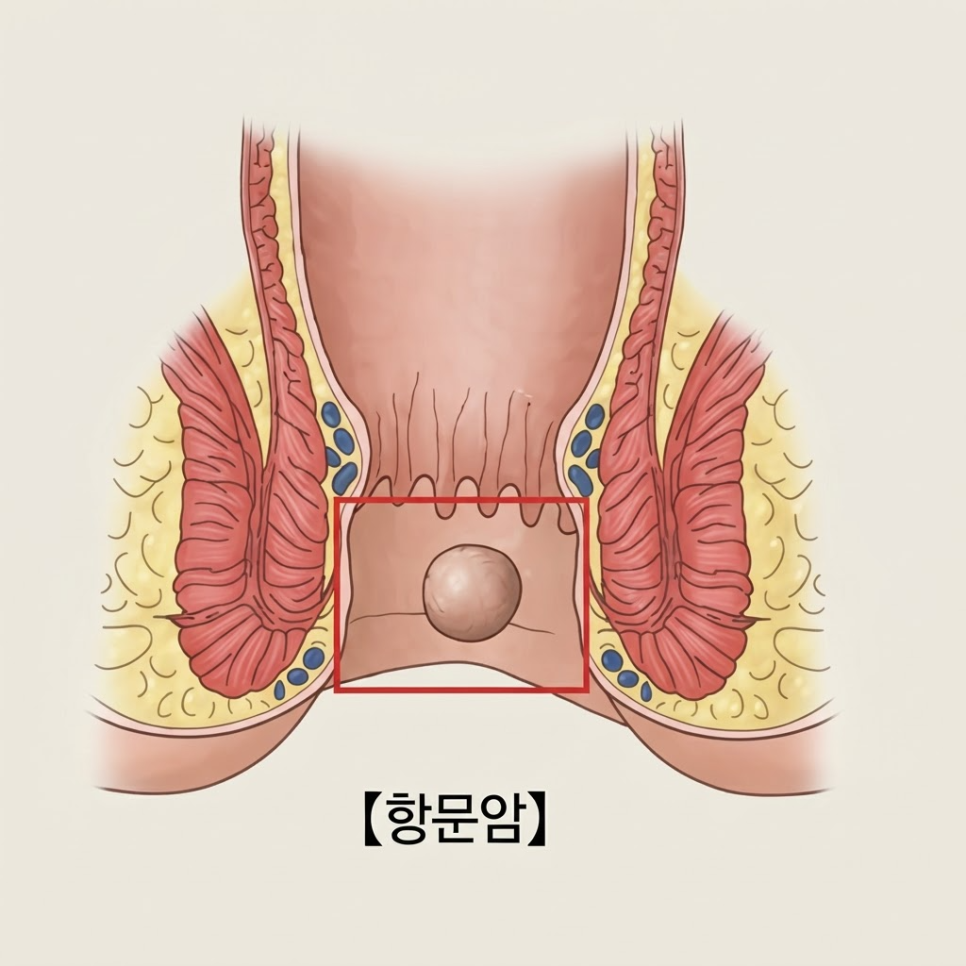
    anal cancer symptoms illustration 2

    Because it’s located at the very end of the digestive tract, a tumor here tends to cause noticeable changes in bowel movements right away.
    Depending on where it develops, it can also start out as a small lump or as a sore that doesn’t heal easily.

    📊 Anal Cancer by the Numbers
    · According to 2023 national cancer registry statistics, anal cancer accounted for 365 cases, or 0.1% of all cancer diagnoses.
    · The crude incidence rate was 0.7 cases per 100,000 people, according to the same statistics.
    · By age group, people in their 60s made up 32.3% of cases, the largest share, followed by those in their 70s and 50s.
    · By sex, there were 224 cases in women and 141 in men, meaning the condition was somewhat more common in women according to this data.

    How Do You Tell Anal Cancer Symptoms Apart From Hemorrhoids?

    The point that trips up the most people is telling this apart from hemorrhoids (piles).
    In short, anal cancer symptoms often differ from hemorrhoids in the color of the bleeding and how long it lasts.

    Typical hemorrhoids usually cause bright red bleeding along with pain.

    anal cancer symptoms illustration 3

    Anal cancer symptoms, on the other hand, tend to show a somewhat different bleeding pattern.
    Dark-colored blood mixed into the stool, or a persistent sense of something foreign in the area, are common features.
    anal cancer symptoms illustration 4

    ⚠️ See a Doctor Right Away If You Notice These Symptoms
    If you have an ongoing feeling of incomplete evacuation even after a bowel movement, or you feel a hard lump around the anal opening, it’s hard to assume it’s just hemorrhoids.

    🚨 Warning Signs You Shouldn’t Ignore

    • Pain and bleeding continue even with hemorrhoid medication or other treatment
    • A sudden change in bowel habits (frequent diarrhea or severe constipation)
    • A lump you can feel in the lymph nodes around the anus or groin
    • Unexplained weight loss along with an ongoing feeling of incomplete evacuation

    The table below summarizes the differences between the two conditions.

    Category Hemorrhoids Anal Cancer Symptoms
    Bleeding color Bright red Dark-colored, mixed with mucus
    Pain Sharp pain during bowel movements Dull pain or no symptoms
    Lump Soft; can be pushed back in Hard; gradually grows larger
    Duration Improves within days to weeks with treatment Persists over 2 weeks despite treatment

    What Causes Anal Cancer, and What’s on the Self-Check Checklist?

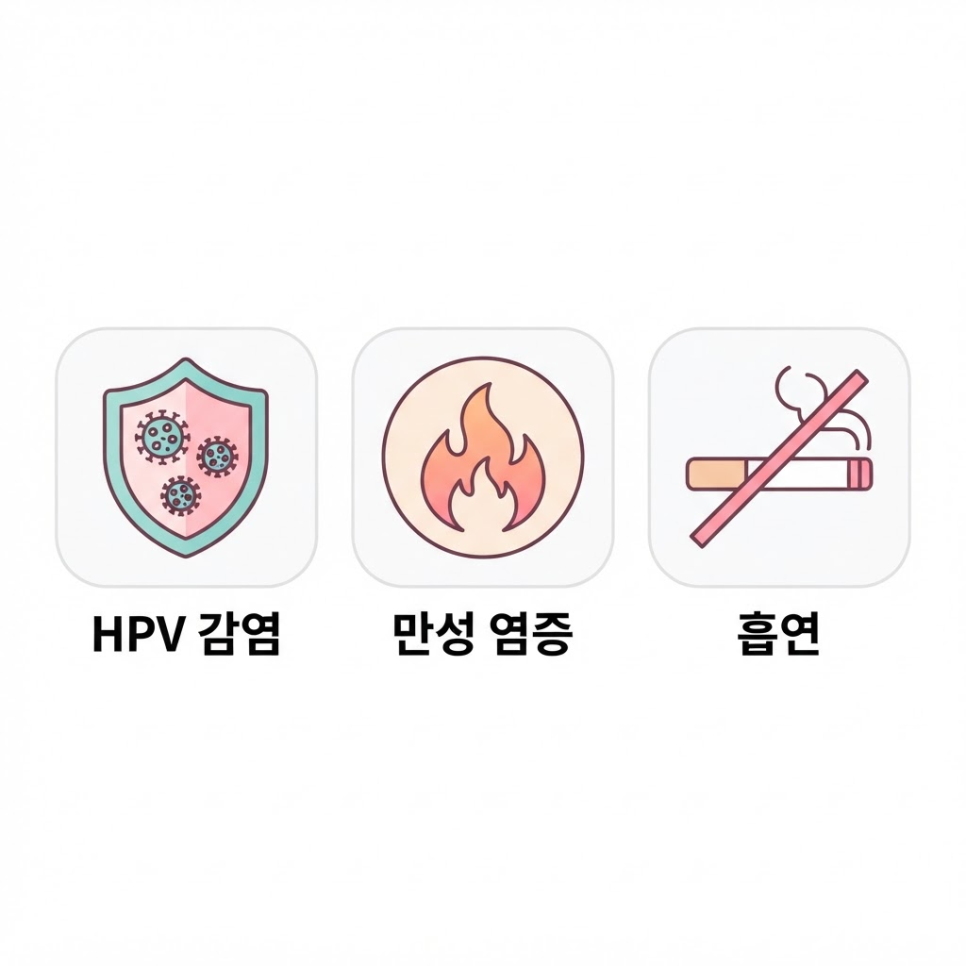
    To put it simply, the leading causes of anal cancer are human papillomavirus (HPV) infection, chronic anal inflammation, and smoking.
    Risk may rise when ongoing irritation occurs alongside a weakened immune system.

    According to statistics from the United States, more than 90% of anal cancer cases are linked to HPV infection, with HPV types 16 and 18 identified as the leading causes.
    Region-specific figures vary, but HPV is consistently recognized as a major risk factor.

    anal cancer symptoms illustration 5

    📋 Self-Check Checklist

    • Blood on the tissue after a bowel movement has continued for more than 2 weeks
    • A lump near the anus is getting bigger over time
    • Stool has become noticeably thinner than before
    • Anal itching or increased discharge won’t go away

    If two or more of these apply to you, don’t put it off — an early evaluation with a specialist is recommended.
    Getting a regular colonoscopy as part of your health checkups may also help with prevention.

    anal cancer symptoms illustration 6

    🚀 Gut-Healthy Habits You Can Start Today
    Eating plenty of fiber-rich vegetables and staying well hydrated can help keep your bowels moving smoothly.
    Quitting smoking, keeping regular bowel habits, and HPV vaccination can also support anal health.

    If pain or bleeding around the anus continues for more than 2 weeks, it’s safer to see a colorectal specialist
    rather than try to judge it on your own.
    [Ansan Yeollin Surgery Hospital] website has more information about care there.


    Frequently Asked Questions

    1. Can hemorrhoids eventually turn into cancer over time?
    No. Hemorrhoids (piles) and malignant tumors develop through completely different mechanisms. However, they can look similar in their early stages, which makes them easy to confuse.

    2. Should I still be concerned if there’s no pain?
    Yes. In the early stages, there’s often little to no pain — just some bleeding or a sense of something foreign. The absence of pain doesn’t mean you can rule it out.

    3. What tests are needed for an accurate diagnosis?
    A digital rectal exam, anoscopy, and biopsy can be used to diagnose it. Endoscopy or imaging tests may also be done if needed.

    4. What’s the best way to help prevent it?
    HPV vaccination, quitting smoking, and keeping regular bowel habits may help. Regular checkups can also play a role in prevention.

    5. Is anal cancer much rarer than hemorrhoids?
    According to 2023 national cancer registry statistics, anal cancer accounts for about 0.1% of all cancers, a lower reported incidence than hemorrhoids, which are widely reported as common.
    anal cancer symptoms illustration 7


    References

    · National Cancer Information Center, “Anal Cancer,” National Cancer Center, accessed 2026. Link
    · Korea Central Cancer Registry, “2023 National Cancer Registration Statistics,” National Cancer Center, 2026. Link
    · Korea Disease Control and Prevention Agency, “Human Papillomavirus (HPV) Vaccination,” KDCA Immunization Helper, accessed 2026. Link
    · Healtho, “How Much Do You Know About HPV, the Virus That Causes Cancer?,” Healtho, accessed 2026. Link


    This article is intended for general health information purposes only and is not a substitute for individual diagnosis or treatment. If you have symptoms, please consult a specialist.

  • Acute Hemorrhoid Symptoms: 3 Warning Signs and Emergency Relief

    Acute Hemorrhoid Symptoms: 3 Warning Signs and Emergency Relief

    SummaryAcute hemorrhoid symptoms usually start with a thrombosed external hemorrhoid, a blood clot forming in a vein around the anus. This guide covers the causes, a self-check list, emergency relief methods like warm sitz baths, and when it’s time to see a doctor.

    Were you perfectly fine last night, only to be startled by a sharp, stabbing pain the moment you sat down in a chair this morning?

    Many people brush this off as a simple muscle ache and try to wait it out,
    but it’s often actually acute hemorrhoid symptoms caused by a sudden blood clot in a vein around the anus.

    Acute hemorrhoid symptoms most often begin with a thrombosed external hemorrhoid, where a clot suddenly forms inside a vein near the anus.
    This article walks through the causes, a self-check list, emergency relief steps you can try at home, and when it’s time to see a doctor.

    acute hemorrhoid symptoms

    What Causes Acute Hemorrhoid Symptoms That Strike Suddenly?

    Most acute hemorrhoid symptoms occur because of a thrombosed external hemorrhoid, a sudden blood clot forming inside a vein around the anus.
    A thrombosed external hemorrhoid is a condition in which a blood clot forms in a vein at the edge of the anus, causing the tissue to swell and triggering intense pain.

    Even people who’ve never had hemorrhoid symptoms before can experience a sudden spike in anal blood vessel pressure from fatigue, sitting on a cold surface for a long time,
    drinking too much alcohol, or straining hard during a bowel movement because of constipation.

    That’s exactly why people say, “I was fine yesterday, and then it just happened out of nowhere.”

    Key Points
    · Straining for more than 5 minutes during a bowel movement sharply raises pressure in the anal blood vessels.
    · Sitting on cold surfaces for long periods, heavy drinking, and accumulated fatigue also encourage clot formation.

    acute hemorrhoid symptoms illustration 2


    Acute Hemorrhoid Symptoms of a Thrombosed External Hemorrhoid: A Checklist

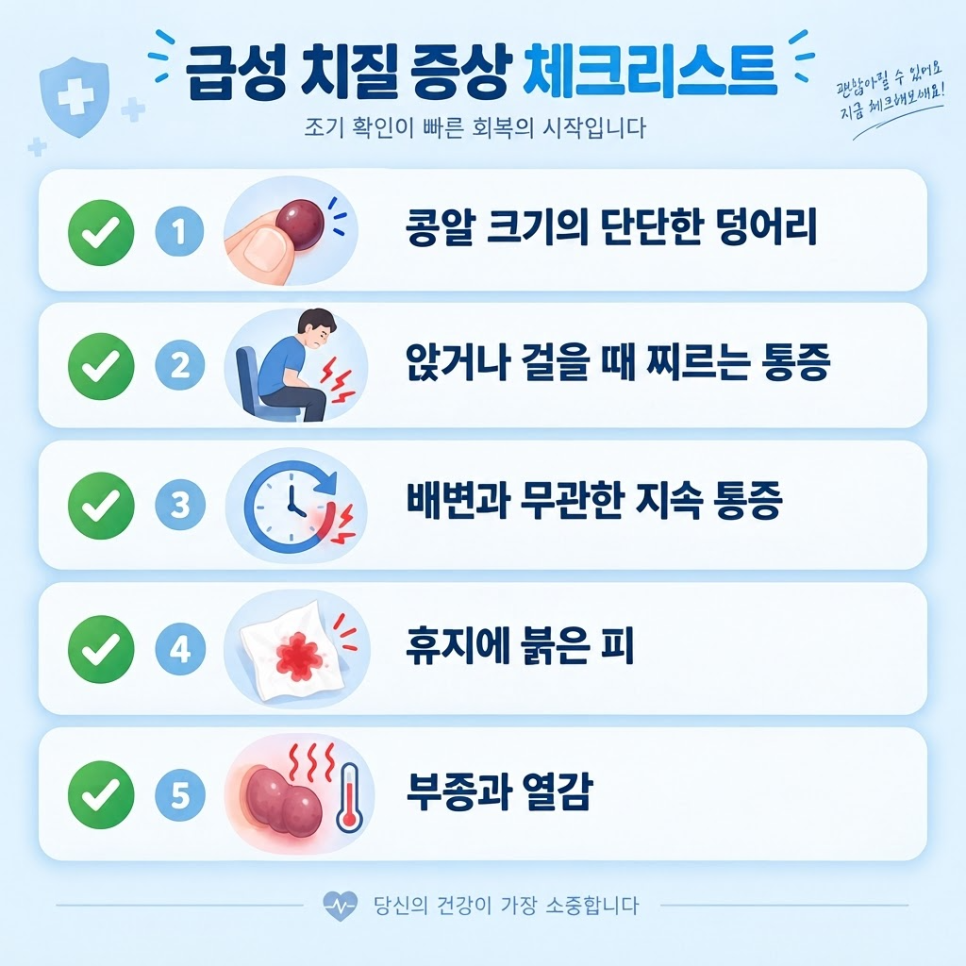
    A thrombosed external hemorrhoid is marked by a firm lump you can feel around the anus within just a few hours, with pain that peaks rapidly.
    Unlike chronic hemorrhoids, the pain intensifies so quickly that walking or even sitting can become difficult.

    Checklist
    ✅ You can feel a firm lump the size of a pea or kidney bean at the anal opening
    ✅ You feel a stabbing pain when sitting in a chair or walking
    ✅ The pain continues regardless of whether you’ve had a bowel movement
    ✅ You notice blood on the toilet paper or bleeding from the surface of the lump
    ✅ The area around the anus is tightly swollen and feels warm to the touch
    Category Acute (Thrombosed External Hemorrhoid) Chronic Hemorrhoids
    Pain onset Worsens sharply within hours Develops gradually, recurs over time
    Lump Firm and painful to the touch Protrudes after bowel movements, then retracts
    Impact on daily life Hard to sit or walk Uncomfortable but can still walk

    acute hemorrhoid symptoms illustration 3


    What Emergency Relief Methods Can You Try at Home Right Away?

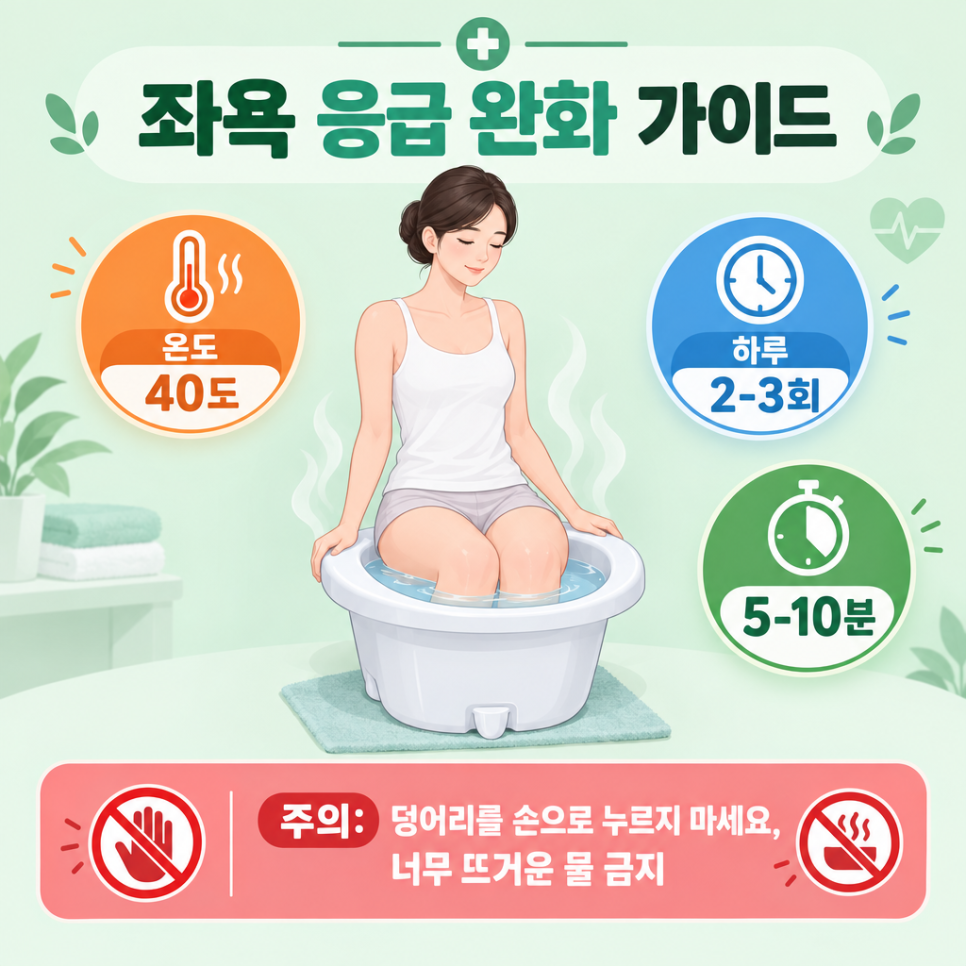
    A warm sitz bath is a method of soaking the anal area in warm water at about 100–104°F (38–40°C) to relax the sphincter muscle and improve blood flow.
    Sitz baths are known to promote circulation, which may help dissolve the clot and support healing of the affected tissue.

    1. Prepare warm water at about 100–104°F (38–40°C).
    2. Soak for 5–10 minutes, 2–3 times a day.
    3. Doing this right after a bowel movement tends to work even better.
    4. Dry the area completely afterward to keep it from staying damp.

    acute hemorrhoid symptoms illustration 4

    ⚠️ Caution
    Never try to force the lump back in or squeeze it with your hands.
    Doing so can rupture the blood vessel or worsen inflammation, potentially leading to a secondary infection — avoid irritating the area at all costs.

    acute hemorrhoid symptoms illustration 5


    When Do You Absolutely Need to See a Doctor?

    If the pain lasts more than 48 hours or the bleeding increases, a professional diagnosis is needed.
    In its early stage, a thrombosed external hemorrhoid often improves on its own with rest, medication, and warm sitz baths.

    acute hemorrhoid symptoms illustration 6

    But if the pain keeps getting worse or lasts more than 48 hours, don’t try to tough it out on your own — see a doctor.
    Missing the early treatment window can extend your recovery time, so prompt evaluation is recommended.

    If symptoms are severe or keep recurring, it’s safest to consult a colorectal surgery specialist.
    You can find more information about the hospital at Burn Treatment, [Ansan Yeolin Surgery Hospital] Home.

    acute hemorrhoid symptoms illustration 7

    🚀 Management Tips
    Combining early, appropriate care with lifestyle changes may help reduce pain more quickly, though results vary from person to person.
    Staying well hydrated and getting enough fiber to prevent constipation is key to lowering the chance of recurrence.

    Frequently Asked Questions

    1. If I have acute hemorrhoid symptoms, do I always need surgery?
    Answer: Not necessarily. Acute thrombosed external hemorrhoids often improve in the early stage with medication, conservative care, and warm sitz baths. The right treatment approach is determined after an in-person exam.

    2. Do alcohol or spicy food make symptoms worse?
    Answer: Yes, they can play a role. Alcohol dilates the blood vessels around the anus and raises the risk of clot formation, while spicy food can irritate bowel movements and put extra strain on anal tissue.

    3. How many times a day should I do a sitz bath?
    Answer: About 2–3 times a day, for 5–10 minutes each, is generally appropriate. Soaking for too long can actually irritate the tissue or interfere with circulation.

    4. Should I push a sudden lump back in with my hand?

    Answer: No — never press hard on it or try to push it in. This can damage the blood vessel or cause severe pain, so it’s safer to leave it alone and get it checked by a doctor.

    acute hemorrhoid symptoms illustration 8


    References

    · Asan Medical Center, “Hemorrhoids,” Disease Encyclopedia, Asan Medical Center Health Information. View source
    · Seoul National University Hospital, “Hemorrhoid,” Medical Information, Seoul National University Hospital Health Information. View source

    This article is intended for general health information purposes only and is not a substitute for individual diagnosis or treatment. If you’re experiencing symptoms, please consult a medical professional.

  • Blood in Stool: 3 Common Causes When You’re Bleeding But Feel No Pain

    Blood in Stool: 3 Common Causes When You’re Bleeding But Feel No Pain

    SummaryThe likely cause of blood in stool can differ depending on the color of the blood. From the difference between bright red and dark red blood to hemorrhoids, anal fissures, colon polyps, and inflammatory bowel disease, here’s a detailed breakdown of the possible causes of rectal bleeding, the warning signs that mean you should see a doctor, and everyday habits that can help prevent it.

    Seeing red blood on the toilet paper can make anyone’s heart sink.

    But did you know that the likely cause of blood in stool can vary completely depending on the color of the blood?

    In fact, when patients come in for evaluation of rectal bleeding, the color of the blood is often one of the first things a doctor checks.

    The color and pattern of the bleeding can vary depending on the underlying condition.
    From anal conditions like hemorrhoids and anal fissures to colon polyps and inflammatory bowel disease,
    here are the possible causes of rectal bleeding and the warning signs that mean you should see a doctor.

    blood in stool

    What Does Blood in Stool Color Tell You About the Cause?

    The short answer: yes, the color of the blood alone can give a rough idea of where the bleeding is coming from.
    Blood in stool refers to bleeding that occurs when the anus or the lining of the intestine is damaged during a bowel movement.

    The closer the bleeding site is to the anus, the more likely the blood is to appear bright red.

    On the other hand, if the issue is higher up in the colon or small intestine, the blood can appear dark red or even black.

    That’s why it’s important to pay attention to both the color and the pattern of bleeding when checking your symptoms.

    illustration related to blood in stool 2

    Key points
    ✔ Bright red blood — may indicate damage to small blood vessels near the anus (hemorrhoids, fissures, etc.)
    ✔ Dark red blood — may indicate bleeding higher in the colon or rectum
    ✔ Blood mixed with mucus — may indicate inflammatory bowel conditions or polyps
    Blood Color Likely Location Possible Condition
    Bright red Near the anus Hemorrhoids, anal fissure
    Dark red / black Upper colon, small intestine Colon polyps, ulcerative conditions
    Mixed with mucus Colon lining Inflammatory bowel disease

    Why do you bleed with no pain at all?

    In most cases, painless bleeding is caused by internal hemorrhoids.
    That’s because the lining inside the anal canal has very few sensory nerve endings.

    Common causes of this kind of rectal bleeding include anal conditions like hemorrhoids and anal fissures.

    When hard stool tears the lining of the anus, it can cause both pain and bleeding.

    By contrast, when hemorrhoid tissue is simply irritated during a bowel movement, bleeding often occurs with little to no pain.

    Key points
    ✔ External hemorrhoids — located outside the anus, richly supplied with nerves, so pain is common
    ✔ Internal hemorrhoids — located inside the anal lining, with fewer nerve endings, so painless bleeding is typical
    ✔ Anal fissure — a tear in the lining from hard stool, usually causing sharp pain along with bleeding

    illustration related to blood in stool 3

    Could the cause be something other than an anal condition?

    It’s not always just an anal issue.
    Colon polyps or inflammatory bowel disease, such as ulcerative colitis,
    can also cause rectal bleeding.

    In these cases, bleeding is often accompanied by mucus in the stool or changes in bowel habits.

    illustration related to blood in stool 4

    Checklist
    ✅ A small streak of bright red blood on the toilet paper → possible anal fissure
    ✅ Blood dripping heavily enough to color the toilet water → possible hemorrhoid tissue damage
    ✅ Blood mixed into the stool itself, or accompanied by a heavy, dull ache → possible issue inside the colon lining

    What should you do if bleeding lasts more than a week?

    If bleeding continues for more than a week, you should see a doctor.
    It’s not a good idea to assume it’s just minor irritation and leave it unchecked.

    illustration related to blood in stool 5

    Things to watch for
    ⚠ Bleeding that continues for more than a week
    ⚠ Bleeding accompanied by unexplained weight loss or a sudden change in bowel frequency
    ⚠ Repeated episodes of dark red blood or black stool
    If you notice any of these signs, it’s safer to get a proper medical evaluation rather than guessing on your own.

    For an accurate assessment, it’s safest to get a thorough clinical evaluation.

    In daily life, try to drink enough water and eat a fiber-rich diet.

    Habits that help prevent constipation go a long way toward maintaining anal and colon health.

    If symptoms keep recurring or you’re unsure of the cause, it’s a good idea to see a colorectal specialist.
    Ansan Yeolin Surgical Hospital — Home

    illustration related to blood in stool 6

    Key takeaways
    ◆ Bright red blood suggests anal conditions like hemorrhoids or fissures, while dark red blood may point to polyps or inflammation higher in the colon.
    ◆ Even without pain, an endoscopic exam is recommended if bleeding lasts more than a week or comes with weight loss or changes in bowel habits.
    ◆ Staying well hydrated and eating enough fiber to prevent constipation is a basic habit that may help reduce your risk.

    Frequently Asked Questions

    1. Does blood in stool always mean colon cancer?
    No. In the vast majority of cases, the cause is a common anal condition like hemorrhoids or an anal fissure. That said, if bleeding persists or the blood is dark red, it’s best to get an accurate diagnosis.

    2. Why does bleeding sometimes happen with no pain at all?
    Painless bleeding is commonly associated with internal hemorrhoids. Because the hemorrhoid tissue inside the anal canal has few sensory nerves, bleeding can occur without any pain.

    3. Should I still get checked if there’s only a small streak of blood on the toilet paper?
    It may just be temporary irritation from hard stool, but if it keeps happening or continues over time, it’s safer to find out the cause.

    4. When should I consider getting a colonoscopy?
    An endoscopic exam is recommended if the blood is dark red, or if it’s accompanied by changes in bowel habits, weight loss, or a family history of colon conditions.

    5. Is there a way to prevent this kind of bleeding?
    Drinking enough water and eating a fiber-rich diet to prevent constipation is generally recommended as a basic way that may help reduce the risk.


    References

    · Korea Disease Control and Prevention Agency, “Blood in Stool and Black Stool (Adults),” National Health Information Portal. View source
    · Korea Disease Control and Prevention Agency, “Hemorrhoids,” National Health Information Portal. View source
    · Asan Medical Center, “Hemorrhoids,” Disease Encyclopedia. View source
    · National Cancer Center, “Recurring Dark Blood in Stool: A Warning Sign From Your Colon,” NCC Webzine, 2019. View source


    This article is provided for general health information purposes only and is not a substitute for individual diagnosis or treatment. If you’re experiencing symptoms, please consult a physician.

  • Early Hemorrhoid Symptoms: 4 Bathroom Habits Worth Changing Now

    Early Hemorrhoid Symptoms: 4 Bathroom Habits Worth Changing Now

    SummaryEarly hemorrhoid symptoms often cause little to no pain, so they’re easy to overlook. Left unaddressed, they can eventually progress to a point where surgery becomes a consideration. Here’s a rundown of the early warning signs that are easy to miss, the bathroom habits worth changing, and how to do a sitz bath correctly.

    A little blood on the toilet paper
    is something many people brush off.

    There’s no pain, so it’s easy to ignore —
    but missing this window can eventually lead to a situation where surgery needs to be considered.

    Catching early hemorrhoid symptoms in time
    and adjusting your bathroom habits may help you manage them.

    This article covers the key warning signs of early hemorrhoid symptoms, the difference between stage 1 and stage 2 hemorrhoids,
    and a sitz bath method you can start using right away.

    If you notice bleeding or a sense of discomfort during bowel movements, check the list below first.

    early hemorrhoid symptoms

    What Exactly Is a Hemorrhoid?

    A hemorrhoid develops when the blood vessels and tissue around the anus come under pressure, stretch, and swell into a lump.
    In short, a hemorrhoid is a swollen blood vessel that forms when the cushion-like tissue of the anal canal stretches under pressure.

    Most of what’s commonly called “piles” falls into this category.
    They’re especially common among people who sit for long stretches or deal with chronic constipation.

    Brushing off the condition
    can eventually lead to a situation where surgery needs to be considered,
    so recognizing and managing the symptoms early matters.

    illustration related to early hemorrhoid symptoms 2

    Key Point
    A hemorrhoid forms when the blood vessels of the anus stretch under pressure, and how it’s managed early on can influence how it progresses.

    How Can You Recognize Early Hemorrhoid Symptoms?

    Early hemorrhoid symptoms usually appear as mild signs rather than pain.
    Early hemorrhoid symptoms typically involve anal itching, a lingering sense of incomplete evacuation, and bright red blood during bowel movements.

    Because the discomfort is mild, many people simply overlook it.
    But missing this stage can allow the condition to progress to the point where the swollen tissue protrudes outward.

    illustration related to early hemorrhoid symptoms 3

    Use the checklist below to see where you currently stand.

    Checklist
    ✅ Blood appears on toilet paper or in the stool during bowel movements
    ✅ There’s itching or a heavy, foreign-body sensation around the anus
    ✅ A sense of incomplete evacuation remains even after a bowel movement

    illustration related to early hemorrhoid symptoms 4

    What’s the Difference Between Stage 1 and Stage 2 Hemorrhoids?

    Stage 1 mainly involves bleeding, while the key difference in stage 2 is that the swollen tissue protrudes during bowel movements and retracts on its own.
    The table below compares the two stages.

    Category Stage 1 Hemorrhoids Stage 2 Hemorrhoids
    Main Symptoms Little to no pain, bright red bleeding during bowel movements Tissue protrudes during bowel movements, may involve itching or a foreign-body sensation
    Location of Tissue Stays inside the anal canal Protrudes outward but returns on its own after the bowel movement
    Management & Treatment May improve with conservative measures such as fiber and water intake and warm sitz baths Same early management approaches apply; a doctor’s evaluation is needed if symptoms persist
    Caution
    If bleeding recurs or the protruding tissue doesn’t retract on its own, it’s safer to see a doctor rather than rely on self-care alone.

    What Bathroom Habits and Sitz Bath Practices Help?

    Correcting daily habits and practicing a proper sitz bath are among the approaches commonly recommended for easing hemorrhoid symptoms.
    Here are four lifestyle habits worth keeping in mind.

    illustration related to early hemorrhoid symptoms 5

    First, avoid sitting on the toilet for long stretches at all costs.
    Second, if you bring your phone in and sit for more than 10 minutes, it’s time to break that habit.

    Letting these small habits slide can make symptoms worse.

    illustration related to early hemorrhoid symptoms 6

    Third, staying well-hydrated and eating a vegetable-rich diet helps prevent constipation.
    Fourth, a light sitz bath in warm water can also support healthy blood circulation.

    A commonly suggested guideline is 3-5 minutes in warm water, 2-3 times a day.

    What Foods Are High in Fiber?

    Fiber adds bulk to the stool and helps it retain moisture, making bowel movements easier and more comfortable.

    illustration related to early hemorrhoid symptoms 7

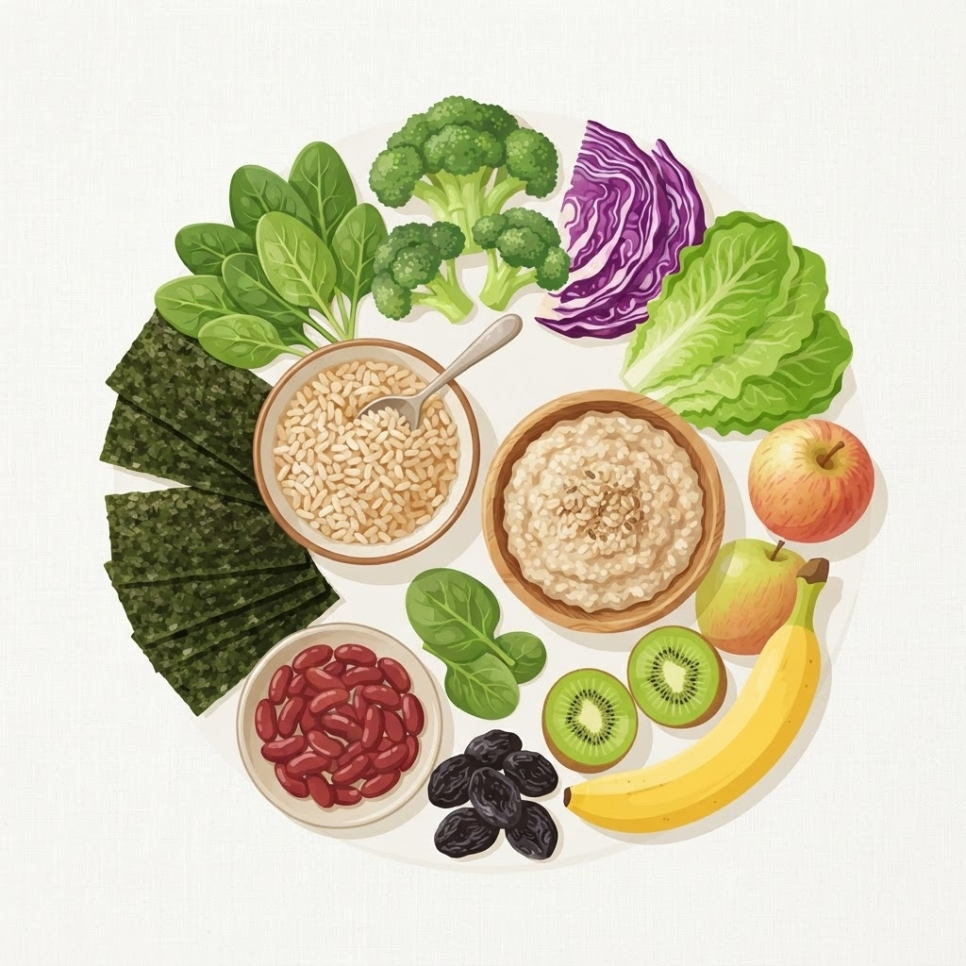
    • Vegetables: spinach, broccoli, cabbage, lettuce, garlic chives
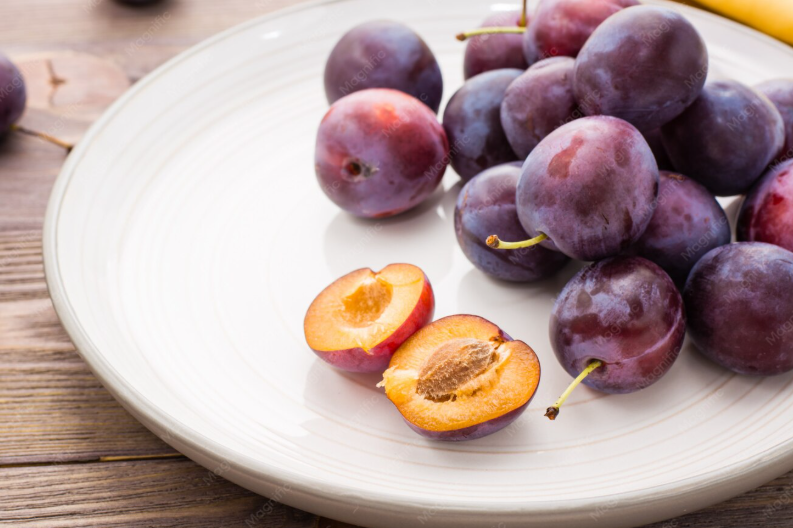
    • Fruits: apples (with skin), pears, bananas, kiwis, prunes (dried plums)
    • Whole Grains & Sea Vegetables: brown rice, oatmeal, legumes, seaweed, kelp, dried laver
    Takeaway
    Combining regular sitz baths with a fiber-rich diet may help ease early symptoms.

    If symptoms keep recurring despite self-care, or if you’re concerned, it’s worth seeing a specialist.
    For an accurate diagnosis, check the link below.
    Hemorrhoid Care at Ansan Yeollin Surgical Hospital


    Frequently Asked Questions

    1. I have early hemorrhoid symptoms — do I need to see a doctor?
    In the early stage, sitz baths and dietary changes may help, but if bleeding continues, it’s safer to get an accurate diagnosis from a doctor.

    2. How often and how long should a sitz bath be?
    Around 3-5 minutes in warm water, 2-3 times a day, is generally recommended to support blood circulation around the anus.

    3. How much fiber and water should I be getting?
    To help prevent constipation, eat plenty of vegetables and fruit, and aim to drink at least 1.5 liters of water a day.

    4. Does stage 2 always require surgery?
    Stage 2 cases may improve with conservative treatment, but if symptoms persist or worsen, it’s important to have your condition evaluated at a hospital.

    5. How can I tell early hemorrhoid symptoms apart from other anal conditions?
    Bleeding patterns and pain location can vary, so an exam by a specialist is more reliable than self-diagnosis.


    illustration related to early hemorrhoid symptoms 8

    References

    · Korea Disease Control and Prevention Agency, “Hemorrhoids,” National Health Information Portal. View source
    · Asan Medical Center, “Hemorrhoids,” Disease Encyclopedia Medical Information. View source


    This article is intended for general health information purposes only and is not a substitute for individual diagnosis or treatment. If you have symptoms, please consult a medical professional.