A stinging sensation or a bit of blood doesn’t automatically mean
you need to head straight into surgery.
In the early stages, medication and lifestyle changes alone
can often bring real improvement.
The real problem is hesitating.
The longer you put off a decision, the longer treatment tends to take.
If you’re looking into an Ansan proctology clinic,
let’s start with the criteria that separate surgical cases from conservative treatment.
This article breaks down the criteria that confuse people looking for an Ansan proctology clinic.
You’ll find what to look for in a trustworthy Ansan proctology clinic, how to tell hemorrhoids, fissures, and fistulas apart,
and the aftercare steps that help prevent recurrence — all in one place.
Does Anal Pain Always Require Surgery?
No.
Depending on how severe the symptoms are, medication or lifestyle adjustments alone can lead to significant improvement.
Anal disease is an umbrella term for conditions like hemorrhoids, anal fissures, and anal fistulas that affect the anal canal and surrounding tissue.
Because the cause and stage differ from patient to patient,
it’s difficult to self-diagnose based on symptoms alone.
The longer you delay diagnosis, the longer treatment tends to take — and in some cases, symptoms worsen to the point where surgery becomes necessary.
How Do Hemorrhoids, Anal Fissures, and Anal Fistulas Differ?
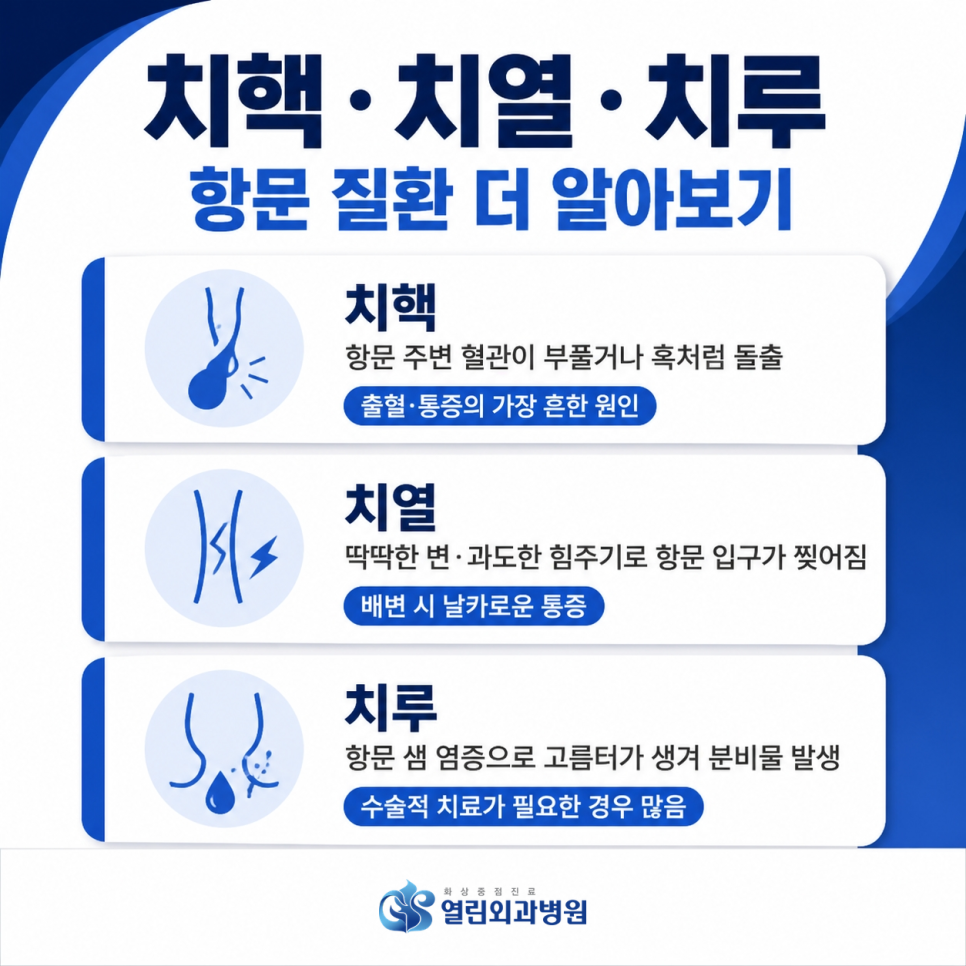
These three conditions have entirely different causes and symptom patterns.
Identifying which one matches your symptoms is the first step toward treatment.

| Condition | Main Symptoms | Characteristics |
|---|---|---|
| Hemorrhoids | Painless bleeding, tissue protruding from the anus | A common anal condition |
| Anal fissure | Sharp pain during bowel movements, bright red bleeding | Often caused by hard stool or excessive straining |
| Anal fistula | Pus-like discharge, recurring inflammation | Usually requires surgical treatment |
What Criteria Matter Most When Choosing an Ansan Proctology Clinic?
A trustworthy Ansan proctology clinic is one with clinically experienced doctors and precise diagnostic equipment working together.
Because the cause and stage of each condition vary from patient to patient,
a one-size-fits-all approach falls short of what a reliable Ansan proctology clinic should offer.
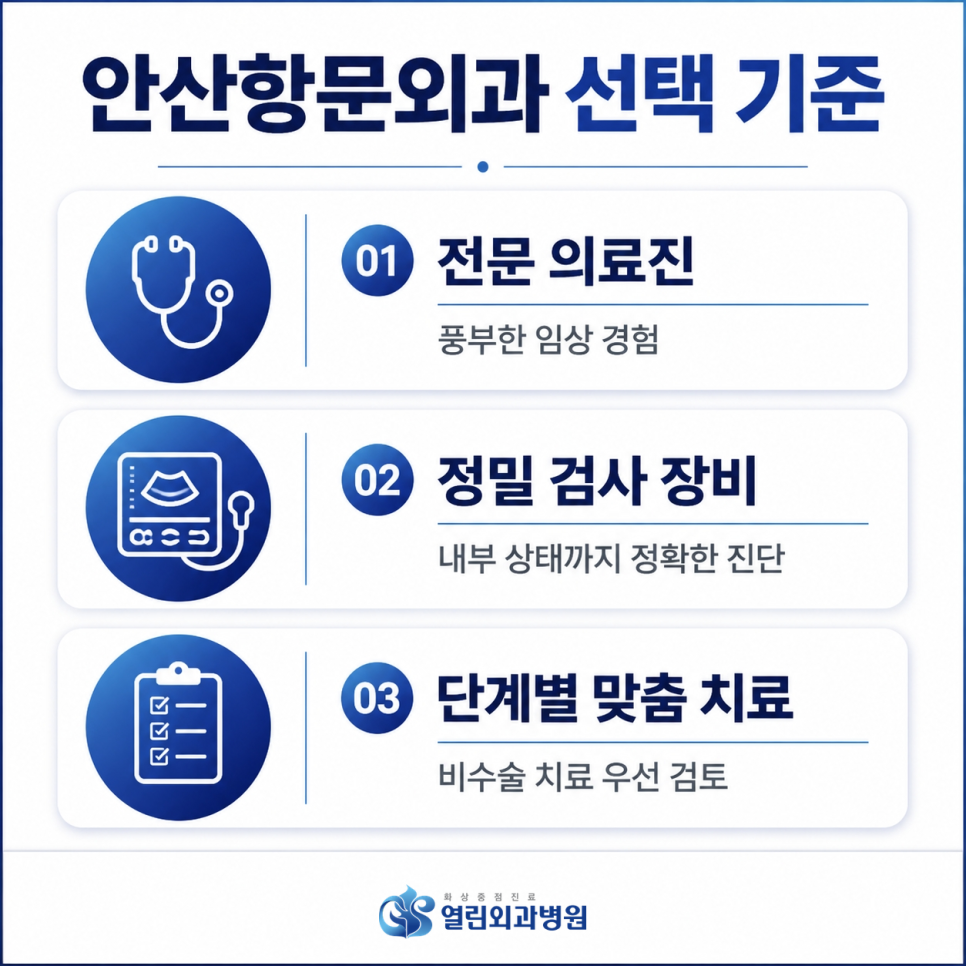
Check whether the clinic appropriately distinguishes between non-surgical conservative treatment and surgical treatment based on the stage of the condition.
Second, check whether the clinic has the medical equipment needed for precise examinations.
Only by closely assessing internal conditions that aren’t visible to the eye
can diagnostic accuracy be improved and the risk of misdiagnosis reduced.
What Diagnostic System Is Needed for an Accurate Diagnosis?
A clinic with an accurate diagnostic system is one equipped with precision ultrasound and similar equipment, and one that offers a tailored treatment plan without unnecessary procedures.

What worries people most when looking for an Ansan proctology clinic
is the pain and burden associated with surgery.
But surgery isn’t necessary in every case.
In the early stages, medication or lifestyle changes can often provide sufficient relief.
So rather than defaulting to surgery,
look for a clinic that accurately identifies the cause and lays out a step-by-step treatment plan.

✅ Has precision ultrasound and other diagnostic equipment
✅ Offers a tailored treatment plan without unnecessary procedures
✅ Runs a pain management program for surgical cases
✅ Has systems in place to protect patient privacy and personal information
Once you’ve gone through this checklist,
remember: the longer you hesitate, the longer treatment tends to take.
What Aftercare Helps Prevent Recurrence After Treatment?
A private, comfortable care environment paired with clear aftercare guidance may help support recurrence prevention.
Since this involves a sensitive area of the body, it’s also worth checking
whether consultations take place in a private, separate space.
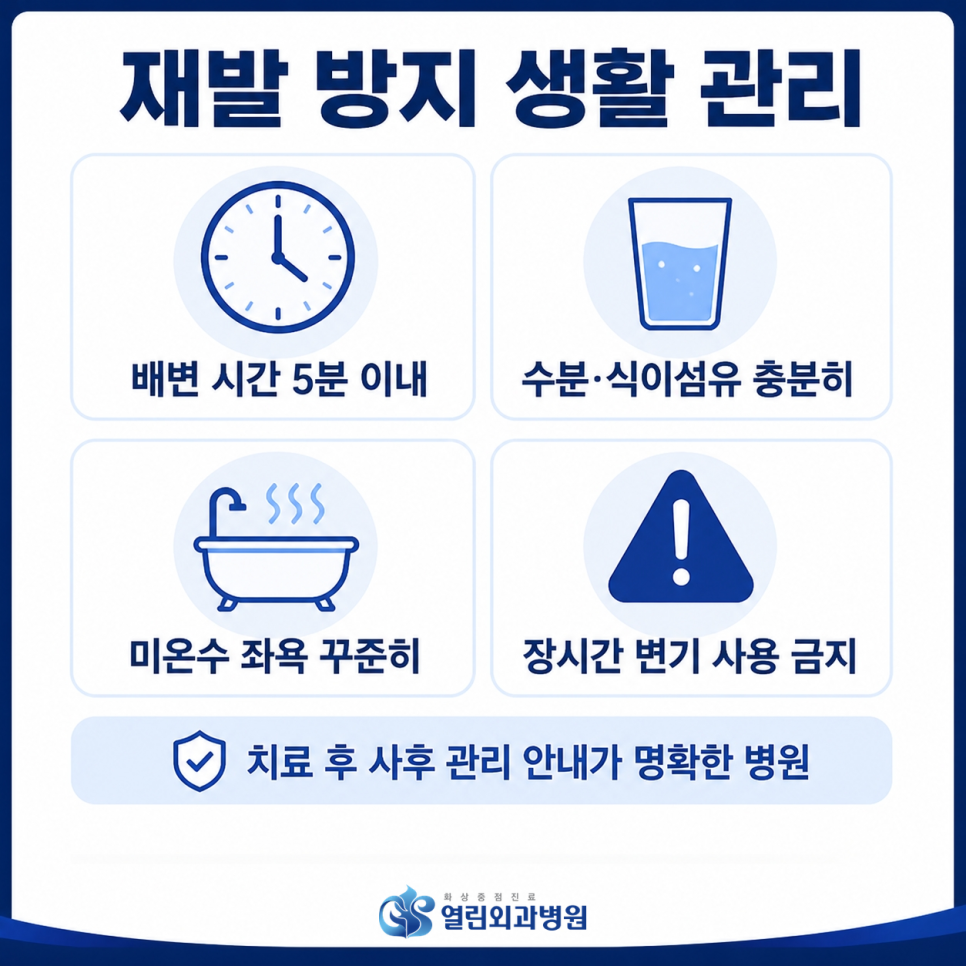
Everyday care — like proper sitz bath technique and getting enough dietary fiber —
needs to go hand in hand with treatment to help prevent recurrence.
In fact, research suggests that simply keeping bowel movements under 5 minutes
can help lower the risk of anal disease.
Putting the phone down while on the toilet
is also known to help improve bowel habits.
Combining a systematic diagnosis with good lifestyle habits may help lower the chance of recurrence and support a smoother return to daily life.

If you’re also curious about other surgical conditions beyond anal disease,
take a look at the link below as well.
Burn treatment information — [Ansan Open Surgery Clinic] Home
We encourage you to use accurate information to find the right medical facility
and take the steps needed to recover.
A little attention and courage now can make a real difference in your quality of life.




Frequently Asked Questions
1. Does anal pain always mean I need surgery?
Not necessarily. Depending on the severity and type of condition, conservative treatments like medication, sitz baths, and dietary changes can be tried first. An exact diagnosis requires a proper exam.
2. What lifestyle habits help prevent anal disease?
Keeping bowel movements under 5 minutes and getting enough water and dietary fiber can help. It’s also best to avoid sitting on the toilet for long periods or using your phone while on the toilet.
3. What’s the most effective way to do a sitz bath?
Soaking in warm water around 38°C (100°F) for about 3 to 5 minutes is generally recommended. Doing this after bowel movements and before bed can help with circulation.
4. Can I go about my day right after the exam?
Basic exams and ultrasound testing usually don’t disrupt daily life much, so it’s often possible to return to work or go about your day the same day.
References
· Asan Medical Center, \”Hemorrhoids,\” Disease Encyclopedia, Asan Medical Center Health Information. View source
· Seoul National University Health Care Center, \”Don’t Ignore Pain Around the Anus: Hemorrhoids, Anal Fissures, and Anal Fistulas.\” View source
· Hidoc, \”Using Your Phone on the Toilet for Over 5 Minutes Raises Hemorrhoid Risk by 46%,\” Latest Research, 2026. View source
This article is intended for general health information purposes only and is not a substitute for individual diagnosis or treatment. If you have symptoms, please consult a medical professional.