Tag: Ansan Yeollin Surgery Hospital

  • Burn First Aid: 15-Minute Golden Window Explained

    Burn First Aid: 15-Minute Golden Window Explained

    SummaryBurn first aid centers on cooling the area under running cool water for 15–20 minutes. Together with Ansan Yeollin Surgical Hospital near Gojan Station, let’s look at burn stages and how the clinic manages wound care.

    Even a brief brush against hot soup or a hot iron can leave skin red and stinging within seconds.
    In the panic of the moment, plenty of people reach first for ice, or apply home remedies like alcohol or toothpaste.

    In reality, the golden window for burn first aid is just the first 15 minutes after the injury,
    and how you use that time can make a real difference in whether a scar forms.
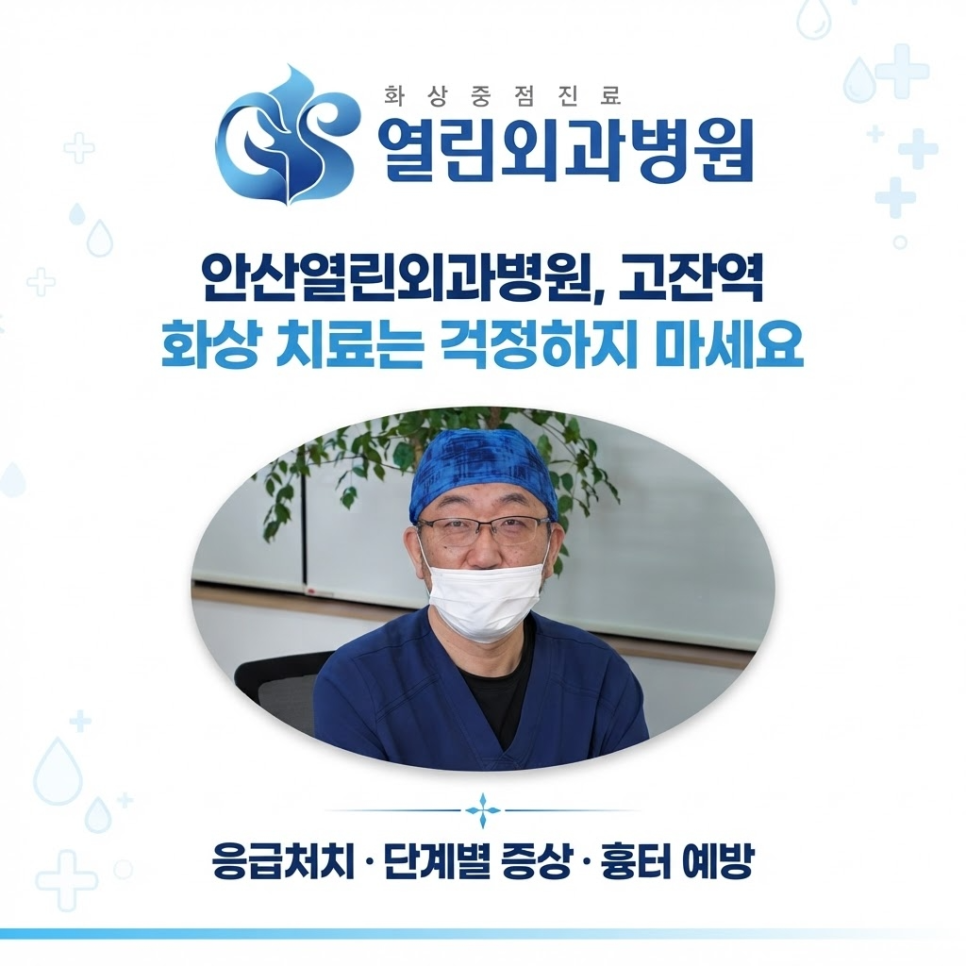
    Burn first aid

    This article covers the correct order of steps for burn first aid and the actions you should never take.

    We’ll also explain how to tell first-, second-, and third-degree burns apart by symptom,
    along with how Ansan Yeollin Surgical Hospital near Gojan Station approaches wound care.
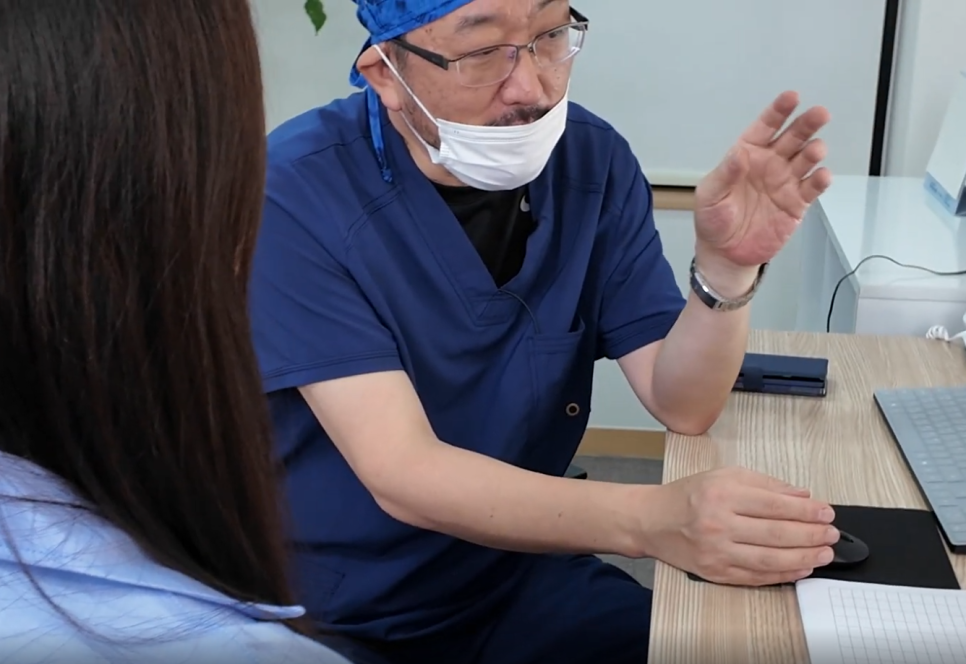
    Burn first aid illustration 2

    What Should You Do Right After a Burn? Burn First Aid Steps

    The first thing to do right after a burn is to cool the affected area under cool running water.
    Burn first aid means the initial response that draws heat out of the skin and helps prevent secondary infection before the damage goes any deeper.

    Remove the source of heat right away, then cool the area under running tap water at roughly 15–20°C (about 59–68°F).

    Avoid placing ice or ice water directly on the skin.
    Doing so can make blood vessels constrict suddenly, which may actually worsen tissue damage.
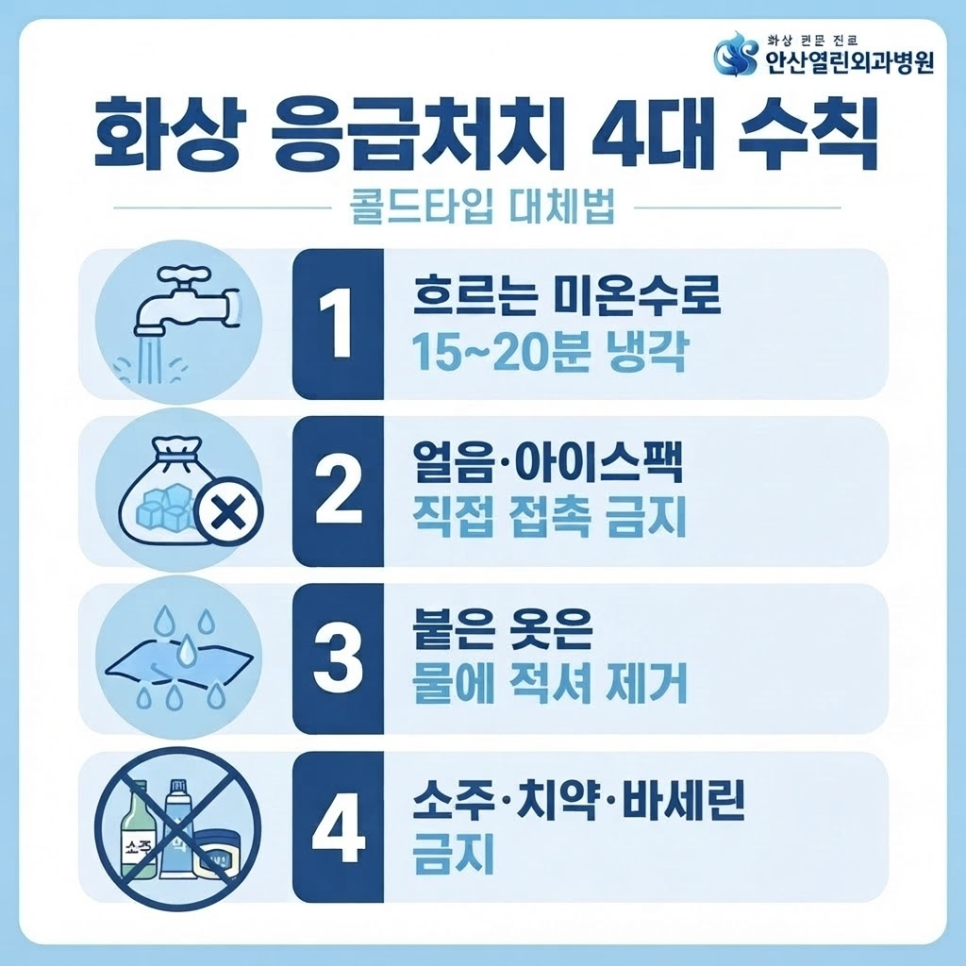
    Burn first aid illustration 3

    If hot liquid soaked through clothing, don’t force the fabric off.
    Keep water running over it and ease it away slowly for safety.

    The key is to keep cooling the area for about 15–20 minutes, until the burning sensation eases.

    Burn first aid illustration 4

    Key Points
    1. Cool the area for 15–20 minutes under lukewarm or cool running water
    2. Never place ice or an ice pack directly on the skin
    3. If clothing sticks to the burn, don’t pull it off — soak it with water and ease it away
    4. Keep the burned area raised above heart level to help reduce swelling
    Precautions
    ⚠️ Do not apply home remedies such as alcohol, soybean paste, toothpaste, or aloe
    ⚠️ Do not apply petroleum jelly or other oil-based ointments while the area still feels hot
    ⚠️ Do not pop blisters with your hands

    Burn first aid illustration 5


    How Do You Tell Burn Degrees (1st, 2nd, 3rd) Apart?

    Burns are classified from first- to third-degree based on how deep the skin damage goes.
    Symptoms and the care needed differ significantly by degree, so telling them apart matters.
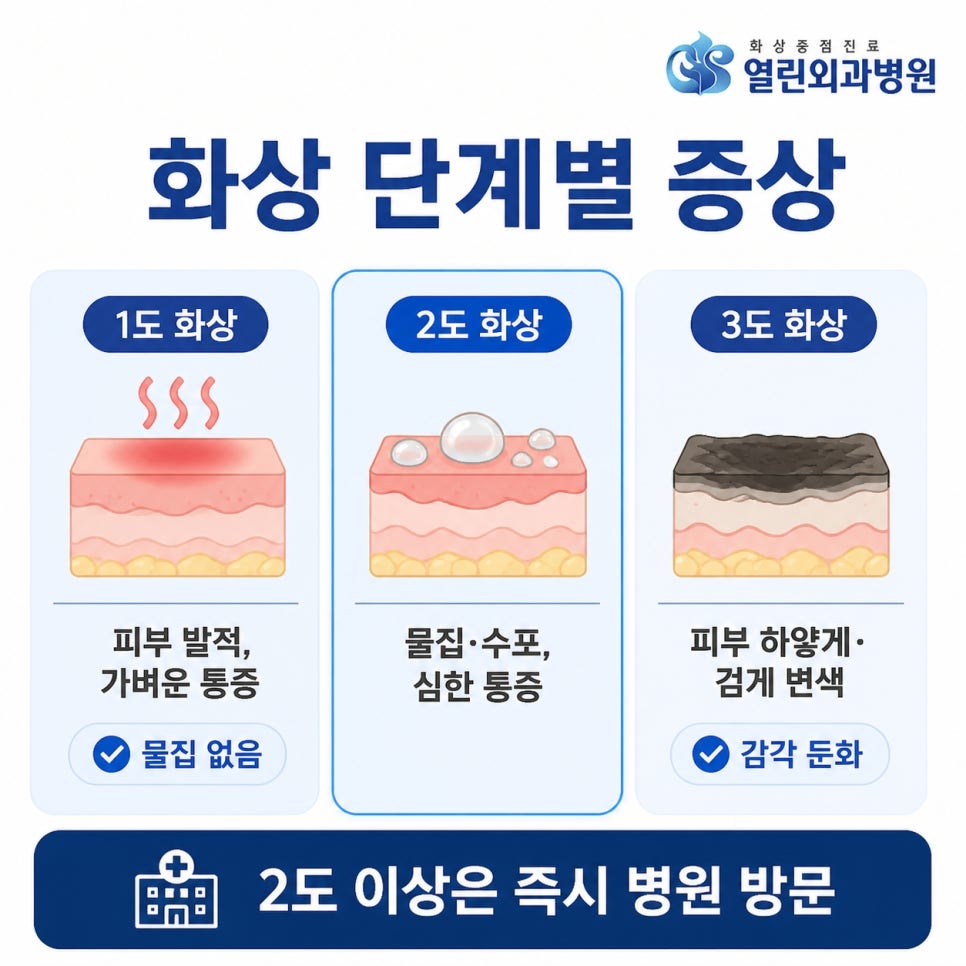
    Burn first aid illustration 6

    Type Depth of Damage Main Symptoms
    First-degree burn Epidermis (outer layer) Redness, mild pain, no blistering
    Second-degree burn Dermis Blistering, severe pain, infection risk
    Third-degree burn Subcutaneous fat layer White or blackened skin discoloration, reduced pain sensation

    First-degree burns affect only the outer layer of skin and tend to heal on their own within a few days, while blistering is the defining feature of second-degree burns.

    Third-degree burns can damage nerves so severely that pain sensation may actually be reduced, which is why surgical evaluation is essential.
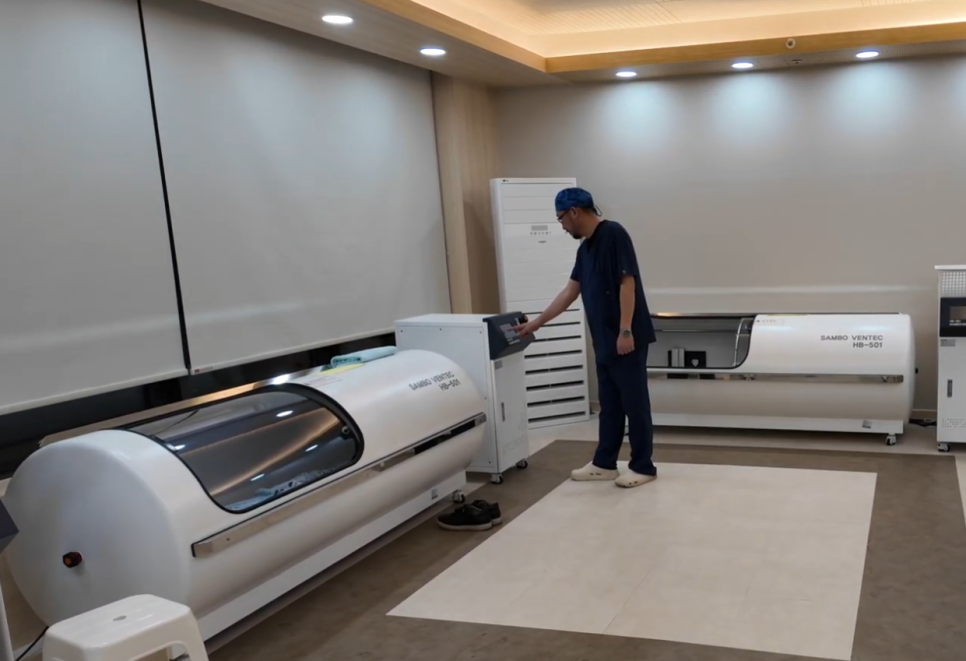
    Burn first aid illustration 7

    Checklist
    ✅ Is the skin red and still warm to the touch? (Possibly first-degree)
    ✅ Have blisters formed with clear or yellowish fluid? (Possibly second-degree)
    ✅ Is sensation reduced, or has the skin turned white? (Possibly third-degree)
    ✅ Is the face, hands, feet, a joint, or a large area affected? (Seek care immediately)

    How Does the Hospital Treat Burn Wounds?

    The goal of surgical treatment is to prevent secondary infection and help minimize scarring.
    Wound care refers to the full process of disinfection, dressing, and maintaining a moist environment to support skin regeneration.

    In the early stage, disinfection and specialized dressing materials help keep out contaminants, and if a blister is large, medical staff drain only the fluid using sterilized instruments.

    Trying to do this at home on your own can sometimes make an infection worse.
    Professional wound care, such as that offered near Gojan Station at Yeollin Surgical Hospital, is generally recommended for this reason.
    Burn first aid illustration 8

    After initial care, a customized moist foam dressing is applied to absorb fluid and protect the wound.

    While the skin regenerates, ongoing disinfection and monitoring alongside it may help reduce the likelihood of scarring.
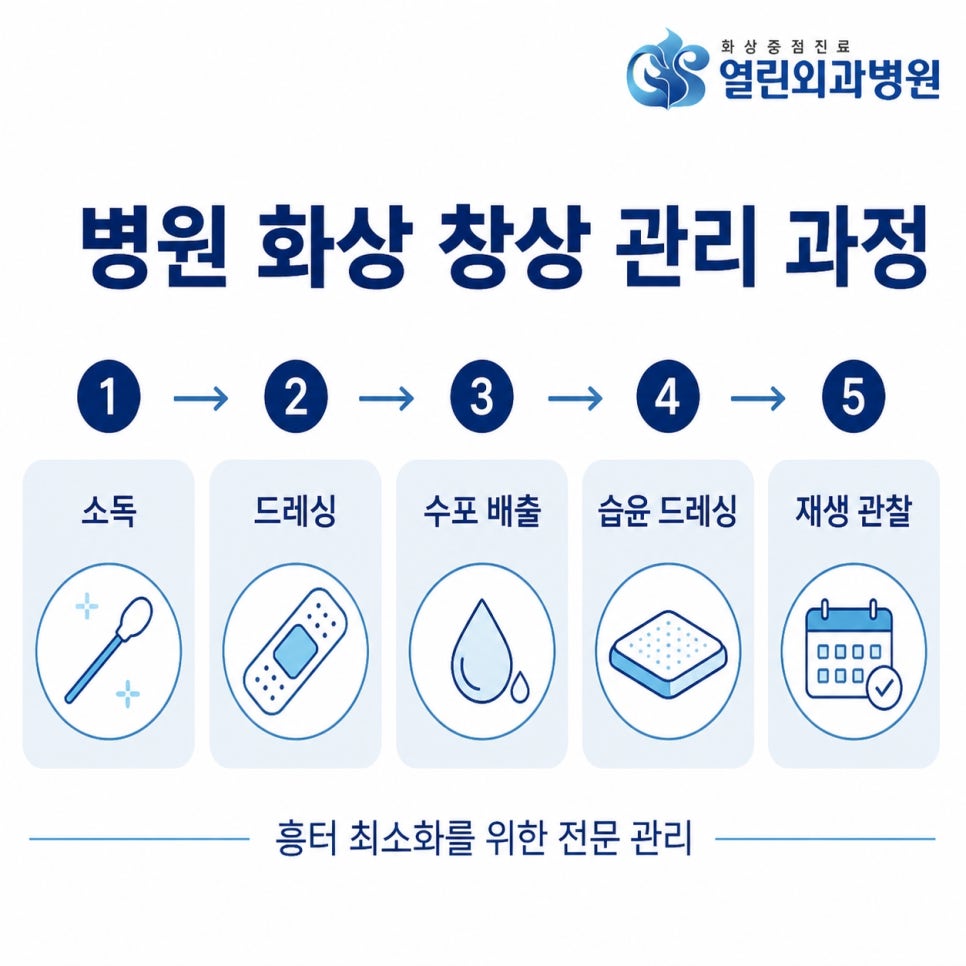
    Burn first aid illustration 9

    Key Points
    1. Blisters act as a natural protective barrier — don’t pop them yourself
    2. Keep water from getting directly on the dressed area
    3. Avoid scratching, even if the healing skin feels itchy
    4. Keep using sunscreen after treatment to help prevent discoloration

    Scar Prevention and Choosing a Hospital: What to Check

    Reducing the risk of scarring is generally understood to involve preventing early infection and maintaining a moist wound environment.
    Even after the skin finishes regenerating, thorough sun protection for 3–6 months can help prevent discoloration.

    Burn first aid illustration 12

    Takeaways
    · Proper initial cooling and disinfection may help reduce the risk of scarring
    · Consistently maintaining a moist dressing may help support the pace of skin regeneration
    · Keeping up sun protection after treatment can help prevent discoloration

    If you have a second-degree burn or worse — one with blistering or skin discoloration — or a burn on the face, hands, feet, or a joint, you should see a doctor without delay.

    Ansan Yeollin Surgical Hospital is located near Gojan Station (376 Hwarang-ro, Danwon-gu, Ansan-si, Gyeonggi-do) and also provides emergency care, allowing for prompt visits even in sudden situations.

    Burn first aid illustration 13

    If you’d like information on surgical conditions beyond burns,
    check out the Burn Treatment Information, [Ansan Yeollin Surgical Hospital] Home page.


    Burn first aid illustration 11

    Frequently Asked Questions

    1. Can I apply petroleum jelly or ointment to a burn right away?
    Applying petroleum jelly or other oil-based ointments while the area is still hot can trap heat inside and make the wound deeper. Cool the burn first, then get professional disinfection and care.

    2. Should I just leave a blister alone?
    Small blisters protect the tissue underneath, so it’s best not to pop them. However, if a blister is large or very painful, it’s safer to have medical staff drain it with sterilized instruments.

    3. What can I do to help prevent a burn scar?

    It’s important to prevent early infection and keep the wound in a moist environment rather than letting it dry out. Even after healing, thorough sun protection for 3–6 months can help prevent discoloration.

    4. When should I visit a hospital after first aid?
    Second-degree burns or worse with blistering or skin discoloration, and burns on the face, hands, feet, or joints, need prompt surgical evaluation. Getting the wound checked early at a nearby facility, such as Yeollin Surgical Hospital near Gojan Station, is a good idea.


    References

    · Korea Disease Control and Prevention Agency, “Burns,” National Health Information Portal. View source (publication year to be confirmed)
    · Asan Medical Center Newsroom, “Don’t Use Ice on a Burn,” Asan Medical Center. View source (publication year to be confirmed)


    This article is intended for general health information purposes only and is not a substitute for individual diagnosis or treatment. If you have symptoms, please consult a physician.
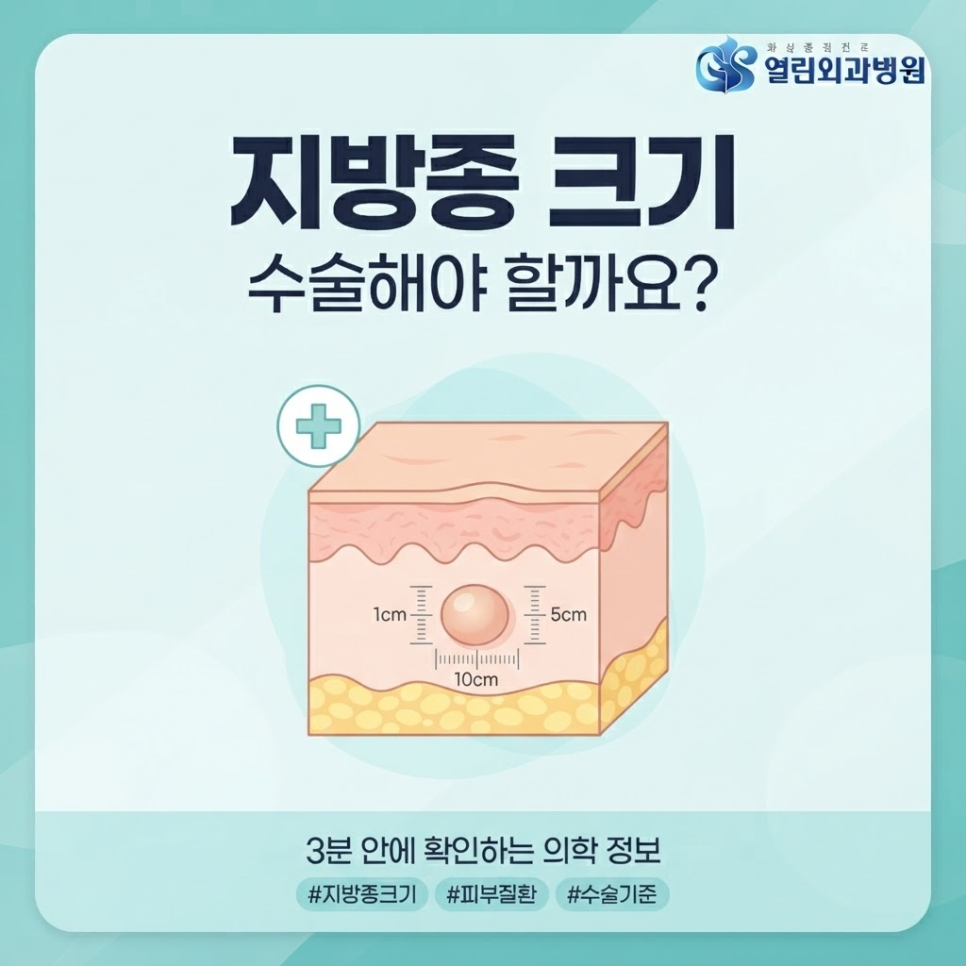
  • Lipoma Size 5cm or Larger: 3 Signs Surgery May Be Needed

    Lipoma Size 5cm or Larger: 3 Signs Surgery May Be Needed

    SummaryThis article summarizes medical guidance on whether a lipoma size of 5cm or larger requires surgery, along with how lipomas are diagnosed and managed.

    Finding a soft, movable lump under your skin can be alarming at first.
    Most of the time there’s no pain or color change, so it’s easy to brush off.

    But once you notice it slowly growing larger over time, the concern becomes harder to ignore.
    You may start wondering whether surgery is necessary, and just how large a lipoma size has to be before it becomes a real concern.

    This is actually a question that comes up often in clinical practice.

    This article outlines the surgical criteria based on changes in lipoma size, along with accurate diagnostic methods.
    Let’s look at what standards doctors use to consider excision when a lipoma grows beyond 5 centimeters or becomes painful, and how to manage it safely without unnecessary worry.

    lipoma size

    What Is a Lipoma and Why Does It Form?

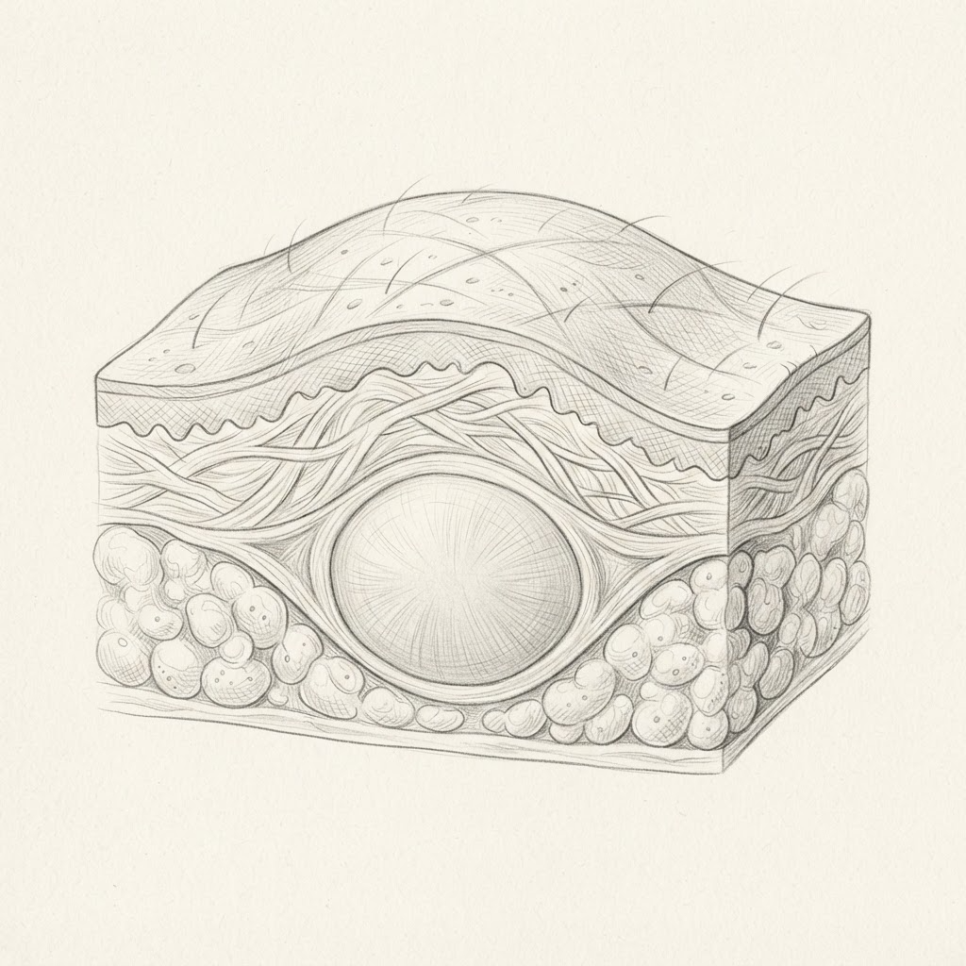
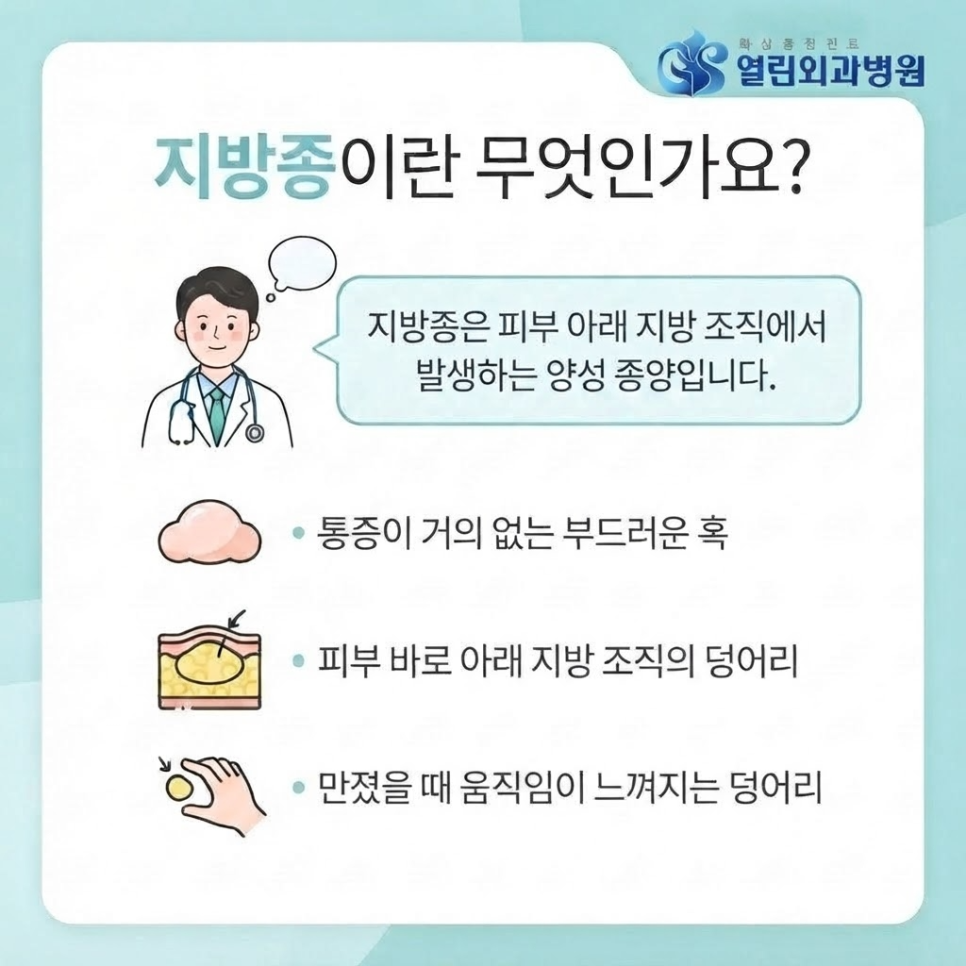
    A lipoma is a common benign tumor that forms when fat cells cluster together and grow within the subcutaneous fat tissue.
    It’s common enough that it may develop in adults of any age.

    Because it’s usually painless, it’s easy to dismiss at first.
    But it’s completely natural to feel a jolt of worry when you discover an unfamiliar lump on your body.

    That’s why doctors often emphasize the importance of distinguishing a lipoma from liposarcoma, a malignant tumor it can sometimes be confused with.

    lipoma size related image 2

    Key Point
    A lipoma is typically painless and moves easily when pressed with a finger. If a lump feels hard and stays fixed in place, other conditions should be ruled out.

    Lipoma Size: How Large Can It Grow?

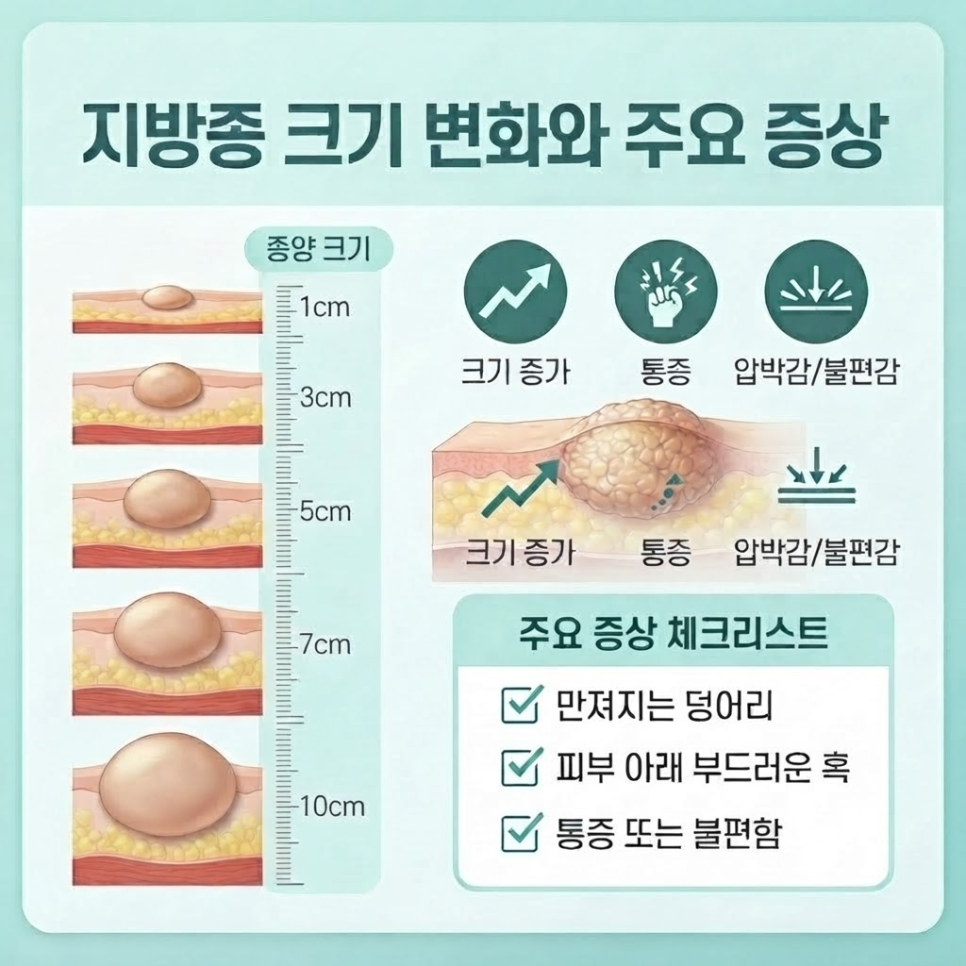
    Lipoma size typically ranges from about 1 centimeter to several centimeters.
    Some grow slowly over time, while others remain unchanged for years.

    lipoma size related image 3

    In rare cases, a lipoma can grow beyond 10 centimeters, becoming what’s known as a giant lipoma.
    As it grows larger, it can press on nearby nerves or muscles.

    This may bring on pain, tingling, or general discomfort.
    The change in appearance can also be a source of stress.

    Checklist
    ✅ Has the lump grown noticeably larger over the past few months?
    ✅ Does it feel hard and fixed in one place when touched?
    ✅ Do you feel pressure or pain during everyday activities?
    ✅ Is the surface irregular or the border unclear?

    lipoma size related image 4


    Does Lipoma Size Determine Whether You Need Surgery?

    Not every lipoma needs to be surgically removed.
    If it’s small and causes no particular discomfort, simply monitoring it over time is often enough.

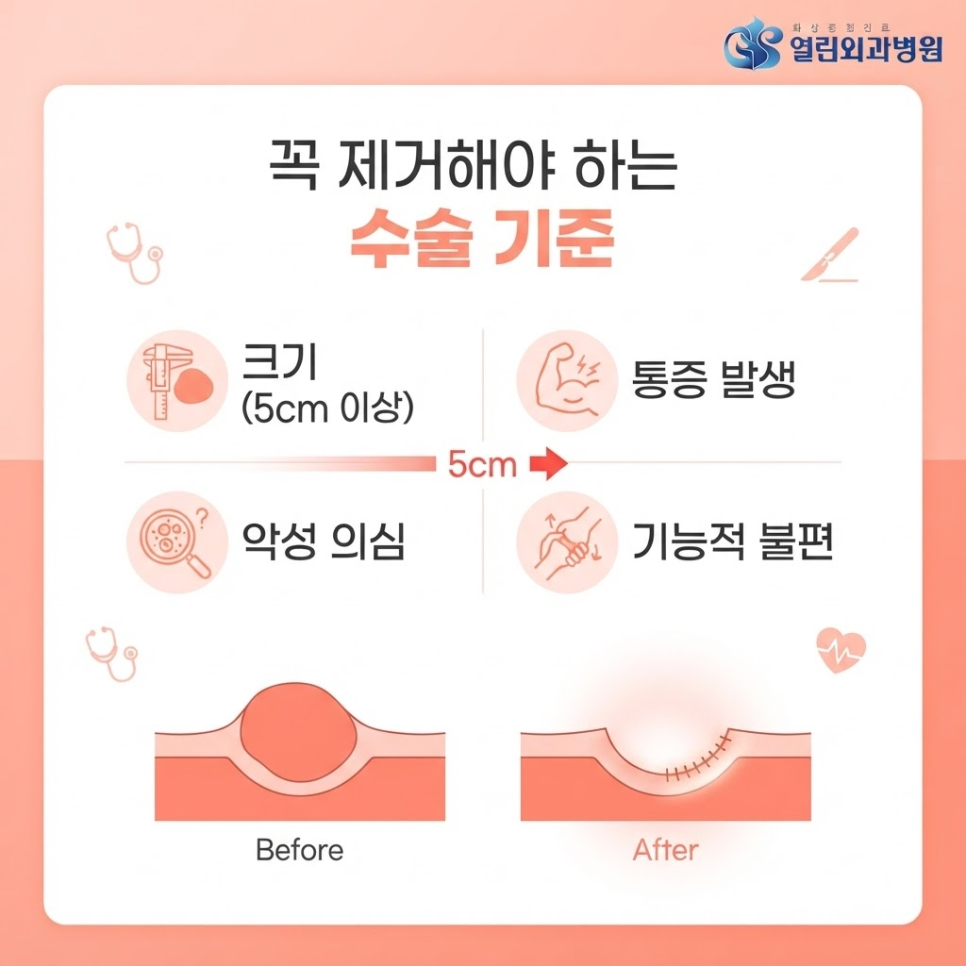
    However, excision may be considered when a lipoma meets specific medical criteria.
    According to disease information from Asan Medical Center, treatment is generally considered when the lipoma is 5 centimeters or larger, or when it causes pain or grows at an abnormal rate.

    lipoma size related image 5

    Category Monitor (Watchful Waiting) Consider Surgery
    Size Under 5cm, little to no change 5cm or larger, or growing rapidly
    Symptoms No pain or pressure Pain, tingling, or functional impairment
    Imaging findings Typical benign appearance Findings suggestive of malignancy, such as liposarcoma

    Beyond cosmetic concerns, these functional symptoms are what typically determine whether surgery is warranted.

    Outcomes
    Excision performed based on clear medical criteria may help lower the risk of recurrence and may also help ease everyday discomfort such as pressure or pain. Outcomes can vary from person to person.

    How Are Lipomas Diagnosed and Managed?

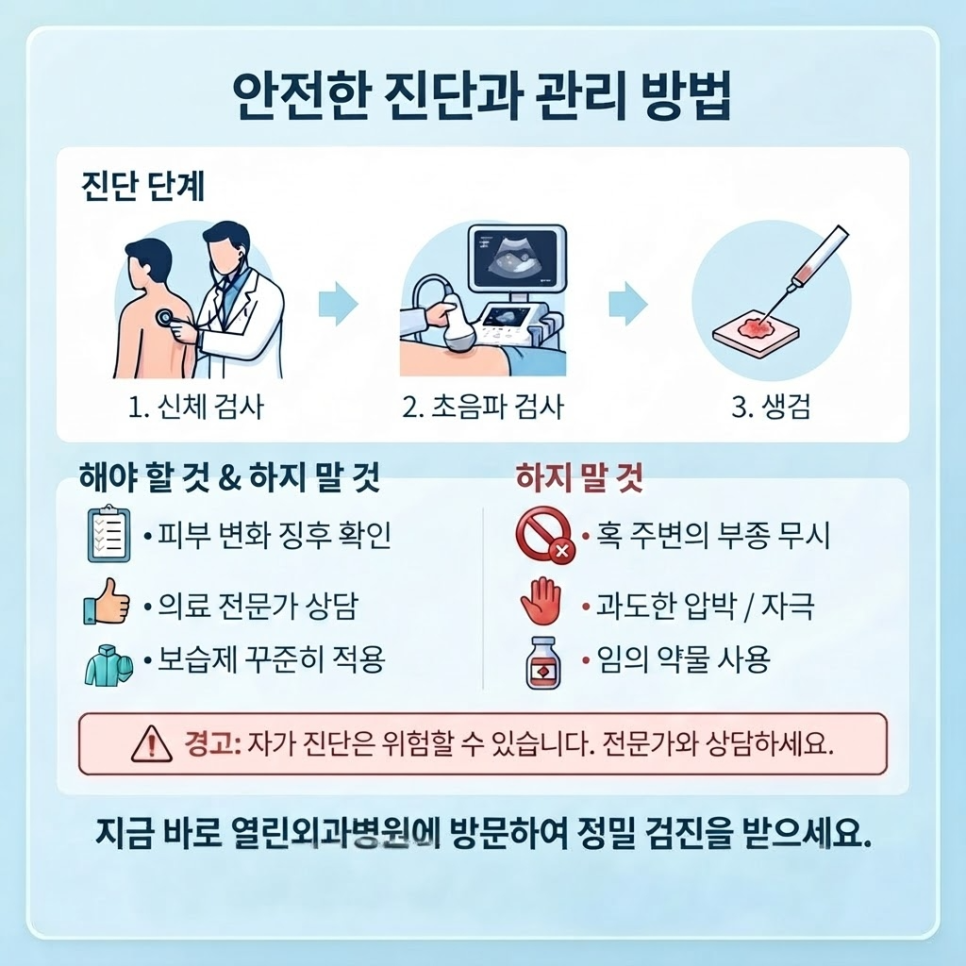
    Lipoma diagnosis is generally made through a physical exam combined with an ultrasound.
    Visual inspection or palpation alone can’t reliably determine the exact depth and characteristics of the mass.

    lipoma size related image 6

    Medical information from Seoul National University Hospital notes that when differentiation from liposarcoma is needed, CT, MRI, or a tissue biopsy may be performed as well.
    According to the Korea Disease Control and Prevention Agency’s National Health Information Portal, ultrasound-guided biopsy allows the lesion’s location to be confirmed in real time while collecting tissue for an accurate diagnosis.

    Relying on online reviews or unverified home remedies can sometimes lead to a delayed diagnosis.
    Getting an objective evaluation at a nearby medical facility is generally recommended.

    If you need an accurate diagnosis and consultation, you’re welcome to check the care information at Ansan Yeorin Surgery Hospital, a burn treatment specialist – Homepage.

    lipoma size related image 7

    Caution
    Do not attempt to press on, squeeze, or forcibly remove the lump yourself based on self-diagnosis — this can lead to inflammation or infection and should be strictly avoided.

    Frequently Asked Questions

    1. Can a lipoma go away on its own?
    Answer: It’s rare for a lipoma to shrink or disappear naturally — it typically stays the same size or grows gradually over time.

    2. How painful is the surgery, and how long is recovery?
    Answer: Most cases involve a simple excision under local anesthesia, and while it varies by size, patients typically return to daily activities relatively quickly.

    3. Is this condition likely to come back after treatment?
    Answer: Once fully excised, recurrence at the same site is relatively uncommon, though a new lipoma may still develop elsewhere.

    4. Should I still see a doctor if the lipoma is small?
    Answer: Even though it’s a benign tumor, an early evaluation is recommended to rule out other conditions such as liposarcoma.

    5. How is a lipoma different from a cyst?
    Answer: Because texture, location, and ultrasound findings differ between the two, a proper exam is needed rather than relying on visual assessment alone.

    lipoma size related image 8

    lipoma size related image 9

    lipoma size related image 10

    lipoma size related image 11


    References

    · Asan Medical Center, “Lipoma,” Disease Encyclopedia, Asan Medical Center. View source
    · Seoul National University Hospital, “Lipoma,” Medical Information, Seoul National University Hospital. View source
    · Korea Disease Control and Prevention Agency, “Ultrasound-Guided Biopsy,” National Health Information Portal, Korea Disease Control and Prevention Agency. View source


    This article is provided for general health information purposes only and is not a substitute for individual diagnosis or treatment. If you have symptoms, please consult a medical professional.