Have you noticed lately that your stool has become noticeably thinner?
It’s easy to write this off at first as simple stress-related indigestion,
but this kind of change is worth paying attention to, since it can be a signal coming from inside the colon.
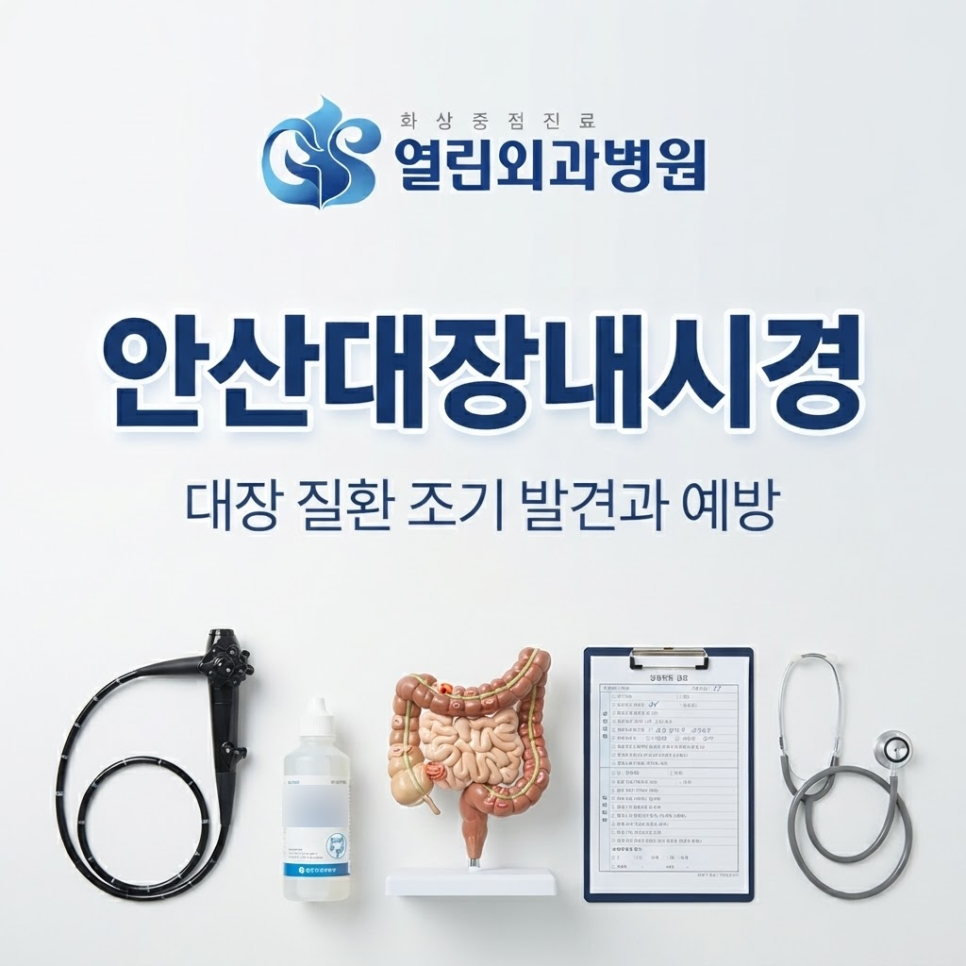
If it keeps happening, it may be time to stop putting it off and look into an Ansan colonoscopy.
This article walks through the symptoms and causes that call for a colonoscopy, what the actual procedure looks like, and how long recovery takes.
We’ll cover easy-to-miss signs like changes in stool caliber or blood in the stool, then move on to a checklist worth reviewing before your Ansan colonoscopy.
A big reason people end up regretting having put it off is
that colon cancer often has almost no early symptoms.
So when symptoms feel vague or hard to pin down,
that’s often exactly when getting checked sooner matters most.

What Is a Colonoscopy and Why Do You Need One?
A colonoscopy is a procedure in which a flexible, camera-equipped tube is inserted through the anus to directly examine the entire inner lining of the colon.
It’s more than just an imaging exam.
It’s generally regarded as one of the standard ways to detect polyps, inflammation, ulcers, and tumors on the colon lining.
If a polyp is found during the exam, it can often be removed right then as part of the same procedure.

Because colon cancer often shows almost no early symptoms, removing adenomatous polyps through regular colonoscopy screening is regarded as one approach that may help with prevention.
What Tests Are Needed for Thinning Stool or Blood in Stool?
If your bowel habits suddenly change or unexplained digestive symptoms continue, the priority is identifying the cause through a colonoscopy.
Common examples include constipation and diarrhea alternating without a clear pattern, or a lingering sense of incomplete evacuation after a bowel movement.
Blood in the stool or a sudden, noticeable thinning of stool caliber
can be a fairly clear signal from your body.
Yet surprisingly many people dismiss these symptoms as simple indigestion and end up missing the right time to get tested.

✅ Unexplained bright red or dark red blood in the stool
✅ Chronic abdominal pain, bloating, or excess gas
✅ Noticeably thinner stool caliber
✅ Age 40 or older, or a family history of colon cancer
✅ Unexplained weight loss or unexplained anemia
Common Causes by Symptom
| Symptom | Common Causes |
|---|---|
| Thinner stool, incomplete evacuation | Polyps, bowel stricture, inflammatory bowel disease |
| Blood in stool, anemia | Bleeding polyps, hemorrhoids, tumor-related lesions |
| Alternating constipation and diarrhea | Stress, a Westernized diet, lack of exercise |
If the discomfort continues, don’t put it off —
it’s best to schedule an Ansan colonoscopy consultation to get an accurate diagnosis.
What Does the Ansan Colonoscopy Procedure Involve?
The exam involves thoroughly clearing the bowel and then closely examining the intestinal lining with precision endoscopic equipment.
That’s why completing the bowel prep the day before — drinking the prescribed prep solution to fully clear the colon — matters so much.
A well-cleared bowel makes it easier for even small polyps
or subtle lesions to be identified during the exam.

1. Starting 3 days before the exam, avoid seeded fruits, whole grains, laver, and seaweed
2. The day before, take the bowel prep solution at the scheduled time and drink plenty of fluids
3. On exam day, sedation is given and the colonoscopy is performed comfortably (about 15–30 minutes)
4. If a polyp is found, a biopsy and polyp removal are performed immediately
With sedation, pain or discomfort during the exam is generally reduced, which may make the procedure easier to tolerate.
How Should You Recover and Care for Yourself Afterward?
Right after the exam, you may feel bloated or gassy from the air used to help visualize the colon during the procedure.
This usually resolves on its own once the gas passes, so there’s generally no need to worry.
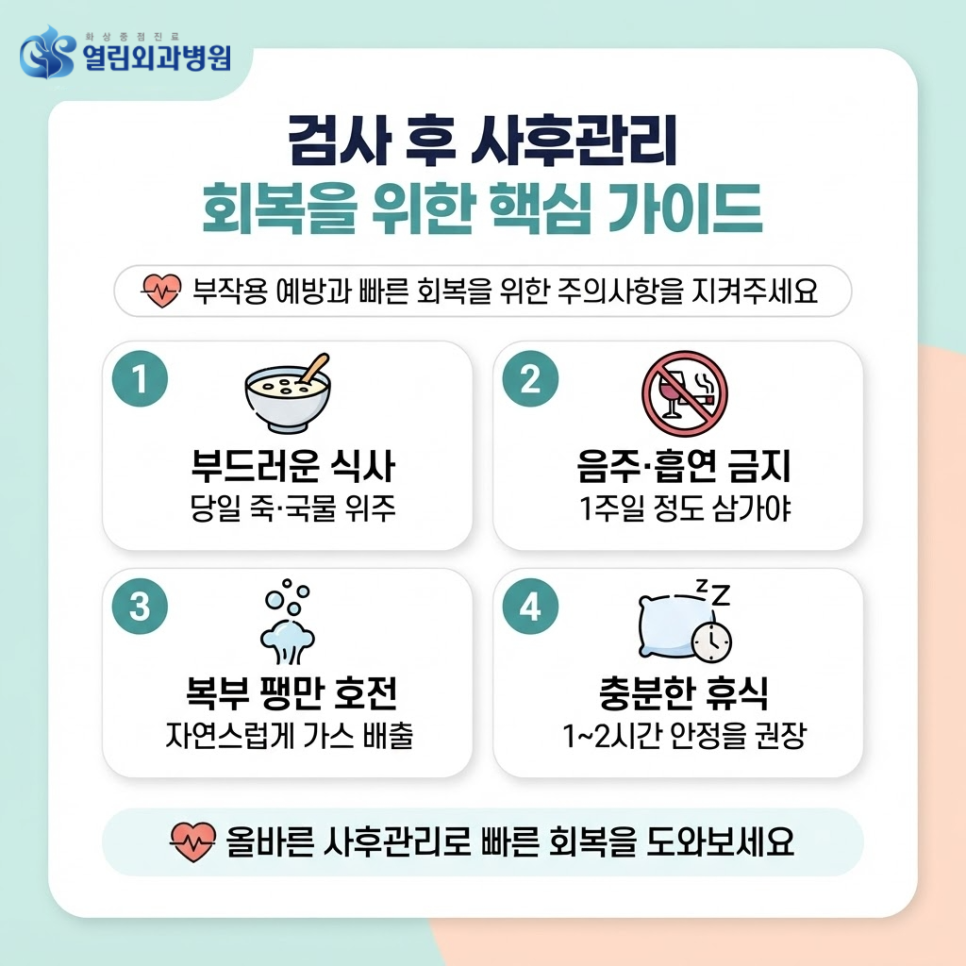
After resting for about 1–2 hours following the exam, it is generally possible to return to your normal routine that same day.
If a polyp was removed, though, the picture is a little different.
To help prevent bleeding, you should avoid strenuous exercise, saunas, and spicy or irritating food for about a week.
On the day of the exam, avoid spicy or greasy food, alcohol, and smoking, and stick to soft foods such as porridge.
If you had sedation, do not drive yourself that day — take public transportation or have someone accompany you instead.
Good gut health starts with small habits of attention and regular screening.
Consider consulting a specialist about an Ansan colonoscopy and building a consistent, personalized care plan to keep your digestive system comfortable day to day.
If you’re also looking for gastroenterology or surgical care information in the Ansan area, you may find it helpful to check out Burn Treatment, [Ansan Open Surgery Hospital] Home for hospital details.
Frequently Asked Questions
1. How often should you get a colonoscopy, and starting at what age?
For healthy adults with no particular symptoms, some guidance suggests screening roughly every 5 years starting after age 40–50, though it’s best to confirm the exact starting age and interval with your healthcare provider. If a prior exam found and removed polyps, or if you have a family history of colon cancer, your doctor may recommend a shorter interval of 1–3 years.
2. Is it okay to drive right after a sedated colonoscopy?
No. While sedative effects remain in your system, judgment and coordination can be impaired, so you shouldn’t drive yourself on the day of the exam — use public transportation or have someone accompany you instead.
3. Does it hurt after a polyp is removed?
The colon lining has very few pain-sensing nerves, so polyp removal often causes little to no pain. That said, if you experience severe abdominal pain or persistent bleeding afterward, you should see a doctor right away.
4. Should you get tested just because your stool has gotten thinner?
If the change is temporary, there’s usually no need to worry. But if it continues for more than 2 weeks, or occurs alongside symptoms like blood in the stool or unexplained weight loss, it’s safer to get an Ansan colonoscopy.



References
· National Cancer Center, “Early Symptoms of Colon Cancer,” National Cancer Information Center. View source
· National Cancer Center, “Colon Cancer,” National Cancer Information Center. View source
· Dailypharm, “Never Drive After Sedation for Endoscopy and Similar Procedures,” interview report with the Korean Society of Anesthesiologists and the Ministry of Food and Drug Safety. View source
This article is intended for general health information purposes only and is not a substitute for individual diagnosis or treatment. If you’re experiencing symptoms, please consult a medical professional.