Tag: Burn Stages

  • Burn Hospital in Ansan: 3 Things 15 Minutes of First Aid Can Decide

    Burn Hospital in Ansan: 3 Things 15 Minutes of First Aid Can Decide

    SummaryDon’t panic if you’re scalded by hot water. This guide covers the first 15 minutes of burn first aid, how to handle blisters, checkpoints for choosing a burn hospital in Ansan, and stage-by-stage burn treatment and scar care.

    The instant hot soup splashes onto the back of your hand, most people panic and reach for ice.

    But that split-second decision can affect how the scar ends up looking.

    What you do in the first 15 minutes after a burn, and how you choose a specialized burn clinic, may affect your recovery speed and scarring.
    burn hospital in Ansan

    Key Points
    1. A specialized burn hospital treats burn patients who need a tailored approach — from dressing changes to scar laser treatment — that differs from routine wound care.
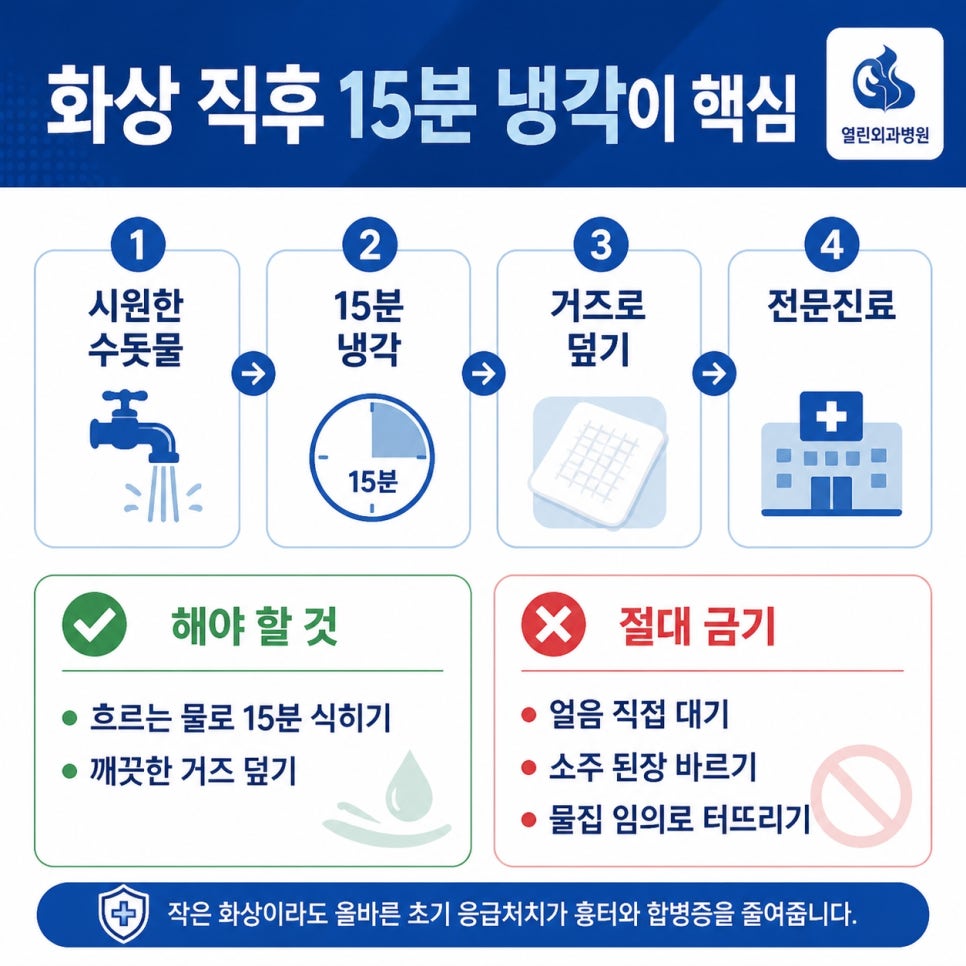
    2. Right after a burn, the basic sequence is to cool the area under running cool water for at least 15 minutes, then get specialized burn care.
    3. Folk remedies like applying ice directly, rubbing on soju or soybean paste, or popping blisters yourself can worsen the damage and cause infection.

    Burn hospital in Ansan - related image 2

    This article walks through the emergency first-aid steps right after a burn, the checkpoints for choosing the right burn treatment center, and stage-by-stage burn treatment and scar care.
    We’ll guide you step by step so you can act right away without panicking.

    What’s the First Thing You Should Do After a Burn?

    The first 15 minutes after a burn are a critical window that can affect how deep the skin damage becomes.
    Burn first aid is the process of cooling the heat as quickly as possible to reduce tissue damage.
    Burn hospital in Ansan - related image 3

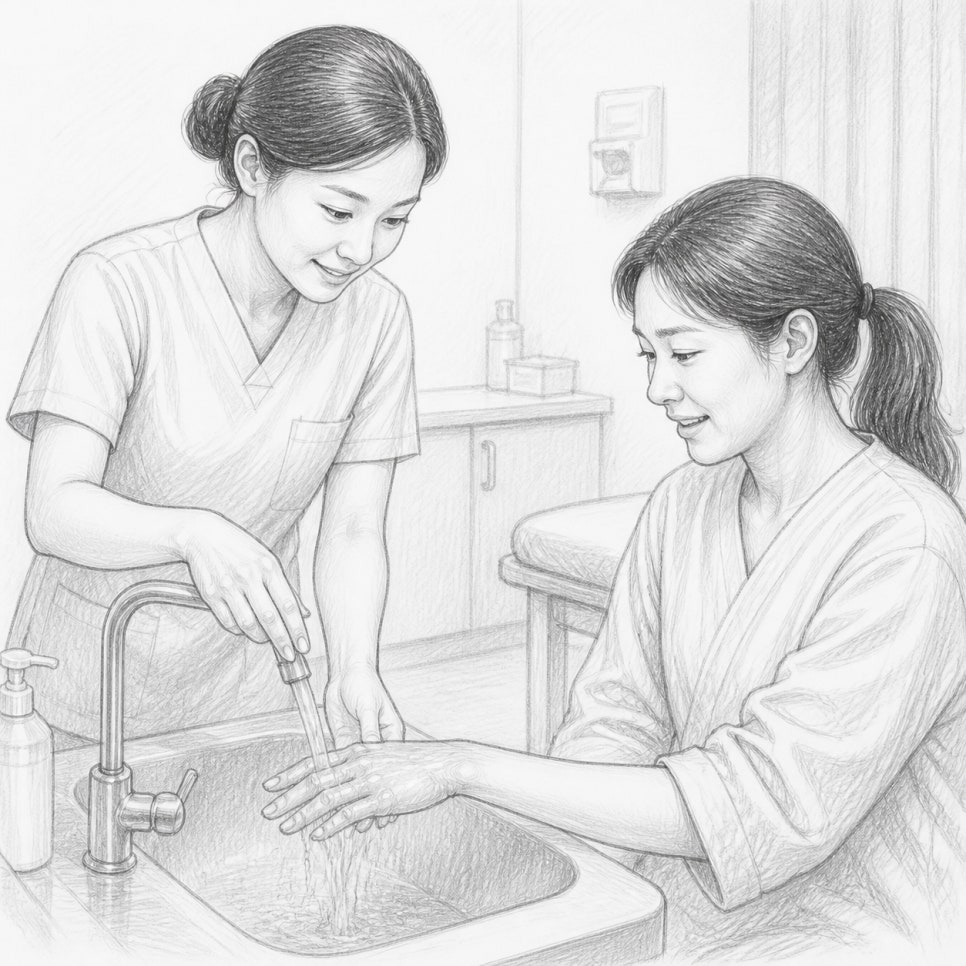
    If you get burned, immediately hold the area under running cool water and cool it for at least 15 minutes.

    That said, some people still try folk remedies like rubbing on soju, soybean paste, or raw potato.

    These should be strictly avoided, as they can cause secondary infection.
    Cooling with clean water alone is generally considered a safe approach.
    Burn hospital in Ansan - related image 4

    Caution
    Popping a blister yourself increases the risk of bacterial infection and can slow healing.
    Blisters act as a natural shield protecting the damaged skin underneath, so leave them intact and have a medical professional treat them if needed.

    In summary, here’s the order to follow for burn first aid:

    1. Hold the area under running cool water (15–25°C / 59–77°F) for at least 15 minutes.
    2. Don’t apply ice directly — it can over-constrict blood vessels and worsen the damage.
    3. Don’t use folk remedies such as soju, soybean paste, or potato.
    4. Cover the area loosely with clean gauze and go to a burn specialty hospital.

    What Should You Check When Choosing a Burn Hospital in Ansan?

    Burn treatment requires a completely different, specialized approach than routine wound care.
    A specialized burn hospital refers to a facility with an integrated care system covering everything from initial dressing to scar management.
    Burn hospital in Ansan - related image 5

    Every hospital has different treatment know-how and aftercare programs.

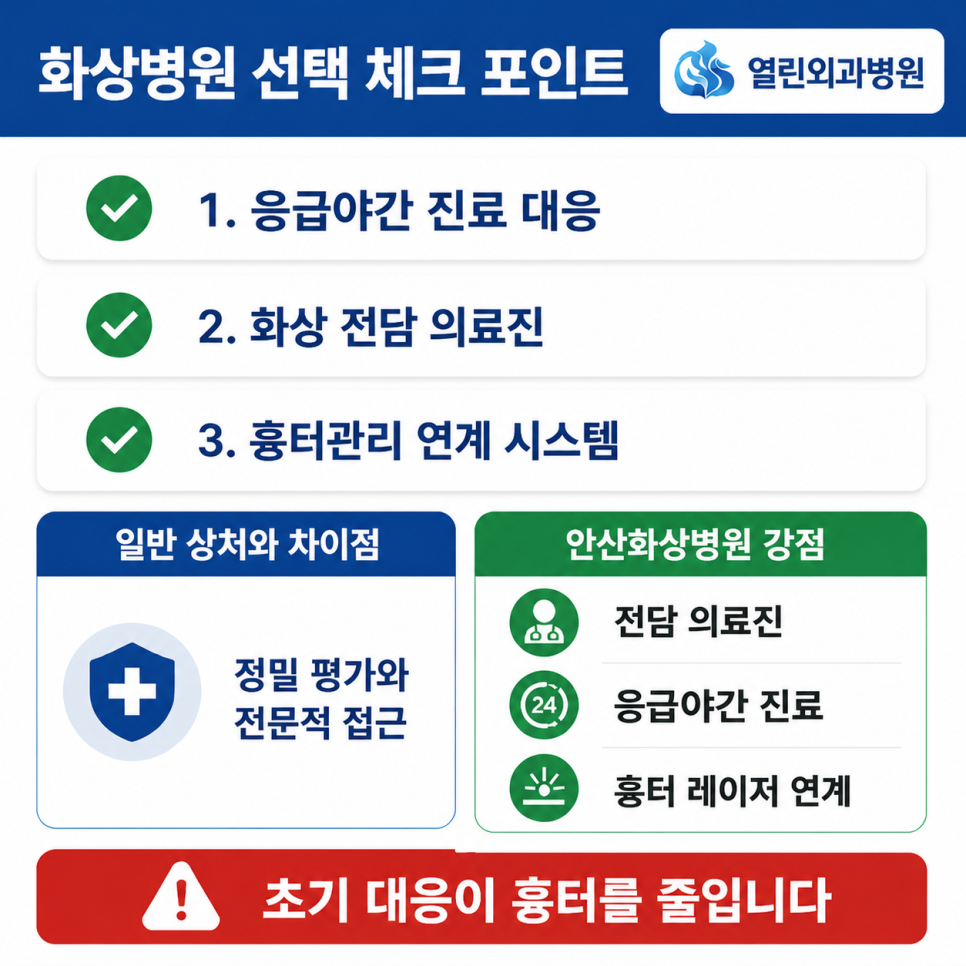
    That’s why it’s worth carefully checking whether a hospital can provide intensive care and whether it also connects patients to scar management.

    Checklist
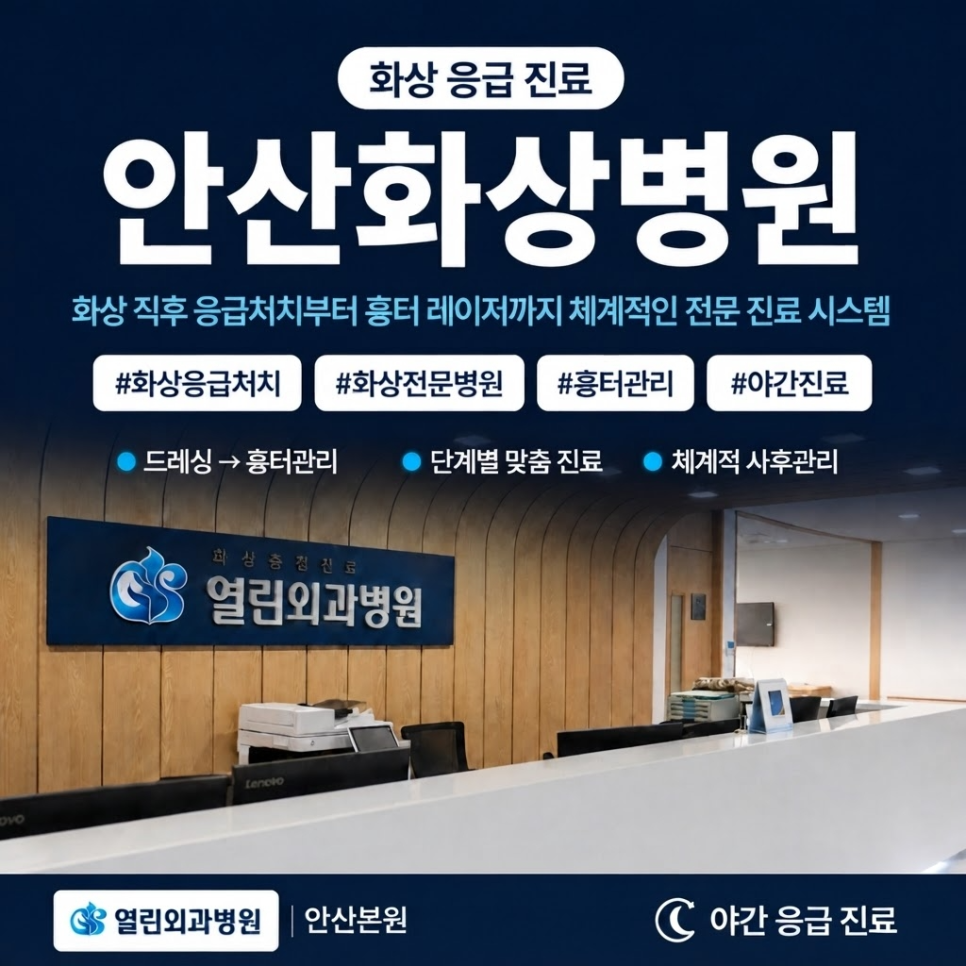
    ✅ Check whether burn care and emergency response are available even at night
    ✅ Look into the clinical experience and expertise of the dedicated burn medical staff
    ✅ See whether there’s a systematic care pathway from dressing to scar laser treatment
    ✅ Confirm whether they create a customized treatment plan based on the burn’s location and depth

    For reference, one option in the Ansan area that offers both burn treatment and scar management is the home page of Ansan Yeollin Surgery Hospital, which provides burn care — it may be worth checking out when comparing hospitals.


    How Does Treatment Differ by Burn Stage?

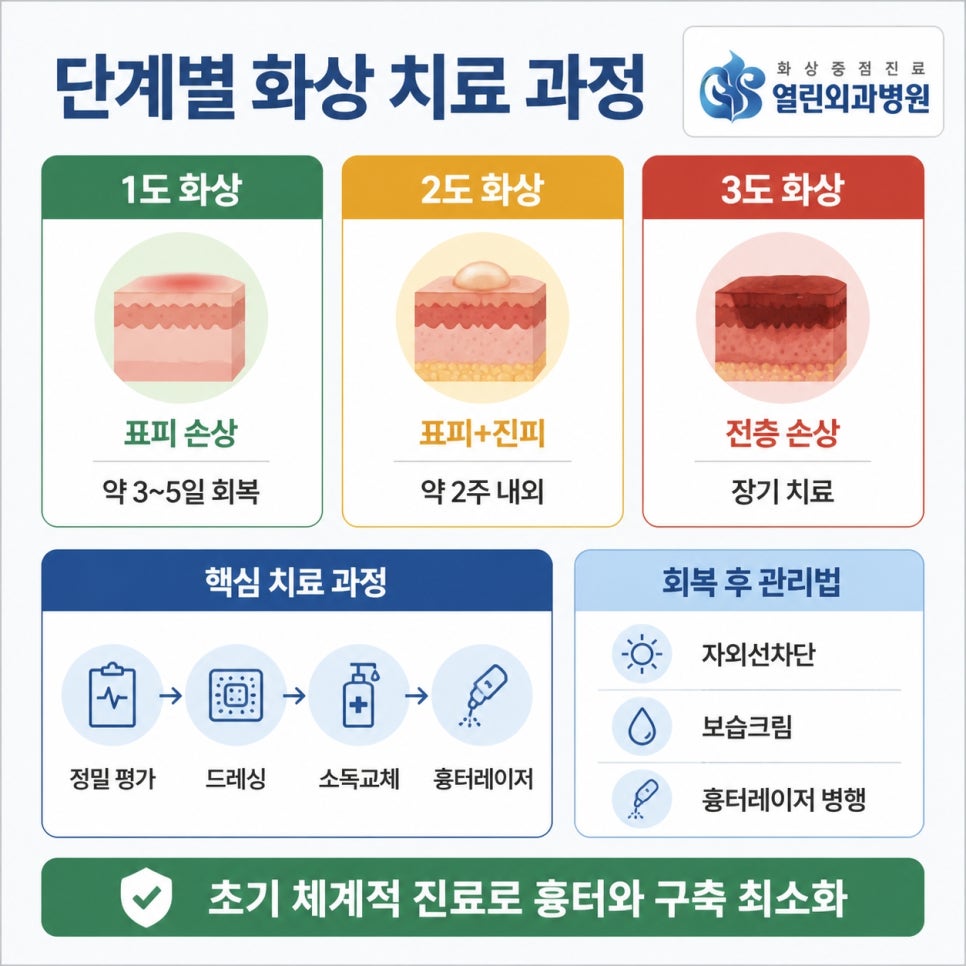
    Burn treatment by stage is tailored to how deep the skin damage goes.
    Burn stages classify the depth of skin damage from first-degree to third-degree.

    Stage Main Symptoms Treatment Focus
    First-degree burn Mild redness, stinging Focus on cooling and moisturizing
    Second-degree burn Blisters with pain Regular dressing changes and disinfection
    Third-degree or higher Skin necrosis, reduced sensation Requires specialist care and intensive treatment

    Burn hospital in Ansan - related image 6

    Proper dressing changes and disinfection are essential to prevent infection and help new skin form properly.

    Even after treatment ends, thorough sun protection and moisturizing are needed to reduce pigmentation.
    Skin that’s been sensitized by injury tends to overproduce melanin, making it darker than the surrounding area.

    Apply an SPF30+ sunscreen daily, even indoors, and reapply every 2–3 hours outdoors.
    Neglecting skin care early on can allow discoloration to linger, so it’s worth paying close attention.

    Outcome
    Getting systematic care early from a burn hospital in Ansan and consistently keeping up with sun protection and moisturizing may help minimize scarring and contracture.


    Burn hospital in Ansan - related image 7

    Burn hospital in Ansan - related image 8

    About Yeollin Surgery Hospital

    It’s located at 376 Hwarang-ro, Danwon-gu, Ansan-si, Gyeonggi-do (basement level and floors 2–4), across from Ansan City Hall and Danwon Police Station, making it easy to reach.

    Burn hospital in Ansan - related image 9

    Burn hospital in Ansan - related image 10

    Burn hospital in Ansan - related image 11

    Burn hospital in Ansan - related image 12


    Frequently Asked Questions

    1. Is it okay to apply ice directly to a burn?
    Applying ice directly can cause excessive blood vessel constriction and worsen tissue damage, so it’s better to use running water at about 15–25°C (59–77°F).

    2. Can I pop a small blister myself at home?
    Blisters protect the wound from bacteria, so you shouldn’t pop them yourself — have them treated under sterile conditions at a hospital instead.

    3. How long does burn treatment usually take?
    It varies by depth and extent, but second-degree burns typically require around two weeks of treatment.

    4. When should I start managing scars?
    Begin moisturizing and sun protection as soon as the wound has fully healed, and combining this with professional scar laser treatment, if needed, may help.

    5. If I get burned at night, should I go straight to the hospital?
    For extensive burns or second-degree-plus burns with large blisters, it’s safer to go straight to a burn specialty hospital that offers night-time care.


    References

    · National Safety Portal (Ministry of the Interior and Safety), “Daily Safety Guidelines – First Aid,” Ministry of the Interior and Safety. View source
    · Seoul National University Hospital, “Burns,” Medical Information. View source
    · Hidoc, “Don’t Pop the Blister… A Surgeon Explains How to Handle Burns,” Hidoc News, 2025. View source
    · Soonchunhyang University Gumi Hospital, “Proper Burn Care and Scar Management,” Health Information. View source


    This article is intended for general health information purposes only and is not a substitute for individual diagnosis or treatment. If you have symptoms, please consult a medical professional.

  • Burn First Aid: 3 Things the First 15 Minutes Decide

    Burn First Aid: 3 Things the First 15 Minutes Decide

    SummaryDon’t panic if you’re scalded by hot water. Here’s a rundown of the first-15-minutes burn first aid steps, how to handle blisters, checkpoints for choosing an Ansan burn hospital, and treatment and scar care by burn stage.

    The moment hot soup splashes onto the back of your hand, most people instinctively reach for ice.

    But that split-second decision actually plays a big role in how large the resulting scar ends up being.

    The first 15 minutes after a burn — and how you choose an Ansan burn hospital — can make a real difference in how quickly you recover and how much scarring remains.

    Ansan burn hospital

    Key Points
    1. An Ansan burn hospital treats burn patients who need a specialized approach — from dressing changes to scar laser treatment — that differs from general wound care.
    2. Right after a burn, the basic sequence is to cool the area under cool running water for at least 15 minutes, then see a burn specialist.
    3. Folk remedies such as applying ice directly, rubbing on soju or soybean paste, or popping blisters yourself can worsen the damage and lead to infection.

    Ansan burn hospital related image 2

    This article covers the order of first aid right after a burn, checkpoints for choosing an Ansan burn hospital, and treatment and scar care by burn stage.
    We’ll walk you through it step by step so you can act calmly and confidently.

    What’s the First Thing You Should Do for Burn First Aid?

    The first 15 minutes after a burn are a critical window for determining how deep the skin damage goes.
    Burn first aid means cooling the heat as quickly as possible to minimize tissue damage.

    Ansan burn hospital related image 3

    If you get burned, immediately hold the area under cool running water and keep it cooling for at least 15 minutes.

    That said, some people still try folk remedies like rubbing soju, soybean paste, or raw potato on the burn.

    These practices can cause secondary infection and should be avoided entirely.
    Cooling with clean water alone is generally considered a safe approach.

    Ansan burn hospital related image 4

    Caution
    Popping a blister yourself increases the risk of bacterial infection and can slow healing.
    Blisters act as a natural shield protecting the damaged skin underneath, so leave them intact and have a medical professional treat them if needed.

    In summary, here’s the recommended order for burn first aid.

    1. Hold the area under cool running water (15–25°C / 59–77°F) for at least 15 minutes.
    2. Don’t apply ice directly — it can over-constrict blood vessels and worsen the damage.
    3. Avoid folk remedies such as soju, soybean paste, or potato.
    4. Lightly cover the area with clean gauze and head to a burn specialist.

    What Should You Check When Choosing an Ansan Burn Hospital?

    Burn treatment calls for a specialized approach that’s completely different from general wound care.
    An Ansan burn hospital is a facility with a coordinated care system covering everything from initial burn dressing to scar management.

    Ansan burn hospital related image 5

    Every hospital has its own treatment know-how and aftercare programs, so there’s naturally some variation between them.

    That’s why it’s worth carefully checking whether a hospital can provide focused treatment and whether scar care is included as part of the process.

    Checklist
    ✅ Check whether burn care and emergency response are available at night
    ✅ Look into the clinical experience and expertise of the burn care team
    ✅ See whether there’s a systematic care pathway from dressing to scar laser treatment
    ✅ Confirm whether they build a treatment plan tailored to the burn’s location and depth

    For reference, one option in the Ansan area offering both burn treatment and scar management is the home page of Yeollin Surgical Hospital in Ansan, which provides burn care — worth a look when comparing hospitals.


    How Does Treatment Differ by Burn Stage?

    Treatment by burn stage is tailored to how deep the skin damage goes.
    Burn stages classify the depth of skin damage from first-degree to third-degree.

    Stage Main Symptoms Treatment Focus
    First-degree burn Mild redness, stinging Cooling and moisturizing care
    Second-degree burn Blisters with pain Regular dressing changes and disinfection
    Third-degree or higher Tissue necrosis, reduced sensation Requires specialist care and intensive treatment

    Ansan burn hospital related image 6

    Proper dressing changes and disinfection are essential for preventing infection and helping new skin grow in well.

    Even after treatment is finished, thorough sun protection and moisturizing matter for reducing pigmentation.
    Skin that’s been sensitized by injury tends to overproduce melanin, which can leave it darker than the surrounding area.

    It’s a good idea to apply SPF 30+ sunscreen daily, even indoors, and reapply every 2–3 hours when outdoors.
    Neglecting this early on can allow discoloration to linger, so staying consistent matters.

    Outcome
    Getting systematic care at an Ansan burn hospital early on, combined with consistent sun protection and moisturizing, may help minimize scarring and contracture.

    Ansan burn hospital related image 7

    Ansan burn hospital related image 8

    About Yeollin Surgical Hospital

    It’s located at 376 Hwarang-ro, Danwon-gu, Ansan-si, Gyeonggi-do (basement level plus floors 2, 3, and 4), across from Ansan City Hall and in front of Danwon Police Station, making it easy to reach.

    Ansan burn hospital related image 9

    Ansan burn hospital related image 10

    Ansan burn hospital related image 11

    Ansan burn hospital related image 12


    Frequently Asked Questions

    1. Is it okay to apply ice directly to a burn?
    Applying ice directly can over-constrict blood vessels and worsen tissue damage, so it’s better to use running water around 15–25°C (59–77°F).

    2. Can I pop a small blister at home?
    Blisters protect the wound from bacteria, so avoid popping them yourself — have them treated under sterile conditions at a hospital instead.

    3. How long does burn treatment usually take?
    It varies with the depth and extent of the burn, but second-degree burns typically require around two weeks of treatment.

    4. When should I start caring for a scar?
    Start moisturizing and applying sun protection as soon as the wound has fully healed, and if needed, professional scar laser treatment may also help.

    5. If I’m burned at night, should I go straight to the hospital?
    For extensive burns or second-degree-and-above burns with large blisters, it’s safest to head straight to a burn specialist that offers night-time care.


    References

    · Safekorea (Ministry of the Interior and Safety), “Life Safety Action Guide – First Aid,” Ministry of the Interior and Safety. View source
    · Seoul National University Hospital, “Burns,” Medical Information. View source
    · Hidoc, “Don’t Pop the Blister… A Surgeon Explains How to Handle Burns,” Hidoc News, 2025. View source
    · Soonchunhyang University Gumi Hospital, “Proper Burn Care and Scar Management,” Health Information. View source


    This article is intended to provide general health information and is not a substitute for individual diagnosis or treatment. If you have symptoms, please consult a medical professional.