If your heart sinks every time you head to the bathroom, you’re not alone.
Many people even cut back on water and tell themselves the pain will pass in a few days.
But did you know that ignoring the pain like this can make chronic anal fissure treatment far more difficult?

This article breaks down why acute fissures progress into chronic ones, along with non-surgical care you can practice at home.
We’ll also look at the specific signs that indicate surgery should be considered as part of chronic anal fissure treatment.

What Is a Chronic Anal Fissure?
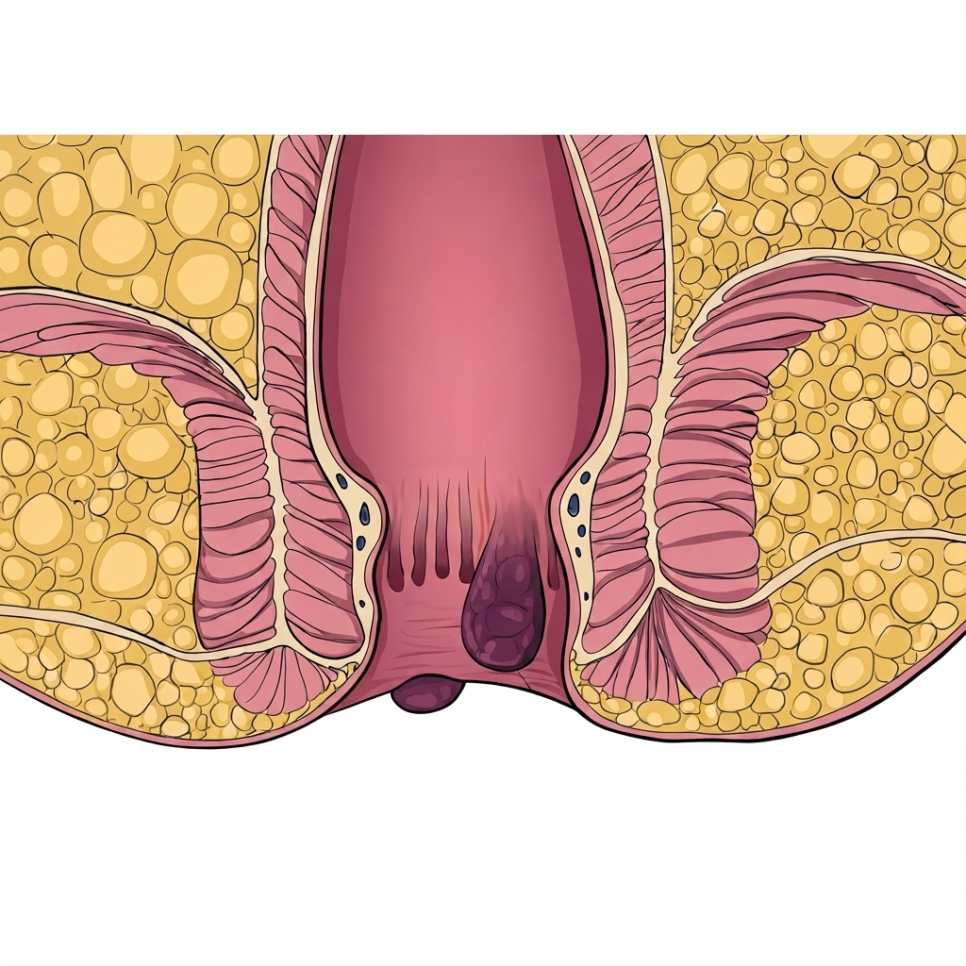
A chronic anal fissure develops when the lining inside the anus tears and heals repeatedly over time, eventually leading to an ulcer or a skin tag.
It’s completely different from an acute fissure, which typically hurts for only a day or two.
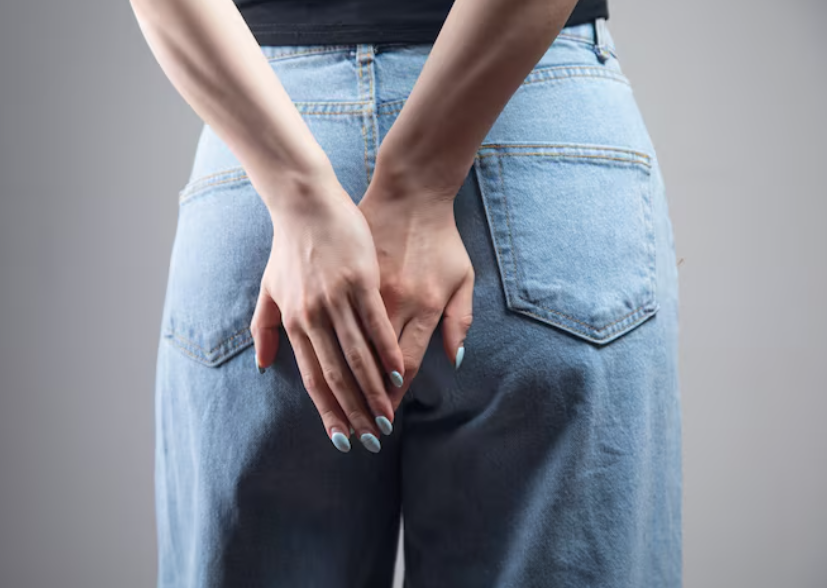
Because the wound loses its elasticity and hardens, natural healing becomes nearly impossible.
It’s common for people to dismiss the early pain of a fissure, only to have symptoms worsen significantly later on.
If a knife-like pain during bowel movements lasts for hours afterward, there’s a good chance the fissure has already become chronic.
Leaving an acute fissure untreated for too long can cause the wound tissue to degenerate into a chronic fissure, sometimes accompanied by sphincter spasm.
| Category | Acute Fissure | Chronic Fissure |
|---|---|---|
| Wound condition | Shallow and flexible | Deep and hardened |
| Associated findings | Rarely any | May include skin tag or ulcer |
| Treatment approach | Conservative care (diet, sitz baths) | Surgery considered after specialist diagnosis |
Why Do Acute Fissures Turn Chronic?
Hardened stool repeatedly puts strong pressure on the inner lining of the anus, reopening the wound before it has a chance to heal.

If another bowel movement occurs before the torn lining has healed, the wound is forced open again and again.
Eventually, the internal anal sphincter stays tense and contracted, which reduces blood flow to the area.

Without proper blood circulation, the wound simply can’t regenerate the way it should.
If this vicious cycle isn’t broken, chronic anal fissure treatment only becomes more complicated over time.
When poor circulation repeatedly prevents the wound from healing, conservative treatment alone may no longer be enough for recovery.
✅ Sharp, stabbing pain lingers for 1–2 hours or more after a bowel movement
✅ Bright red blood frequently appears on toilet paper
✅ You can feel a small raised skin tag near the anus
✅ The pain is severe enough that you dread every bowel movement
Can You Start Chronic Anal Fissure Treatment Without Surgery?
If symptoms are mild or caught early, conservative care alone can be enough to see real improvement.
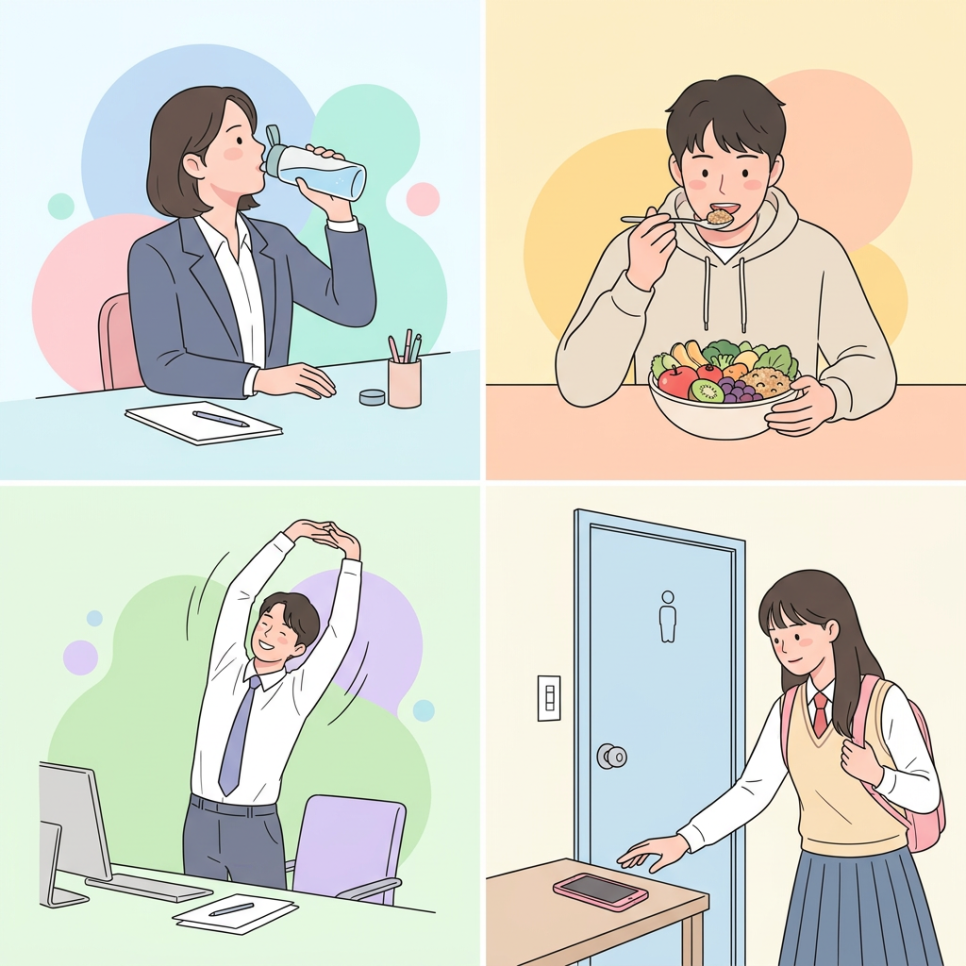
The first step is increasing fiber intake and staying well hydrated to keep stool soft.

Aim to drink at least 1.5 liters of water a day and build meals around vegetables and fruit.
Warm sitz baths can also help improve blood circulation and ease sphincter tension.
- Prepare warm water at around 40°C (104°F).
- Soak for 5–10 minutes in plain water, without soap.
- Repeat 2–3 times a day, especially right after a bowel movement.

With consistent sitz baths and dietary changes alone, early-stage fissure pain often eases noticeably.
Using plain water instead of soap is a simple way to reduce irritation during a sitz bath.
If this is your first time seeing a colorectal specialist and you’re not sure where to start, you can check the clinic information at Burn Treatment, [Ansan Yeollin Surgical Hospital] Home first.
When Does Chronic Anal Fissure Treatment Require Surgery?
If months of sitz baths and topical ointment still leave daily life difficult, surgical treatment should be seriously considered.

This typically applies when the tissue has already hardened into an ulcer, or when the sphincter remains permanently contracted.
In these cases, lateral internal sphincterotomy, a surgical option for this condition, is understood to help widen the narrowed anal canal and may lower the recurrence rate.
According to a systematic review and meta-analysis of the procedure, some studies have reported success rates around 90%, though actual outcomes can vary depending on the patient’s condition and the medical institution.

Many people put off surgery simply because the word itself sounds frightening.
But the longer treatment is delayed, the longer the pain can last, and recovery may take even more time.
If your symptoms have persisted for a long time, we recommend consulting a specialist as soon as possible.
Relying on self-diagnosis and leaving symptoms untreated can allow them to progress into a chronic ulcer, seriously disrupting daily life. If symptoms keep recurring, be sure to see a specialist.
Frequently Asked Questions
1. How often should I do a sitz bath?
Twice a day — morning and evening — is standard, and doing one right after a bowel movement is even more effective for pain relief.
2. Does a little blood during a bowel movement always mean it’s chronic?
Not necessarily. It could be a temporary tear, but if the symptom keeps recurring for several weeks or more, there’s a good chance it has become chronic.
3. How soon can I return to daily life after surgery?
It depends on the procedure, but same-day discharge or a light return to daily activities is possible as early as the next day in some cases.
4. What foods are good sources of fiber?
Focus on naturally fiber-rich foods such as vegetables, seaweed, and whole grains — they support healthy bowel movements.
5. Won’t it just heal on its own if I wait it out?
Once a fissure reaches the chronic stage, natural healing is nearly impossible, so waiting only risks prolonging and worsening the pain.
References
· Ratto C. et al., “Comparing closed versus open lateral internal sphincterotomy for management of chronic anal fissure: systematic review and meta-analysis of randomised control trials,” Scientific Reports, 2023. View source
· Cleveland Clinic, “Lateral Internal Sphincterotomy: Surgery & Recovery,” Cleveland Clinic, 2024. View source
· BioTimes, “Anal Pain and Bleeding: How Should Fissures Be Treated?,” BioTimes, 2023. View source
This article is intended for general health information purposes only and is not a substitute for individual diagnosis or treatment. If you have symptoms, please consult a specialist.