Tag: Health Information

  • Armpit Lump Causes: 4 Types and Warning Signs to Know

    Armpit Lump Causes: 4 Types and Warning Signs to Know

    SummaryMistaking an armpit lump for a simple pimple and squeezing it or ignoring it can lead to much higher treatment costs down the road. Understanding the main armpit lump causes can help you catch problems early. Explore the 4 possible causes — sebaceous cysts, lymphadenitis, accessory breast tissue, and lipomas — along with their warning signs and proper treatment options.

    While massaging your lymph nodes,
    have you ever touched your armpit
    and felt a hard lump underneath?

    Brushing it off as "just a big pimple"
    can sometimes lead to spiraling medical bills later.

    That’s because an armpit lump isn’t always a simple pimple —
    it can be a warning sign of a condition that needs treatment.
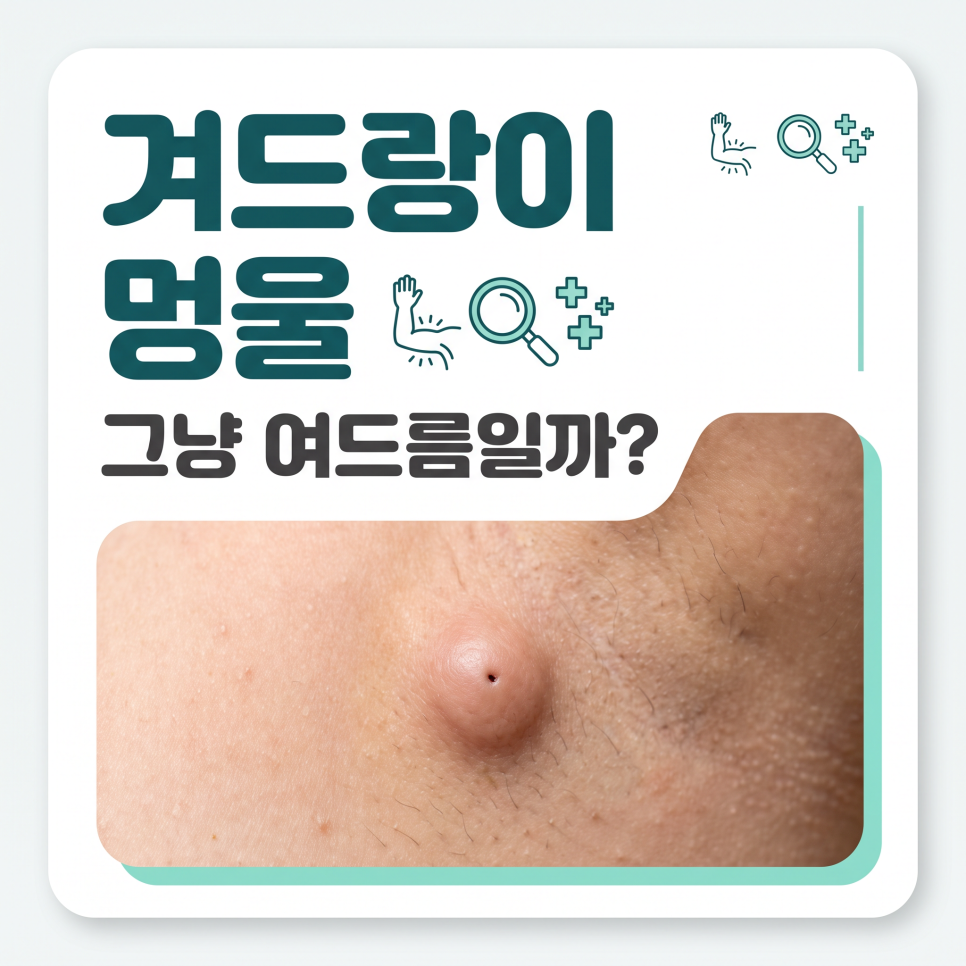
    armpit lump causes

    Key Takeaways
    An armpit lump can have many different causes, including sebaceous cysts, lymphadenitis, accessory breast tissue, and lipomas.
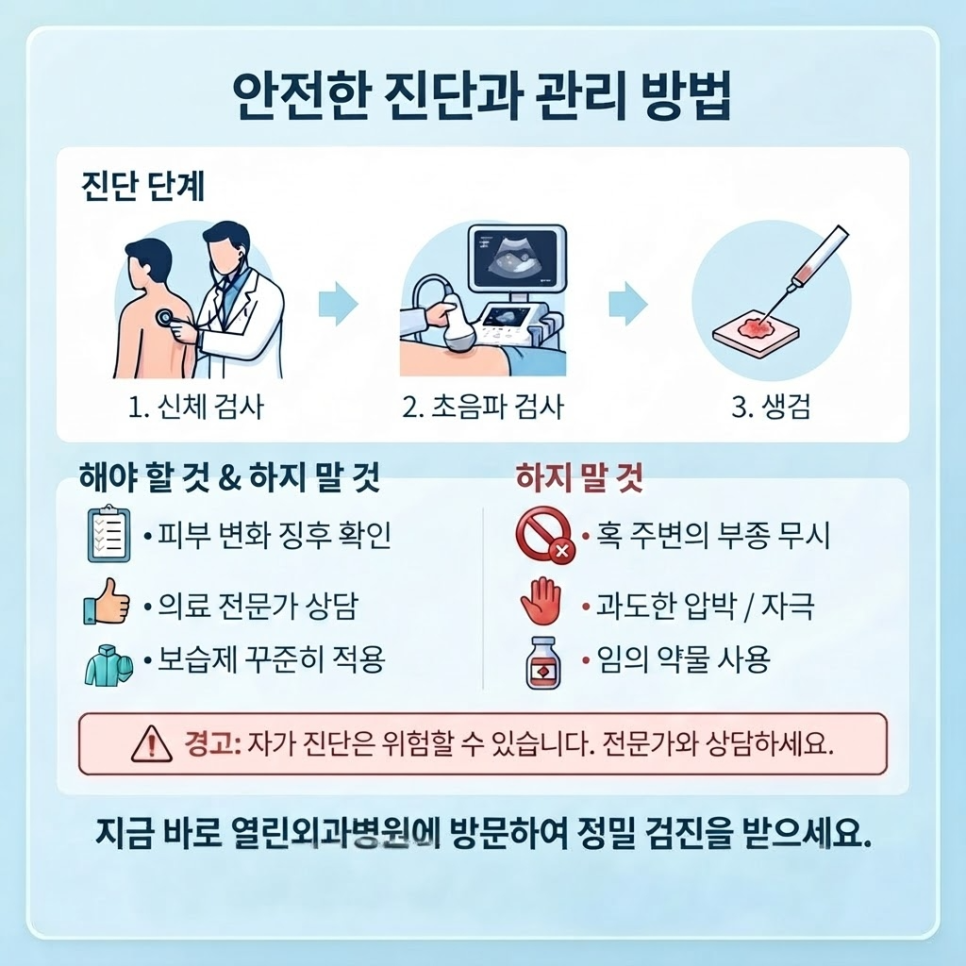
    It’s safest to monitor for pain and size changes and get an ultrasound exam for an accurate diagnosis.
    Some cases resolve on their own depending on the cause, but leaving it unchecked can increase the scope and cost of treatment.

    What Are the Main Armpit Lump Causes?

    To answer the question directly, armpit lump causes generally fall into one of four main categories.
    An armpit lump is a mass that forms in the skin or the tissue beneath it, and the right treatment depends entirely on its underlying cause.

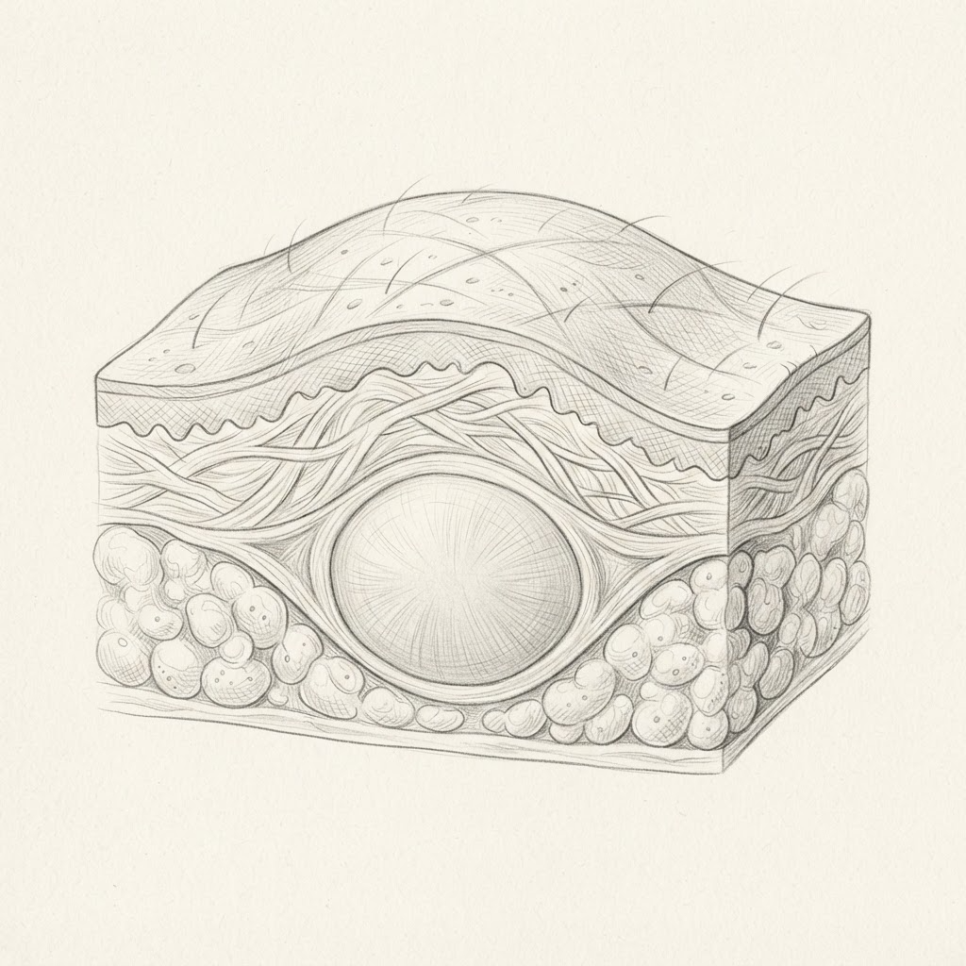
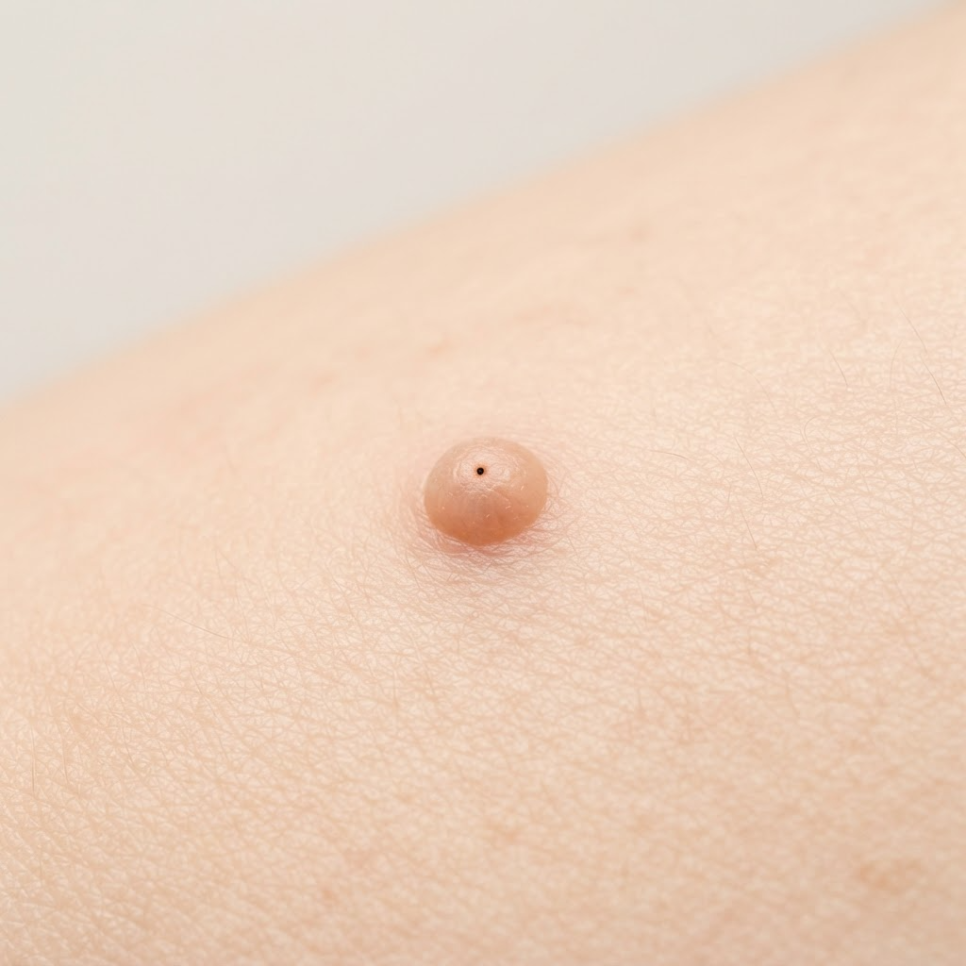
    A common cause is an epidermal cyst (sebaceous cyst), which forms when a hair follicle or sebaceous material builds up under the skin.
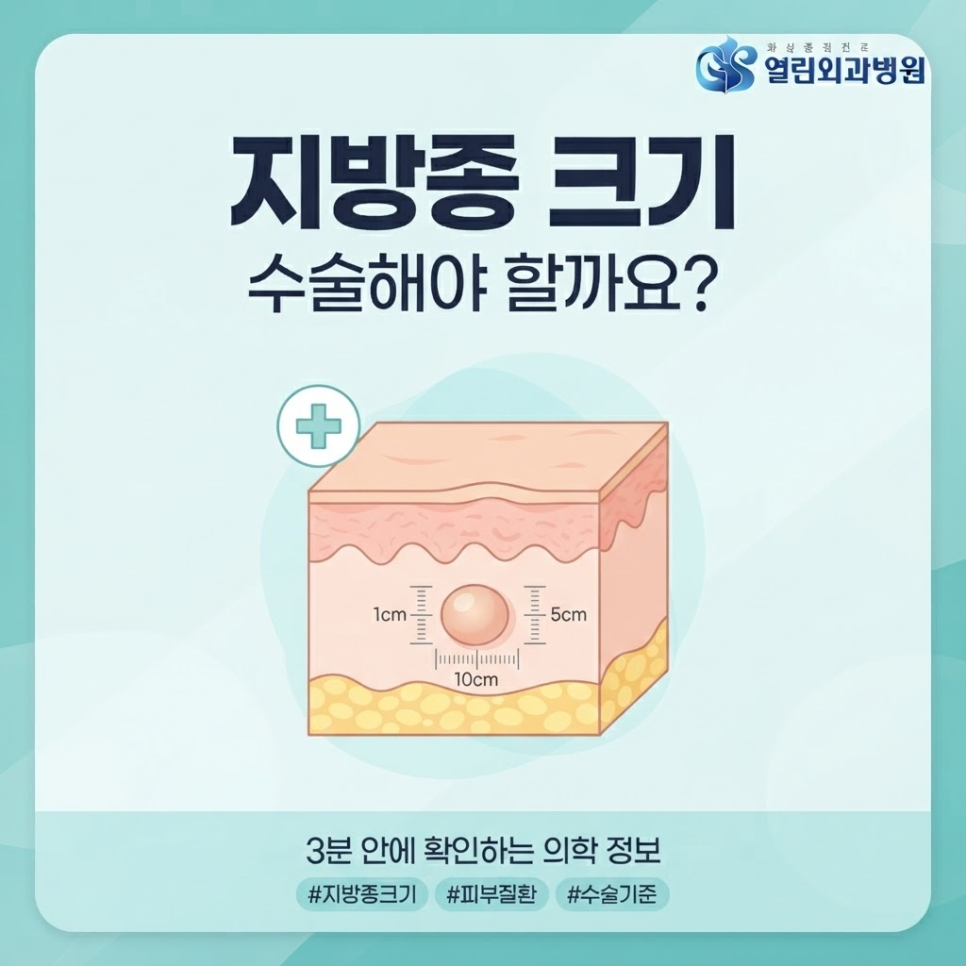
    According to Asan Medical Center’s disease encyclopedia, epidermal cysts typically grow slowly to about 1 to 5 cm and sometimes show a small central opening (punctum).
    Squeezing the cyst can release foul-smelling discharge, but doing so carelessly can worsen inflammation, so caution is needed.
    armpit lump related image 2

    The second cause is lymphadenitis (swollen lymph nodes), where the lymph nodes enlarge as part of an immune response.
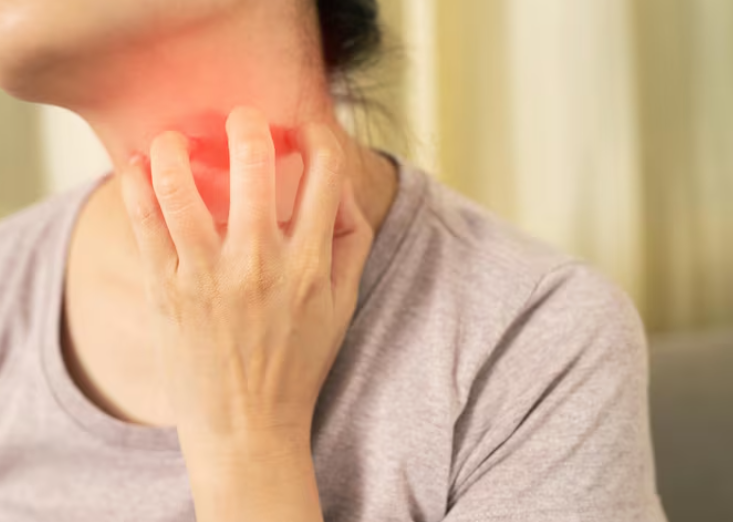
    When the body reacts to a cold, weakened immunity, or internal inflammation, the lymph nodes swell and can be felt as a firm lump.
    Asan Medical Center describes lymphadenitis as "an immune response in which the lymph nodes enlarge due to infection or, less commonly, malignant tumors."
    armpit lump related image 3

    The third cause is accessory breast tissue, which occurs when mammary gland tissue remains in the armpit area.
    It develops when the "milk line" tissue running from the chest to the armpit during fetal development doesn’t fully regress, and its size and pain level change with the menstrual cycle and hormonal shifts.
    Finally, a soft, slow-growing, painless lipoma is another common cause.

    Type Characteristics Pain
    Epidermal/Sebaceous Cyst Close to skin surface, may discharge fluid Usually none
    Lymphadenitis Caused by immune response Painful when pressed
    Accessory Breast Tissue Size fluctuates with menstrual cycle Cyclical pain
    Lipoma Soft, slow-growing None
    Checklist
    ✅ Epidermal/Sebaceous cyst: Feels soft just beneath the skin and may discharge fluid
    ✅ Lymphadenitis: Occurs from an immune response and causes pain when pressed
    ✅ Accessory breast tissue: Residual mammary tissue that changes in pain and size with the menstrual cycle
    ✅ Lipoma: A soft, painless fatty lump that grows slowly

    Is a Painless Armpit Lump Safe to Ignore?

    No. In fact, a hard, painless lump deserves even more attention.
    A warning sign isn’t judged by how much it hurts, but by changes in the lump’s size, firmness, and whether it’s fixed in place.

    Warning Signs
    ⚠️ When it feels completely painless, hard, and fixed in place when touched
    ⚠️ When it gradually grows larger over time and nearby skin changes appear
    ⚠️ When fever, redness, or swelling around the armpit worsens
    • A normal lymph node is usually less than 1 cm in diameter, small, and moves freely.
    • When inflammation progresses, however, the lymph node adheres to surrounding tissue and becomes difficult to move.
    • If the size, firmness, or mobility changes, further testing should be considered.

    Lymph node enlargement occurs when the lymph nodes are infected or inflamed, or in cases involving a pus-filled abscess or cancer.

    The Korea Disease Control and Prevention Agency explains this through its National Health Information Portal, noting that localized lymph node enlargement accounts for 70 to 80 percent of all cases.
    Among these, swelling in the neck’s cervical lymph nodes is common, with the armpit and groin also being frequent sites.
    armpit lump related image 4

    A painless lump is more likely to be a chronic cyst or lipoma, but in rare cases further testing is necessary.
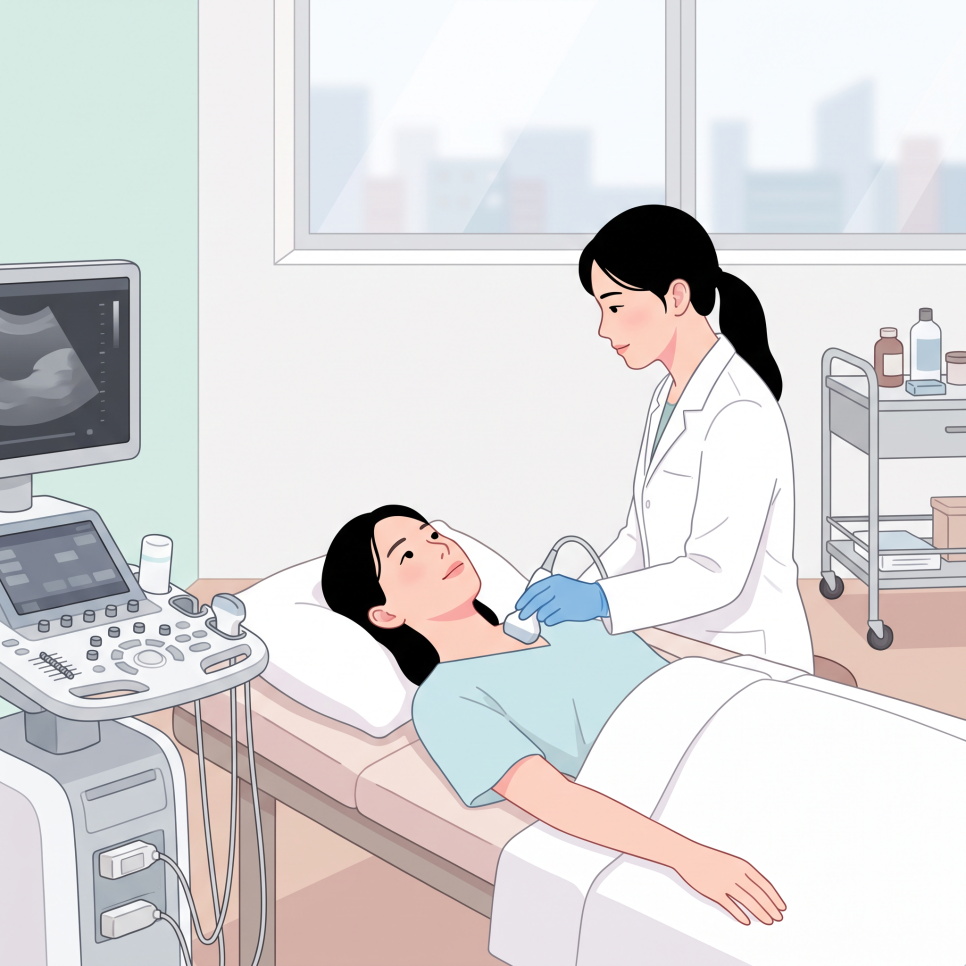
    That’s why confirming the diagnosis with an ultrasound exam is a safer choice than self-diagnosis.


    How Does Treatment Differ by Cause?

    Knowing the exact cause is key to reducing recurrence and complications.
    Treatment for an armpit lump ranges from simple monitoring to surgical removal, depending entirely on the underlying condition.

    1. Lymphadenitis: May improve with adequate rest and immune care alone; anti-inflammatory pain relievers or antibiotics may be prescribed if needed.
    2. armpit lump related image 5

    3. Sebaceous cyst (epidermal cyst): Avoid squeezing it by hand; having it surgically removed under local anesthesia, including the cyst wall, can lower the risk of recurrence.
    4. armpit lump related image 6

    5. Accessory breast tissue: Since hormones play a major role, periodic monitoring is the standard approach, and surgical removal of the glandular tissue may be considered if pain or discomfort significantly affects daily life.
    Outcome
    Identifying armpit lump causes accurately and managing them appropriately may help some cases avoid major surgery, depending on the underlying condition.
    However, we recommend discussing the diagnosis and treatment plan with a medical professional before making any decisions.

    If you’re concerned about a lump or wound on your skin — not just in the armpit — seeing a specialist is important.
    Burn Treatment Specialists – [Ansan Open Surgery Hospital] Homepage has more information on surgical care.


    Frequently Asked Questions

    1. Is it okay to keep touching an armpit lump to check on it?
    Answer: Bacteria on your hands can cause a secondary infection or worsen inflammation, so it’s best to avoid pressing on or repeatedly touching the lump.

    2. If an armpit lump doesn’t hurt, is it fine to just leave it alone?
    Answer: Even without pain, it could be a chronic cyst, lipoma, or another condition, so it’s safer to monitor any size changes and confirm the diagnosis with an ultrasound exam.

    3. Why does my armpit lump only hurt during my period?

    Answer: It’s likely accessory breast tissue responding to changes in female hormones. This tissue tends to temporarily swell and become painful in sync with the menstrual cycle, then subside afterward.

    4. Which specialist should I see for an armpit lump?
    Answer: Visiting a breast surgeon, general surgeon, or dermatologist allows for an accurate diagnosis using tools like ultrasound, along with guidance tailored to the cause.

    armpit lump related image 7


    References

    · Korea Disease Control and Prevention Agency, "Lymph Node Enlargement," National Health Information Portal. Link
    · Asan Medical Center, "Lymphadenitis," Disease Encyclopedia. Link
    · Asan Medical Center, "Epidermal Cyst," Disease Encyclopedia. Link
    · Health Kyunghyang, "[Accessory Breast Story] Accessory Breast Tissue Is a Real Medical Condition," 2023. Link

    This article is provided for general health information purposes only and is not a substitute for individual diagnosis or treatment. If you have symptoms, please consult a medical professional.

  • Burn First Aid: 3 Steps to Follow in the First 20 Minutes

    Burn First Aid: 3 Steps to Follow in the First 20 Minutes

    SummaryThe key to burn first aid is cooling the area under running water for 15 to 20 minutes immediately after the injury. This guide covers the correct response steps, home remedies to avoid, symptoms by burn stage, and when to see a doctor.

    Have you ever spilled hot soup and instinctively reached for ice?

    Actually, that reflex is a risky mistake that can deepen skin tissue damage.

    How you respond in the first few minutes after a burn can make a major difference in how deep the resulting scar becomes.

    burn first aid

    Key Takeaway
    The core of burn first aid is cooling the affected area under lukewarm running water for 15 to 20 minutes right after the injury.
    Applying ice directly or using home remedies like soybean paste or toothpaste raises the risk of infection and further damage.
    This article walks through the full process of burn first aid—the correct response steps, symptoms by burn stage, and situations that call for a hospital visit.

    Key Points
    ✔ Cool the burn under running water for 15–20 minutes right away
    ✔ Ice and home remedies can make the damage worse
    ✔ Whether you need to see a doctor depends on blister size, location, and extent

    What’s the First Thing to Do When You Get a Burn?

    The first thing you should do is cool the burn under running water.
    Burn first aid refers to the process of stopping contact with the heat source and lowering skin temperature to prevent further damage.

    The National Health Information Portal also recommends cooling the burn under cool running water and not popping any blisters.

    “Cool the burned area under cool running water for at least 20 minutes, and do not pop any blisters.”

    This guidance comes from the Korea Disease Control and Prevention Agency via the National Health Information Portal.

    burn first aid illustration 2

    Lukewarm tap water, around 15–20°C (59–68°F), is generally recommended for cooling the burn.

    Water pressure matters too.
    Water that’s too forceful can further irritate the wound surface.

    So it’s safest to use a gentle, low-pressure stream of water for 15 to 20 minutes.

    Remove any jewelry right away, before swelling sets in.
    Once swelling occurs, it can restrict blood flow and cause bigger problems.

    Avoid forcibly removing clothing.
    Fabric stuck to the skin can worsen the injury if pulled off.
    It’s safer to cool the area with clothing still on, then cut the fabric away with scissors.

    burn first aid illustration 3

    Checklist
    ✅ Cool the burn under running water for 15–20 minutes
    ✅ Don’t apply ice directly (risk of vessel constriction)
    ✅ Remove jewelry immediately, before swelling starts
    ✅ Don’t pull off clothing—cool with water first, then cut it away with scissors

    burn first aid illustration 4


    Is It Safe to Put Toothpaste or Soybean Paste on a Burn?

    The short answer: it’s not recommended.
    A home remedy is a self-treatment method that hasn’t been medically verified.

    In a panic, some people reach for toothpaste, soybean paste, or even sliced potatoes.

    But these substances can trap heat in the wound and raise the risk of bacterial infection.
    Pouring soju on a burn—hoping the alcohol’s evaporation will cool it—only irritates the already-damaged skin barrier further and makes the wound worse.

    burn first aid illustration 5

    Precautions
    🚫 Don’t apply toothpaste, soybean paste, cucumber, or other foods
    🚫 Don’t pour soju or alcohol directly on the wound
    🚫 Don’t pop blisters yourself
    🚫 Don’t self-apply unverified topical remedies

    Popping a blister with your fingers is just as risky.

    Blister fluid acts as a natural barrier that protects the wound from outside bacteria.
    Breaking it open can lead to secondary infection, slower healing, and more severe scarring.
    Leave blisters intact and keep them clean and protected.

    burn first aid illustration 6


    What Are the Degrees of Burns, and How Do Symptoms Differ?

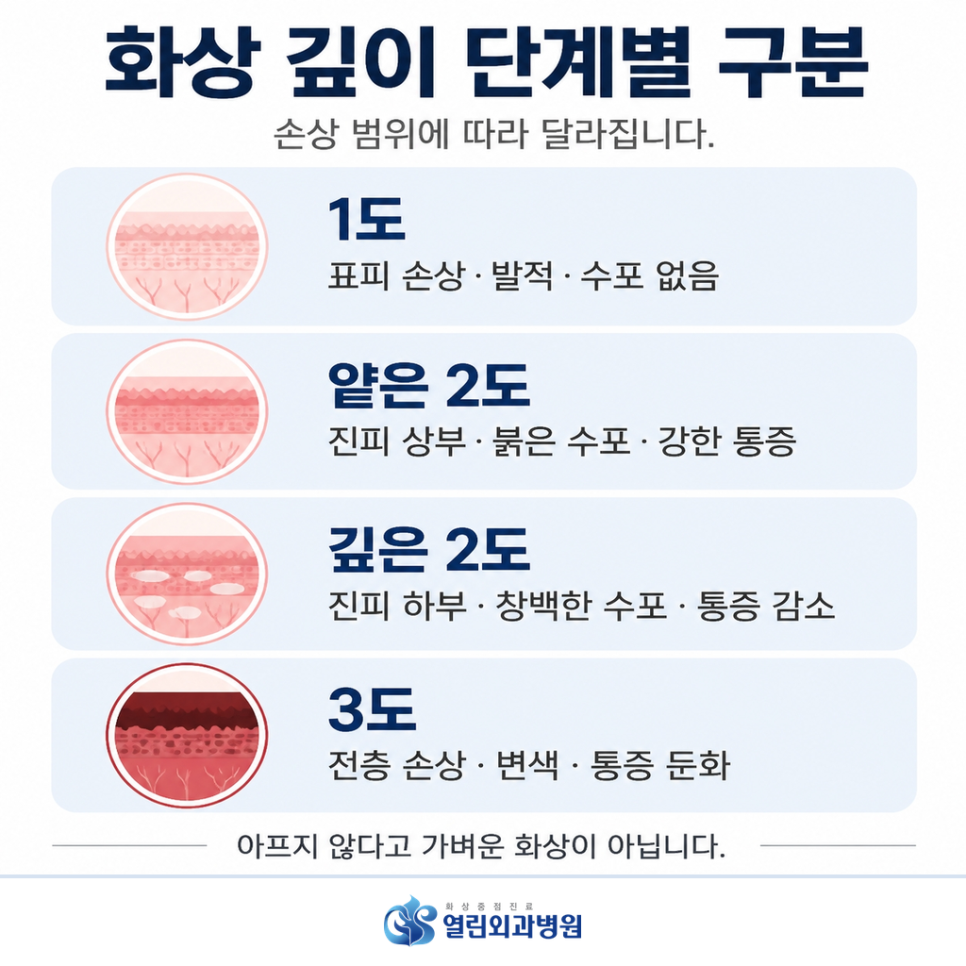
    Burns are classified from first to third degree based on how deep the damage goes.
    The deeper the burn, the longer the healing time and the greater the risk of scarring.

    Degree Depth of Damage Main Symptoms Pain
    1st Degree Epidermis Redness, no blisters Mild pain
    Superficial 2nd Degree Upper dermis Red blisters Severe pain
    Deep 2nd Degree Lower dermis Pale blisters Reduced pain
    3rd Degree Full-thickness skin Discoloration, eschar formation No pain (nerve damage)

    burn first aid illustration 7

    Second-degree burns damage the dermis and come with blisters and significant pain.
    Healing typically takes about 2 to 4 weeks, and scarring or skin discoloration can remain afterward.

    When damage reaches deep into the dermis, nerve endings can be destroyed, which paradoxically means less pain is felt.

    But less pain doesn’t mean the injury is less serious.
    Third-degree burns destroy the full thickness of the skin, causing discoloration, and generally do not heal on their own—professional treatment is recommended.

    burn first aid illustration 8


    When Should You See a Doctor After Burn First Aid?

    If the burn is on the face, hands, feet, or a major joint, head to the hospital without delay.
    Burns over joints can cause the skin to tighten as it heals, which may limit range of motion.

    burn first aid illustration 9

    Burns covering a large area, or those affecting infants or older adults, also call for prompt medical attention.
    People with weaker immunity can experience whole-body effects even from a relatively small burn.

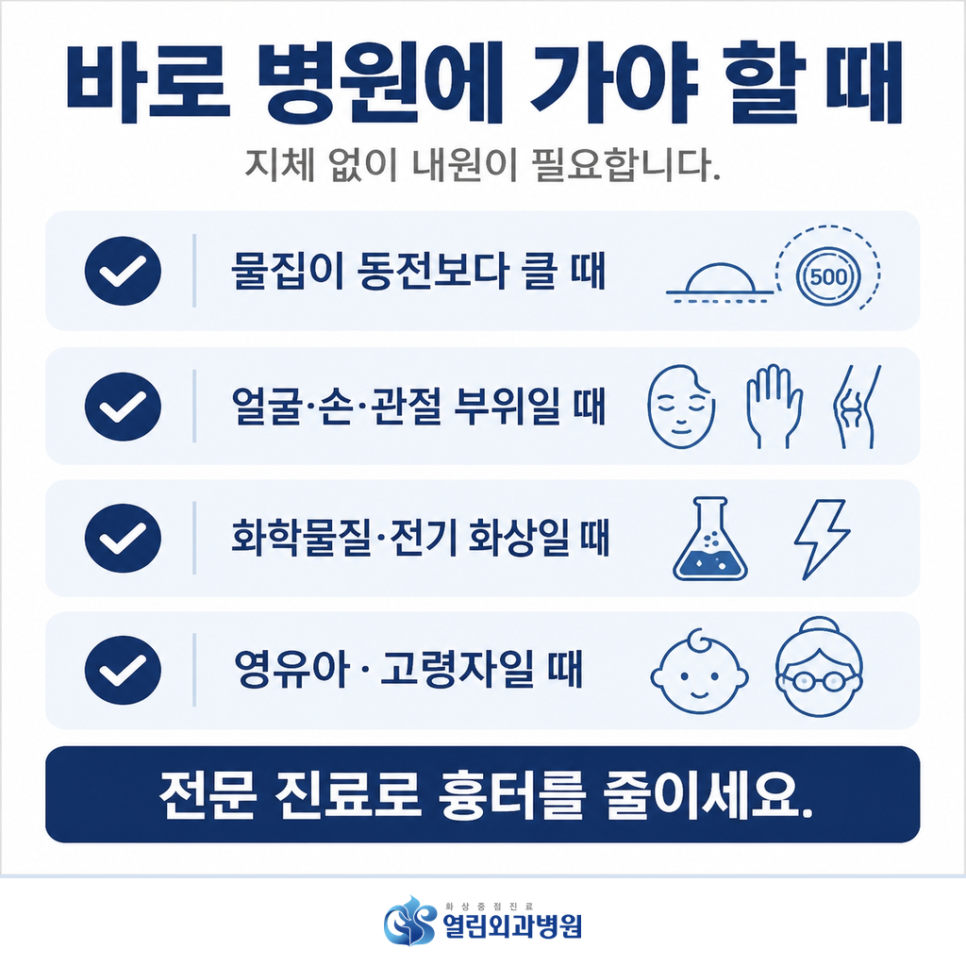
    When You Should See a Doctor Right Away
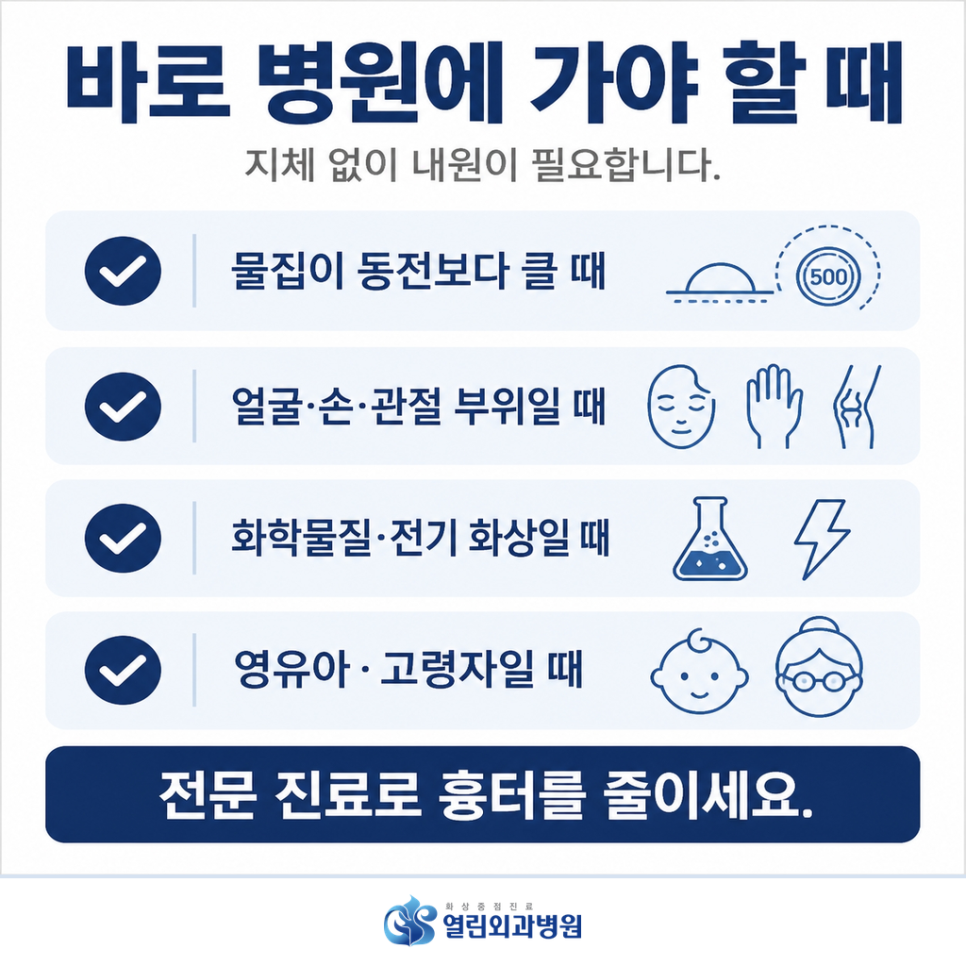
    🎯 The blister is larger than a coin
    🎯 The burn is on the face, hands, or a joint
    🎯 The injury was caused by chemicals or electricity
    🎯 The injury occurred in an older adult or a young child

    burn first aid illustration 10

    After first aid, it’s best to have your condition properly assessed at a medical facility for hygienic dressing and infection prevention.

    Our hospital operates a burn treatment system intended to make care available outside regular daytime hours.
    You can find more detailed treatment information at Burn Treatment — Ansan Open Surgery Hospital Home.


    Frequently Asked Questions

    1. When is the right time to apply ointment to a burn?
    Answer: Applying ointment while the burn still feels hot can trap heat in and worsen the damage. It’s best to cool the area thoroughly with cold water, pat it dry, and then apply an infection-prevention ointment.

    2. How should you care for a blister that has already popped?
    Answer: Don’t peel off the blister skin—leave it in place and gently clean the area with sterile saline. Then protect it with an appropriate dressing to reduce the risk of bacterial infection and visit a hospital.

    3. Why shouldn’t you put ice directly on a burn?
    Answer: Direct contact with ice causes skin blood vessels to constrict rapidly, restricting circulation and potentially causing secondary damage similar to frostbite. Running water at 15–20°C (59–68°F) is generally used to cool a burn instead.

    burn first aid illustration 11


    References

    · Korea Disease Control and Prevention Agency, “Burns,” National Health Information Portal, 2024. View source
    · National Emergency Medical Center, “Heat/Cold-Related Injuries – Burns,” National Emergency Medical Information Center (E-Gen), 2023. View source
    · Nate News, “‘Ouch, That’s Hot!’ Skip the Soju and Soybean Paste While Frying Pancakes — Burn First Aid Tips,” Nate News, 2026. View source

    burn first aid illustration 12

    This article is intended for general health information purposes and is not a substitute for individual diagnosis or treatment. If you have symptoms, please consult a medical professional.
  • Anal Cancer Symptoms: 4 Warning Signs Not to Confuse With Hemorrhoids

    Anal Cancer Symptoms: 4 Warning Signs Not to Confuse With Hemorrhoids

    SummaryAnal cancer symptoms closely resemble hemorrhoids, which makes this condition easy to miss in its early stages. This article covers the 4 key anal cancer symptoms — dark-colored bleeding, a persistent feeling of incomplete evacuation, a lump near the anus, and changes in bowel habits — along with the causes and a self-check checklist. If symptoms continue even after using hemorrhoid medication, be sure to look into this further.

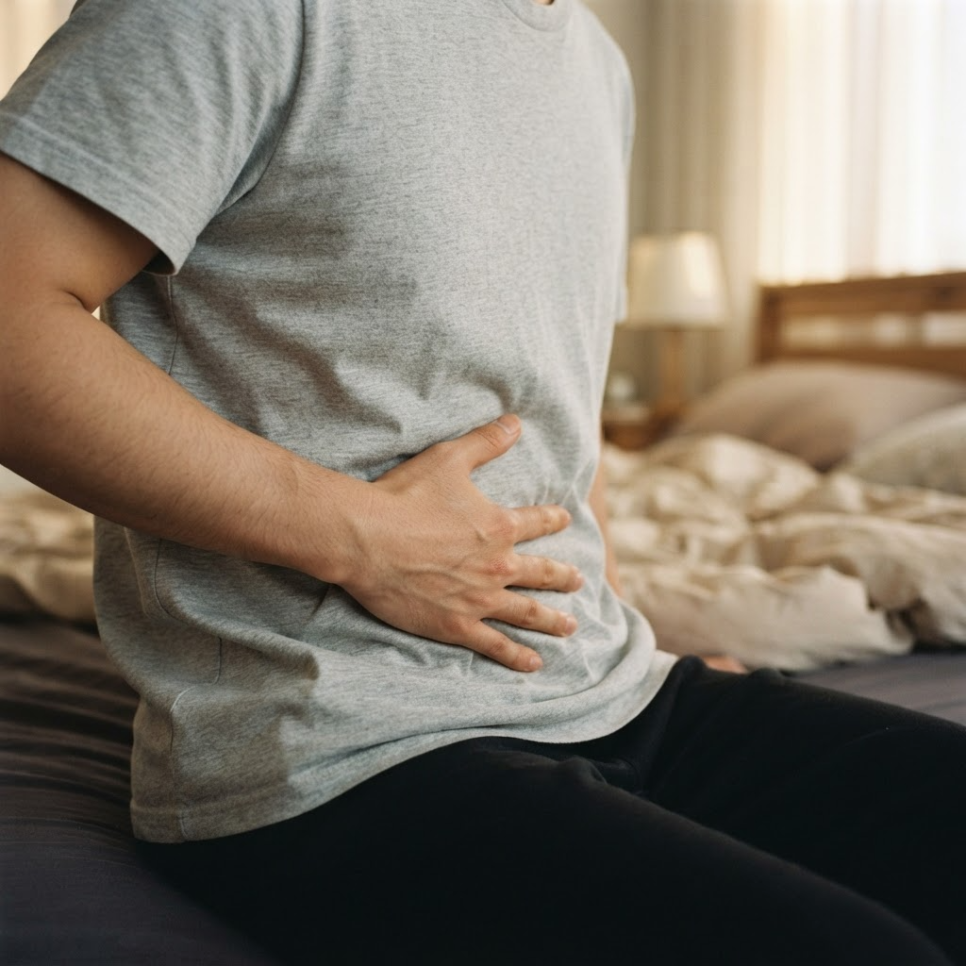
    Many people notice a little blood on the tissue
    and think, “I’ve probably just been tired and my hemorrhoids flared up again,”
    brushing it off without much concern.

    But if bleeding and pain continue for weeks
    even after using ointment and medication, that’s a different story.

    It can look so similar to hemorrhoids that even specialists
    sometimes mistake it in the early stages — these are anal cancer symptoms.

    anal cancer symptoms

    Key Takeaways
    Anal cancer symptoms typically appear as dark-colored bleeding (rather than bright red), a persistent feeling of incomplete evacuation, a hard lump near the anus, and changes in bowel habits — and because they look similar to hemorrhoids, they’re easy to mistake for them.
    According to 2023 national cancer registry statistics, anal cancer is rare, accounting for just 0.1% (365 cases) of all cancer diagnoses. Still, if symptoms persist for more than 2 weeks despite hemorrhoid treatment, you should see a specialist.

    What Exactly Is Anal Cancer?

    To put it simply, anal cancer is a malignant tumor that develops in the anal canal and the skin around the anus.
    Unlike colorectal cancer, it’s a condition many people have never even heard of, but it is a documented disease.

    Here’s how South Korea’s National Cancer Information Center defines it.

    Anal cancer is a malignant tumor (cancer) that develops in the anus. It is a rare cancer, typically diagnosed around age 60.

    The center adds that squamous cell carcinoma and cloacogenic carcinoma are the most common types.

    anal cancer symptoms illustration 2

    Because it’s located at the very end of the digestive tract, a tumor here tends to cause noticeable changes in bowel movements right away.
    Depending on where it develops, it can also start out as a small lump or as a sore that doesn’t heal easily.

    📊 Anal Cancer by the Numbers
    · According to 2023 national cancer registry statistics, anal cancer accounted for 365 cases, or 0.1% of all cancer diagnoses.
    · The crude incidence rate was 0.7 cases per 100,000 people, according to the same statistics.
    · By age group, people in their 60s made up 32.3% of cases, the largest share, followed by those in their 70s and 50s.
    · By sex, there were 224 cases in women and 141 in men, meaning the condition was somewhat more common in women according to this data.

    How Do You Tell Anal Cancer Symptoms Apart From Hemorrhoids?

    The point that trips up the most people is telling this apart from hemorrhoids (piles).
    In short, anal cancer symptoms often differ from hemorrhoids in the color of the bleeding and how long it lasts.

    Typical hemorrhoids usually cause bright red bleeding along with pain.

    anal cancer symptoms illustration 3

    Anal cancer symptoms, on the other hand, tend to show a somewhat different bleeding pattern.
    Dark-colored blood mixed into the stool, or a persistent sense of something foreign in the area, are common features.

    anal cancer symptoms illustration 4

    ⚠️ See a Doctor Right Away If You Notice These Symptoms
    If you have an ongoing feeling of incomplete evacuation even after a bowel movement, or you feel a hard lump around the anal opening, it’s hard to assume it’s just hemorrhoids.

    🚨 Warning Signs You Shouldn’t Ignore

    • Pain and bleeding continue even with hemorrhoid medication or other treatment
    • A sudden change in bowel habits (frequent diarrhea or severe constipation)
    • A lump you can feel in the lymph nodes around the anus or groin
    • Unexplained weight loss along with an ongoing feeling of incomplete evacuation

    The table below summarizes the differences between the two conditions.

    Category Hemorrhoids Anal Cancer Symptoms
    Bleeding color Bright red Dark-colored, mixed with mucus
    Pain Sharp pain during bowel movements Dull pain or no symptoms
    Lump Soft; can be pushed back in Hard; gradually grows larger
    Duration Improves within days to weeks with treatment Persists over 2 weeks despite treatment

    What Causes Anal Cancer, and What’s on the Self-Check Checklist?

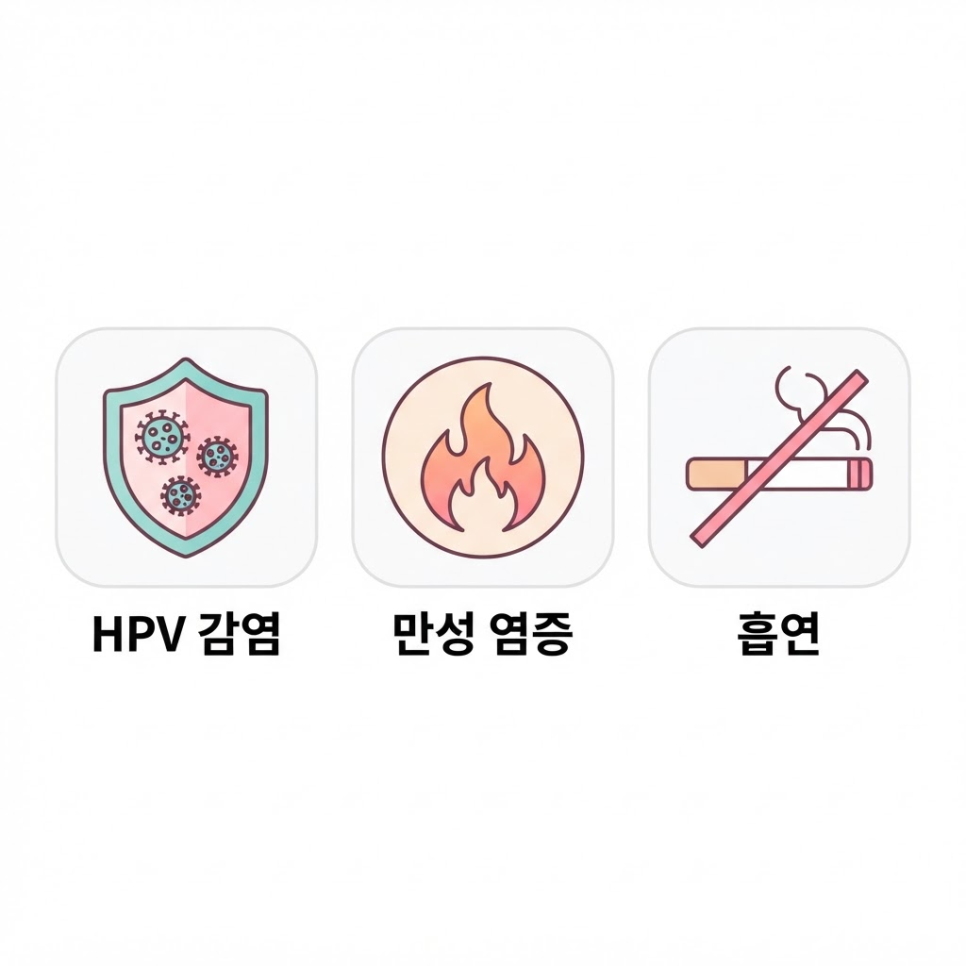
    To put it simply, the leading causes of anal cancer are human papillomavirus (HPV) infection, chronic anal inflammation, and smoking.
    Risk may rise when ongoing irritation occurs alongside a weakened immune system.

    According to statistics from the United States, more than 90% of anal cancer cases are linked to HPV infection, with HPV types 16 and 18 identified as the leading causes.
    Region-specific figures vary, but HPV is consistently recognized as a major risk factor.

    anal cancer symptoms illustration 5

    📋 Self-Check Checklist

    • Blood on the tissue after a bowel movement has continued for more than 2 weeks
    • A lump near the anus is getting bigger over time
    • Stool has become noticeably thinner than before
    • Anal itching or increased discharge won’t go away

    If two or more of these apply to you, don’t put it off — an early evaluation with a specialist is recommended.
    Getting a regular colonoscopy as part of your health checkups may also help with prevention.

    anal cancer symptoms illustration 6

    🚀 Gut-Healthy Habits You Can Start Today
    Eating plenty of fiber-rich vegetables and staying well hydrated can help keep your bowels moving smoothly.
    Quitting smoking, keeping regular bowel habits, and HPV vaccination can also support anal health.

    If pain or bleeding around the anus continues for more than 2 weeks, it’s safer to see a colorectal specialist
    rather than try to judge it on your own.
    [Ansan Yeollin Surgery Hospital] website has more information about care there.


    Frequently Asked Questions

    1. Can hemorrhoids eventually turn into cancer over time?
    No. Hemorrhoids (piles) and malignant tumors develop through completely different mechanisms. However, they can look similar in their early stages, which makes them easy to confuse.

    2. Should I still be concerned if there’s no pain?
    Yes. In the early stages, there’s often little to no pain — just some bleeding or a sense of something foreign. The absence of pain doesn’t mean you can rule it out.

    3. What tests are needed for an accurate diagnosis?
    A digital rectal exam, anoscopy, and biopsy can be used to diagnose it. Endoscopy or imaging tests may also be done if needed.

    4. What’s the best way to help prevent it?
    HPV vaccination, quitting smoking, and keeping regular bowel habits may help. Regular checkups can also play a role in prevention.

    5. Is anal cancer much rarer than hemorrhoids?
    According to 2023 national cancer registry statistics, anal cancer accounts for about 0.1% of all cancers, a lower reported incidence than hemorrhoids, which are widely reported as common.

    anal cancer symptoms illustration 7


    References

    · National Cancer Information Center, “Anal Cancer,” National Cancer Center, accessed 2026. Link
    · Korea Central Cancer Registry, “2023 National Cancer Registration Statistics,” National Cancer Center, 2026. Link
    · Korea Disease Control and Prevention Agency, “Human Papillomavirus (HPV) Vaccination,” KDCA Immunization Helper, accessed 2026. Link
    · Healtho, “How Much Do You Know About HPV, the Virus That Causes Cancer?,” Healtho, accessed 2026. Link


    This article is intended for general health information purposes only and is not a substitute for individual diagnosis or treatment. If you have symptoms, please consult a specialist.

  • Burn First Aid: 4 Steps to Take in the First 20 Minutes

    Burn First Aid: 4 Steps to Take in the First 20 Minutes

    SummaryThe key to burn first aid is cooling the area under running cool water for 15 to 20 minutes. Many people confuse this with icing a burn or mishandle blisters. Ansan Burn Hospital breaks down why home remedies like toothpaste or soybean paste can be risky, how burn degrees are classified, and when it’s time to see a doctor.

    The moment you spill hot soup on yourself, is reaching for ice your first instinct?

    This reflex, which many people assume is correct, can actually make skin damage worse.

    How you handle the first few minutes after a burn can affect how deep the resulting scar becomes.

    Key Takeaway
    The key to burn first aid is cooling the area under running cool water for 15 to 20 minutes.
    Applying ice directly, or using home remedies like toothpaste or soybean paste, can make the damage go deeper.
    This article walks through what to do immediately after a burn, what to avoid, how burns are classified by degree, and when to seek medical care.

    Burn first aid

    What’s the First Step in Burn First Aid?

    The first thing to do right after a burn is cool the area under running cool water.
    Burn first aid is the process of stopping contact with the heat source and lowering skin temperature to prevent further damage.

    The moment skin touches a hot pot or spilled soup, the heat trapped inside doesn’t disappear on its own.
    If that heat isn’t drawn out quickly, the damage can spread into deeper layers of skin.

    That’s why cooling the burn is the very first thing to do.

    Burn first aid illustration 2

    1. Run tap water over the affected area for 15 to 20 minutes to cool it down.
    2. Keep the water pressure gentle, like a light trickle, rather than a strong stream.
    3. Remove rings, watches, and other jewelry right away, before swelling sets in.
    4. If clothing is stuck to the skin, don’t force it off—cool the area with water first, then cut the fabric away with scissors.

    “Burned skin should be cooled under running cool water for at least 15 to 20 minutes. Applying ice directly can cause blood vessels to constrict rapidly, which may actually deepen tissue damage.”

    This is how Korea’s Disease Control and Prevention Agency describes burn first aid on its National Health Information Portal.

    Key Point: Proper Cooling Guidelines
    ✅ Run water over the area for 15 to 20 minutes to remove trapped heat.
    ✅ Don’t apply ice directly to the wound (risk of blood vessel constriction).
    ✅ Remove jewelry immediately, before swelling begins.

    Burn first aid illustration 3


    Is It Really Okay to Apply Toothpaste or Soybean Paste?

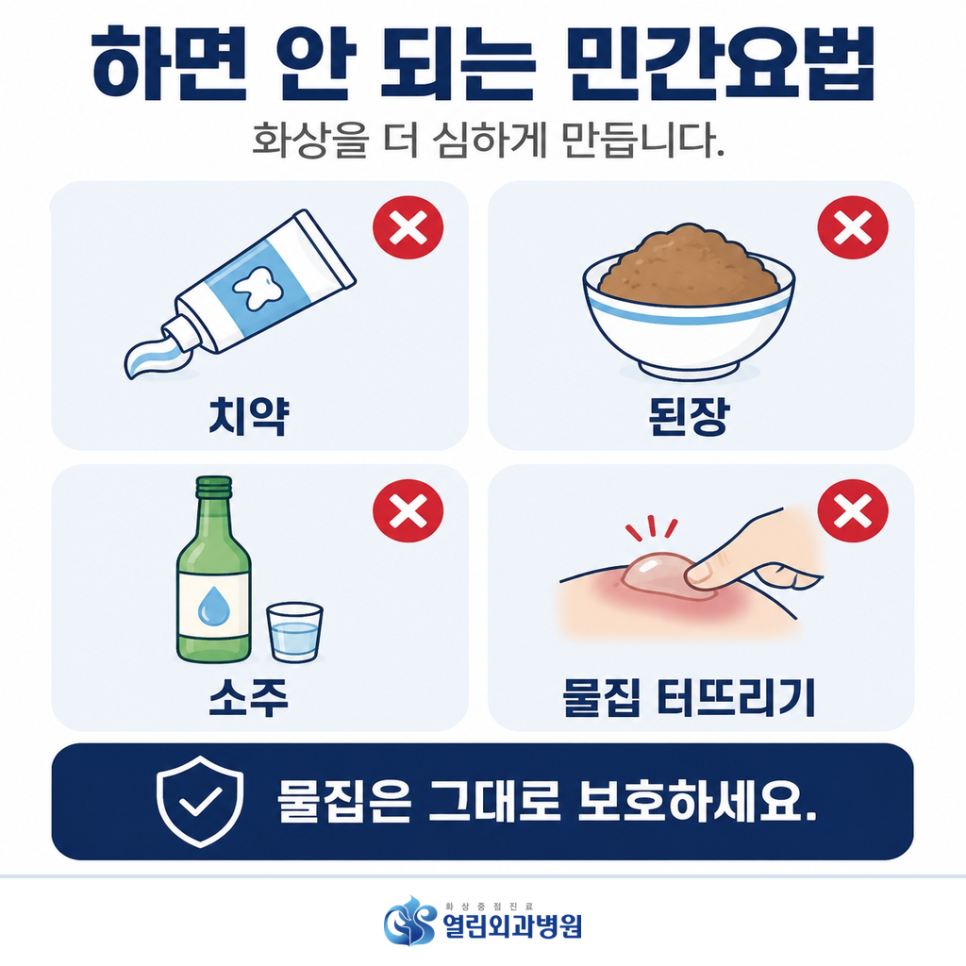
    Home remedies like toothpaste, soybean paste, or soju can actually make a burn worse.
    A home remedy is a self-treatment method passed down informally, without medical verification.

    In the panic of the moment, it’s tempting to reach for whatever’s in the kitchen.
    But toothpaste, soybean paste, and potato juice trap heat inside the wound.

    These substances can also introduce bacteria and lead to infection.
    Pouring soju or other alcohol on a burn is no better.
    Alcohol further irritates skin whose barrier is already damaged.

    Burn first aid illustration 4

    Burn first aid illustration 5

    Caution: Things You Should Never Do
    🚫 Applying toothpaste, soybean paste, cucumber, or other food items
    🚫 Pouring soju or alcohol directly on the wound
    🚫 Popping a blister with your fingers
    🚫 Self-applying unverified topical products

    There’s a reason you shouldn’t pop a blister.
    Blister fluid acts as a natural barrier that protects the wound from bacteria.

    Forcing a blister open is thought to increase the risk of deeper scarring.
    Leave blisters intact and keep the area clean instead.

    Burn first aid illustration 6


    How Are Burn Degrees Classified?

    Burns are classified from first-degree to third-degree based on how deep the damage goes.
    Burn degree is a classification based on how much of the epidermis and dermis has been damaged.

    First-degree burns affect only the epidermis, causing redness and a stinging sensation.
    From second-degree burns onward, blisters form and pain intensifies.

    However, when damage reaches deep into the dermis, nerve endings can be destroyed, which may actually reduce pain.
    Less pain doesn’t mean less damage, so the area should be examined carefully.

    Burn first aid illustration 7

    Degree Depth of Damage Main Symptoms
    First-degree Epidermis Redness, pain, no blisters
    Superficial second-degree Upper dermis Red blisters, intense pain
    Deep second-degree Lower dermis Pale blisters, reduced pain
    Third-degree Full skin thickness Discoloration, painless due to nerve damage

    Burn first aid illustration 8


    When Should You Go to the Hospital Right Away?

    Burns on the face, hands, or joints, or burns covering a large area, call for prompt medical attention.
    A burn that needs immediate care is one where natural healing is unlikely or there’s a meaningful risk of losing function.

    According to a report by The Seoul Shinmun, about 67% of burn accidents in Korea happen at home.
    The same report found that infants and toddlers aged 0 to 4 made up 29% of all burn patients in Korea.

    Infants and older adults, who tend to have weaker immune systems, can experience wider-reaching effects from even a small burn.
    Burns near joints can cause the skin to contract as it heals, which may limit range of motion.

    Checklist: When to Seek Care Right Away
    ✅ The blister is larger than a coin
    ✅ The burn is on the face, hands, or a joint
    ✅ The burn was caused by a chemical or electrical source
    ✅ The burn occurred in an older adult or a young child

    Burn first aid illustration 9

    Burn first aid illustration 10

    Finishing first aid isn’t the end of the process.
    A proper evaluation and dressing from a medical professional can help minimize scarring.

    We recommend having your burn assessed at the Burn Treatment page of Ansan Open Surgery Hospital, which has experience treating burns.

    Burn first aid illustration 11

    Burn first aid illustration 12


    Frequently Asked Questions

    1. When should you apply ointment to a burn?
    Applying ointment while the burn still feels hot can trap heat inside and worsen the damage. It’s best to cool the area thoroughly with cool water, pat it dry, and then apply an infection-prevention ointment.

    2. How should you care for a blister that has already popped?
    Don’t peel away the loose skin—leave it in place and gently clean the area with sterile saline. After that, protect it with an appropriate dressing and see a doctor to be safe.

    3. Why shouldn’t you put ice directly on a burn?
    Direct contact with ice causes skin blood vessels to constrict sharply, which restricts circulation and can cause secondary damage similar to frostbite. Always cool a burn with running cool water instead.


    References

    · Korea Disease Control and Prevention Agency, “Burns,” National Health Information Portal, KDCA. View source
    · Ministry of the Interior and Safety, “First Aid – Burns,” Korea Safety (안전24), MOIS. View source
    · The Seoul Shinmun, “29% of Burn Patients Are Ages 0–4… 67% Occur at Home,” The Seoul Shinmun, 2018. View source
    · Hidoc, “‘Don’t Pop the Blister’… A Surgeon Explains How to Handle Burns,” Hidoc, 2025. View source


    This article is intended for general health information purposes only and is not a substitute for individual diagnosis or treatment. If you have symptoms, please consult a medical professional.

  • Ansan Proctology Clinic: 3 Signs of a Trustworthy One

    Ansan Proctology Clinic: 3 Signs of a Trustworthy One

    SummaryIf you’re considering an Ansan proctology clinic, start with the diagnostic criteria. This guide covers how to tell hemorrhoids, anal fissures, and fistulas apart, when conservative treatment versus surgery is appropriate, and the aftercare steps that help prevent recurrence — key points to consider when choosing an Ansan proctology clinic. Delaying treatment tends to make recovery take longer.

    A stinging sensation or a bit of blood doesn’t automatically mean
    you need to head straight into surgery.

    In the early stages, medication and lifestyle changes alone
    can often bring real improvement.

    The real problem is hesitating.
    The longer you put off a decision, the longer treatment tends to take.

    If you’re looking into an Ansan proctology clinic,
    let’s start with the criteria that separate surgical cases from conservative treatment.

    This article breaks down the criteria that confuse people looking for an Ansan proctology clinic.
    You’ll find what to look for in a trustworthy Ansan proctology clinic, how to tell hemorrhoids, fissures, and fistulas apart,
    and the aftercare steps that help prevent recurrence — all in one place.

    Ansan proctology clinic

    Does Anal Pain Always Require Surgery?

    No.
    Depending on how severe the symptoms are, medication or lifestyle adjustments alone can lead to significant improvement.

    Anal disease is an umbrella term for conditions like hemorrhoids, anal fissures, and anal fistulas that affect the anal canal and surrounding tissue.

    Because the cause and stage differ from patient to patient,
    it’s difficult to self-diagnose based on symptoms alone.

    ⚠️ Caution
    The longer you delay diagnosis, the longer treatment tends to take — and in some cases, symptoms worsen to the point where surgery becomes necessary.

    How Do Hemorrhoids, Anal Fissures, and Anal Fistulas Differ?

    These three conditions have entirely different causes and symptom patterns.
    Identifying which one matches your symptoms is the first step toward treatment.

    Ansan proctology clinic related image 3

    Condition Main Symptoms Characteristics
    Hemorrhoids Painless bleeding, tissue protruding from the anus A common anal condition
    Anal fissure Sharp pain during bowel movements, bright red bleeding Often caused by hard stool or excessive straining
    Anal fistula Pus-like discharge, recurring inflammation Usually requires surgical treatment

    Ansan proctology clinic related image 4


    What Criteria Matter Most When Choosing an Ansan Proctology Clinic?

    A trustworthy Ansan proctology clinic is one with clinically experienced doctors and precise diagnostic equipment working together.

    Because the cause and stage of each condition vary from patient to patient,
    a one-size-fits-all approach falls short of what a reliable Ansan proctology clinic should offer.

    Ansan proctology clinic related image 2

    💡 Key Point
    Check whether the clinic appropriately distinguishes between non-surgical conservative treatment and surgical treatment based on the stage of the condition.

    Second, check whether the clinic has the medical equipment needed for precise examinations.

    Only by closely assessing internal conditions that aren’t visible to the eye
    can diagnostic accuracy be improved and the risk of misdiagnosis reduced.


    What Diagnostic System Is Needed for an Accurate Diagnosis?

    A clinic with an accurate diagnostic system is one equipped with precision ultrasound and similar equipment, and one that offers a tailored treatment plan without unnecessary procedures.

    Ansan proctology clinic related image 5

    What worries people most when looking for an Ansan proctology clinic
    is the pain and burden associated with surgery.

    But surgery isn’t necessary in every case.
    In the early stages, medication or lifestyle changes can often provide sufficient relief.

    So rather than defaulting to surgery,
    look for a clinic that accurately identifies the cause and lays out a step-by-step treatment plan.

    Ansan proctology clinic related image 6

    📋 Checklist
    ✅ Has precision ultrasound and other diagnostic equipment
    ✅ Offers a tailored treatment plan without unnecessary procedures
    ✅ Runs a pain management program for surgical cases
    ✅ Has systems in place to protect patient privacy and personal information

    Once you’ve gone through this checklist,
    remember: the longer you hesitate, the longer treatment tends to take.


    What Aftercare Helps Prevent Recurrence After Treatment?

    A private, comfortable care environment paired with clear aftercare guidance may help support recurrence prevention.

    Since this involves a sensitive area of the body, it’s also worth checking
    whether consultations take place in a private, separate space.

    Ansan proctology clinic related image 7

    Everyday care — like proper sitz bath technique and getting enough dietary fiber —
    needs to go hand in hand with treatment to help prevent recurrence.

    In fact, research suggests that simply keeping bowel movements under 5 minutes
    can help lower the risk of anal disease.
    Putting the phone down while on the toilet
    is also known to help improve bowel habits.

    🚀 Benefits of Proper Care
    Combining a systematic diagnosis with good lifestyle habits may help lower the chance of recurrence and support a smoother return to daily life.

    Ansan proctology clinic related image 8

    If you’re also curious about other surgical conditions beyond anal disease,
    take a look at the link below as well.
    Burn treatment information — [Ansan Open Surgery Clinic] Home

    We encourage you to use accurate information to find the right medical facility
    and take the steps needed to recover.

    A little attention and courage now can make a real difference in your quality of life.

    Ansan proctology clinic related image 9

    Ansan proctology clinic related image 10

    Ansan proctology clinic related image 11

    Ansan proctology clinic related image 12

    Ansan proctology clinic related image 13


    Frequently Asked Questions

    1. Does anal pain always mean I need surgery?
    Not necessarily. Depending on the severity and type of condition, conservative treatments like medication, sitz baths, and dietary changes can be tried first. An exact diagnosis requires a proper exam.

    2. What lifestyle habits help prevent anal disease?
    Keeping bowel movements under 5 minutes and getting enough water and dietary fiber can help. It’s also best to avoid sitting on the toilet for long periods or using your phone while on the toilet.

    3. What’s the most effective way to do a sitz bath?
    Soaking in warm water around 38°C (100°F) for about 3 to 5 minutes is generally recommended. Doing this after bowel movements and before bed can help with circulation.

    4. Can I go about my day right after the exam?
    Basic exams and ultrasound testing usually don’t disrupt daily life much, so it’s often possible to return to work or go about your day the same day.


    References

    · Asan Medical Center, \”Hemorrhoids,\” Disease Encyclopedia, Asan Medical Center Health Information. View source
    · Seoul National University Health Care Center, \”Don’t Ignore Pain Around the Anus: Hemorrhoids, Anal Fissures, and Anal Fistulas.\” View source
    · Hidoc, \”Using Your Phone on the Toilet for Over 5 Minutes Raises Hemorrhoid Risk by 46%,\” Latest Research, 2026. View source


    This article is intended for general health information purposes only and is not a substitute for individual diagnosis or treatment. If you have symptoms, please consult a medical professional.
  • Food Before Endoscopy: 3 Safe Meal Options and Foods to Avoid

    Food Before Endoscopy: 3 Safe Meal Options and Foods to Avoid

    SummaryWhat should you eat the night before an upper endoscopy to help support accurate results? This guide covers safe food before endoscopy, foods you should avoid, the recommended dinner time, and exactly when your fasting window should begin.

    Have you ever stood in front of the fridge the night before an endoscopy appointment, unsure what to make for dinner?

    Actually, what you eat the night before matters more than simply skipping meals altogether.

    Choosing the wrong food before endoscopy can leave residue in your stomach, which may mean the exam needs to be repeated.

    This guide covers which foods are safe to eat the night before an endoscopy, which foods to avoid, and exactly when your fasting window should begin. Getting your pre-procedure dinner right can help you complete the exam on the first visit, without a repeat appointment.

    food before endoscopy

    What Food Before Endoscopy Is Safe to Eat?

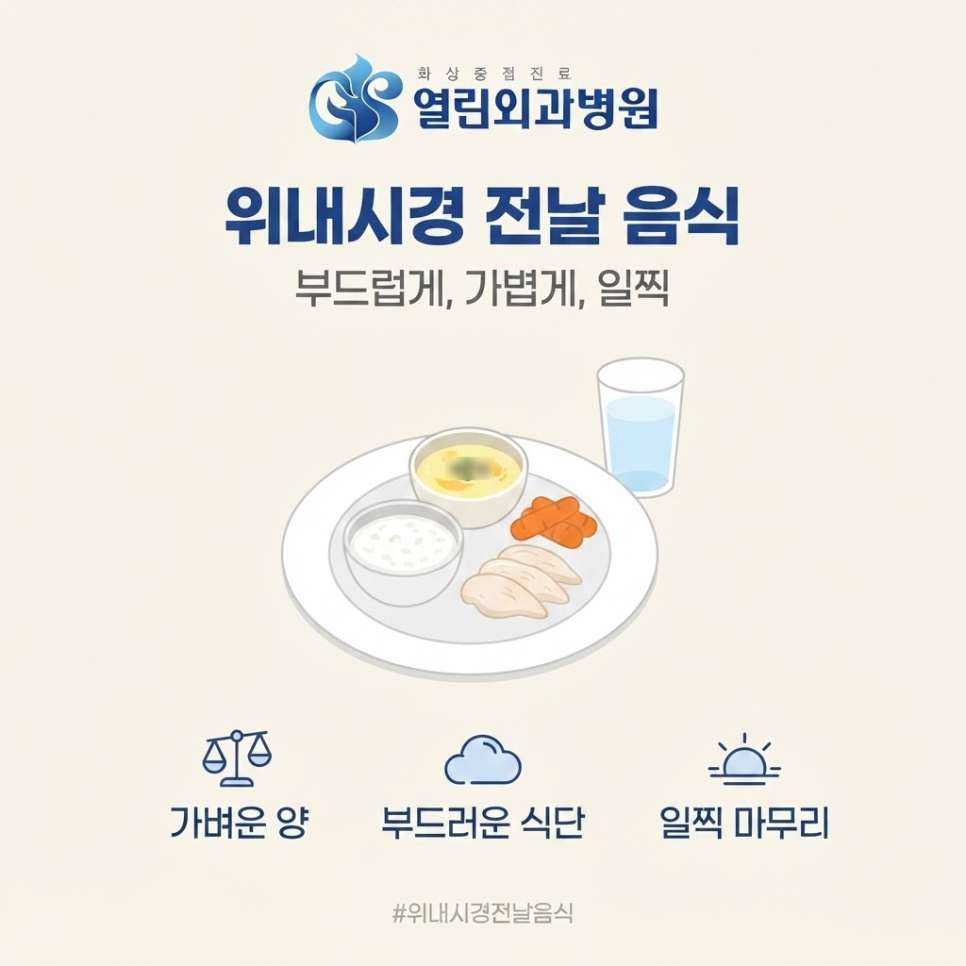
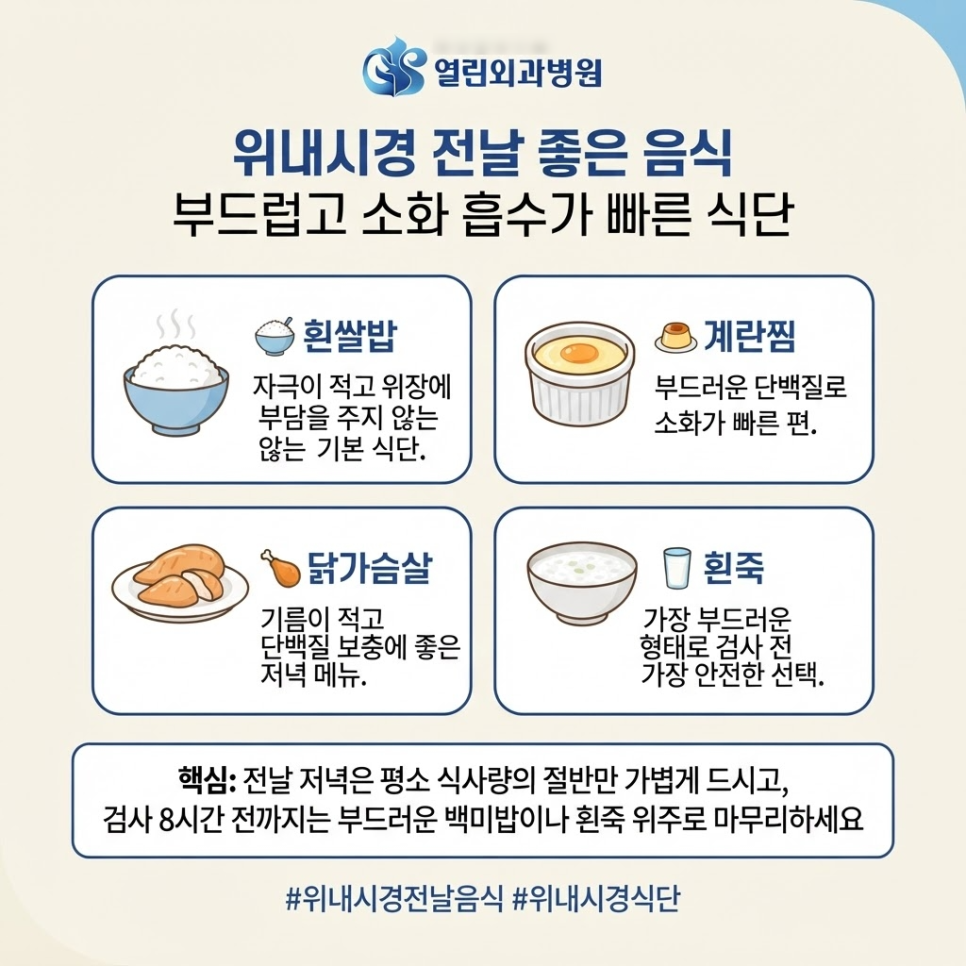
    To answer the question directly: rather than skipping dinner entirely, the safer choice is soft, easily digestible food before your endoscopy — about half of your usual portion.

    Food before endoscopy refers to a diet that digests quickly and doesn’t leave residue in your stomach.

    Soft, mild foods such as white rice, steamed egg, or chicken breast are good options.

    Oily or chewy foods tend to stay in the stomach longer, so it’s best to avoid them.

    Eating your usual full portion can slow digestion, so reducing it to about half is the safer approach.

    food before endoscopy image 2

    • Soft grains such as white rice or rice porridge
    • Mild proteins such as steamed egg or tofu
    • Lean meats such as chicken breast or fish

    food before endoscopy image 3

    Key Point
    Keep dinner the night before light — about half your usual portion — and stick mainly to rice porridge or soft white rice.

    What Foods Should You Avoid the Night Before an Endoscopy?

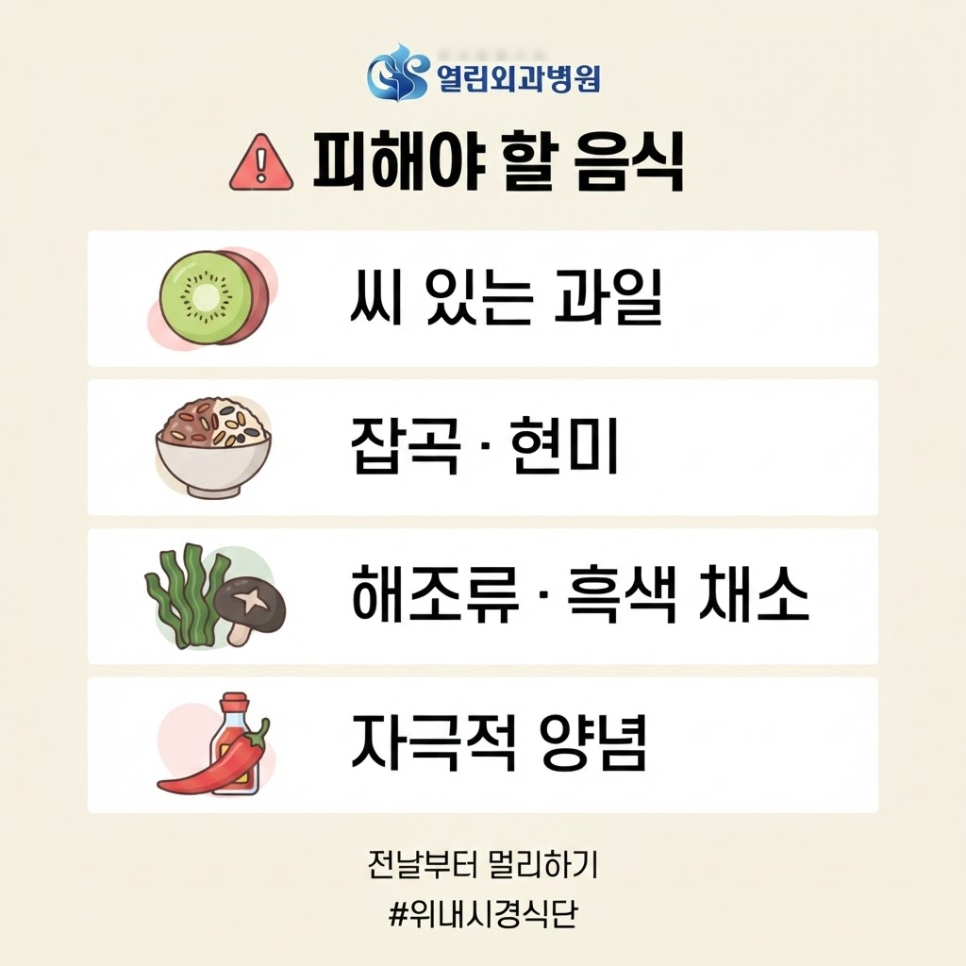
    Fruits with seeds, coarse grains, and spicy seasonings should be avoided the night before your exam.

    Foods to avoid are those that linger in the stomach or intestines and can obstruct the endoscopist’s view.

    Small-seeded fruits such as melon, kiwi, or grapes can remain in the intestines for a while.

    Coarse grains like multigrain rice, brown rice, or beans can also interfere with the exam view.

    Avoiding just these items may help support exam accuracy.

    Category Safe Foods Foods to Avoid
    Grains White rice, rice porridge Multigrain rice, brown rice, black rice
    Fruits & Vegetables Ripe banana Melon, kiwi, grapes, seaweed
    Seasoning Mild seasoning Red pepper flakes, gochujang, and other spicy seasonings

    food before endoscopy image 4

    Checklist
    ✅ Fruits with seeds (melon, grapes, tomatoes, etc.)
    ✅ Coarse grains such as multigrain rice, brown rice, or beans
    ✅ Seaweed (such as kelp) and dark-colored vegetables
    ✅ Spicy seasonings such as gochujang or red pepper flakes

    When Should Fasting Begin Before an Endoscopy?

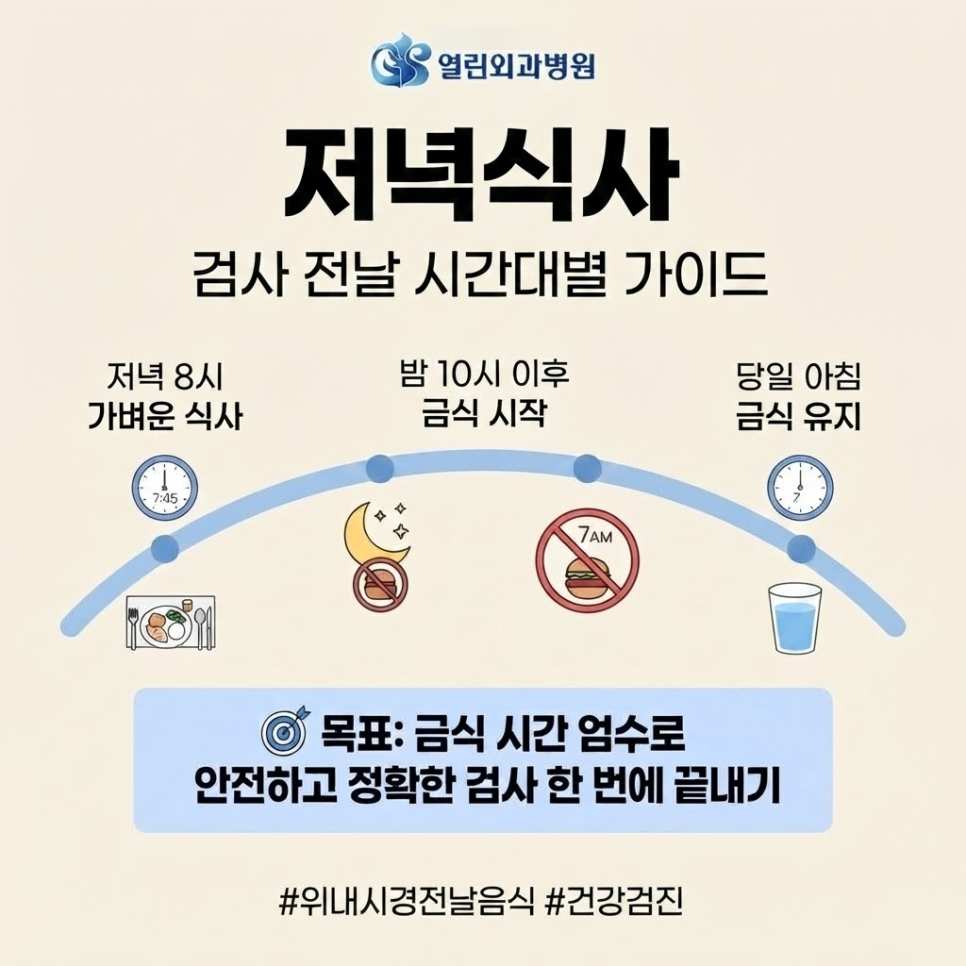
    Finish a light dinner before 8 p.m. the night before your exam, and fast completely — including water — after that.

    The fasting window refers to the period when you avoid even water so your stomach is fully empty before the procedure.

    Eating something like instant noodles late the night before can leave food in your stomach, which may mean the exam needs to be repeated.

    It’s recommended to finish eating before 8 p.m. and avoid water after that as well.

    Following this fasting window can help you complete the exam without needing a repeat visit.

    food before endoscopy image 5

    Caution
    Not following the fasting schedule can leave food in your stomach, which may interrupt the exam or require a repeat visit. Be sure to confirm the exact fasting time provided by your clinic.
    Key Point
    Eat a light dinner early the night before, and follow your clinic’s fasting instructions closely to help complete the exam on the first visit.

    Where Can You Get an Upper Endoscopy in Ansan?

    Once you’ve followed the right food and fasting guidelines before your endoscopy, the next step is having the procedure done by a qualified medical team.

    If you’re considering an upper endoscopy in Ansan, Gyeonggi-do, it’s worth checking whether the clinic has experience in digestive endoscopy.

    You can check the services and location on the [Ansan Yeollin Surgery Clinic] website.

    food before endoscopy image 6

    food before endoscopy image 7

    food before endoscopy image 8

    food before endoscopy image 9

    food before endoscopy image 10

    Yeollin Surgery Clinic is located at 376 Hwarang-ro, Danwon-gu, Ansan-si, Gyeonggi-do (across from Ansan City Hall and Danwon Police Station).

    This article is not intended to recommend any specific procedure and is provided only for informational purposes about pre-exam diet.


    Frequently Asked Questions

    1. Is it okay to drink coffee or milk the night before?
    Answer: Dairy products like milk and dark-colored coffee can leave residue on the stomach lining, so it’s best to avoid them starting the night before your exam. Stick to plain water only.

    2. Can I take my regular blood pressure medication the night before or on the day of the exam?
    Answer: Essential medications such as blood pressure or heart medication are often taken early on the morning of the exam with a minimal amount of water. However, this varies by medication, so be sure to check with your doctor in advance.

    3. I’m very hungry the night before — can I have a small late-night snack?
    Answer: A late-night snack can leave food in your stomach, which may cause nausea or make it harder to get an accurate view during the next morning’s exam. Be sure to follow the fasting schedule.

    4. Until when can I drink water?
    Answer: Fasting typically begins the night before the exam, and water is often restricted as well. Please follow your clinic’s specific instructions.


    References

    · Korea Disease Control and Prevention Agency, “Upper Endoscopy,” National Health Information Portal. Source
    · National Health Insurance Service, “Health Checkup Guide,” 2025. Source
    · Kangbuk Samsung Hospital Health Promotion Center, “Endoscopy (Upper/Lower) Precautions.” Source

    This article is intended for general health information purposes only and is not a substitute for individual diagnosis or treatment. If you have symptoms, please consult a medical professional.

  • Lipoma Size 5cm or Larger: 3 Signs Surgery May Be Needed

    Lipoma Size 5cm or Larger: 3 Signs Surgery May Be Needed

    SummaryThis article summarizes medical guidance on whether a lipoma size of 5cm or larger requires surgery, along with how lipomas are diagnosed and managed.

    Finding a soft, movable lump under your skin can be alarming at first.
    Most of the time there’s no pain or color change, so it’s easy to brush off.

    But once you notice it slowly growing larger over time, the concern becomes harder to ignore.
    You may start wondering whether surgery is necessary, and just how large a lipoma size has to be before it becomes a real concern.

    This is actually a question that comes up often in clinical practice.

    This article outlines the surgical criteria based on changes in lipoma size, along with accurate diagnostic methods.
    Let’s look at what standards doctors use to consider excision when a lipoma grows beyond 5 centimeters or becomes painful, and how to manage it safely without unnecessary worry.

    lipoma size

    What Is a Lipoma and Why Does It Form?

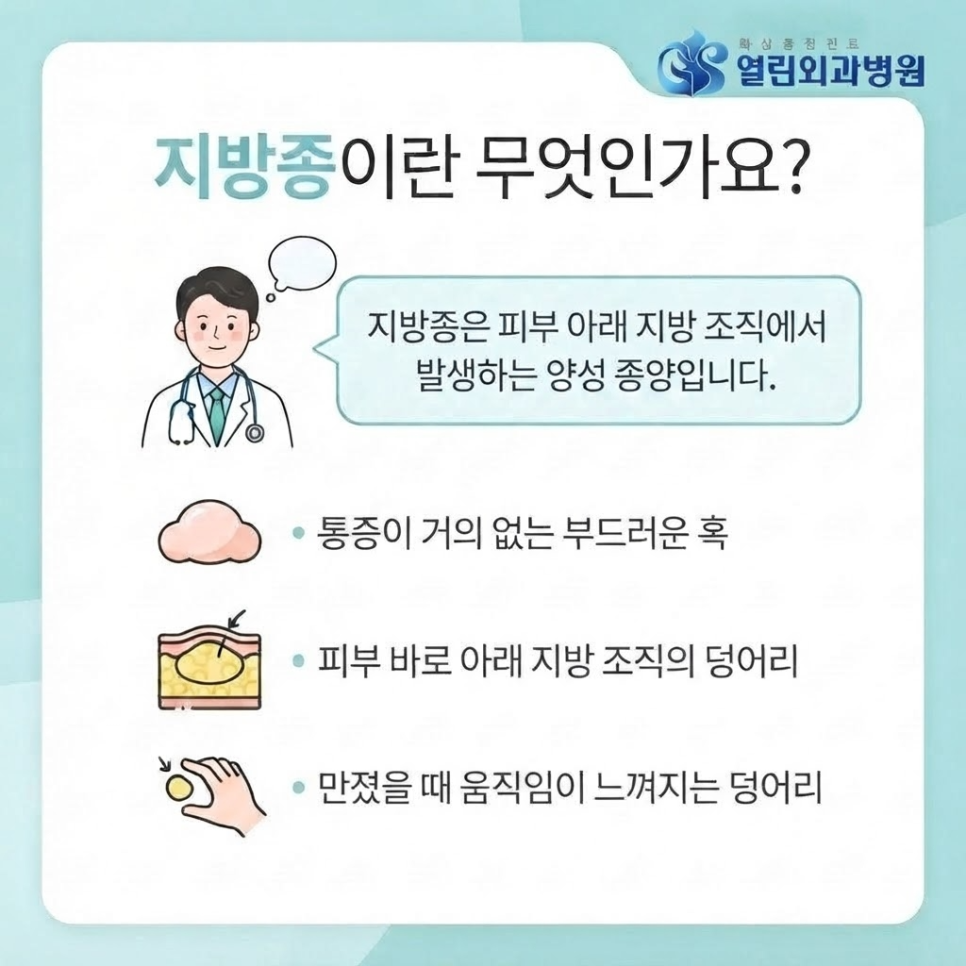
    A lipoma is a common benign tumor that forms when fat cells cluster together and grow within the subcutaneous fat tissue.
    It’s common enough that it may develop in adults of any age.

    Because it’s usually painless, it’s easy to dismiss at first.
    But it’s completely natural to feel a jolt of worry when you discover an unfamiliar lump on your body.

    That’s why doctors often emphasize the importance of distinguishing a lipoma from liposarcoma, a malignant tumor it can sometimes be confused with.

    lipoma size related image 2

    Key Point
    A lipoma is typically painless and moves easily when pressed with a finger. If a lump feels hard and stays fixed in place, other conditions should be ruled out.

    Lipoma Size: How Large Can It Grow?

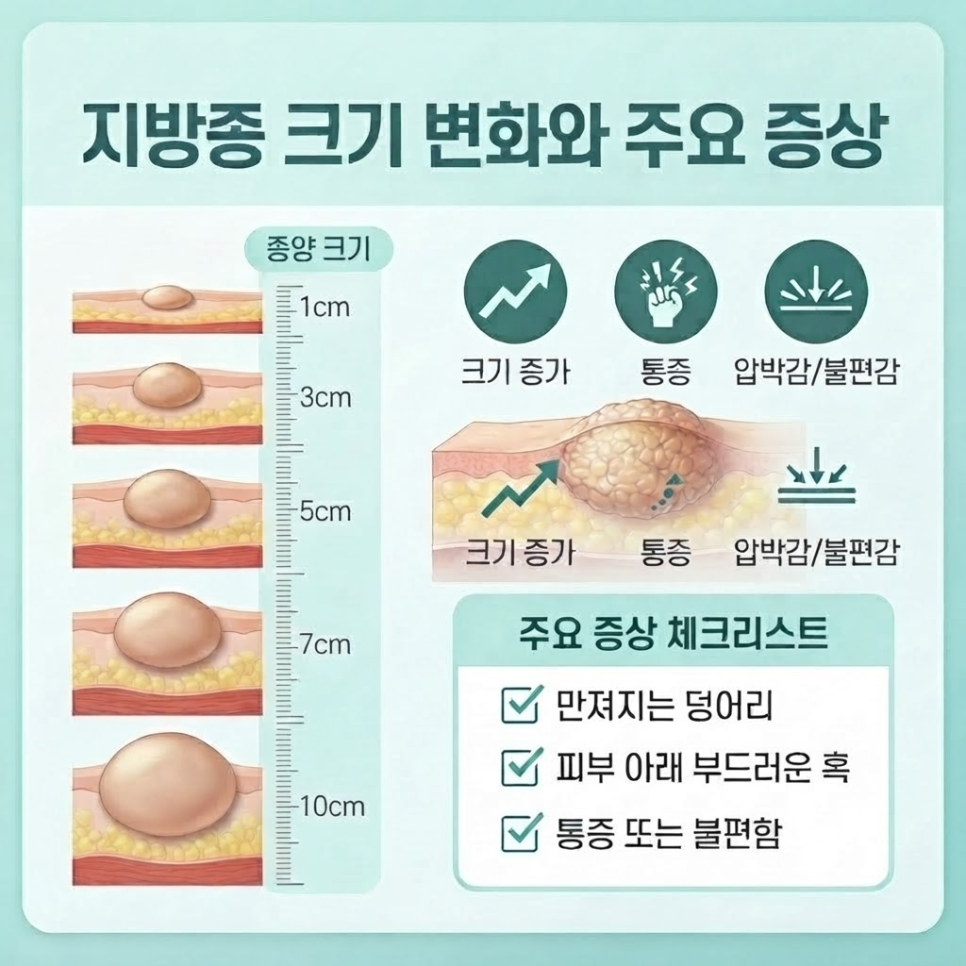
    Lipoma size typically ranges from about 1 centimeter to several centimeters.
    Some grow slowly over time, while others remain unchanged for years.

    lipoma size related image 3

    In rare cases, a lipoma can grow beyond 10 centimeters, becoming what’s known as a giant lipoma.
    As it grows larger, it can press on nearby nerves or muscles.

    This may bring on pain, tingling, or general discomfort.
    The change in appearance can also be a source of stress.

    Checklist
    ✅ Has the lump grown noticeably larger over the past few months?
    ✅ Does it feel hard and fixed in one place when touched?
    ✅ Do you feel pressure or pain during everyday activities?
    ✅ Is the surface irregular or the border unclear?

    lipoma size related image 4


    Does Lipoma Size Determine Whether You Need Surgery?

    Not every lipoma needs to be surgically removed.
    If it’s small and causes no particular discomfort, simply monitoring it over time is often enough.

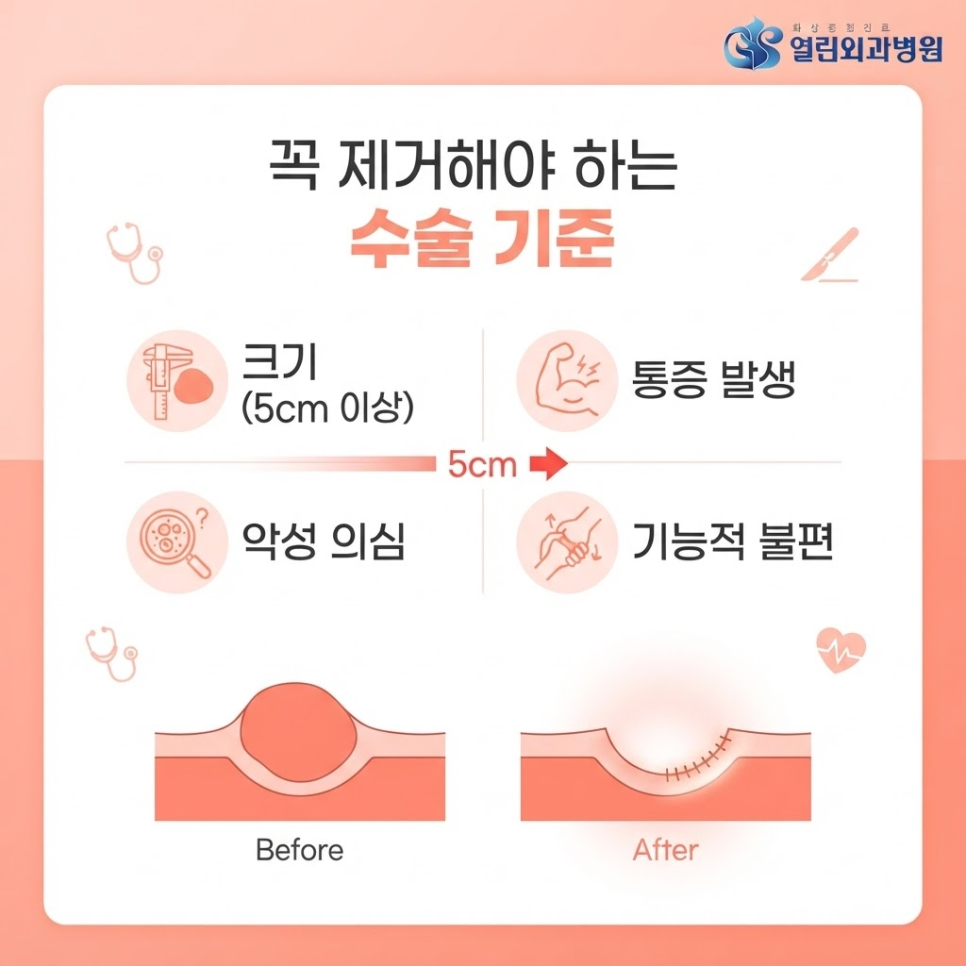
    However, excision may be considered when a lipoma meets specific medical criteria.
    According to disease information from Asan Medical Center, treatment is generally considered when the lipoma is 5 centimeters or larger, or when it causes pain or grows at an abnormal rate.

    lipoma size related image 5

    Category Monitor (Watchful Waiting) Consider Surgery
    Size Under 5cm, little to no change 5cm or larger, or growing rapidly
    Symptoms No pain or pressure Pain, tingling, or functional impairment
    Imaging findings Typical benign appearance Findings suggestive of malignancy, such as liposarcoma

    Beyond cosmetic concerns, these functional symptoms are what typically determine whether surgery is warranted.

    Outcomes
    Excision performed based on clear medical criteria may help lower the risk of recurrence and may also help ease everyday discomfort such as pressure or pain. Outcomes can vary from person to person.

    How Are Lipomas Diagnosed and Managed?

    Lipoma diagnosis is generally made through a physical exam combined with an ultrasound.
    Visual inspection or palpation alone can’t reliably determine the exact depth and characteristics of the mass.

    lipoma size related image 6

    Medical information from Seoul National University Hospital notes that when differentiation from liposarcoma is needed, CT, MRI, or a tissue biopsy may be performed as well.
    According to the Korea Disease Control and Prevention Agency’s National Health Information Portal, ultrasound-guided biopsy allows the lesion’s location to be confirmed in real time while collecting tissue for an accurate diagnosis.

    Relying on online reviews or unverified home remedies can sometimes lead to a delayed diagnosis.
    Getting an objective evaluation at a nearby medical facility is generally recommended.

    If you need an accurate diagnosis and consultation, you’re welcome to check the care information at Ansan Yeorin Surgery Hospital, a burn treatment specialist – Homepage.

    lipoma size related image 7

    Caution
    Do not attempt to press on, squeeze, or forcibly remove the lump yourself based on self-diagnosis — this can lead to inflammation or infection and should be strictly avoided.

    Frequently Asked Questions

    1. Can a lipoma go away on its own?
    Answer: It’s rare for a lipoma to shrink or disappear naturally — it typically stays the same size or grows gradually over time.

    2. How painful is the surgery, and how long is recovery?
    Answer: Most cases involve a simple excision under local anesthesia, and while it varies by size, patients typically return to daily activities relatively quickly.

    3. Is this condition likely to come back after treatment?
    Answer: Once fully excised, recurrence at the same site is relatively uncommon, though a new lipoma may still develop elsewhere.

    4. Should I still see a doctor if the lipoma is small?
    Answer: Even though it’s a benign tumor, an early evaluation is recommended to rule out other conditions such as liposarcoma.

    5. How is a lipoma different from a cyst?
    Answer: Because texture, location, and ultrasound findings differ between the two, a proper exam is needed rather than relying on visual assessment alone.

    lipoma size related image 8

    lipoma size related image 9

    lipoma size related image 10

    lipoma size related image 11


    References

    · Asan Medical Center, “Lipoma,” Disease Encyclopedia, Asan Medical Center. View source
    · Seoul National University Hospital, “Lipoma,” Medical Information, Seoul National University Hospital. View source
    · Korea Disease Control and Prevention Agency, “Ultrasound-Guided Biopsy,” National Health Information Portal, Korea Disease Control and Prevention Agency. View source


    This article is provided for general health information purposes only and is not a substitute for individual diagnosis or treatment. If you have symptoms, please consult a medical professional.
  • Blood in Stool: 3 Common Causes When You’re Bleeding But Feel No Pain

    Blood in Stool: 3 Common Causes When You’re Bleeding But Feel No Pain

    SummaryThe likely cause of blood in stool can differ depending on the color of the blood. From the difference between bright red and dark red blood to hemorrhoids, anal fissures, colon polyps, and inflammatory bowel disease, here’s a detailed breakdown of the possible causes of rectal bleeding, the warning signs that mean you should see a doctor, and everyday habits that can help prevent it.

    Seeing red blood on the toilet paper can make anyone’s heart sink.

    But did you know that the likely cause of blood in stool can vary completely depending on the color of the blood?

    In fact, when patients come in for evaluation of rectal bleeding, the color of the blood is often one of the first things a doctor checks.

    The color and pattern of the bleeding can vary depending on the underlying condition.
    From anal conditions like hemorrhoids and anal fissures to colon polyps and inflammatory bowel disease,
    here are the possible causes of rectal bleeding and the warning signs that mean you should see a doctor.

    blood in stool

    What Does Blood in Stool Color Tell You About the Cause?

    The short answer: yes, the color of the blood alone can give a rough idea of where the bleeding is coming from.
    Blood in stool refers to bleeding that occurs when the anus or the lining of the intestine is damaged during a bowel movement.

    The closer the bleeding site is to the anus, the more likely the blood is to appear bright red.

    On the other hand, if the issue is higher up in the colon or small intestine, the blood can appear dark red or even black.

    That’s why it’s important to pay attention to both the color and the pattern of bleeding when checking your symptoms.

    illustration related to blood in stool 2

    Key points
    ✔ Bright red blood — may indicate damage to small blood vessels near the anus (hemorrhoids, fissures, etc.)
    ✔ Dark red blood — may indicate bleeding higher in the colon or rectum
    ✔ Blood mixed with mucus — may indicate inflammatory bowel conditions or polyps
    Blood Color Likely Location Possible Condition
    Bright red Near the anus Hemorrhoids, anal fissure
    Dark red / black Upper colon, small intestine Colon polyps, ulcerative conditions
    Mixed with mucus Colon lining Inflammatory bowel disease

    Why do you bleed with no pain at all?

    In most cases, painless bleeding is caused by internal hemorrhoids.
    That’s because the lining inside the anal canal has very few sensory nerve endings.

    Common causes of this kind of rectal bleeding include anal conditions like hemorrhoids and anal fissures.

    When hard stool tears the lining of the anus, it can cause both pain and bleeding.

    By contrast, when hemorrhoid tissue is simply irritated during a bowel movement, bleeding often occurs with little to no pain.

    Key points
    ✔ External hemorrhoids — located outside the anus, richly supplied with nerves, so pain is common
    ✔ Internal hemorrhoids — located inside the anal lining, with fewer nerve endings, so painless bleeding is typical
    ✔ Anal fissure — a tear in the lining from hard stool, usually causing sharp pain along with bleeding

    illustration related to blood in stool 3

    Could the cause be something other than an anal condition?

    It’s not always just an anal issue.
    Colon polyps or inflammatory bowel disease, such as ulcerative colitis,
    can also cause rectal bleeding.

    In these cases, bleeding is often accompanied by mucus in the stool or changes in bowel habits.

    illustration related to blood in stool 4

    Checklist
    ✅ A small streak of bright red blood on the toilet paper → possible anal fissure
    ✅ Blood dripping heavily enough to color the toilet water → possible hemorrhoid tissue damage
    ✅ Blood mixed into the stool itself, or accompanied by a heavy, dull ache → possible issue inside the colon lining

    What should you do if bleeding lasts more than a week?

    If bleeding continues for more than a week, you should see a doctor.
    It’s not a good idea to assume it’s just minor irritation and leave it unchecked.

    illustration related to blood in stool 5

    Things to watch for
    ⚠ Bleeding that continues for more than a week
    ⚠ Bleeding accompanied by unexplained weight loss or a sudden change in bowel frequency
    ⚠ Repeated episodes of dark red blood or black stool
    If you notice any of these signs, it’s safer to get a proper medical evaluation rather than guessing on your own.

    For an accurate assessment, it’s safest to get a thorough clinical evaluation.

    In daily life, try to drink enough water and eat a fiber-rich diet.

    Habits that help prevent constipation go a long way toward maintaining anal and colon health.

    If symptoms keep recurring or you’re unsure of the cause, it’s a good idea to see a colorectal specialist.
    Ansan Yeolin Surgical Hospital — Home

    illustration related to blood in stool 6

    Key takeaways
    ◆ Bright red blood suggests anal conditions like hemorrhoids or fissures, while dark red blood may point to polyps or inflammation higher in the colon.
    ◆ Even without pain, an endoscopic exam is recommended if bleeding lasts more than a week or comes with weight loss or changes in bowel habits.
    ◆ Staying well hydrated and eating enough fiber to prevent constipation is a basic habit that may help reduce your risk.

    Frequently Asked Questions

    1. Does blood in stool always mean colon cancer?
    No. In the vast majority of cases, the cause is a common anal condition like hemorrhoids or an anal fissure. That said, if bleeding persists or the blood is dark red, it’s best to get an accurate diagnosis.

    2. Why does bleeding sometimes happen with no pain at all?
    Painless bleeding is commonly associated with internal hemorrhoids. Because the hemorrhoid tissue inside the anal canal has few sensory nerves, bleeding can occur without any pain.

    3. Should I still get checked if there’s only a small streak of blood on the toilet paper?
    It may just be temporary irritation from hard stool, but if it keeps happening or continues over time, it’s safer to find out the cause.

    4. When should I consider getting a colonoscopy?
    An endoscopic exam is recommended if the blood is dark red, or if it’s accompanied by changes in bowel habits, weight loss, or a family history of colon conditions.

    5. Is there a way to prevent this kind of bleeding?
    Drinking enough water and eating a fiber-rich diet to prevent constipation is generally recommended as a basic way that may help reduce the risk.


    References

    · Korea Disease Control and Prevention Agency, “Blood in Stool and Black Stool (Adults),” National Health Information Portal. View source
    · Korea Disease Control and Prevention Agency, “Hemorrhoids,” National Health Information Portal. View source
    · Asan Medical Center, “Hemorrhoids,” Disease Encyclopedia. View source
    · National Cancer Center, “Recurring Dark Blood in Stool: A Warning Sign From Your Colon,” NCC Webzine, 2019. View source


    This article is provided for general health information purposes only and is not a substitute for individual diagnosis or treatment. If you’re experiencing symptoms, please consult a physician.

  • Burn Hospital in Ansan: 3 Things 15 Minutes of First Aid Can Decide

    Burn Hospital in Ansan: 3 Things 15 Minutes of First Aid Can Decide

    SummaryDon’t panic if you’re scalded by hot water. This guide covers the first 15 minutes of burn first aid, how to handle blisters, checkpoints for choosing a burn hospital in Ansan, and stage-by-stage burn treatment and scar care.

    The instant hot soup splashes onto the back of your hand, most people panic and reach for ice.

    But that split-second decision can affect how the scar ends up looking.

    What you do in the first 15 minutes after a burn, and how you choose a specialized burn clinic, may affect your recovery speed and scarring.

    burn hospital in Ansan

    Key Points
    1. A specialized burn hospital treats burn patients who need a tailored approach — from dressing changes to scar laser treatment — that differs from routine wound care.
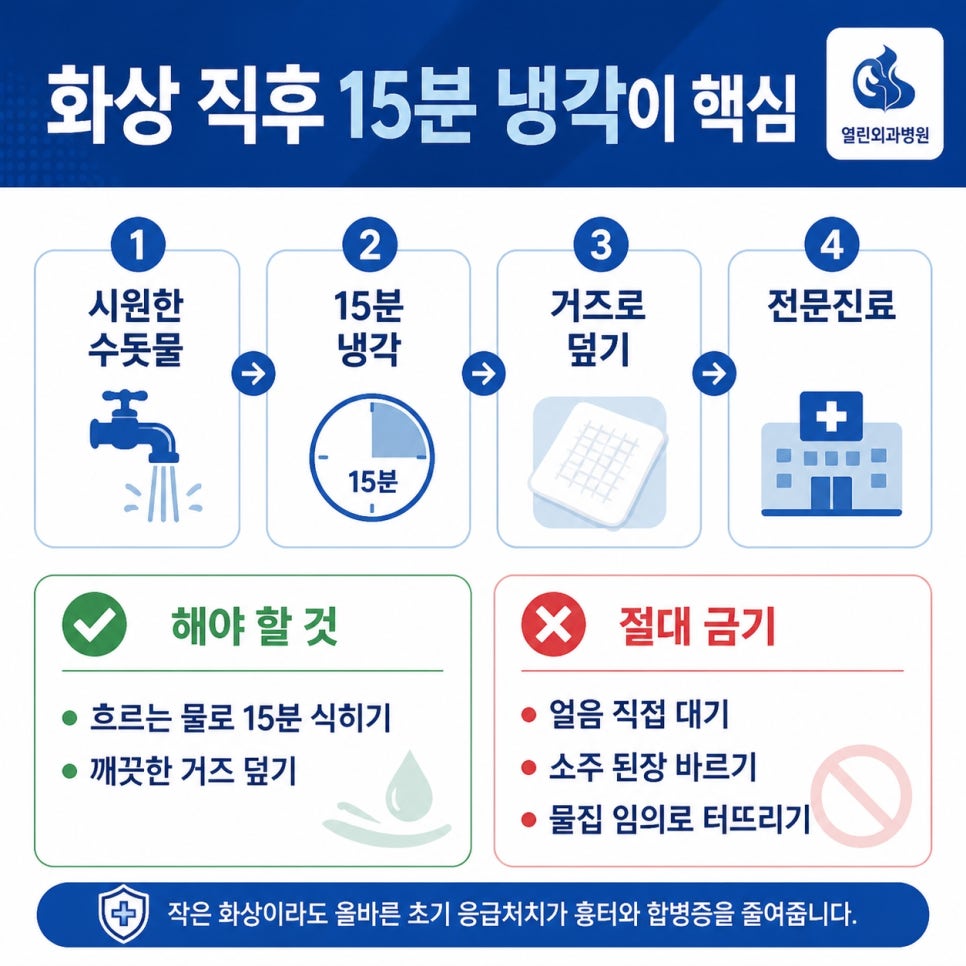
    2. Right after a burn, the basic sequence is to cool the area under running cool water for at least 15 minutes, then get specialized burn care.
    3. Folk remedies like applying ice directly, rubbing on soju or soybean paste, or popping blisters yourself can worsen the damage and cause infection.

    Burn hospital in Ansan - related image 2

    This article walks through the emergency first-aid steps right after a burn, the checkpoints for choosing the right burn treatment center, and stage-by-stage burn treatment and scar care.
    We’ll guide you step by step so you can act right away without panicking.

    What’s the First Thing You Should Do After a Burn?

    The first 15 minutes after a burn are a critical window that can affect how deep the skin damage becomes.
    Burn first aid is the process of cooling the heat as quickly as possible to reduce tissue damage.

    Burn hospital in Ansan - related image 3

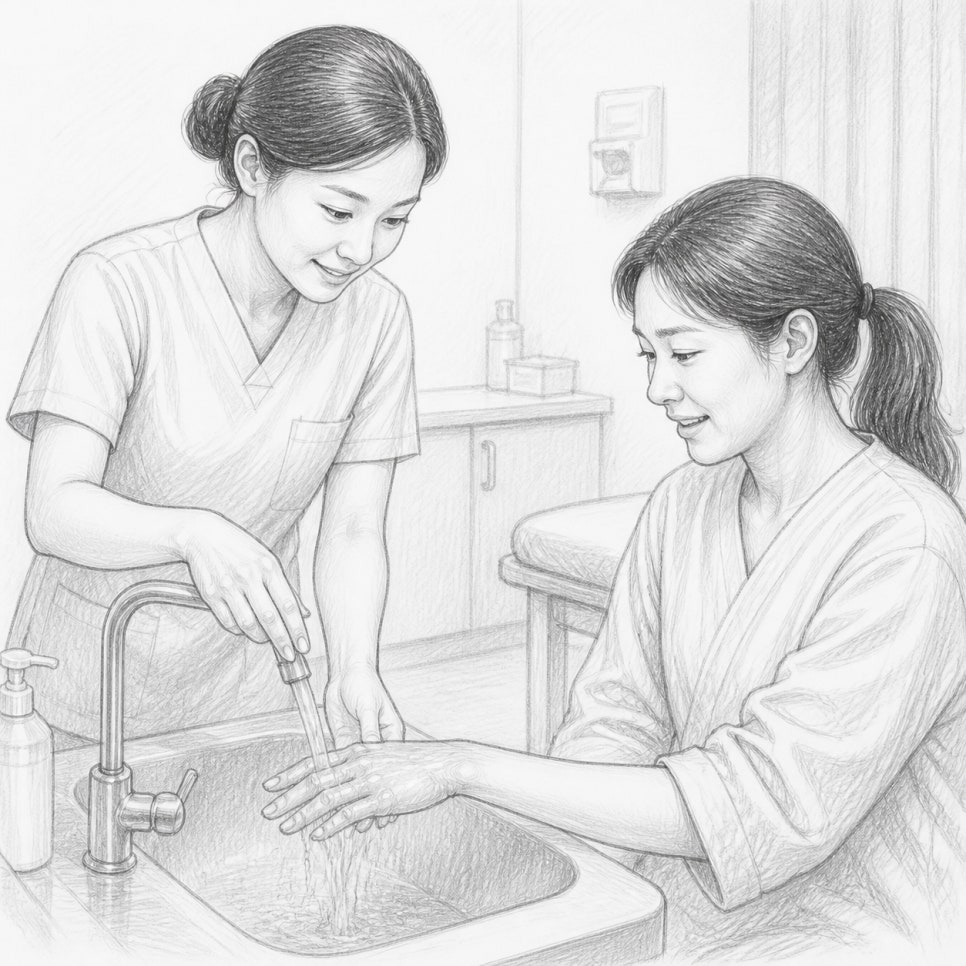
    If you get burned, immediately hold the area under running cool water and cool it for at least 15 minutes.

    That said, some people still try folk remedies like rubbing on soju, soybean paste, or raw potato.

    These should be strictly avoided, as they can cause secondary infection.
    Cooling with clean water alone is generally considered a safe approach.

    Burn hospital in Ansan - related image 4

    Caution
    Popping a blister yourself increases the risk of bacterial infection and can slow healing.
    Blisters act as a natural shield protecting the damaged skin underneath, so leave them intact and have a medical professional treat them if needed.

    In summary, here’s the order to follow for burn first aid:

    1. Hold the area under running cool water (15–25°C / 59–77°F) for at least 15 minutes.
    2. Don’t apply ice directly — it can over-constrict blood vessels and worsen the damage.
    3. Don’t use folk remedies such as soju, soybean paste, or potato.
    4. Cover the area loosely with clean gauze and go to a burn specialty hospital.

    What Should You Check When Choosing a Burn Hospital in Ansan?

    Burn treatment requires a completely different, specialized approach than routine wound care.
    A specialized burn hospital refers to a facility with an integrated care system covering everything from initial dressing to scar management.

    Burn hospital in Ansan - related image 5

    Every hospital has different treatment know-how and aftercare programs.

    That’s why it’s worth carefully checking whether a hospital can provide intensive care and whether it also connects patients to scar management.

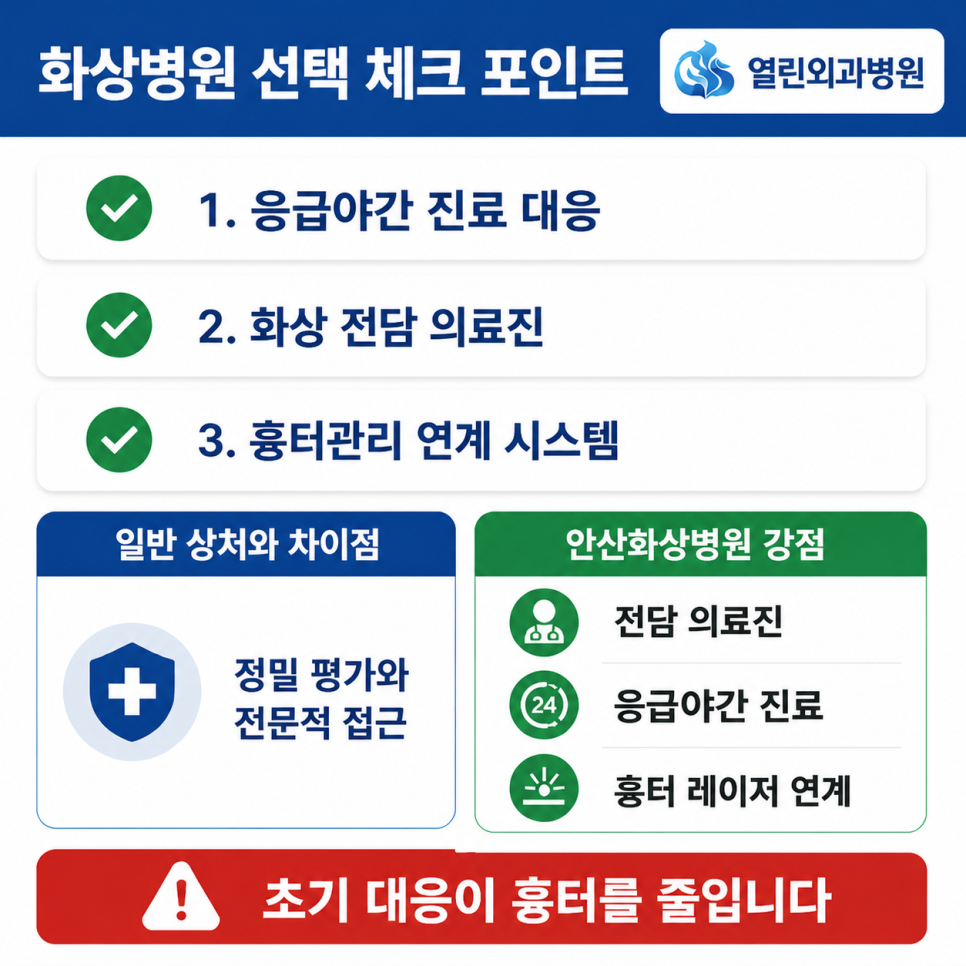
    Checklist
    ✅ Check whether burn care and emergency response are available even at night
    ✅ Look into the clinical experience and expertise of the dedicated burn medical staff
    ✅ See whether there’s a systematic care pathway from dressing to scar laser treatment
    ✅ Confirm whether they create a customized treatment plan based on the burn’s location and depth

    For reference, one option in the Ansan area that offers both burn treatment and scar management is the home page of Ansan Yeollin Surgery Hospital, which provides burn care — it may be worth checking out when comparing hospitals.


    How Does Treatment Differ by Burn Stage?

    Burn treatment by stage is tailored to how deep the skin damage goes.
    Burn stages classify the depth of skin damage from first-degree to third-degree.

    Stage Main Symptoms Treatment Focus
    First-degree burn Mild redness, stinging Focus on cooling and moisturizing
    Second-degree burn Blisters with pain Regular dressing changes and disinfection
    Third-degree or higher Skin necrosis, reduced sensation Requires specialist care and intensive treatment

    Burn hospital in Ansan - related image 6

    Proper dressing changes and disinfection are essential to prevent infection and help new skin form properly.

    Even after treatment ends, thorough sun protection and moisturizing are needed to reduce pigmentation.
    Skin that’s been sensitized by injury tends to overproduce melanin, making it darker than the surrounding area.

    Apply an SPF30+ sunscreen daily, even indoors, and reapply every 2–3 hours outdoors.
    Neglecting skin care early on can allow discoloration to linger, so it’s worth paying close attention.

    Outcome
    Getting systematic care early from a burn hospital in Ansan and consistently keeping up with sun protection and moisturizing may help minimize scarring and contracture.

    Burn hospital in Ansan - related image 7

    Burn hospital in Ansan - related image 8

    About Yeollin Surgery Hospital

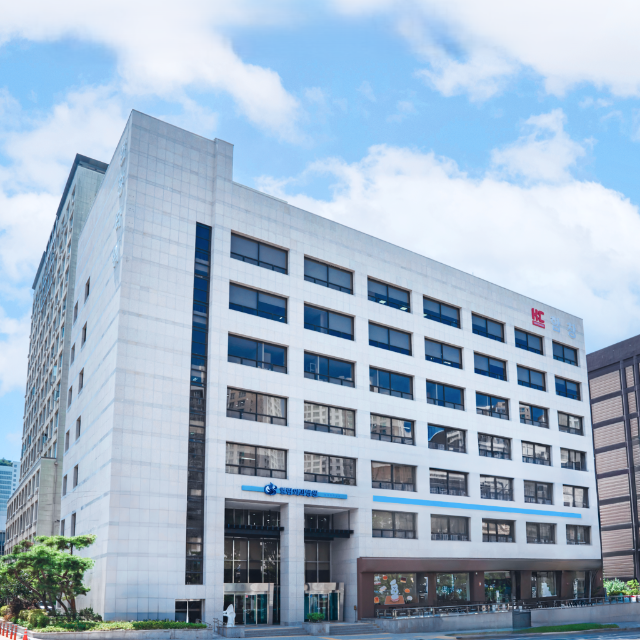
    It’s located at 376 Hwarang-ro, Danwon-gu, Ansan-si, Gyeonggi-do (basement level and floors 2–4), across from Ansan City Hall and Danwon Police Station, making it easy to reach.

    Burn hospital in Ansan - related image 9

    Burn hospital in Ansan - related image 10

    Burn hospital in Ansan - related image 11

    Burn hospital in Ansan - related image 12


    Frequently Asked Questions

    1. Is it okay to apply ice directly to a burn?
    Applying ice directly can cause excessive blood vessel constriction and worsen tissue damage, so it’s better to use running water at about 15–25°C (59–77°F).

    2. Can I pop a small blister myself at home?
    Blisters protect the wound from bacteria, so you shouldn’t pop them yourself — have them treated under sterile conditions at a hospital instead.

    3. How long does burn treatment usually take?
    It varies by depth and extent, but second-degree burns typically require around two weeks of treatment.

    4. When should I start managing scars?
    Begin moisturizing and sun protection as soon as the wound has fully healed, and combining this with professional scar laser treatment, if needed, may help.

    5. If I get burned at night, should I go straight to the hospital?
    For extensive burns or second-degree-plus burns with large blisters, it’s safer to go straight to a burn specialty hospital that offers night-time care.


    References

    · National Safety Portal (Ministry of the Interior and Safety), “Daily Safety Guidelines – First Aid,” Ministry of the Interior and Safety. View source
    · Seoul National University Hospital, “Burns,” Medical Information. View source
    · Hidoc, “Don’t Pop the Blister… A Surgeon Explains How to Handle Burns,” Hidoc News, 2025. View source
    · Soonchunhyang University Gumi Hospital, “Proper Burn Care and Scar Management,” Health Information. View source


    This article is intended for general health information purposes only and is not a substitute for individual diagnosis or treatment. If you have symptoms, please consult a medical professional.
  • Burn First Aid: 3 Things the First 15 Minutes Decide

    Burn First Aid: 3 Things the First 15 Minutes Decide

    SummaryDon’t panic if you’re scalded by hot water. Here’s a rundown of the first-15-minutes burn first aid steps, how to handle blisters, checkpoints for choosing an Ansan burn hospital, and treatment and scar care by burn stage.

    The moment hot soup splashes onto the back of your hand, most people instinctively reach for ice.

    But that split-second decision actually plays a big role in how large the resulting scar ends up being.

    The first 15 minutes after a burn — and how you choose an Ansan burn hospital — can make a real difference in how quickly you recover and how much scarring remains.

    Ansan burn hospital

    Key Points
    1. An Ansan burn hospital treats burn patients who need a specialized approach — from dressing changes to scar laser treatment — that differs from general wound care.
    2. Right after a burn, the basic sequence is to cool the area under cool running water for at least 15 minutes, then see a burn specialist.
    3. Folk remedies such as applying ice directly, rubbing on soju or soybean paste, or popping blisters yourself can worsen the damage and lead to infection.

    Ansan burn hospital related image 2

    This article covers the order of first aid right after a burn, checkpoints for choosing an Ansan burn hospital, and treatment and scar care by burn stage.
    We’ll walk you through it step by step so you can act calmly and confidently.

    What’s the First Thing You Should Do for Burn First Aid?

    The first 15 minutes after a burn are a critical window for determining how deep the skin damage goes.
    Burn first aid means cooling the heat as quickly as possible to minimize tissue damage.

    Ansan burn hospital related image 3

    If you get burned, immediately hold the area under cool running water and keep it cooling for at least 15 minutes.

    That said, some people still try folk remedies like rubbing soju, soybean paste, or raw potato on the burn.

    These practices can cause secondary infection and should be avoided entirely.
    Cooling with clean water alone is generally considered a safe approach.

    Ansan burn hospital related image 4

    Caution
    Popping a blister yourself increases the risk of bacterial infection and can slow healing.
    Blisters act as a natural shield protecting the damaged skin underneath, so leave them intact and have a medical professional treat them if needed.

    In summary, here’s the recommended order for burn first aid.

    1. Hold the area under cool running water (15–25°C / 59–77°F) for at least 15 minutes.
    2. Don’t apply ice directly — it can over-constrict blood vessels and worsen the damage.
    3. Avoid folk remedies such as soju, soybean paste, or potato.
    4. Lightly cover the area with clean gauze and head to a burn specialist.

    What Should You Check When Choosing an Ansan Burn Hospital?

    Burn treatment calls for a specialized approach that’s completely different from general wound care.
    An Ansan burn hospital is a facility with a coordinated care system covering everything from initial burn dressing to scar management.

    Ansan burn hospital related image 5

    Every hospital has its own treatment know-how and aftercare programs, so there’s naturally some variation between them.

    That’s why it’s worth carefully checking whether a hospital can provide focused treatment and whether scar care is included as part of the process.

    Checklist
    ✅ Check whether burn care and emergency response are available at night
    ✅ Look into the clinical experience and expertise of the burn care team
    ✅ See whether there’s a systematic care pathway from dressing to scar laser treatment
    ✅ Confirm whether they build a treatment plan tailored to the burn’s location and depth

    For reference, one option in the Ansan area offering both burn treatment and scar management is the home page of Yeollin Surgical Hospital in Ansan, which provides burn care — worth a look when comparing hospitals.


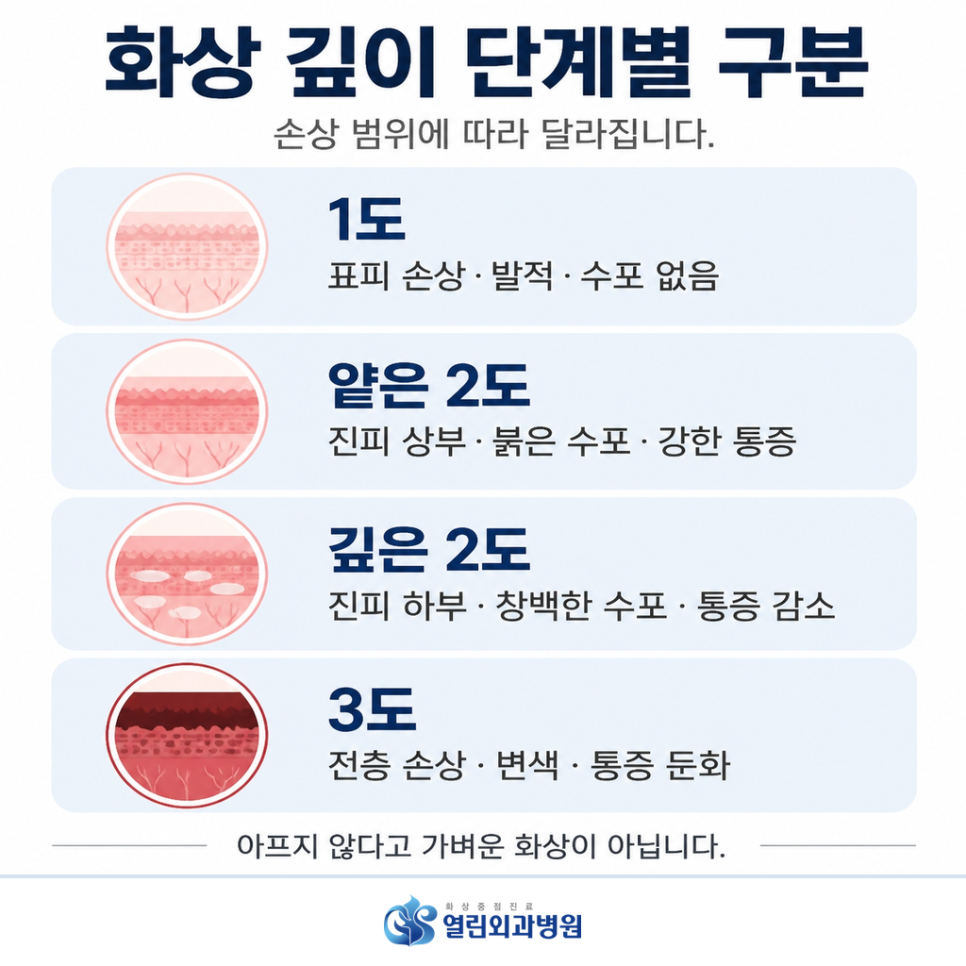
    How Does Treatment Differ by Burn Stage?

    Treatment by burn stage is tailored to how deep the skin damage goes.
    Burn stages classify the depth of skin damage from first-degree to third-degree.

    Stage Main Symptoms Treatment Focus
    First-degree burn Mild redness, stinging Cooling and moisturizing care
    Second-degree burn Blisters with pain Regular dressing changes and disinfection
    Third-degree or higher Tissue necrosis, reduced sensation Requires specialist care and intensive treatment

    Ansan burn hospital related image 6

    Proper dressing changes and disinfection are essential for preventing infection and helping new skin grow in well.
    Even after treatment is finished, thorough sun protection and moisturizing matter for reducing pigmentation.
    Skin that’s been sensitized by injury tends to overproduce melanin, which can leave it darker than the surrounding area.

    It’s a good idea to apply SPF 30+ sunscreen daily, even indoors, and reapply every 2–3 hours when outdoors.
    Neglecting this early on can allow discoloration to linger, so staying consistent matters.

    Outcome
    Getting systematic care at an Ansan burn hospital early on, combined with consistent sun protection and moisturizing, may help minimize scarring and contracture.

    Ansan burn hospital related image 7

    Ansan burn hospital related image 8

    About Yeollin Surgical Hospital

    It’s located at 376 Hwarang-ro, Danwon-gu, Ansan-si, Gyeonggi-do (basement level plus floors 2, 3, and 4), across from Ansan City Hall and in front of Danwon Police Station, making it easy to reach.

    Ansan burn hospital related image 9

    Ansan burn hospital related image 10

    Ansan burn hospital related image 11

    Ansan burn hospital related image 12


    Frequently Asked Questions

    1. Is it okay to apply ice directly to a burn?
    Applying ice directly can over-constrict blood vessels and worsen tissue damage, so it’s better to use running water around 15–25°C (59–77°F).

    2. Can I pop a small blister at home?
    Blisters protect the wound from bacteria, so avoid popping them yourself — have them treated under sterile conditions at a hospital instead.

    3. How long does burn treatment usually take?
    It varies with the depth and extent of the burn, but second-degree burns typically require around two weeks of treatment.

    4. When should I start caring for a scar?
    Start moisturizing and applying sun protection as soon as the wound has fully healed, and if needed, professional scar laser treatment may also help.

    5. If I’m burned at night, should I go straight to the hospital?
    For extensive burns or second-degree-and-above burns with large blisters, it’s safest to head straight to a burn specialist that offers night-time care.


    References

    · Safekorea (Ministry of the Interior and Safety), “Life Safety Action Guide – First Aid,” Ministry of the Interior and Safety. View source
    · Seoul National University Hospital, “Burns,” Medical Information. View source
    · Hidoc, “Don’t Pop the Blister… A Surgeon Explains How to Handle Burns,” Hidoc News, 2025. View source
    · Soonchunhyang University Gumi Hospital, “Proper Burn Care and Scar Management,” Health Information. View source


    This article is intended to provide general health information and is not a substitute for individual diagnosis or treatment. If you have symptoms, please consult a medical professional.