Ever spent a full day at the beach and woken up the next morning with shoulders so sunburned that a blister has actually formed?
Many people hesitate over whether to pop it themselves or just leave it alone, and that hesitation often makes the damage worse.
Dermatologists note that popping sunburn blisters carelessly significantly raises the risk of secondary infection.
Sunburn blisters form when UV-damaged skin protects itself by filling the space between the epidermis and dermis with fluid.
Never pop the blister. The key first-aid step is to cool it with cold water for 10 to 20 minutes, then replenish moisture with aloe vera gel or a similar product.
If a blister is larger than the palm of your hand, or is accompanied by pus or fever, you should see a doctor.

What Exactly Are Sunburn Blisters?
Sunburn blisters are a defensive response in which skin damaged by intense UV (UVB) rays protects itself by filling the space between the epidermis and dermis with fluid.
In simple terms, it’s a natural bandage your body makes on its own.
According to the Korea Disease Control and Prevention Agency’s National Health Information Portal, sunburn symptoms typically begin 4 to 6 hours after UV exposure and peak between 12 and 24 hours later.
If a blister forms during this window, it generally means the burn has already progressed to a second-degree burn.
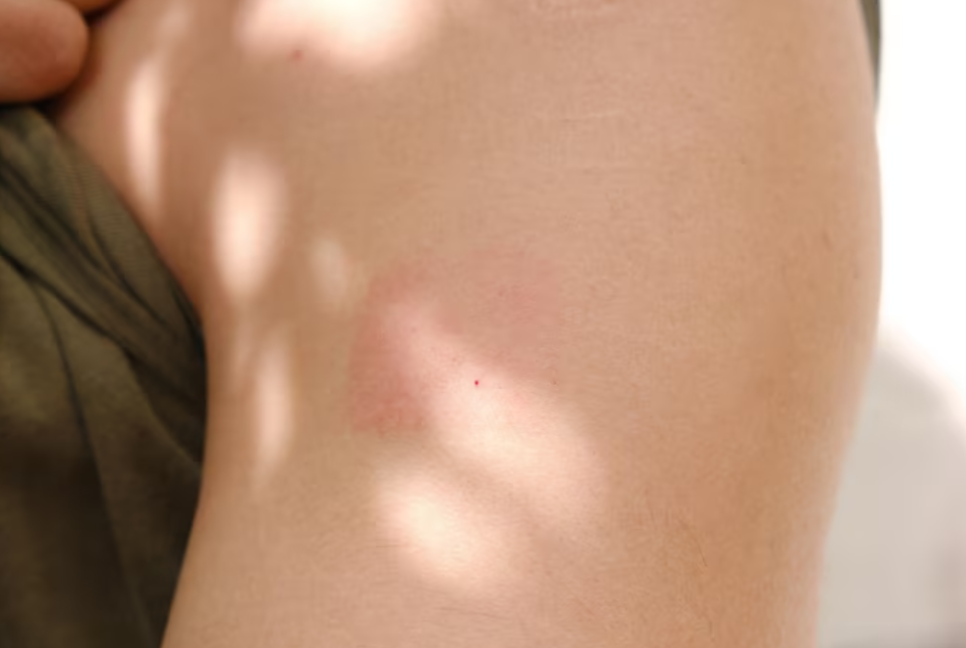
✔ The fluid inside a blister acts as a barrier that keeps bacteria out.
✔ New skin is regenerating underneath that protective barrier.
✔ Popping it on purpose destroys that protective function.
Allowing blisters to heal — instead of popping them — may help protect against infection.
The American Academy of Dermatology (AAD) explains in its official patient guidance that letting blisters heal naturally, rather than popping them, is what helps prevent infection.
Why Shouldn’t You Pop Sunburn Blisters?
To put it simply: the moment you pop a blister, its protective barrier disappears, creating an easy path for bacteria to penetrate deep into the skin.
As a result, healing takes longer and the chances of scarring increase.
| Category | If Popped | If Left Alone |
|---|---|---|
| Protective barrier | Disappears | Stays intact |
| Secondary infection risk | Significantly increases | Relatively low |
| Scarring risk | Increases | Decreases |
| Recovery time | Longer | Proceeds as expected |
That said, blisters often pop on their own from friction with clothing or from being pressed on while you sleep.
If that happens, don’t forcibly peel off the skin — just follow the care steps covered in the next section.
How Do You Treat Sunburn Blisters? 4-Step First Aid
The first thing to do is quickly cool down the heat in your skin.
Just follow these steps in order — it’s easier than it sounds.
- Cover the burned area gently with a cold, damp towel for about 10 to 20 minutes. Mayo Clinic warns that applying ice directly to the skin can cause additional tissue damage.
- Rinse the area under lukewarm running water several times a day, about 10 minutes each time, to keep cooling it down.
- Once the heat has eased somewhat, replenish moisture with a gentle, low-irritation aloe vera soothing gel.
- Wear loose, breathable clothing so nothing presses against the blister.

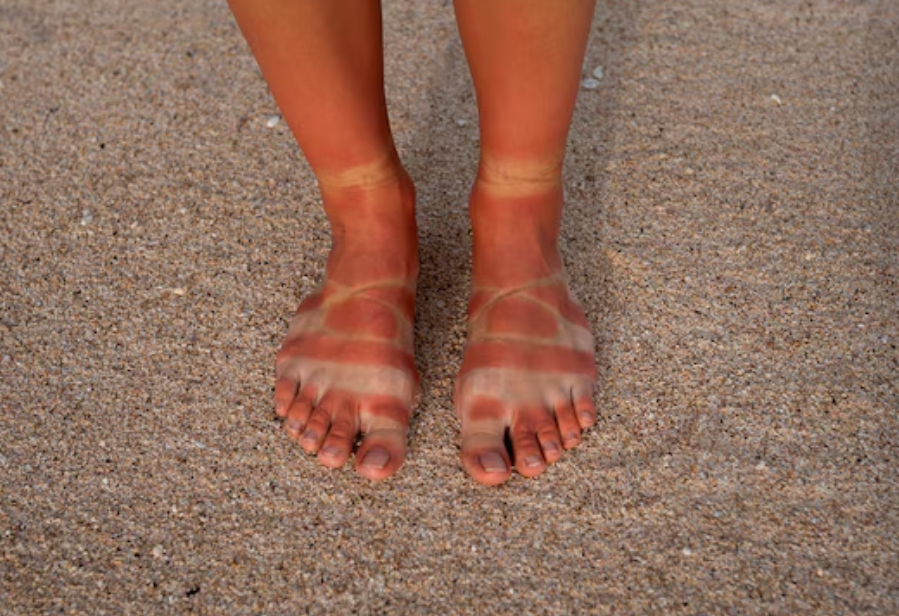
✅ Cool the heat with lukewarm or cool water for 10-20 minutes
✅ Don’t apply ice directly to the skin
✅ Gently hydrate with a low-irritation aloe vera gel
✅ Wear breathable clothing instead of anything tight over the blister
What’s the Right Way to Care for Popped Sunburn Blisters — and What Should You Avoid?
If a blister has already popped, the most important thing is not to forcibly peel off the loosened skin with your hands.
Gently dab away any fluid with sterile gauze, apply an antibiotic ointment, and cover it with a foam-type bandage to block outside irritation.

✔ Rinse a popped blister with running water or saline solution.
✔ Don’t tear off the skin — apply antibiotic ointment, then cover with sterile gauze.
✔ Keep the area out of direct sunlight until it has fully healed.
One thing that’s easy to overlook in all this is staying hydrated.
Since adequate hydration is essential for skin regeneration, drinking water more often than usual can support recovery.

When you follow through with cold-water first aid, proper hydration, and blister protection, most sunburn symptoms tend to gradually ease within 3 to 7 days.
⚠ Avoid greasy products like petroleum jelly (they can trap heat in the skin)
⚠ Never pop a blister with a needle or fingernail
⚠ Don’t use heating pads or warm water on the burned area
⚠ Avoid re-exposing the area to UV rays until it has healed
If a blister is larger than the palm of your hand, comes with chills or fever, or shows signs of infection like yellow pus, seeing a specialist should take priority over self-care.
Knowing in advance where you can receive burn treatment can help you respond faster in these situations.
Visit the homepage of Ansan Yeorin Surgical Hospital for burn treatment information.

Frequently Asked Questions
1. What’s the real reason you shouldn’t pop sunburn blisters?
The skin covering a blister acts as a natural barrier against bacteria. Removing it significantly raises the risk of secondary infection and scarring.
2. My blister keeps getting rubbed by my clothes and feels like it’s about to pop. What should I do?
Loosely cover it with a cushioned burn bandage or gauze so it isn’t compressed, and wear loose, breathable clothing over it.
3. What should I do if a blister pops by accident?
Rinse it with clean running water or saline solution, avoid tearing off the skin, apply antibiotic ointment, and cover it with sterile gauze.
4. Can I apply aloe vera gel right away if a blister forms?
If the blister is still intact, aloe vera gel can help once the heat has cooled down. However, it may irritate an open wound that’s leaking fluid, so a dedicated ointment is safer in that case.
5. When should I consider seeing a doctor?
If the blister is larger than the palm of your hand, comes with chills or fever, or shows signs of infection such as yellow pus, it’s recommended that you see a specialist right away.
References
· Korea Disease Control and Prevention Agency, “Sunburn,” National Health Information Portal, 2026. Link
· American Academy of Dermatology, “How to Treat Sunburn,” AAD.org, 2024. Link
· Mayo Clinic Staff, “Sunburn: First Aid,” Mayo Clinic, 2024. Link
· Seoul National University Hospital, “Sunburn,” Medical Information, Seoul National University Hospital. Link
This article is intended for general health information purposes only and is not a substitute for individual diagnosis or treatment. If you have symptoms, please consult a medical professional.