Tag: Surgical Conditions

  • Lipoma Size 5cm or Larger: 3 Signs Surgery May Be Needed

    Lipoma Size 5cm or Larger: 3 Signs Surgery May Be Needed

    SummaryThis article summarizes medical guidance on whether a lipoma size of 5cm or larger requires surgery, along with how lipomas are diagnosed and managed.

    Finding a soft, movable lump under your skin can be alarming at first.
    Most of the time there’s no pain or color change, so it’s easy to brush off.

    But once you notice it slowly growing larger over time, the concern becomes harder to ignore.
    You may start wondering whether surgery is necessary, and just how large a lipoma size has to be before it becomes a real concern.

    This is actually a question that comes up often in clinical practice.

    This article outlines the surgical criteria based on changes in lipoma size, along with accurate diagnostic methods.
    Let’s look at what standards doctors use to consider excision when a lipoma grows beyond 5 centimeters or becomes painful, and how to manage it safely without unnecessary worry.

    lipoma size

    What Is a Lipoma and Why Does It Form?

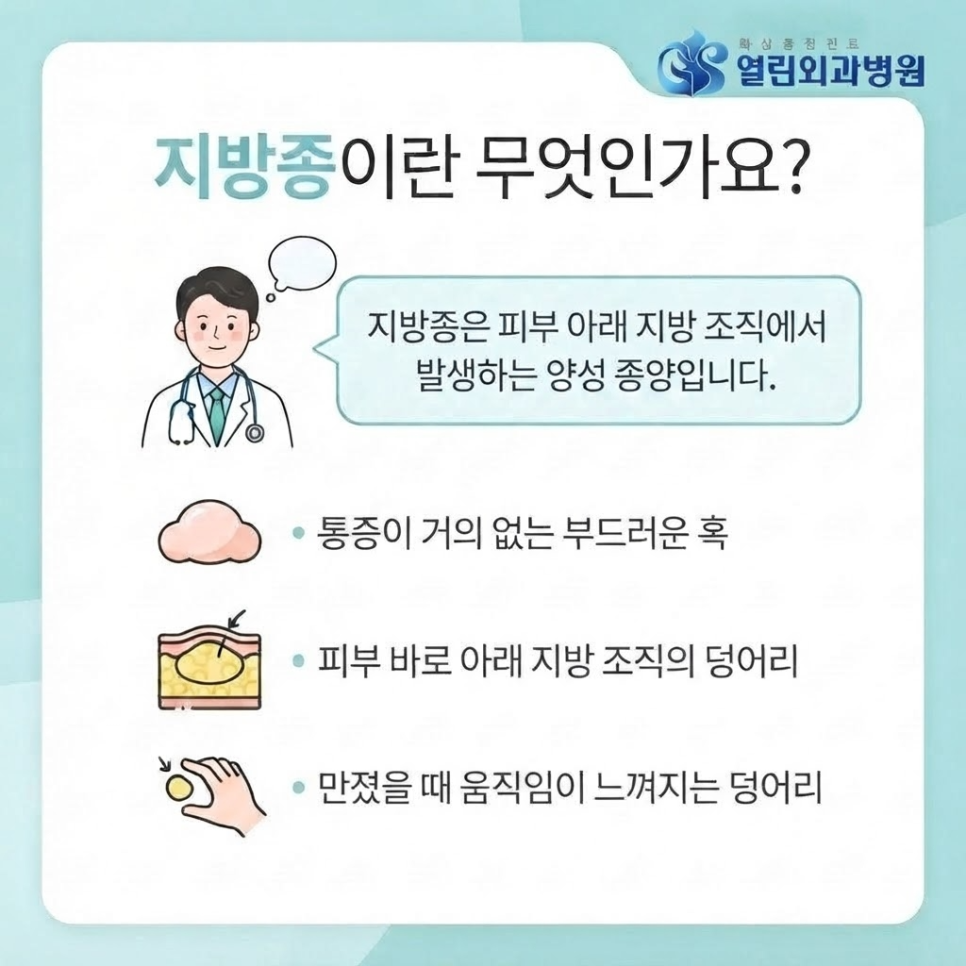
    A lipoma is a common benign tumor that forms when fat cells cluster together and grow within the subcutaneous fat tissue.
    It’s common enough that it may develop in adults of any age.

    Because it’s usually painless, it’s easy to dismiss at first.
    But it’s completely natural to feel a jolt of worry when you discover an unfamiliar lump on your body.

    That’s why doctors often emphasize the importance of distinguishing a lipoma from liposarcoma, a malignant tumor it can sometimes be confused with.
    lipoma size related image 2

    Key Point
    A lipoma is typically painless and moves easily when pressed with a finger. If a lump feels hard and stays fixed in place, other conditions should be ruled out.

    Lipoma Size: How Large Can It Grow?

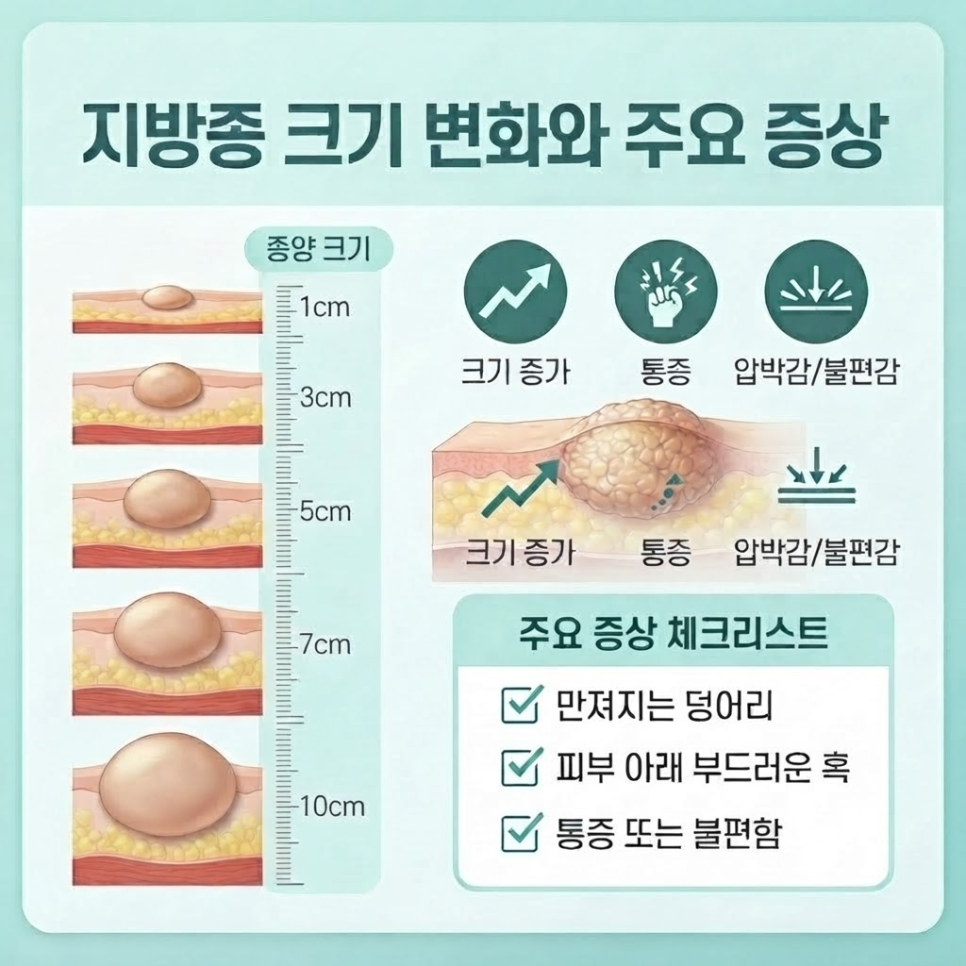
    Lipoma size typically ranges from about 1 centimeter to several centimeters.
    Some grow slowly over time, while others remain unchanged for years.
    lipoma size related image 3

    In rare cases, a lipoma can grow beyond 10 centimeters, becoming what’s known as a giant lipoma.
    As it grows larger, it can press on nearby nerves or muscles.

    This may bring on pain, tingling, or general discomfort.
    The change in appearance can also be a source of stress.

    Checklist
    ✅ Has the lump grown noticeably larger over the past few months?
    ✅ Does it feel hard and fixed in one place when touched?
    ✅ Do you feel pressure or pain during everyday activities?
    ✅ Is the surface irregular or the border unclear?

    lipoma size related image 4


    Does Lipoma Size Determine Whether You Need Surgery?

    Not every lipoma needs to be surgically removed.
    If it’s small and causes no particular discomfort, simply monitoring it over time is often enough.

    However, excision may be considered when a lipoma meets specific medical criteria.
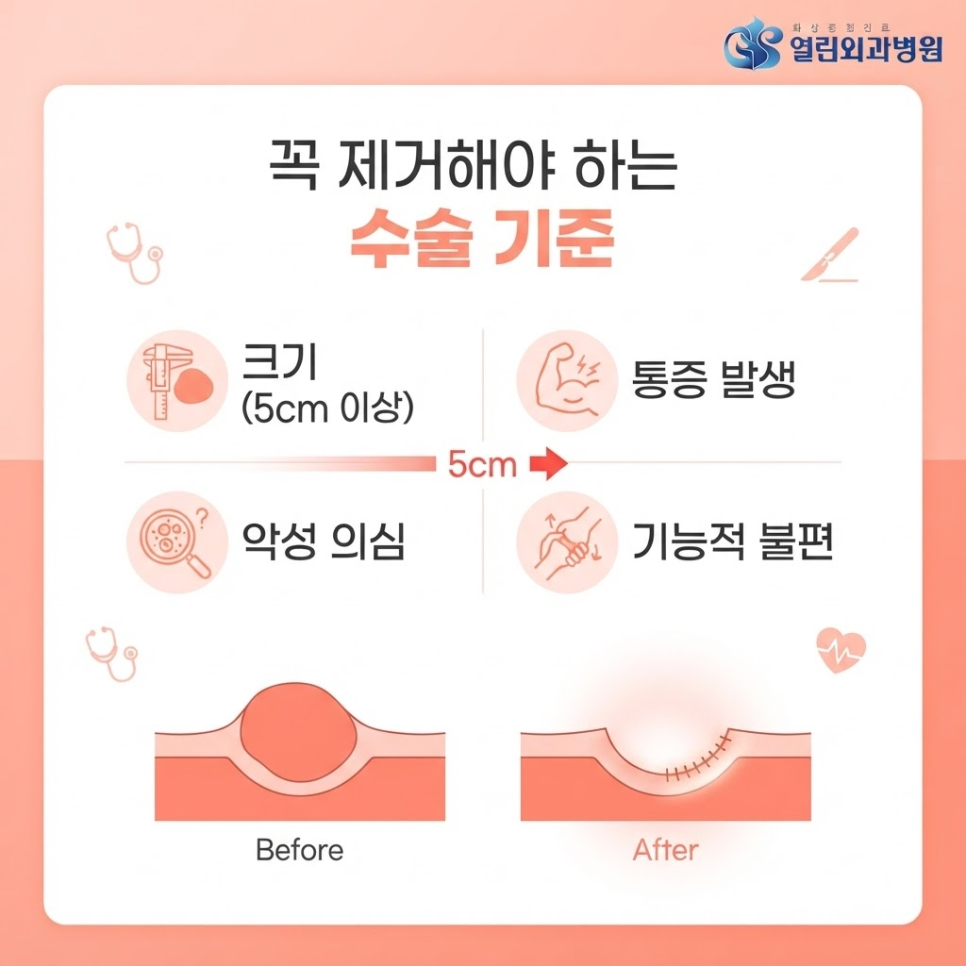
    According to disease information from Asan Medical Center, treatment is generally considered when the lipoma is 5 centimeters or larger, or when it causes pain or grows at an abnormal rate.
    lipoma size related image 5

    Category Monitor (Watchful Waiting) Consider Surgery
    Size Under 5cm, little to no change 5cm or larger, or growing rapidly
    Symptoms No pain or pressure Pain, tingling, or functional impairment
    Imaging findings Typical benign appearance Findings suggestive of malignancy, such as liposarcoma

    Beyond cosmetic concerns, these functional symptoms are what typically determine whether surgery is warranted.

    Outcomes
    Excision performed based on clear medical criteria may help lower the risk of recurrence and may also help ease everyday discomfort such as pressure or pain. Outcomes can vary from person to person.

    How Are Lipomas Diagnosed and Managed?

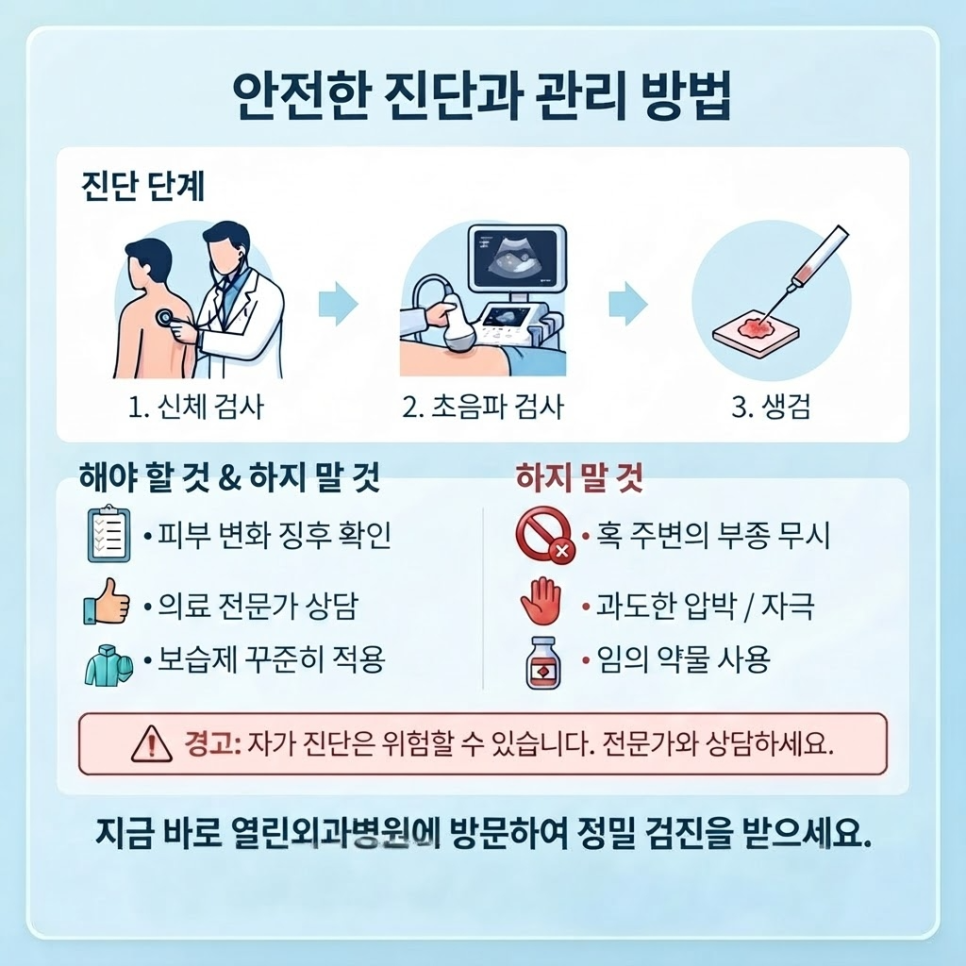
    Lipoma diagnosis is generally made through a physical exam combined with an ultrasound.
    Visual inspection or palpation alone can’t reliably determine the exact depth and characteristics of the mass.
    lipoma size related image 6

    Medical information from Seoul National University Hospital notes that when differentiation from liposarcoma is needed, CT, MRI, or a tissue biopsy may be performed as well.
    According to the Korea Disease Control and Prevention Agency’s National Health Information Portal, ultrasound-guided biopsy allows the lesion’s location to be confirmed in real time while collecting tissue for an accurate diagnosis.

    Relying on online reviews or unverified home remedies can sometimes lead to a delayed diagnosis.
    Getting an objective evaluation at a nearby medical facility is generally recommended.

    If you need an accurate diagnosis and consultation, you’re welcome to check the care information at Ansan Yeorin Surgery Hospital, a burn treatment specialist – Homepage.

    lipoma size related image 7

    Caution
    Do not attempt to press on, squeeze, or forcibly remove the lump yourself based on self-diagnosis — this can lead to inflammation or infection and should be strictly avoided.

    Frequently Asked Questions

    1. Can a lipoma go away on its own?
    Answer: It’s rare for a lipoma to shrink or disappear naturally — it typically stays the same size or grows gradually over time.

    2. How painful is the surgery, and how long is recovery?
    Answer: Most cases involve a simple excision under local anesthesia, and while it varies by size, patients typically return to daily activities relatively quickly.

    3. Is this condition likely to come back after treatment?
    Answer: Once fully excised, recurrence at the same site is relatively uncommon, though a new lipoma may still develop elsewhere.

    4. Should I still see a doctor if the lipoma is small?
    Answer: Even though it’s a benign tumor, an early evaluation is recommended to rule out other conditions such as liposarcoma.

    5. How is a lipoma different from a cyst?
    Answer: Because texture, location, and ultrasound findings differ between the two, a proper exam is needed rather than relying on visual assessment alone.


    lipoma size related image 8

    lipoma size related image 9

    lipoma size related image 10

    lipoma size related image 11


    References

    · Asan Medical Center, “Lipoma,” Disease Encyclopedia, Asan Medical Center. View source
    · Seoul National University Hospital, “Lipoma,” Medical Information, Seoul National University Hospital. View source
    · Korea Disease Control and Prevention Agency, “Ultrasound-Guided Biopsy,” National Health Information Portal, Korea Disease Control and Prevention Agency. View source


    This article is provided for general health information purposes only and is not a substitute for individual diagnosis or treatment. If you have symptoms, please consult a medical professional.

  • Appendicitis Surgery: 5 Warning Signs and Recovery Timeline

    Appendicitis Surgery: 5 Warning Signs and Recovery Timeline

    SummaryA quick overview of the pain signals and causes that are easy to miss before appendicitis surgery, along with diagnostic tests, recovery time, and post-surgery care tips.

    When stomach pain suddenly quiets down, it’s easy to assume that’s a good sign.

    But when appendicitis surgery may be needed, that very moment can actually be a warning sign.

    That’s because when the appendix ruptures and the internal pressure releases, the pain can feel like it’s temporarily easing.

    Knowing this can change how you respond to abdominal pain.

    💡 Article Preview
    This article walks through the warning symptoms that may call for appendicitis surgery, accurate diagnostic tests, and recovery time and aftercare after surgery.
    If you’re concerned about right lower abdominal pain, we recommend reading through to the end.

    What Is Appendicitis Surgery?

    Appendicitis surgery (appendectomy) is a procedure that removes the inflamed appendix to help prevent complications such as peritonitis.

    It’s commonly called \”appendicitis\” in everyday speech, but more precisely, it refers to inflammation of the appendix, the small pouch attached to the cecum.

    The concern is how quickly it progresses — if left untreated, this inflammation can worsen rapidly.

    appendicitis surgery

    According to Asan Medical Center, appendix perforation occurs in about 20% of patients within 24 hours of symptom onset, and in about 70% within 48 hours.

    Once perforation occurs, pus can spread into the abdominal cavity, raising the risk of progressing to peritonitis.

    For this reason, physicians generally proceed with surgery without delay once a diagnosis is confirmed.

    appendicitis surgery illustration 2

    💡 Key Point
    According to the source cited above, the risk of perforation rises to about 70% within 48 hours of symptom onset.
    Don’t assume a sudden drop in pain means things are fine — seeking medical care right away is the safer choice.

    What Symptoms Suggest Acute Appendicitis?

    If pain around the upper abdomen or navel shifts toward the right lower abdomen, acute appendicitis should be suspected.

    The exact cause isn’t fully understood, but according to Korea’s National Health Information Portal, inflammation often begins when the opening of the appendix becomes blocked.

    In teenagers, overgrown lymphoid tissue is a common cause of blockage, while in adults, hardened fecal matter (fecaliths) is often responsible.

    appendicitis surgery illustration 3

    In the early stages, it can feel similar to indigestion, so it’s easy to dismiss.

    The typical pattern is that nausea, vomiting, and a low-grade fever appear alongside the pain as it moves to the right lower abdomen.

    📋 Checklist
    ✅ Dull, aching pain around the upper abdomen or navel
    ✅ Sharp pain when pressing on the right lower abdomen
    ✅ Rebound tenderness — pain that worsens when pressure is released
    ✅ Loss of appetite with ongoing low-grade fever and nausea

    How Is Appendicitis Diagnosed?

    Appendicitis is diagnosed using a combination of physical examination, blood tests, and imaging studies.

    First, a physician presses on the right lower abdomen to check for tenderness and rebound tenderness.

    Blood tests are then used to check white blood cell counts and inflammation markers.

    appendicitis surgery illustration 4

    A definitive diagnosis typically requires an abdominal ultrasound or CT scan.

    CT scans, in particular, clearly show the swollen appendix and help distinguish it from other conditions.

    🚀 Takeaway
    Combining physical examination with imaging may help reduce the chance of misdiagnosis.
    Fast, accurate diagnosis is generally considered an important step toward safer appendicitis surgery.

    What Is the Recovery Time and Aftercare Following Appendicitis Surgery?

    Recovery time varies depending on the surgical method used and each patient’s individual condition.

    Laparoscopic surgery is now common and generally allows for a somewhat faster recovery than open surgery.

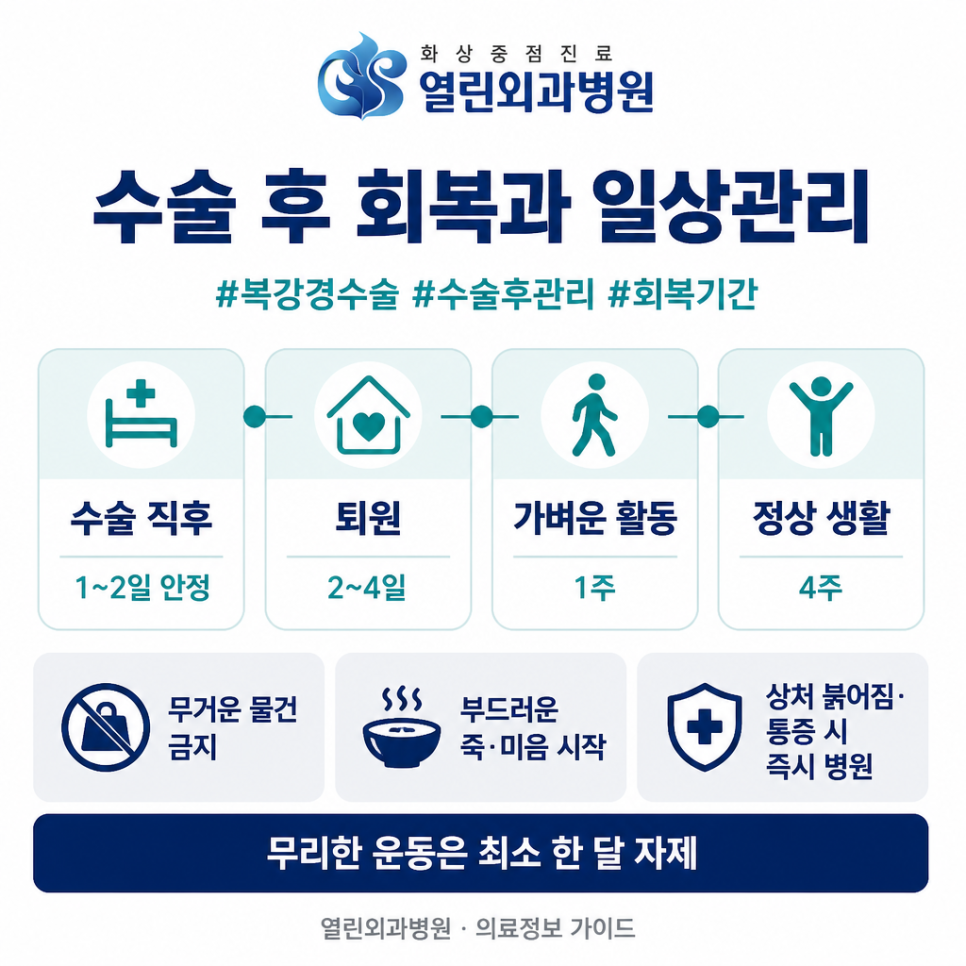
    According to Asan Medical Center, when surgery is performed early and without complications, patients can typically be discharged after about 2 to 3 days.

    appendicitis surgery illustration 5

    The timeline for returning to daily life varies by person, but light activity is often possible around one week after surgery.

    That said, some sources note that a full return to normal daily activity can take roughly 2 to 4 weeks, so keep this in mind as well.

    appendicitis surgery illustration 6

    After discharge, it’s important to avoid lifting heavy objects and to get adequate rest.

    For meals, it’s best to start slowly with soft foods like porridge or rice gruel rather than spicy or irritating foods.

    ⚠️ Precautions
    If pain or redness at the incision site worsens, contact your hospital right away.
    Avoiding strenuous exercise for at least a month is the safer approach.

    Frequently Asked Questions

    1. Will the surgery leave a large scar?
    Laparoscopic and single-incision techniques are now the norm, so scars tend to be small and less noticeable.

    2. When can I shower after surgery?
    If a waterproof dressing is applied, a brief shower may be possible right after discharge, but it’s safest to wait until the stitches are removed or the wound has healed.

    3. How should I manage my diet after discharge?
    Since digestive function is still recovering, it’s best to avoid spicy or greasy foods and gradually progress from easily digestible liquids to regular meals.

    4. Does right lower abdominal pain always mean appendicitis?
    Not necessarily — conditions such as ovarian cysts, urinary stones, and enteritis can cause similar pain, so a proper medical evaluation is needed rather than self-diagnosis.

    5. My abdominal pain suddenly went away — is that a good sign?
    Not necessarily. A ruptured appendix can sometimes feel like the pain has eased, so you should seek medical attention immediately.

    appendicitis surgery illustration 7

    If you have any questions about abdominal pain or surgical conditions, please feel free to reach out anytime.

    Information on burn care and a range of other surgical services is also available at Burn Care, [Ansan Yeolin Surgery Hospital] Home.

    appendicitis surgery illustration 8

    appendicitis surgery illustration 11


    References

    · Asan Medical Center, \”Acute Appendicitis,\” Disease Encyclopedia, Medical Information. View
    · Asan Medical Center, \”Appendectomy,\” Tests/Procedures/Surgery Information, Medical Information. View
    · Korea Disease Control and Prevention Agency, \”Acute Appendicitis,\” National Health Information Portal. View


    This article is intended for general health information purposes only and is not a substitute for individual diagnosis or treatment. If you have symptoms, please consult a physician.