Even after your appendectomy stitches have fully healed,
does the scar on your side still catch your eye every time you look?
Two people can have the exact same surgery,
yet one ends up with a scar that’s barely noticeable
while the other is left with a red, thickened mark.
That difference isn’t just about skin type —
how you handle the days right after the stitches come out can matter too.
When it comes to scar care,
missing this early golden window often leads to a less-than-ideal result.
Appendectomy scar care comes down to how you handle the golden window right after stitch removal, while your skin barrier is still rebuilding itself.
This article walks through why these scars tend to widen, a 3-step care routine by phase, and the daily habits that help prevent discoloration.


Why do appendectomy scars often turn out larger than expected?
The abdomen is an area where the skin is constantly being pulled,
so without proper early care, a scar can end up wider than expected.
An appendectomy scar is the natural mark left in the dermis as the incision site heals.
Whether you had laparoscopic or open surgery, if collagen builds up excessively during healing,
the mark can gradually thicken.
On top of that,
the abdomen is a spot where skin tension is especially strong,
so frequent movement keeps pulling at the wound as it tries to close.

Without proper protection at this stage,
the skin on either side of the incision line can stretch, widening the red mark.
If hydration and physical support aren’t in place early on,
the risk of the scar raising into a thicker, more visible ridge also increases.
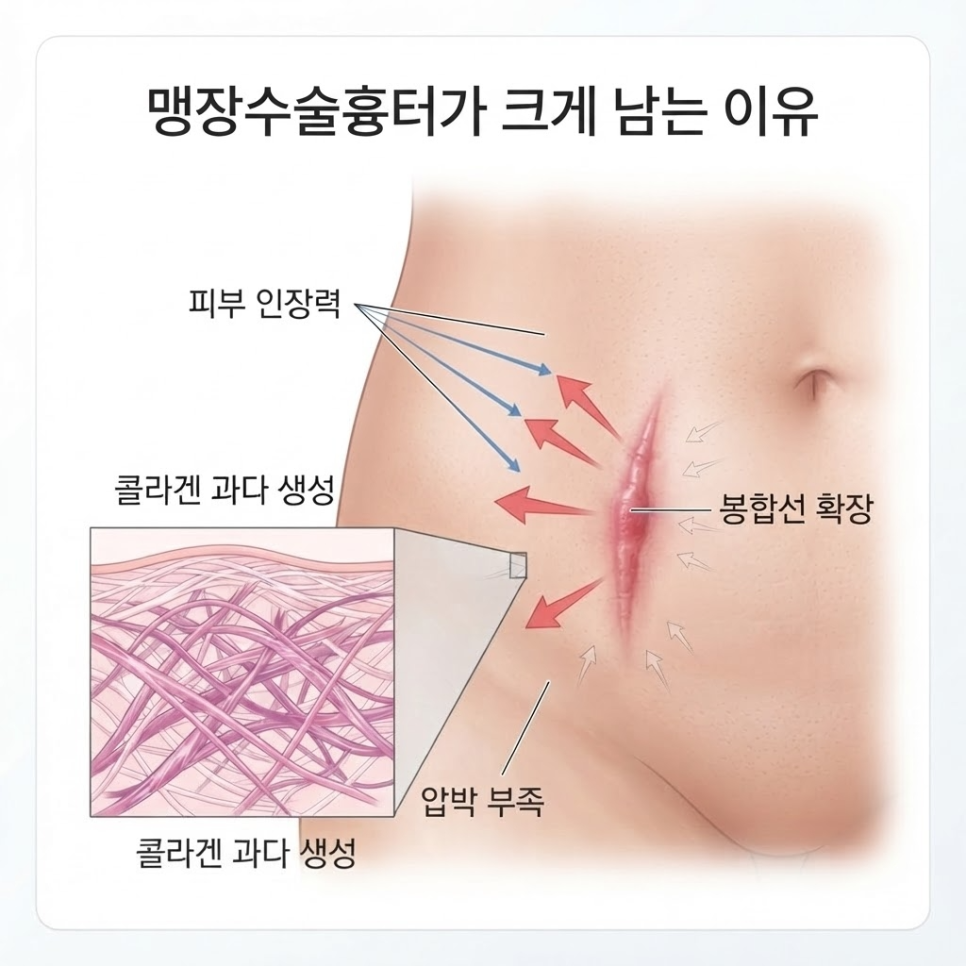
Because the abdomen is under constant skin tension, how you care for it in the first few days after stitch removal is considered an important factor that can affect the eventual width and color of the scar.
How should appendectomy scar care change over time?
It can help to split recovery into three phases and adjust your care approach for each one.
Appendectomy scar care is typically broken into three stages: right after surgery, after stitch removal, and one month and beyond.
| Phase | Main Goal | Care Method |
|---|---|---|
| Right after surgery | Prevent infection, keep the area moist | Keep the wound disinfected; keep it fully waterproof |
| After stitch removal | Ease tension, block irritation | Silicone gel products, protective tape |
| One month and beyond | Prevent hyperpigmentation | Apply sunscreen thoroughly |
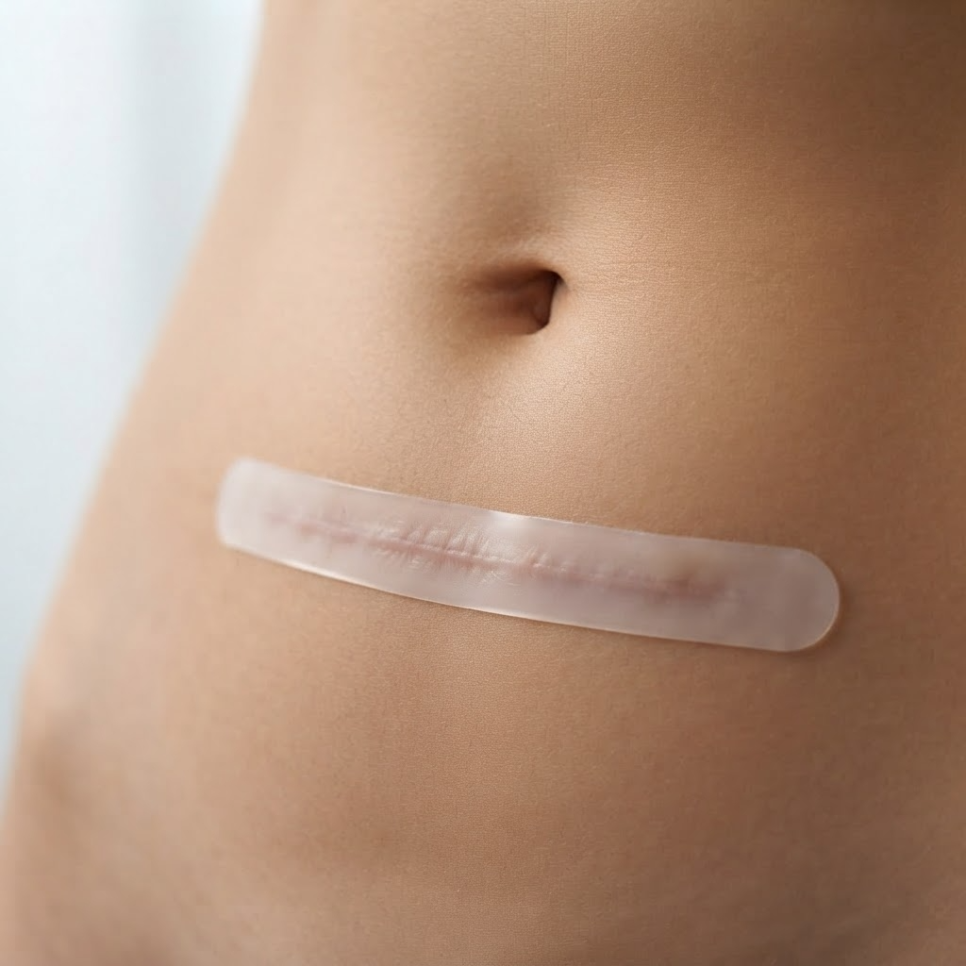
Starting right after your stitches are removed, it helps to apply silicone-based products or protective tape
so the area isn’t irritated.
Irritation that reaches the dermis can lead to hyperpigmentation,
so keeping the area consistently covered and moisturized is essential.

✅ Right after surgery: keep the wound disinfected; keep it fully waterproof so water doesn’t touch it directly
✅ After stitch removal: ease tension with silicone gel products or patches
✅ One month and beyond: prevent hyperpigmentation with sunscreen
✅ At every stage: don’t pick at scabs
What daily habits help prevent scar discoloration?
Even small changes to your daily habits can go a long way toward keeping a scar from darkening.
Reducing two triggers — friction and UV exposure — can help prevent discoloration.
Tight-waisted pants or leggings
can speed up discoloration through constant friction, so it’s best to avoid them.
Also,
UV rays stimulate melanin production,
which can turn a red mark into a darker, brownish one.
So,
when you’re outdoors, even if the scar is covered by clothing,
it’s a good idea to apply a light layer of sunscreen underneath.
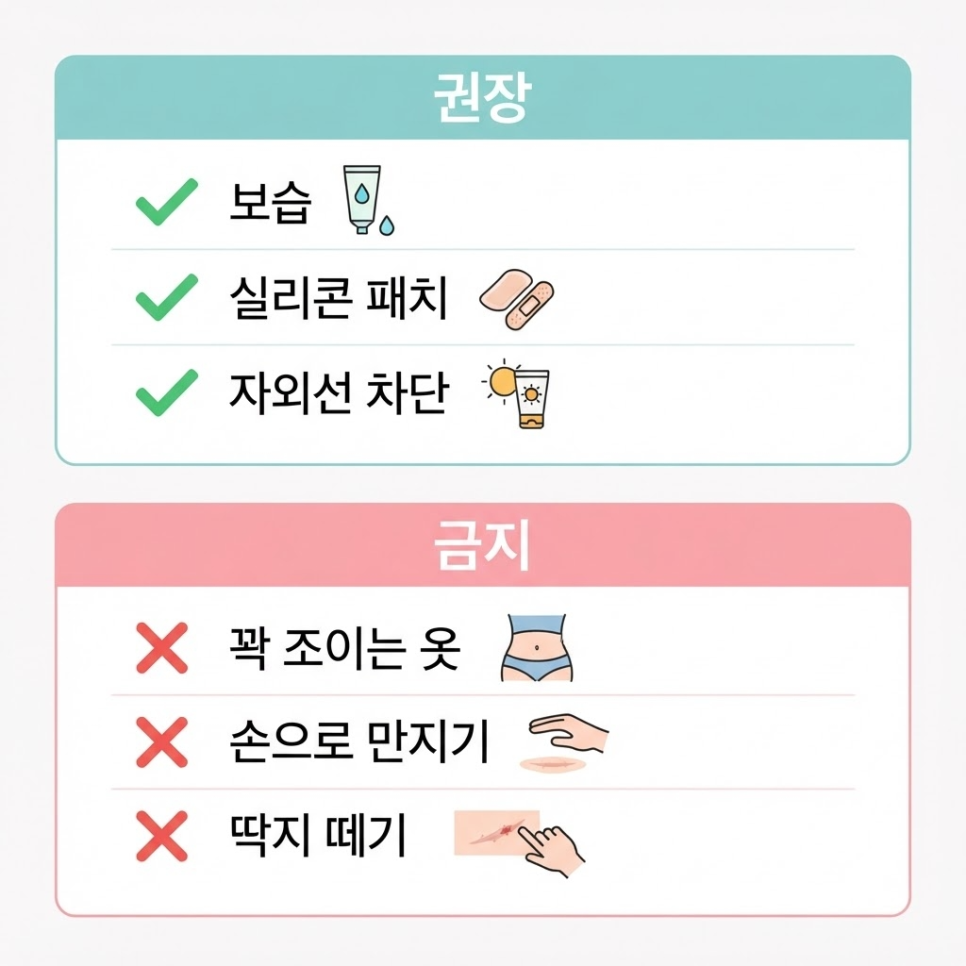
Repeatedly touching the wound or forcibly picking at scabs can raise the risk of secondary infection and progression into a hypertrophic scar.
Cutting down on just these two triggers — friction and UV exposure — may help slow how quickly a scar discolors.
If, despite consistent care, a scar stays red and hard for a long time,
self-care alone may not be enough.
In that case, it’s safer to get an accurate diagnosis
from a hospital that specializes in scar and burn scar treatment.
👉 Visit the Ansan Open Surgery Hospital website, a burn treatment specialist, for more information.
Frequently Asked Questions
1. When should I start caring for a surgical scar?
Once the skin has fully closed, right after the stitches come out, using a dedicated silicone product can help support stable healing.
2. Is it okay that the mark looks red and raised?
Some temporary redness or puffiness is normal during early tissue repair, but if it keeps swelling, it needs professional evaluation and care.
3. Can I use soap on it right away when showering?
Once the scab has come off and the wound is fully closed, gentle rinsing with water is fine, but avoid scrubbing or any harsh friction.
4. Which is better — ointment or a silicone patch?
For a high-friction area like the abdomen, a silicone patch is useful because it reduces physical tension; depending on the area, combining it with an ointment can also work.
5. If the scar becomes hard and lumpy, do I need to see a doctor?
If it hardens or keeps growing in size, it could be progressing into a hypertrophic scar or keloid, so it’s better to see a specialist rather than rely on self-care alone.
References
· Seoul National University Hospital, “How to Manage Scar Treatment,” Hospital News, 2014. Read more
· Yakup Gongnon (Pharmacist News), “All Pigmented Scars Require Both Treatment and Sun Protection,” Yakup Gongnon, 2016. Read more
This article is intended for general health information purposes only and is not a substitute for individual diagnosis or treatment. If you have symptoms, please consult a specialist.