Tag: Ansan Burn Hospital

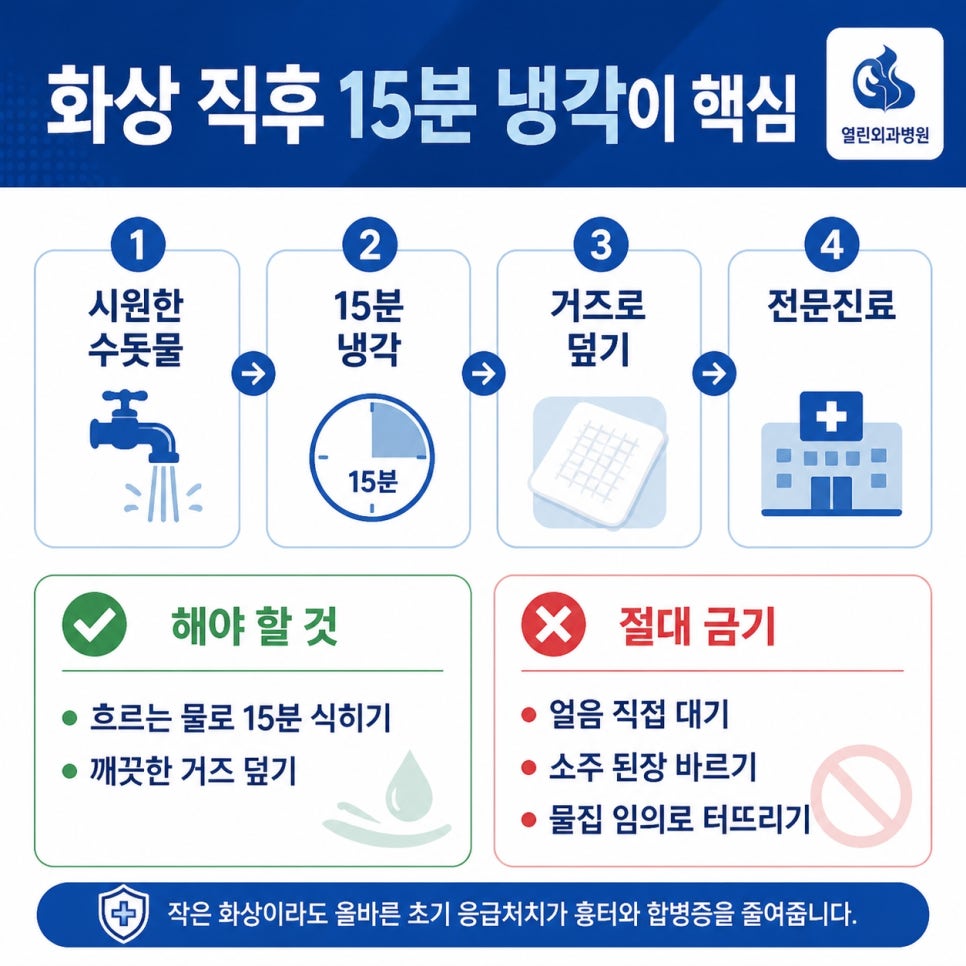
  • Burn First Aid: 3 Steps to Follow in the First 20 Minutes

    Burn First Aid: 3 Steps to Follow in the First 20 Minutes

    SummaryThe key to burn first aid is cooling the area under running water for 15 to 20 minutes immediately after the injury. This guide covers the correct response steps, home remedies to avoid, symptoms by burn stage, and when to see a doctor.

    Have you ever spilled hot soup and instinctively reached for ice?

    Actually, that reflex is a risky mistake that can deepen skin tissue damage.

    How you respond in the first few minutes after a burn can make a major difference in how deep the resulting scar becomes.

    burn first aid

    Key Takeaway
    The core of burn first aid is cooling the affected area under lukewarm running water for 15 to 20 minutes right after the injury.
    Applying ice directly or using home remedies like soybean paste or toothpaste raises the risk of infection and further damage.
    This article walks through the full process of burn first aid—the correct response steps, symptoms by burn stage, and situations that call for a hospital visit.

    Key Points
    ✔ Cool the burn under running water for 15–20 minutes right away
    ✔ Ice and home remedies can make the damage worse
    ✔ Whether you need to see a doctor depends on blister size, location, and extent

    What’s the First Thing to Do When You Get a Burn?

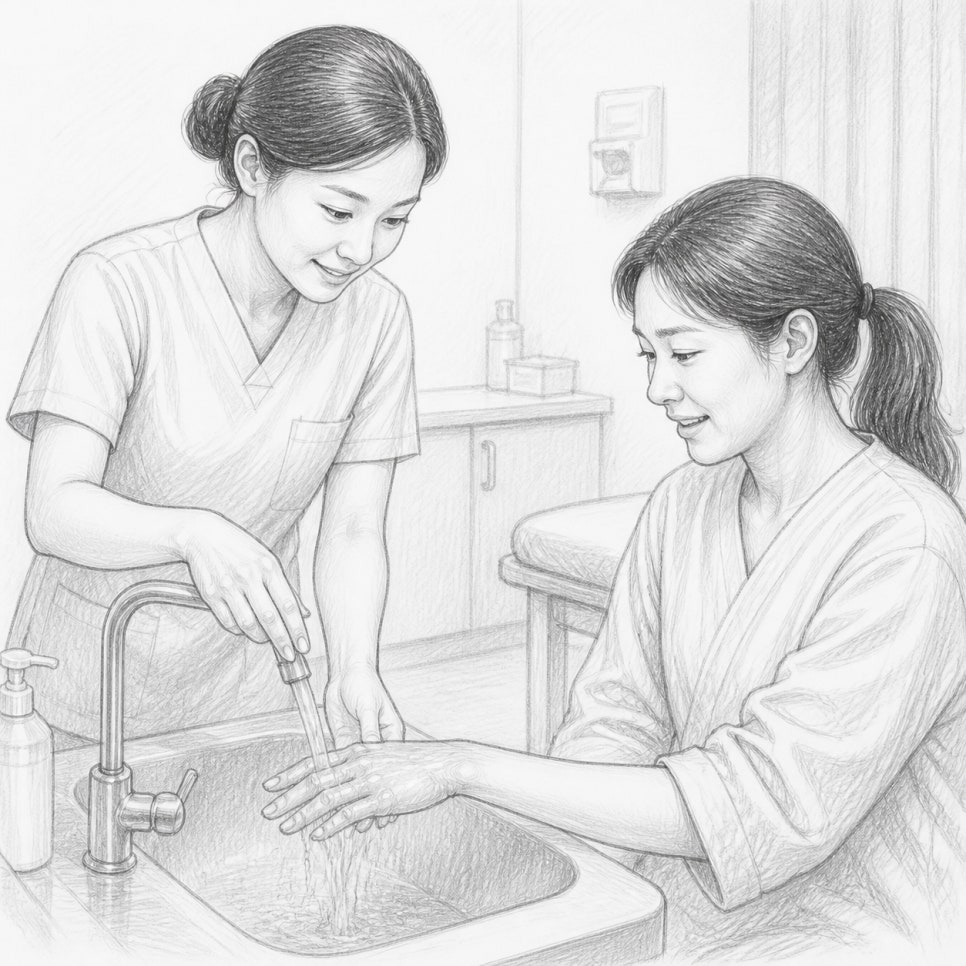
    The first thing you should do is cool the burn under running water.
    Burn first aid refers to the process of stopping contact with the heat source and lowering skin temperature to prevent further damage.

    The National Health Information Portal also recommends cooling the burn under cool running water and not popping any blisters.

    “Cool the burned area under cool running water for at least 20 minutes, and do not pop any blisters.”

    This guidance comes from the Korea Disease Control and Prevention Agency via the National Health Information Portal.

    burn first aid illustration 2

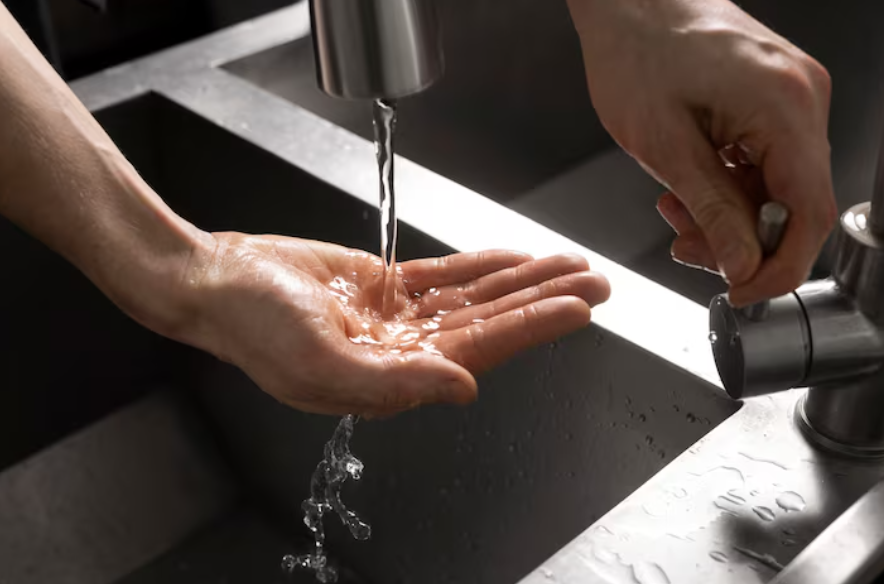
    Lukewarm tap water, around 15–20°C (59–68°F), is generally recommended for cooling the burn.

    Water pressure matters too.
    Water that’s too forceful can further irritate the wound surface.

    So it’s safest to use a gentle, low-pressure stream of water for 15 to 20 minutes.

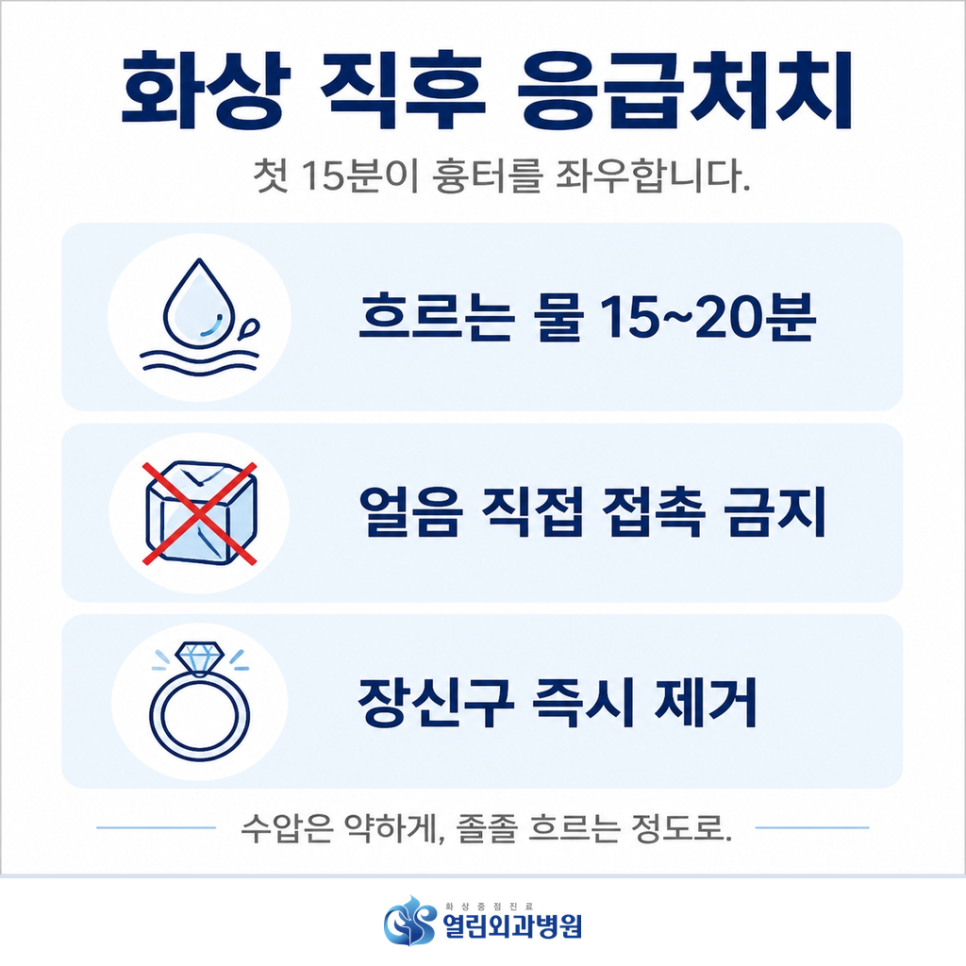
    Remove any jewelry right away, before swelling sets in.
    Once swelling occurs, it can restrict blood flow and cause bigger problems.

    Avoid forcibly removing clothing.
    Fabric stuck to the skin can worsen the injury if pulled off.
    It’s safer to cool the area with clothing still on, then cut the fabric away with scissors.
    burn first aid illustration 3

    Checklist
    ✅ Cool the burn under running water for 15–20 minutes
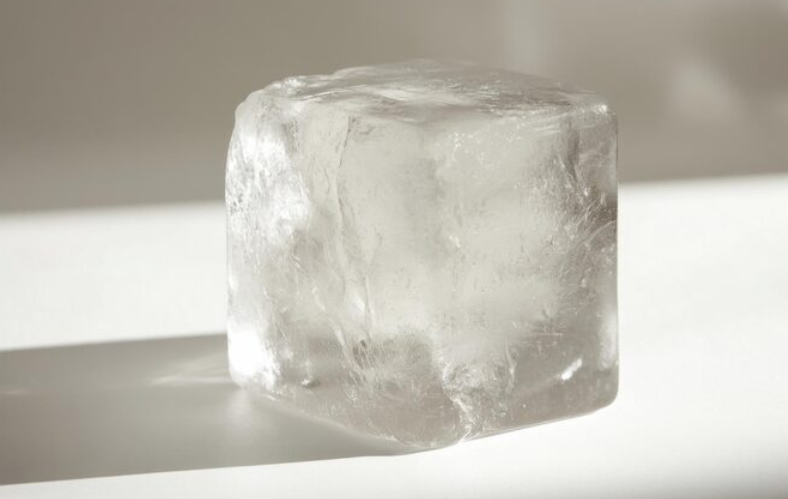
    ✅ Don’t apply ice directly (risk of vessel constriction)
    ✅ Remove jewelry immediately, before swelling starts
    ✅ Don’t pull off clothing—cool with water first, then cut it away with scissors

    burn first aid illustration 4


    Is It Safe to Put Toothpaste or Soybean Paste on a Burn?

    The short answer: it’s not recommended.
    A home remedy is a self-treatment method that hasn’t been medically verified.

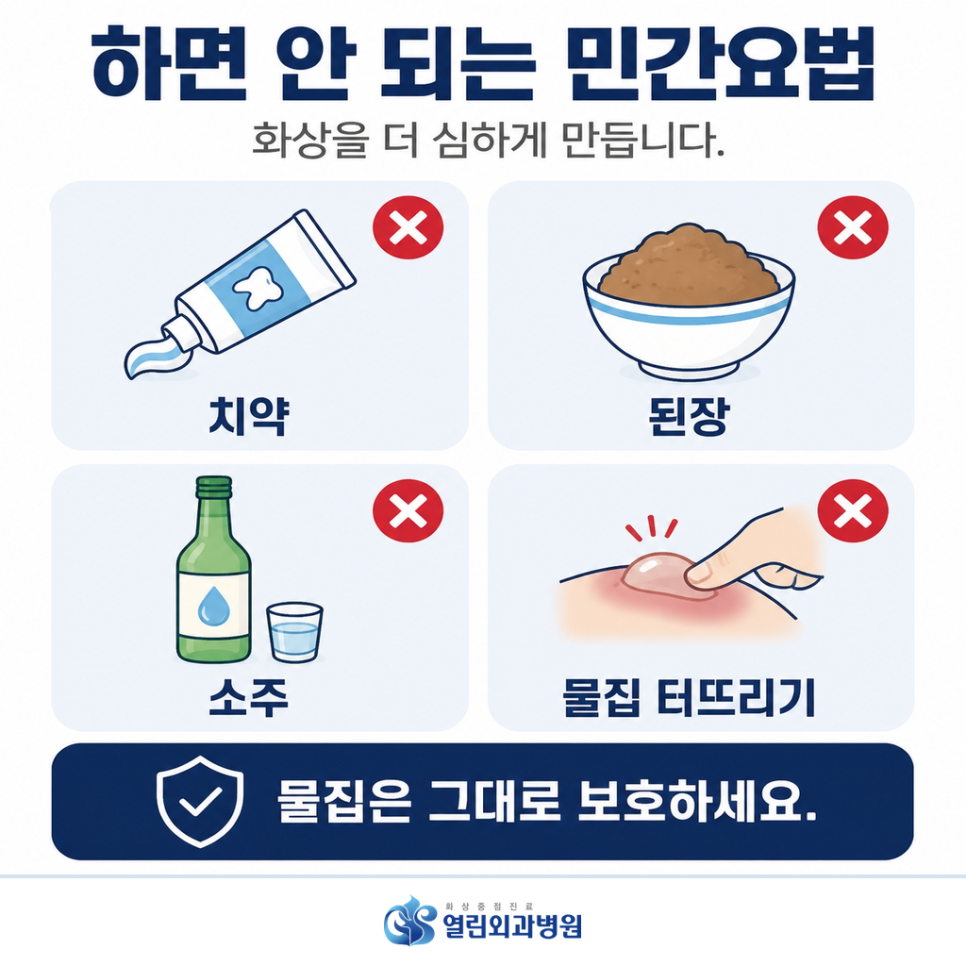
    In a panic, some people reach for toothpaste, soybean paste, or even sliced potatoes.

    But these substances can trap heat in the wound and raise the risk of bacterial infection.
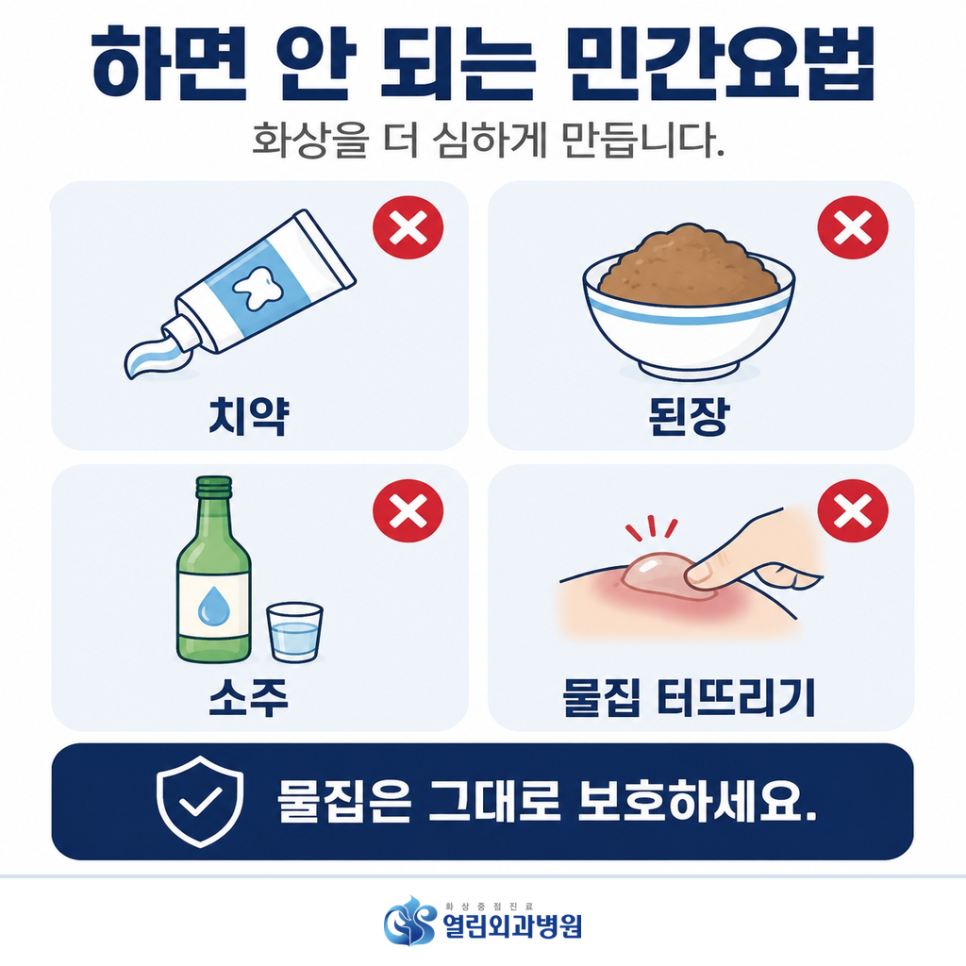
    Pouring soju on a burn—hoping the alcohol’s evaporation will cool it—only irritates the already-damaged skin barrier further and makes the wound worse.
    burn first aid illustration 5

    Precautions
    🚫 Don’t apply toothpaste, soybean paste, cucumber, or other foods
    🚫 Don’t pour soju or alcohol directly on the wound
    🚫 Don’t pop blisters yourself
    🚫 Don’t self-apply unverified topical remedies

    Popping a blister with your fingers is just as risky.

    Blister fluid acts as a natural barrier that protects the wound from outside bacteria.
    Breaking it open can lead to secondary infection, slower healing, and more severe scarring.
    Leave blisters intact and keep them clean and protected.

    burn first aid illustration 6


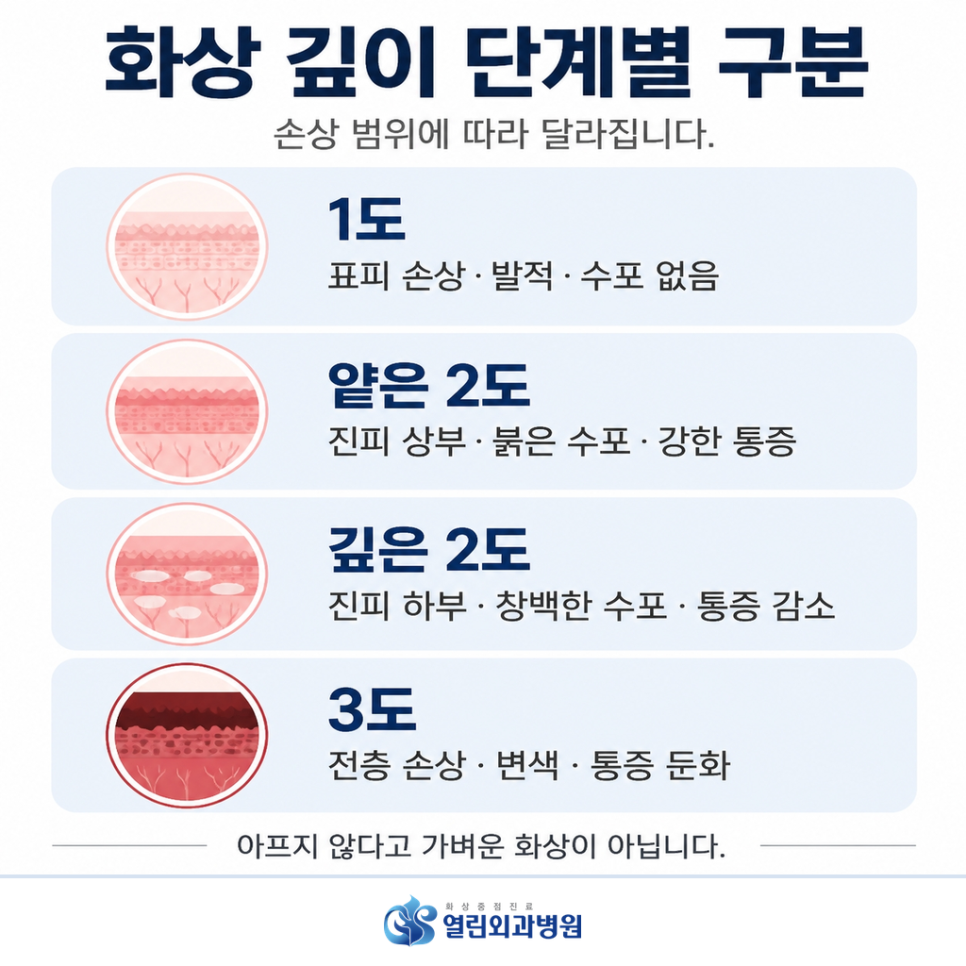
    What Are the Degrees of Burns, and How Do Symptoms Differ?

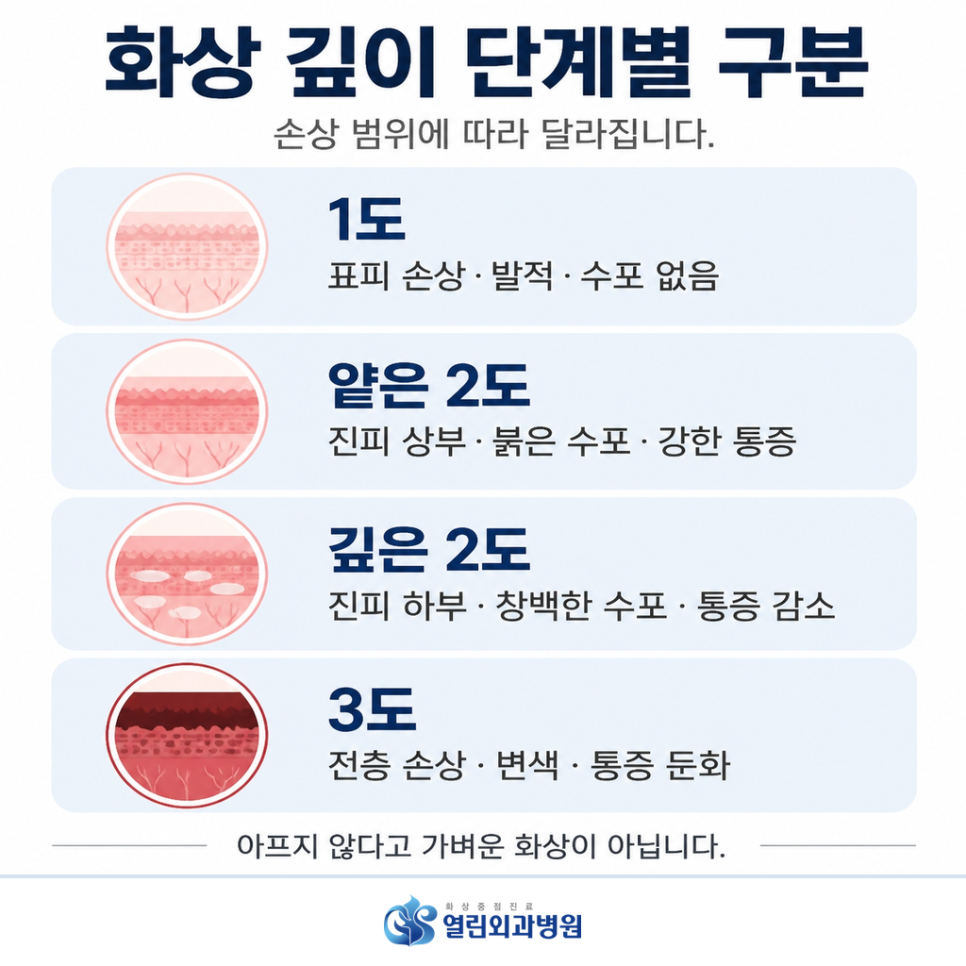
    Burns are classified from first to third degree based on how deep the damage goes.
    The deeper the burn, the longer the healing time and the greater the risk of scarring.

    Degree Depth of Damage Main Symptoms Pain
    1st Degree Epidermis Redness, no blisters Mild pain
    Superficial 2nd Degree Upper dermis Red blisters Severe pain
    Deep 2nd Degree Lower dermis Pale blisters Reduced pain
    3rd Degree Full-thickness skin Discoloration, eschar formation No pain (nerve damage)

    burn first aid illustration 7

    Second-degree burns damage the dermis and come with blisters and significant pain.
    Healing typically takes about 2 to 4 weeks, and scarring or skin discoloration can remain afterward.

    When damage reaches deep into the dermis, nerve endings can be destroyed, which paradoxically means less pain is felt.

    But less pain doesn’t mean the injury is less serious.
    Third-degree burns destroy the full thickness of the skin, causing discoloration, and generally do not heal on their own—professional treatment is recommended.
    burn first aid illustration 8


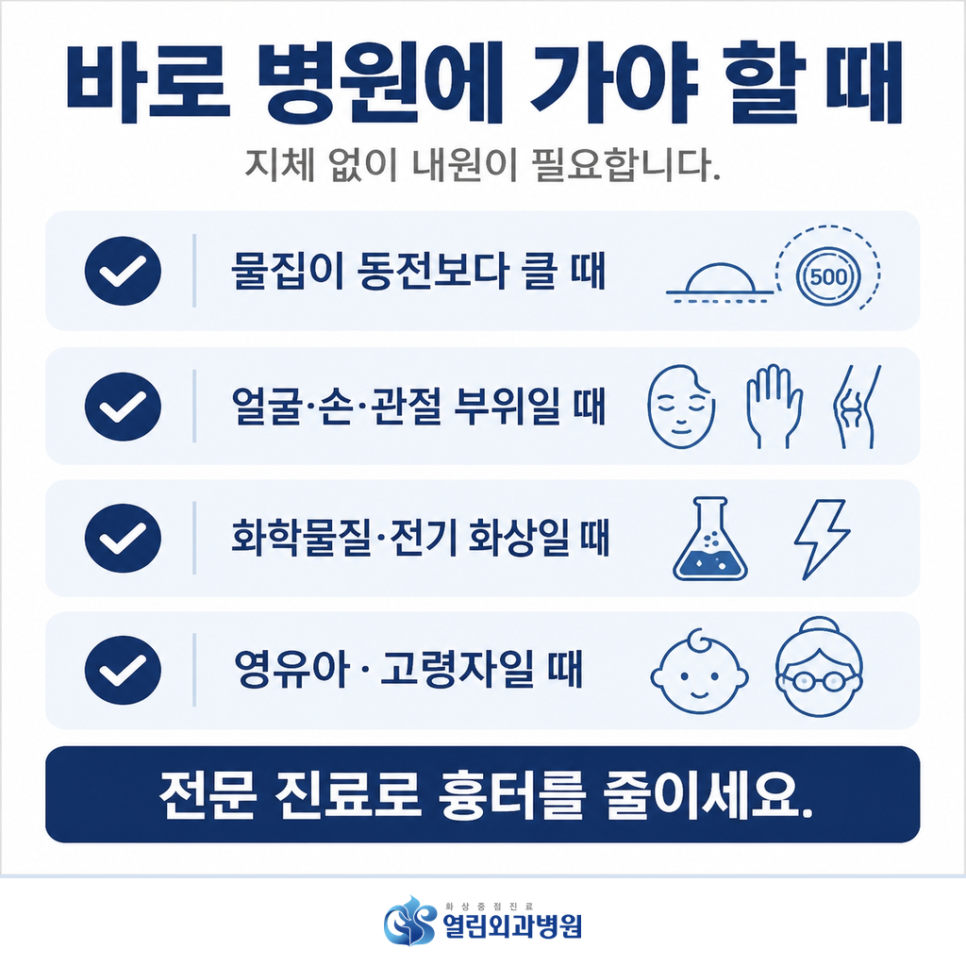
    When Should You See a Doctor After Burn First Aid?

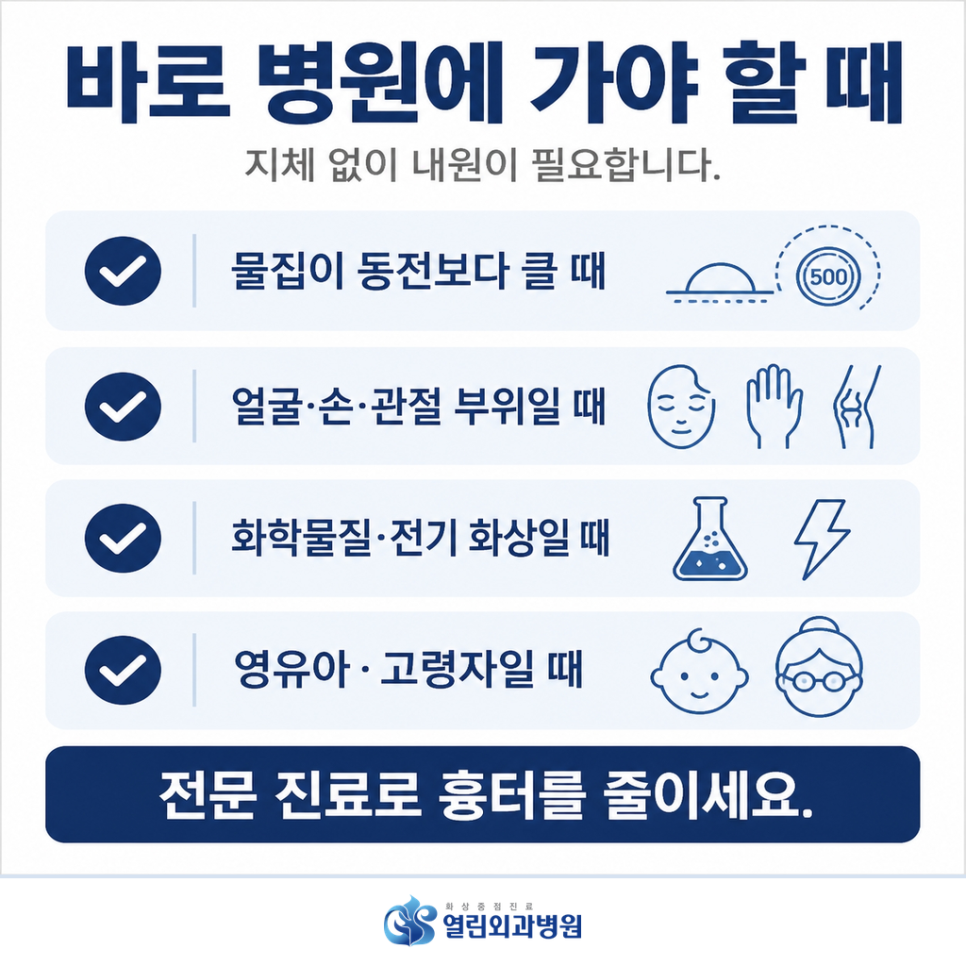
    If the burn is on the face, hands, feet, or a major joint, head to the hospital without delay.
    Burns over joints can cause the skin to tighten as it heals, which may limit range of motion.
    burn first aid illustration 9

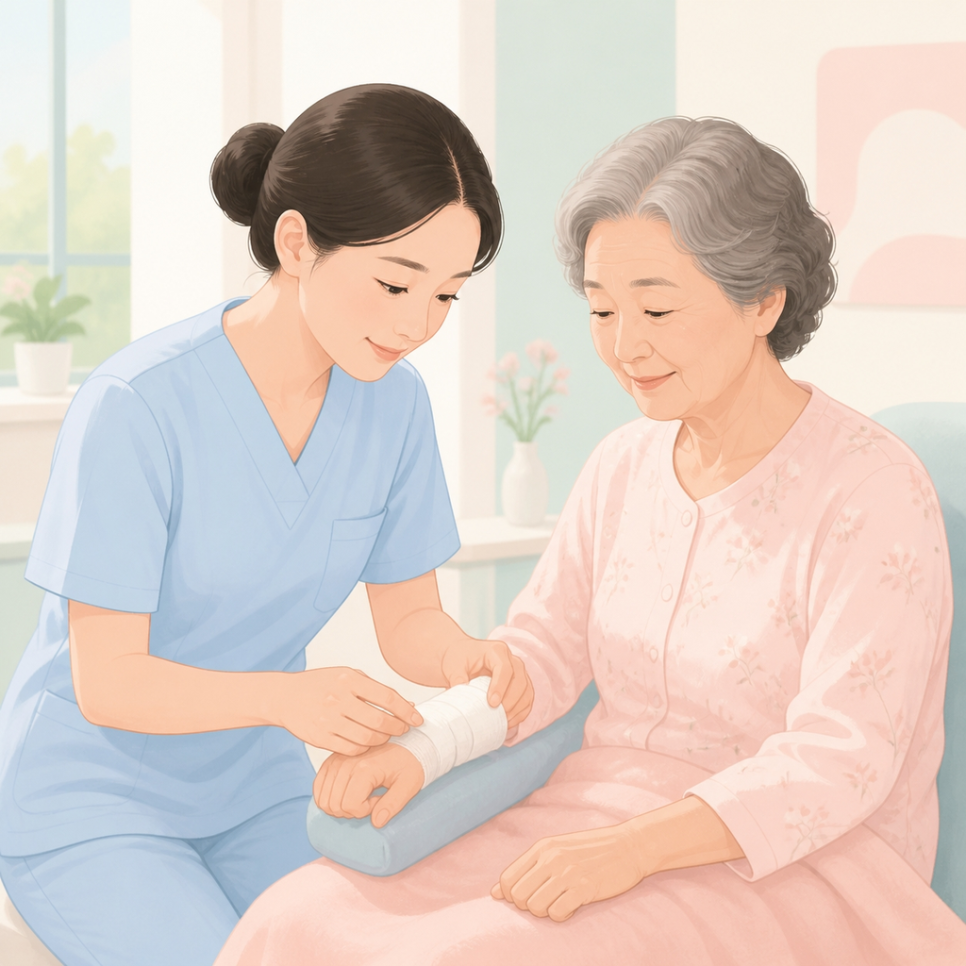
    Burns covering a large area, or those affecting infants or older adults, also call for prompt medical attention.
    People with weaker immunity can experience whole-body effects even from a relatively small burn.

    When You Should See a Doctor Right Away
    🎯 The blister is larger than a coin
    🎯 The burn is on the face, hands, or a joint
    🎯 The injury was caused by chemicals or electricity
    🎯 The injury occurred in an older adult or a young child

    burn first aid illustration 10

    After first aid, it’s best to have your condition properly assessed at a medical facility for hygienic dressing and infection prevention.

    Our hospital operates a burn treatment system intended to make care available outside regular daytime hours.
    You can find more detailed treatment information at Burn Treatment — Ansan Open Surgery Hospital Home.


    Frequently Asked Questions

    1. When is the right time to apply ointment to a burn?
    Answer: Applying ointment while the burn still feels hot can trap heat in and worsen the damage. It’s best to cool the area thoroughly with cold water, pat it dry, and then apply an infection-prevention ointment.

    2. How should you care for a blister that has already popped?
    Answer: Don’t peel off the blister skin—leave it in place and gently clean the area with sterile saline. Then protect it with an appropriate dressing to reduce the risk of bacterial infection and visit a hospital.

    3. Why shouldn’t you put ice directly on a burn?
    Answer: Direct contact with ice causes skin blood vessels to constrict rapidly, restricting circulation and potentially causing secondary damage similar to frostbite. Running water at 15–20°C (59–68°F) is generally used to cool a burn instead.

    burn first aid illustration 11


    References

    · Korea Disease Control and Prevention Agency, “Burns,” National Health Information Portal, 2024. View source
    · National Emergency Medical Center, “Heat/Cold-Related Injuries – Burns,” National Emergency Medical Information Center (E-Gen), 2023. View source
    · Nate News, “‘Ouch, That’s Hot!’ Skip the Soju and Soybean Paste While Frying Pancakes — Burn First Aid Tips,” Nate News, 2026. View source
    burn first aid illustration 12

    This article is intended for general health information purposes and is not a substitute for individual diagnosis or treatment. If you have symptoms, please consult a medical professional.

  • Flat Iron Burn Scar: 15-Minute Golden Window First Aid & Prevention Guide

    Flat Iron Burn Scar: 15-Minute Golden Window First Aid & Prevention Guide

    SummaryFor a flat iron burn scar, the golden window is cooling the area under running cold water for 15 to 20 minutes right after contact. This guide covers the first aid steps, how to care for blisters, skin recovery habits that help reduce discoloration, and ways to prevent flat iron burns in the first place.

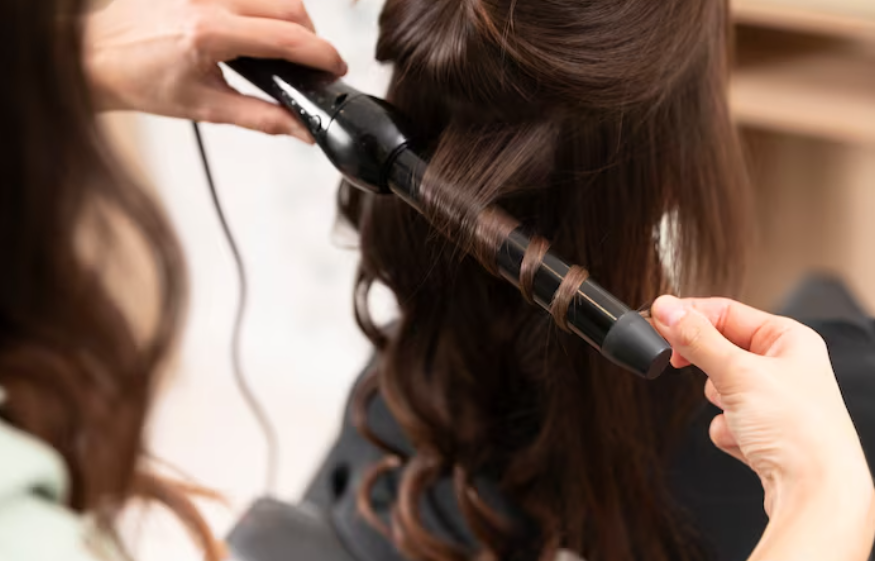
    You’re rushing to get ready in the morning, styling your bangs, when the hot plate of your flat iron brushes against the back of your neck.
    The sting only lasts a moment, but a few hours later the spot turns red, swells, and even blisters.

    It was just a light touch, so why does the mark linger so long?
    A flat iron burn scar starts with a split second of carelessness, but how deep the mark ends up depends heavily on what you do right after it happens.

    flat iron burn scar

    Key Takeaways
    To help reduce a flat iron burn scar, an important first step is cooling the area under running cold water for 15 to 20 minutes right after contact.
    Leave blisters intact and cover them with a clean dressing; once the skin has re-epithelialized, staying consistent with sun protection and moisturizing can help reduce discoloration and scarring.
    Flat iron plates can reach up to 215°C (419°F), so accidental contact is a risk not only while it’s in use but also right after you turn it off.

    Why Can a Flat Iron Burn Turn Into a Second-Degree Burn So Fast?

    A flat iron is a high-heat tool that can damage skin all the way down to the dermis with just a brief touch.
    A flat iron burn is thermal skin damage caused by momentary contact with plates or heating elements that reach roughly 150–200°C (300–390°F).

    When the Korea Consumer Agency measured the plate temperature of flat irons on the market, it found that the peak temperature during use reached 215°C (419°F).
    Even after the device was switched off, the plates stayed above 100°C (212°F) for about 5 minutes.

    That’s why an unguarded brush against the back of the hand or neck right after use can easily cause a burn.
    Thin-skinned areas like the face, neck, and back of the hand are especially prone to oozing or blistering because heat transfers to them faster.

    Flat iron burn scar illustration 2

    Flat iron burn scar illustration 3

    According to the Korea Consumer Agency, 200 of 268 burn injuries among children under age 10 — 74.6% — occurred on the hands and arms.
    Younger children, who are less able to sense and avoid danger, were more likely to be injured by directly touching or grabbing a hot flat iron.

    The plate’s peak temperature rose to 215°C, and it remained above 100°C for about 5 minutes even after the power was switched off.

    Based on these findings, the Korea Consumer Agency advised households with children not to put a flat iron away immediately after use, but to leave it somewhere out of reach until it has fully cooled down.

    Key Points
    ✅ The thinner the skin, the faster heat transfers and the deeper the damage tends to be.
    ✅ The first priority is identifying early on whether it’s a first-degree burn (epidermis only) or a second-degree burn (with blistering).

    What’s the Golden-Window First Aid for Reducing a Flat Iron Burn Scar?

    Cooling the burn for 15 to 20 minutes immediately after it happens can play a major role in how deep the resulting scar may be.
    Golden-window first aid means using running cold water right after a burn to remove residual heat and help keep the damage from spreading deeper into the dermis.

    Cool the burned area thoroughly under running cold water for at least 15 to 20 minutes, and do not pop any blisters.

    That’s how the Korea Disease Control and Prevention Agency (KDCA) describes it in the burn guidance on its National Health Information Portal.
    That said, if the burn covers a large area, it’s better to let water run evenly over it rather than submerging the whole body, to avoid the risk of hypothermia.

    Flat iron burn scar illustration 4

    Precautions
    ⚠️ Applying ice directly to the wound can irritate the tissue and worsen the damage.
    ⚠️ Avoid home remedies like toothpaste or soju entirely — they only increase the risk of infection.

    Flat iron burn scar illustration 5

    Checklist
    ✅ Cool the area under running tap water for 15 to 20 minutes
    ✅ Never apply ice directly or use home remedies
    ✅ Leave blisters intact and protect them with clean gauze
    ✅ Use a gentle, low-irritation foam dressing

    How Do You Manage Burn Marks and Discoloration for Scar-Free Healing?

    Care needs to continue even after re-epithelialization, when new skin has formed over the wound.
    Re-epithelialization refers to the process in which a new epidermis regenerates over damaged skin and the wound closes.

    According to Asan Medical Center, second-degree burns are classified as superficial or deep, depending on how far the damage extends.
    A superficial second-degree burn damages only part of the dermis and typically heals in about 2 weeks, while a deep second-degree burn affects most of the dermis, takes 2 to 4 weeks to heal, and can leave a scar.

    Type Depth of Damage Recovery Time Likelihood of Scarring
    Superficial second-degree burn Partial dermis About 2 weeks Low
    Deep second-degree burn Most of the dermis 2–4 weeks Possible

    If the skin is exposed to UV rays while it’s still red, melanin production can become overactive and leave a dark discoloration.
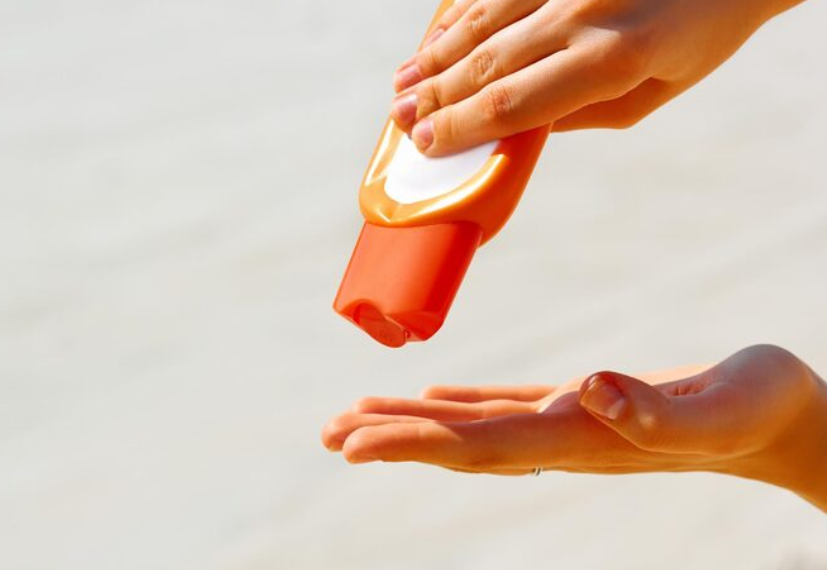
    That’s why it’s important to apply sunscreen thoroughly whenever you go outside and keep moisturizing consistently.

    Flat iron burn scar illustration 6

    Key Points
    ✅ Once the wound has fully closed, consistently using scar ointments or sheet-type care products can help fade marks.
    ✅ Keeping SPF 30+ sunscreen on throughout the healing phase can help lower the risk of discoloration.
    Recovery Care Guide
    · Wound stage: Absorb exudate and block bacteria (use a moist wound dressing)
    · Skin regeneration stage: Sun protection (SPF 30+) and continuous moisturizing
    · Maintenance stage: Use silicone-based products to help stabilize the tissue

    What Habits Help Prevent Flat Iron Burns?

    Preventing an accident in the first place matters far more than treating a burn afterward.
    Practicing the habits below can help lower your risk of ending up with a flat iron burn scar.

    1. Rest the flat iron on a silicone stand or mat while using it or letting it cool
    2. Wear a hair band, and heat-resistant gloves if needed, when styling near your neck or ears
    3. Set the temperature to 150–180°C (300–355°F) instead of an unnecessarily high 200°C+ (390°F+)
    4. Avoid rushed movements and make sure you have a clear view in the mirror before styling
    5. Unplug it right after use and keep it out of reach of children and pets

    Flat iron burn scar illustration 7

    If a mark has already developed or you’re unsure how to manage it, consulting a specialist is also worth considering.
    Burn Treatment Information — [Ansan Yeollin Surgery Clinic] Home has more information you can check out.


    Frequently Asked Questions

    1. What should I do if a blister has already popped?
    A popped blister carries a higher risk of secondary infection. Gently rinse it with tap water or saline, disinfect it, and keep the area clean with a moisture-absorbing wound dressing.

    2. Can a mark that’s already turned red still be managed?
    Redness right after re-epithelialization is a normal part of tissue regeneration. Applying sunscreen and moisturizer consistently during this stage can help reduce the chance of it progressing into discoloration.

    3. Is it okay to use aloe soothing gel from home?
    It may help cool the area, but if the skin is still oozing or the wound is open, the ingredients can cause irritation or infection. Before the wound closes, it’s safer to use saline or a dedicated wound dressing.

    Flat iron burn scar illustration 8


    References

    · Korea Disease Control and Prevention Agency, “Burns,” National Health Information Portal. View source
    · Korea Consumer Agency, “Watch Out for Flat Iron Burns in Children,” Consumer Safety Information. View source
    · Asan Medical Center, “Burn,” Disease Encyclopedia. View source


    This article is intended to provide general health information and is not a substitute for individual diagnosis or treatment.
    If you’re experiencing symptoms, please consult a medical professional.

  • Sunburn Blisters: Should You Pop Them? 4-Step First Aid Guide

    Sunburn Blisters: Should You Pop Them? 4-Step First Aid Guide

    SummaryWondering whether it’s safe to pop sunburn blisters? Here’s everything you need to know — how blisters form, the step-by-step first aid routine, how to use aloe vera, what never to do, and when to see a doctor.

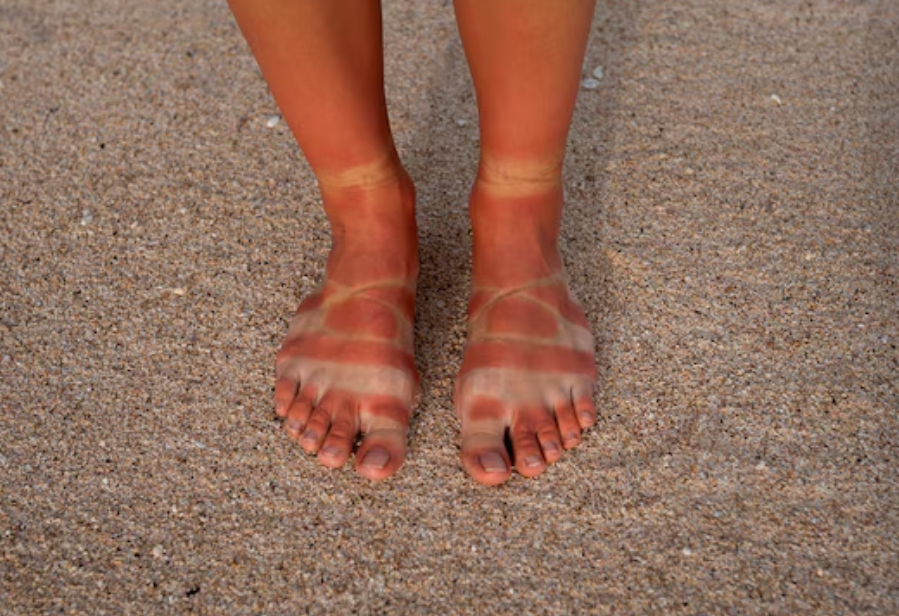
    Ever spent a full day at the beach and woken up the next morning with shoulders so sunburned that a blister has actually formed?
    Many people hesitate over whether to pop it themselves or just leave it alone, and that hesitation often makes the damage worse.

    Dermatologists note that popping sunburn blisters carelessly significantly raises the risk of secondary infection.

    Key Takeaway
    Sunburn blisters form when UV-damaged skin protects itself by filling the space between the epidermis and dermis with fluid.
    Never pop the blister. The key first-aid step is to cool it with cold water for 10 to 20 minutes, then replenish moisture with aloe vera gel or a similar product.
    If a blister is larger than the palm of your hand, or is accompanied by pus or fever, you should see a doctor.

    Sunburn blister

    What Exactly Are Sunburn Blisters?

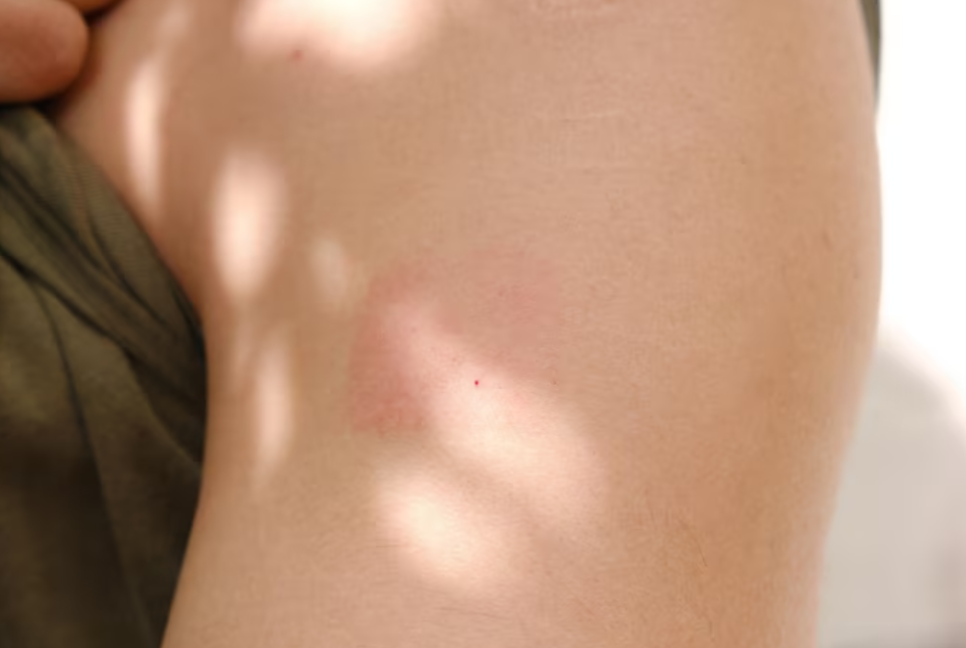
    Sunburn blisters are a defensive response in which skin damaged by intense UV (UVB) rays protects itself by filling the space between the epidermis and dermis with fluid.
    In simple terms, it’s a natural bandage your body makes on its own.

    According to the Korea Disease Control and Prevention Agency’s National Health Information Portal, sunburn symptoms typically begin 4 to 6 hours after UV exposure and peak between 12 and 24 hours later.
    If a blister forms during this window, it generally means the burn has already progressed to a second-degree burn.

    Sunburn blister illustration 2

    Key Points
    ✔ The fluid inside a blister acts as a barrier that keeps bacteria out.
    ✔ New skin is regenerating underneath that protective barrier.
    ✔ Popping it on purpose destroys that protective function.

    Allowing blisters to heal — instead of popping them — may help protect against infection.

    The American Academy of Dermatology (AAD) explains in its official patient guidance that letting blisters heal naturally, rather than popping them, is what helps prevent infection.


    Why Shouldn’t You Pop Sunburn Blisters?

    To put it simply: the moment you pop a blister, its protective barrier disappears, creating an easy path for bacteria to penetrate deep into the skin.
    As a result, healing takes longer and the chances of scarring increase.

    Category If Popped If Left Alone
    Protective barrier Disappears Stays intact
    Secondary infection risk Significantly increases Relatively low
    Scarring risk Increases Decreases
    Recovery time Longer Proceeds as expected

    That said, blisters often pop on their own from friction with clothing or from being pressed on while you sleep.
    If that happens, don’t forcibly peel off the skin — just follow the care steps covered in the next section.


    How Do You Treat Sunburn Blisters? 4-Step First Aid

    The first thing to do is quickly cool down the heat in your skin.
    Just follow these steps in order — it’s easier than it sounds.

    1. Cover the burned area gently with a cold, damp towel for about 10 to 20 minutes. Mayo Clinic warns that applying ice directly to the skin can cause additional tissue damage.
    2. Rinse the area under lukewarm running water several times a day, about 10 minutes each time, to keep cooling it down.
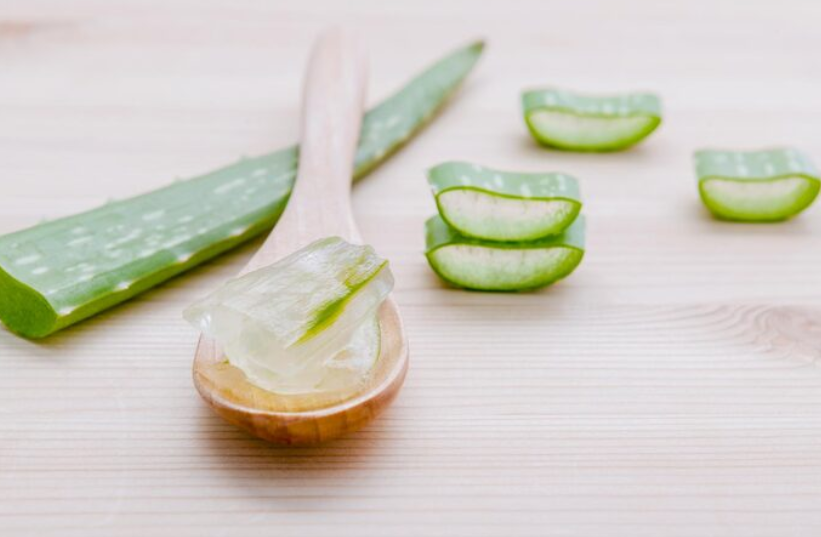
    3. Once the heat has eased somewhat, replenish moisture with a gentle, low-irritation aloe vera soothing gel.
    4. Wear loose, breathable clothing so nothing presses against the blister.

    Sunburn blister illustration 3

    Sunburn blister illustration 4

    Checklist
    ✅ Cool the heat with lukewarm or cool water for 10-20 minutes
    ✅ Don’t apply ice directly to the skin
    ✅ Gently hydrate with a low-irritation aloe vera gel
    ✅ Wear breathable clothing instead of anything tight over the blister

    What’s the Right Way to Care for Popped Sunburn Blisters — and What Should You Avoid?

    If a blister has already popped, the most important thing is not to forcibly peel off the loosened skin with your hands.
    Gently dab away any fluid with sterile gauze, apply an antibiotic ointment, and cover it with a foam-type bandage to block outside irritation.

    Sunburn blister illustration 5

    Key Points
    ✔ Rinse a popped blister with running water or saline solution.
    ✔ Don’t tear off the skin — apply antibiotic ointment, then cover with sterile gauze.
    ✔ Keep the area out of direct sunlight until it has fully healed.

    One thing that’s easy to overlook in all this is staying hydrated.
    Since adequate hydration is essential for skin regeneration, drinking water more often than usual can support recovery.

    Sunburn blister illustration 6

    Outcome
    When you follow through with cold-water first aid, proper hydration, and blister protection, most sunburn symptoms tend to gradually ease within 3 to 7 days.
    Things to Absolutely Avoid
    ⚠ Avoid greasy products like petroleum jelly (they can trap heat in the skin)
    ⚠ Never pop a blister with a needle or fingernail
    ⚠ Don’t use heating pads or warm water on the burned area
    ⚠ Avoid re-exposing the area to UV rays until it has healed

    If a blister is larger than the palm of your hand, comes with chills or fever, or shows signs of infection like yellow pus, seeing a specialist should take priority over self-care.
    Knowing in advance where you can receive burn treatment can help you respond faster in these situations.
    Visit the homepage of Ansan Yeorin Surgical Hospital for burn treatment information.

    Sunburn blister illustration 7


    Frequently Asked Questions

    1. What’s the real reason you shouldn’t pop sunburn blisters?
    The skin covering a blister acts as a natural barrier against bacteria. Removing it significantly raises the risk of secondary infection and scarring.

    2. My blister keeps getting rubbed by my clothes and feels like it’s about to pop. What should I do?
    Loosely cover it with a cushioned burn bandage or gauze so it isn’t compressed, and wear loose, breathable clothing over it.

    3. What should I do if a blister pops by accident?
    Rinse it with clean running water or saline solution, avoid tearing off the skin, apply antibiotic ointment, and cover it with sterile gauze.

    4. Can I apply aloe vera gel right away if a blister forms?

    If the blister is still intact, aloe vera gel can help once the heat has cooled down. However, it may irritate an open wound that’s leaking fluid, so a dedicated ointment is safer in that case.

    5. When should I consider seeing a doctor?
    If the blister is larger than the palm of your hand, comes with chills or fever, or shows signs of infection such as yellow pus, it’s recommended that you see a specialist right away.


    References

    · Korea Disease Control and Prevention Agency, “Sunburn,” National Health Information Portal, 2026. Link
    · American Academy of Dermatology, “How to Treat Sunburn,” AAD.org, 2024. Link
    · Mayo Clinic Staff, “Sunburn: First Aid,” Mayo Clinic, 2024. Link
    · Seoul National University Hospital, “Sunburn,” Medical Information, Seoul National University Hospital. Link

    This article is intended for general health information purposes only and is not a substitute for individual diagnosis or treatment. If you have symptoms, please consult a medical professional.

  • Burn First Aid: 4 Steps to Take in the First 20 Minutes

    Burn First Aid: 4 Steps to Take in the First 20 Minutes

    SummaryThe key to burn first aid is cooling the area under running cool water for 15 to 20 minutes. Many people confuse this with icing a burn or mishandle blisters. Ansan Burn Hospital breaks down why home remedies like toothpaste or soybean paste can be risky, how burn degrees are classified, and when it’s time to see a doctor.

    The moment you spill hot soup on yourself, is reaching for ice your first instinct?

    This reflex, which many people assume is correct, can actually make skin damage worse.

    How you handle the first few minutes after a burn can affect how deep the resulting scar becomes.

    Key Takeaway
    The key to burn first aid is cooling the area under running cool water for 15 to 20 minutes.
    Applying ice directly, or using home remedies like toothpaste or soybean paste, can make the damage go deeper.
    This article walks through what to do immediately after a burn, what to avoid, how burns are classified by degree, and when to seek medical care.

    Burn first aid

    What’s the First Step in Burn First Aid?

    The first thing to do right after a burn is cool the area under running cool water.
    Burn first aid is the process of stopping contact with the heat source and lowering skin temperature to prevent further damage.

    The moment skin touches a hot pot or spilled soup, the heat trapped inside doesn’t disappear on its own.
    If that heat isn’t drawn out quickly, the damage can spread into deeper layers of skin.

    That’s why cooling the burn is the very first thing to do.

    Burn first aid illustration 2

    1. Run tap water over the affected area for 15 to 20 minutes to cool it down.
    2. Keep the water pressure gentle, like a light trickle, rather than a strong stream.
    3. Remove rings, watches, and other jewelry right away, before swelling sets in.
    4. If clothing is stuck to the skin, don’t force it off—cool the area with water first, then cut the fabric away with scissors.

    “Burned skin should be cooled under running cool water for at least 15 to 20 minutes. Applying ice directly can cause blood vessels to constrict rapidly, which may actually deepen tissue damage.”

    This is how Korea’s Disease Control and Prevention Agency describes burn first aid on its National Health Information Portal.

    Key Point: Proper Cooling Guidelines
    ✅ Run water over the area for 15 to 20 minutes to remove trapped heat.
    ✅ Don’t apply ice directly to the wound (risk of blood vessel constriction).
    ✅ Remove jewelry immediately, before swelling begins.

    Burn first aid illustration 3


    Is It Really Okay to Apply Toothpaste or Soybean Paste?

    Home remedies like toothpaste, soybean paste, or soju can actually make a burn worse.
    A home remedy is a self-treatment method passed down informally, without medical verification.

    In the panic of the moment, it’s tempting to reach for whatever’s in the kitchen.
    But toothpaste, soybean paste, and potato juice trap heat inside the wound.

    These substances can also introduce bacteria and lead to infection.
    Pouring soju or other alcohol on a burn is no better.
    Alcohol further irritates skin whose barrier is already damaged.

    Burn first aid illustration 4

    Burn first aid illustration 5

    Caution: Things You Should Never Do
    🚫 Applying toothpaste, soybean paste, cucumber, or other food items
    🚫 Pouring soju or alcohol directly on the wound
    🚫 Popping a blister with your fingers
    🚫 Self-applying unverified topical products

    There’s a reason you shouldn’t pop a blister.
    Blister fluid acts as a natural barrier that protects the wound from bacteria.

    Forcing a blister open is thought to increase the risk of deeper scarring.
    Leave blisters intact and keep the area clean instead.

    Burn first aid illustration 6


    How Are Burn Degrees Classified?

    Burns are classified from first-degree to third-degree based on how deep the damage goes.
    Burn degree is a classification based on how much of the epidermis and dermis has been damaged.

    First-degree burns affect only the epidermis, causing redness and a stinging sensation.
    From second-degree burns onward, blisters form and pain intensifies.

    However, when damage reaches deep into the dermis, nerve endings can be destroyed, which may actually reduce pain.
    Less pain doesn’t mean less damage, so the area should be examined carefully.

    Burn first aid illustration 7

    Degree Depth of Damage Main Symptoms
    First-degree Epidermis Redness, pain, no blisters
    Superficial second-degree Upper dermis Red blisters, intense pain
    Deep second-degree Lower dermis Pale blisters, reduced pain
    Third-degree Full skin thickness Discoloration, painless due to nerve damage

    Burn first aid illustration 8


    When Should You Go to the Hospital Right Away?

    Burns on the face, hands, or joints, or burns covering a large area, call for prompt medical attention.
    A burn that needs immediate care is one where natural healing is unlikely or there’s a meaningful risk of losing function.

    According to a report by The Seoul Shinmun, about 67% of burn accidents in Korea happen at home.
    The same report found that infants and toddlers aged 0 to 4 made up 29% of all burn patients in Korea.

    Infants and older adults, who tend to have weaker immune systems, can experience wider-reaching effects from even a small burn.
    Burns near joints can cause the skin to contract as it heals, which may limit range of motion.

    Checklist: When to Seek Care Right Away
    ✅ The blister is larger than a coin
    ✅ The burn is on the face, hands, or a joint
    ✅ The burn was caused by a chemical or electrical source
    ✅ The burn occurred in an older adult or a young child

    Burn first aid illustration 9

    Burn first aid illustration 10

    Finishing first aid isn’t the end of the process.
    A proper evaluation and dressing from a medical professional can help minimize scarring.

    We recommend having your burn assessed at the Burn Treatment page of Ansan Open Surgery Hospital, which has experience treating burns.

    Burn first aid illustration 11

    Burn first aid illustration 12


    Frequently Asked Questions

    1. When should you apply ointment to a burn?
    Applying ointment while the burn still feels hot can trap heat inside and worsen the damage. It’s best to cool the area thoroughly with cool water, pat it dry, and then apply an infection-prevention ointment.

    2. How should you care for a blister that has already popped?
    Don’t peel away the loose skin—leave it in place and gently clean the area with sterile saline. After that, protect it with an appropriate dressing and see a doctor to be safe.

    3. Why shouldn’t you put ice directly on a burn?
    Direct contact with ice causes skin blood vessels to constrict sharply, which restricts circulation and can cause secondary damage similar to frostbite. Always cool a burn with running cool water instead.


    References

    · Korea Disease Control and Prevention Agency, “Burns,” National Health Information Portal, KDCA. View source
    · Ministry of the Interior and Safety, “First Aid – Burns,” Korea Safety (안전24), MOIS. View source
    · The Seoul Shinmun, “29% of Burn Patients Are Ages 0–4… 67% Occur at Home,” The Seoul Shinmun, 2018. View source
    · Hidoc, “‘Don’t Pop the Blister’… A Surgeon Explains How to Handle Burns,” Hidoc, 2025. View source


    This article is intended for general health information purposes only and is not a substitute for individual diagnosis or treatment. If you have symptoms, please consult a medical professional.
  • Hyperbaric Oxygen Therapy for Burns: Why the 24-48 Hour Golden Window Matters

    Hyperbaric Oxygen Therapy for Burns: Why the 24-48 Hour Golden Window Matters

    SummaryHere’s what you need to know about hyperbaric oxygen therapy for burns: how it works, why the 24-48 hour golden window matters, what the treatment process looks like, and a checklist to help you prepare.

    If a burn from hot water or fire hasn’t even started to scab over after a week,
    it may be more than just a slow recovery.

    In many cases, the underlying issue is reduced blood flow to the damaged tissue, which cuts off its oxygen supply.
    One approach that’s drawn attention for speeding up recovery in these situations is hyperbaric oxygen therapy for burns.

    💡 Quick preview
    This article breaks down how hyperbaric oxygen therapy for burns works, why the golden window matters for recovery, and what to check before starting treatment.
    Read on for the 3 mechanisms that help reduce swelling and lower scarring risk, plus why the 24-48 hour window is so critical.

    hyperbaric oxygen therapy for burns

    What Is Hyperbaric Oxygen Therapy for Burns?

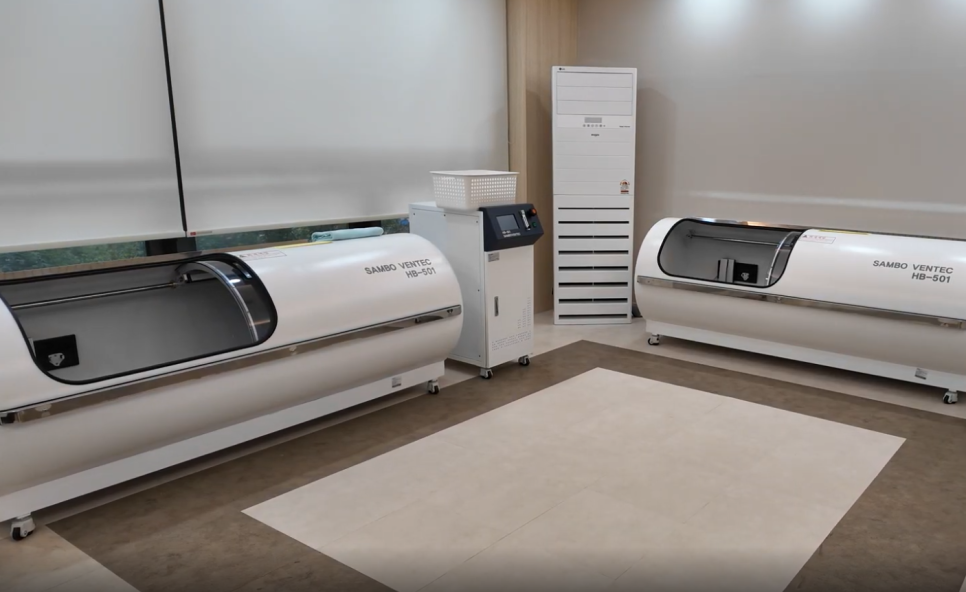
    Hyperbaric oxygen therapy for burns is a treatment in which patients breathe highly concentrated oxygen in an environment with air pressure higher than normal atmospheric pressure, in order to support the recovery of damaged tissue.
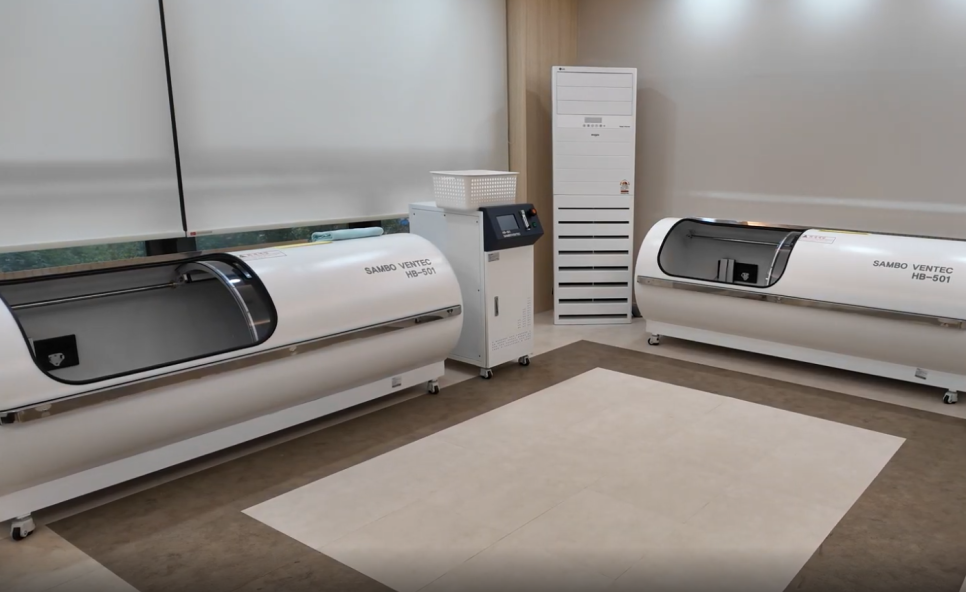
    It’s administered inside a sealed piece of equipment called a hyperbaric chamber.

    Under normal breathing conditions, oxygen struggles to reach deep into damaged skin tissue.
    When pressure is increased, however, oxygen dissolves not only into red blood cells but also into blood plasma (serum).

    If this is your first time hearing about the concept, you’re probably wondering how much it actually helps with skin recovery.
    The key idea is that it delivers oxygen directly to injured areas where circulation is compromised.

    hyperbaric oxygen therapy for burns illustration 3

    💡 Key point
    The high-concentration oxygen inhaled under pressure travels through the bloodstream deep into damaged skin, helping to lay the groundwork for cell regeneration.

    hyperbaric oxygen therapy for burns illustration 4


    What Are the Core Mechanisms Behind Faster Recovery?

    Hyperbaric oxygen therapy supports recovery through three main mechanisms: reducing swelling, promoting new blood vessel formation, and supporting white blood cell function.
    When skin tissue is damaged, localized swelling develops and blood flow drops sharply.

    If this state continues, tissue oxygen levels fall further and recovery slows down.
    High-concentration oxygen helps stimulate the formation of new microvessels, allowing fresh blood supply to return to the area.

    hyperbaric oxygen therapy for burns illustration 5

    Elevated blood oxygen levels help reduce swelling
    and support the bactericidal function of white blood cells, which can help guard against secondary infection.

    Together, these combined effects help activate the skin’s regeneration cycle,
    which may in turn help lower the likelihood of scarring.

    🚀 Potential benefits
    ✅ Reduced swelling and improved blood flow at the injury site
    ✅ Support for white blood cell function that may help prevent infection
    ✅ Encouragement of new microvessel and skin cell formation

    Why Does the 24-48 Hour Golden Window Matter So Much?

    The “golden window” in burn care refers to the first 24 to 48 hours after injury, a period that’s understood to help minimize cell death and support the body’s recovery capacity.
    The faster the initial response, the more the extent of damage may be limited.

    hyperbaric oxygen therapy for burns illustration 6

    Prompt, appropriate first aid and care during this period is understood to have a positive effect on outcomes.
    That said, this timeframe reflects general clinical guidance for burn injuries
    and isn’t an absolute standard that applies identically to every patient.

    Missing the golden window raises the risk of deeper tissue damage,
    so it’s advisable to seek a professional evaluation and prompt care immediately after injury.

    ⚠️ A note of caution
    Simply waiting for natural healing without intervention can allow the area of tissue death to expand, so it’s best to get appropriate care within the initial golden window.

    What Does the Hyperbaric Oxygen Treatment Process Look Like?

    Hyperbaric oxygen therapy generally follows this sequence: consultation and evaluation → entering the chamber → progress check.
    Understanding these steps ahead of time can help you receive care safely.

    1. Consultation and evaluation: Medical staff assess the patient’s condition and determine whether the treatment is appropriate.
    2. Entering the chamber: Pressure is raised gradually while the patient breathes high-concentration oxygen for 60 to 90 minutes.
    3. Progress check: Skin recovery is evaluated and the number of remaining sessions is adjusted accordingly.

    hyperbaric oxygen therapy for burns illustration 7

    📋 Checklist
    ✅ Does the facility have equipment that meets recognized safety standards?
    ✅ Is the treatment supervised by qualified medical staff?
    ✅ Were you given clear instructions on equalizing (ear pressure adjustment) before treatment?

    If you’re looking for a specialized hospital that offers hyperbaric oxygen therapy,
    the homepage of Ansan Yeorin Surgery Hospital, a hospital specializing in burn treatment, is a good place to find more information.

    hyperbaric oxygen therapy for burns illustration 8


    Frequently Asked Questions

    1. Is the treatment painful or uncomfortable?
    As pressure increases, you may feel ear fullness similar to what you experience on an airplane. Swallowing or pinching your nose while gently blowing (equalizing) usually resolves this.

    2. How long does each session take, and how many sessions are needed?
    A single session typically takes 60 to 90 minutes, and the total number of sessions varies depending on the severity of the burn and how recovery progresses.

    3. Can it be combined with regular wound dressing?
    Yes. When combined with standard wound care and dressing, it may support skin regeneration alongside those treatments.

    4. Can every burn patient receive this treatment?
    Eligibility depends on the depth and extent of the burn as well as overall health, so it should be decided based on a physician’s evaluation.

    5. Does it completely eliminate scarring after treatment?
    It may help lower the risk of scarring, but results vary by individual and complete scar removal isn’t guaranteed.

    hyperbaric oxygen therapy for burns illustration 9

    hyperbaric oxygen therapy for burns illustration 10

    If you need emergency burn care in the Ansan area, it’s worth checking in advance whether a hospital has dedicated burn specialists and the proper dressing materials on hand.
    Facilities like Yeorin Surgery Hospital, located at 376 Hwarang-ro, Danwon-gu, Ansan-si, Gyeonggi-do, can serve as a reference for the kind of care infrastructure to look for.

    hyperbaric oxygen therapy for burns illustration 11


    References

    · NCBI StatPearls, “Hyperbaric Treatment of Thermal Burns,” StatPearls Publishing, 2023. View source
    · Journal of Burn Care & Research, “Hyperbaric Oxygen Therapy in Burn Care: A Systematic Review of Current Evidence,” Oxford University Press, 2025. View source
    · Doctors News, “Why Is Hyperbaric Oxygen Therapy Needed for Acute Burns?”, Korean Medical Association, 2023. View source


    This article is intended for general health information purposes only and is not a substitute for individual diagnosis or treatment. If you have symptoms, please consult a physician.

  • Burn Hospital in Ansan: 3 Things 15 Minutes of First Aid Can Decide

    Burn Hospital in Ansan: 3 Things 15 Minutes of First Aid Can Decide

    SummaryDon’t panic if you’re scalded by hot water. This guide covers the first 15 minutes of burn first aid, how to handle blisters, checkpoints for choosing a burn hospital in Ansan, and stage-by-stage burn treatment and scar care.

    The instant hot soup splashes onto the back of your hand, most people panic and reach for ice.

    But that split-second decision can affect how the scar ends up looking.

    What you do in the first 15 minutes after a burn, and how you choose a specialized burn clinic, may affect your recovery speed and scarring.

    burn hospital in Ansan

    Key Points
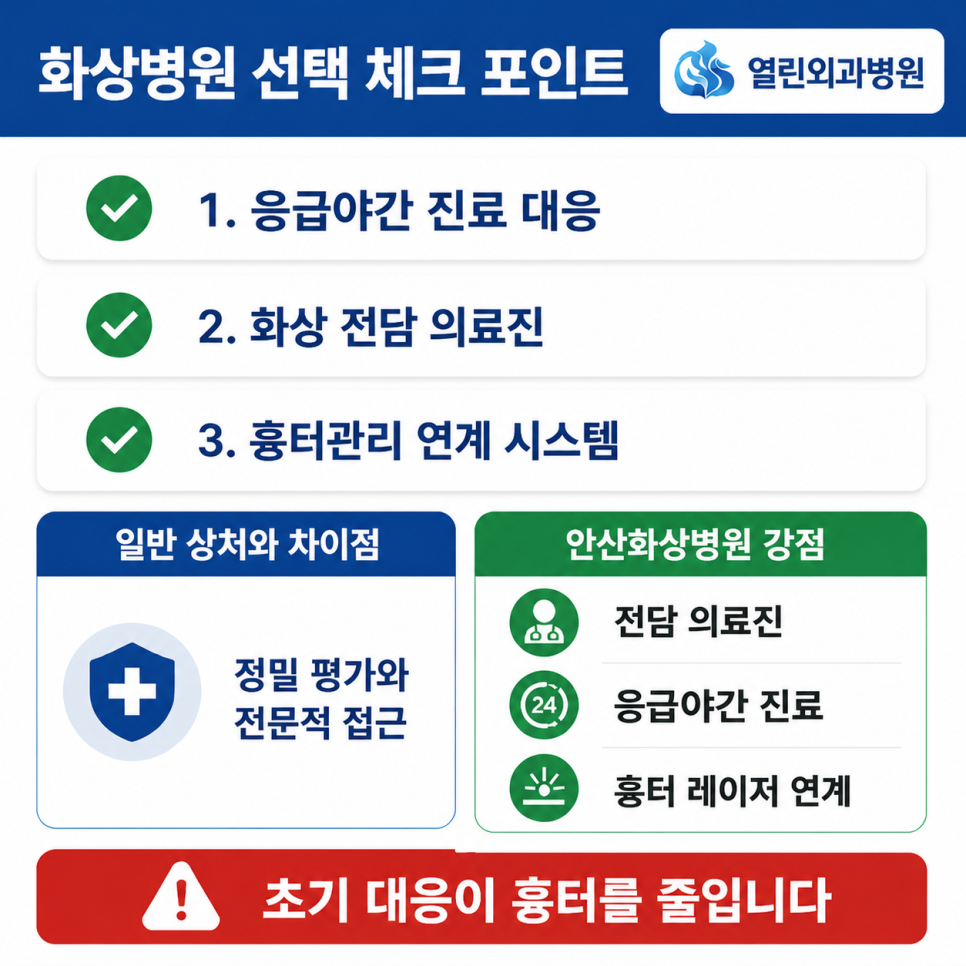
    1. A specialized burn hospital treats burn patients who need a tailored approach — from dressing changes to scar laser treatment — that differs from routine wound care.
    2. Right after a burn, the basic sequence is to cool the area under running cool water for at least 15 minutes, then get specialized burn care.
    3. Folk remedies like applying ice directly, rubbing on soju or soybean paste, or popping blisters yourself can worsen the damage and cause infection.

    Burn hospital in Ansan - related image 2

    This article walks through the emergency first-aid steps right after a burn, the checkpoints for choosing the right burn treatment center, and stage-by-stage burn treatment and scar care.
    We’ll guide you step by step so you can act right away without panicking.

    What’s the First Thing You Should Do After a Burn?

    The first 15 minutes after a burn are a critical window that can affect how deep the skin damage becomes.
    Burn first aid is the process of cooling the heat as quickly as possible to reduce tissue damage.

    Burn hospital in Ansan - related image 3

    If you get burned, immediately hold the area under running cool water and cool it for at least 15 minutes.

    That said, some people still try folk remedies like rubbing on soju, soybean paste, or raw potato.

    These should be strictly avoided, as they can cause secondary infection.
    Cooling with clean water alone is generally considered a safe approach.

    Burn hospital in Ansan - related image 4

    Caution
    Popping a blister yourself increases the risk of bacterial infection and can slow healing.
    Blisters act as a natural shield protecting the damaged skin underneath, so leave them intact and have a medical professional treat them if needed.

    In summary, here’s the order to follow for burn first aid:

    1. Hold the area under running cool water (15–25°C / 59–77°F) for at least 15 minutes.
    2. Don’t apply ice directly — it can over-constrict blood vessels and worsen the damage.
    3. Don’t use folk remedies such as soju, soybean paste, or potato.
    4. Cover the area loosely with clean gauze and go to a burn specialty hospital.

    What Should You Check When Choosing a Burn Hospital in Ansan?

    Burn treatment requires a completely different, specialized approach than routine wound care.
    A specialized burn hospital refers to a facility with an integrated care system covering everything from initial dressing to scar management.

    Burn hospital in Ansan - related image 5

    Every hospital has different treatment know-how and aftercare programs.

    That’s why it’s worth carefully checking whether a hospital can provide intensive care and whether it also connects patients to scar management.

    Checklist
    ✅ Check whether burn care and emergency response are available even at night
    ✅ Look into the clinical experience and expertise of the dedicated burn medical staff
    ✅ See whether there’s a systematic care pathway from dressing to scar laser treatment
    ✅ Confirm whether they create a customized treatment plan based on the burn’s location and depth

    For reference, one option in the Ansan area that offers both burn treatment and scar management is the home page of Ansan Yeollin Surgery Hospital, which provides burn care — it may be worth checking out when comparing hospitals.


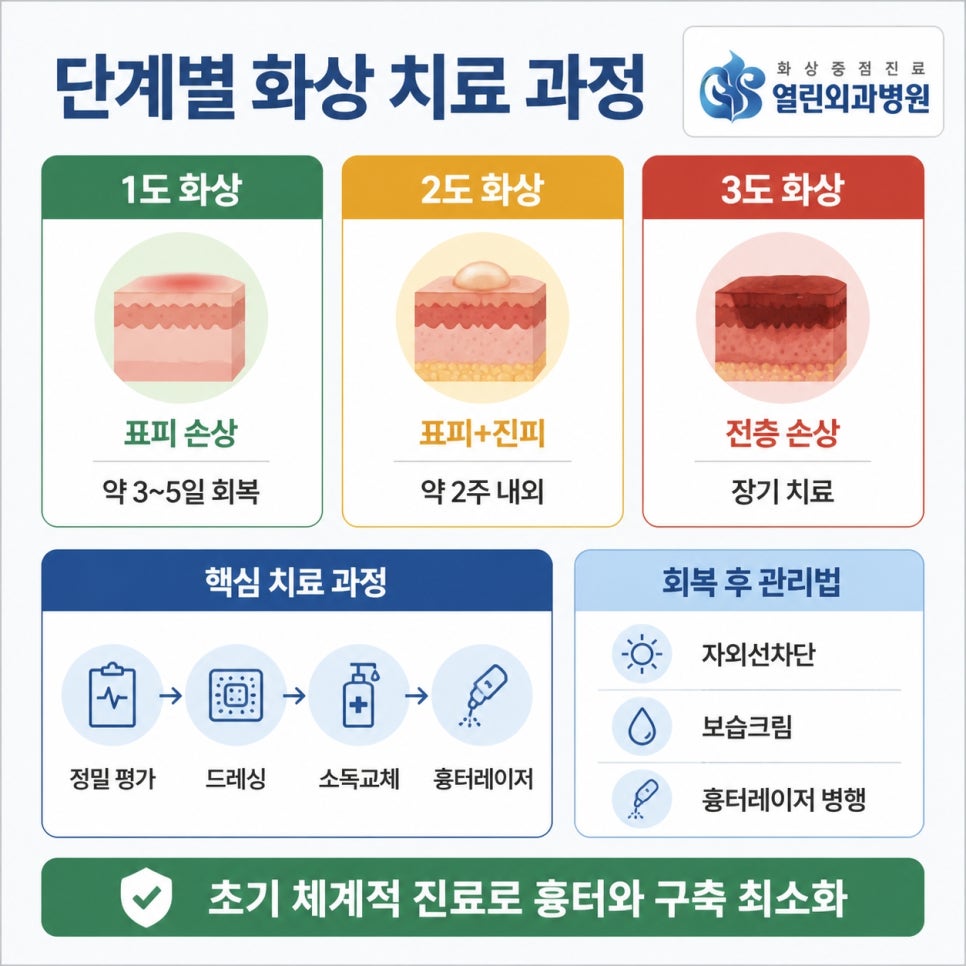
    How Does Treatment Differ by Burn Stage?

    Burn treatment by stage is tailored to how deep the skin damage goes.
    Burn stages classify the depth of skin damage from first-degree to third-degree.

    Stage Main Symptoms Treatment Focus
    First-degree burn Mild redness, stinging Focus on cooling and moisturizing
    Second-degree burn Blisters with pain Regular dressing changes and disinfection
    Third-degree or higher Skin necrosis, reduced sensation Requires specialist care and intensive treatment

    Burn hospital in Ansan - related image 6

    Proper dressing changes and disinfection are essential to prevent infection and help new skin form properly.

    Even after treatment ends, thorough sun protection and moisturizing are needed to reduce pigmentation.
    Skin that’s been sensitized by injury tends to overproduce melanin, making it darker than the surrounding area.

    Apply an SPF30+ sunscreen daily, even indoors, and reapply every 2–3 hours outdoors.
    Neglecting skin care early on can allow discoloration to linger, so it’s worth paying close attention.

    Outcome
    Getting systematic care early from a burn hospital in Ansan and consistently keeping up with sun protection and moisturizing may help minimize scarring and contracture.

    Burn hospital in Ansan - related image 7

    Burn hospital in Ansan - related image 8

    About Yeollin Surgery Hospital

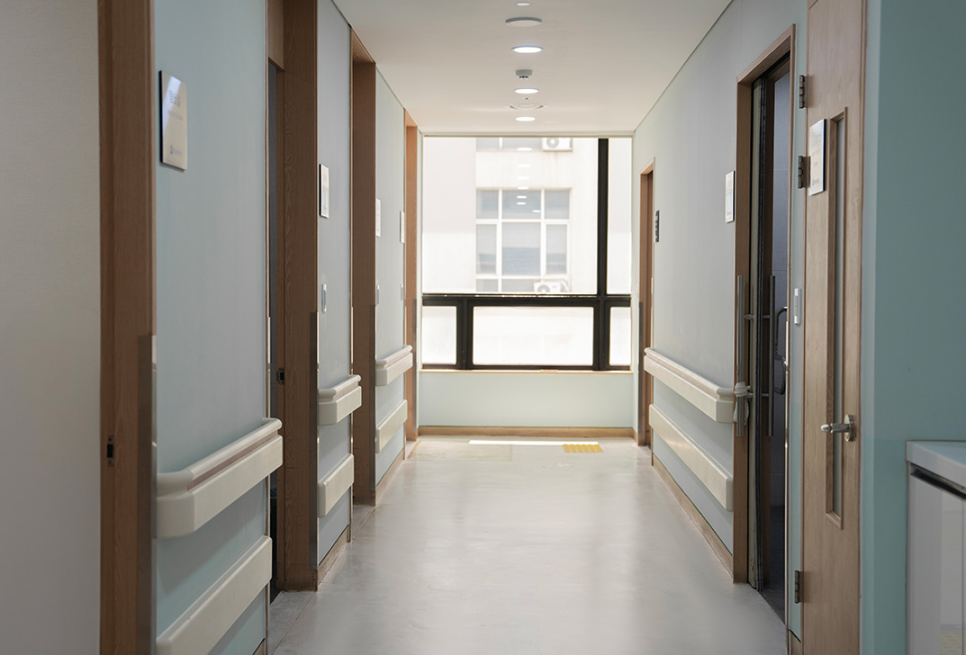
    It’s located at 376 Hwarang-ro, Danwon-gu, Ansan-si, Gyeonggi-do (basement level and floors 2–4), across from Ansan City Hall and Danwon Police Station, making it easy to reach.

    Burn hospital in Ansan - related image 9

    Burn hospital in Ansan - related image 10

    Burn hospital in Ansan - related image 11

    Burn hospital in Ansan - related image 12


    Frequently Asked Questions

    1. Is it okay to apply ice directly to a burn?
    Applying ice directly can cause excessive blood vessel constriction and worsen tissue damage, so it’s better to use running water at about 15–25°C (59–77°F).

    2. Can I pop a small blister myself at home?
    Blisters protect the wound from bacteria, so you shouldn’t pop them yourself — have them treated under sterile conditions at a hospital instead.

    3. How long does burn treatment usually take?
    It varies by depth and extent, but second-degree burns typically require around two weeks of treatment.

    4. When should I start managing scars?
    Begin moisturizing and sun protection as soon as the wound has fully healed, and combining this with professional scar laser treatment, if needed, may help.

    5. If I get burned at night, should I go straight to the hospital?
    For extensive burns or second-degree-plus burns with large blisters, it’s safer to go straight to a burn specialty hospital that offers night-time care.


    References

    · National Safety Portal (Ministry of the Interior and Safety), “Daily Safety Guidelines – First Aid,” Ministry of the Interior and Safety. View source
    · Seoul National University Hospital, “Burns,” Medical Information. View source
    · Hidoc, “Don’t Pop the Blister… A Surgeon Explains How to Handle Burns,” Hidoc News, 2025. View source
    · Soonchunhyang University Gumi Hospital, “Proper Burn Care and Scar Management,” Health Information. View source


    This article is intended for general health information purposes only and is not a substitute for individual diagnosis or treatment. If you have symptoms, please consult a medical professional.
  • Burn First Aid: 3 Things the First 15 Minutes Decide

    Burn First Aid: 3 Things the First 15 Minutes Decide

    SummaryDon’t panic if you’re scalded by hot water. Here’s a rundown of the first-15-minutes burn first aid steps, how to handle blisters, checkpoints for choosing an Ansan burn hospital, and treatment and scar care by burn stage.

    The moment hot soup splashes onto the back of your hand, most people instinctively reach for ice.

    But that split-second decision actually plays a big role in how large the resulting scar ends up being.

    The first 15 minutes after a burn — and how you choose an Ansan burn hospital — can make a real difference in how quickly you recover and how much scarring remains.

    Ansan burn hospital

    Key Points
    1. An Ansan burn hospital treats burn patients who need a specialized approach — from dressing changes to scar laser treatment — that differs from general wound care.
    2. Right after a burn, the basic sequence is to cool the area under cool running water for at least 15 minutes, then see a burn specialist.
    3. Folk remedies such as applying ice directly, rubbing on soju or soybean paste, or popping blisters yourself can worsen the damage and lead to infection.

    Ansan burn hospital related image 2

    This article covers the order of first aid right after a burn, checkpoints for choosing an Ansan burn hospital, and treatment and scar care by burn stage.
    We’ll walk you through it step by step so you can act calmly and confidently.

    What’s the First Thing You Should Do for Burn First Aid?

    The first 15 minutes after a burn are a critical window for determining how deep the skin damage goes.
    Burn first aid means cooling the heat as quickly as possible to minimize tissue damage.

    Ansan burn hospital related image 3

    If you get burned, immediately hold the area under cool running water and keep it cooling for at least 15 minutes.

    That said, some people still try folk remedies like rubbing soju, soybean paste, or raw potato on the burn.

    These practices can cause secondary infection and should be avoided entirely.
    Cooling with clean water alone is generally considered a safe approach.

    Ansan burn hospital related image 4

    Caution
    Popping a blister yourself increases the risk of bacterial infection and can slow healing.
    Blisters act as a natural shield protecting the damaged skin underneath, so leave them intact and have a medical professional treat them if needed.

    In summary, here’s the recommended order for burn first aid.

    1. Hold the area under cool running water (15–25°C / 59–77°F) for at least 15 minutes.
    2. Don’t apply ice directly — it can over-constrict blood vessels and worsen the damage.
    3. Avoid folk remedies such as soju, soybean paste, or potato.
    4. Lightly cover the area with clean gauze and head to a burn specialist.

    What Should You Check When Choosing an Ansan Burn Hospital?

    Burn treatment calls for a specialized approach that’s completely different from general wound care.
    An Ansan burn hospital is a facility with a coordinated care system covering everything from initial burn dressing to scar management.

    Ansan burn hospital related image 5

    Every hospital has its own treatment know-how and aftercare programs, so there’s naturally some variation between them.

    That’s why it’s worth carefully checking whether a hospital can provide focused treatment and whether scar care is included as part of the process.

    Checklist
    ✅ Check whether burn care and emergency response are available at night
    ✅ Look into the clinical experience and expertise of the burn care team
    ✅ See whether there’s a systematic care pathway from dressing to scar laser treatment
    ✅ Confirm whether they build a treatment plan tailored to the burn’s location and depth

    For reference, one option in the Ansan area offering both burn treatment and scar management is the home page of Yeollin Surgical Hospital in Ansan, which provides burn care — worth a look when comparing hospitals.


    How Does Treatment Differ by Burn Stage?

    Treatment by burn stage is tailored to how deep the skin damage goes.
    Burn stages classify the depth of skin damage from first-degree to third-degree.

    Stage Main Symptoms Treatment Focus
    First-degree burn Mild redness, stinging Cooling and moisturizing care
    Second-degree burn Blisters with pain Regular dressing changes and disinfection
    Third-degree or higher Tissue necrosis, reduced sensation Requires specialist care and intensive treatment

    Ansan burn hospital related image 6

    Proper dressing changes and disinfection are essential for preventing infection and helping new skin grow in well.

    Even after treatment is finished, thorough sun protection and moisturizing matter for reducing pigmentation.
    Skin that’s been sensitized by injury tends to overproduce melanin, which can leave it darker than the surrounding area.

    It’s a good idea to apply SPF 30+ sunscreen daily, even indoors, and reapply every 2–3 hours when outdoors.
    Neglecting this early on can allow discoloration to linger, so staying consistent matters.

    Outcome
    Getting systematic care at an Ansan burn hospital early on, combined with consistent sun protection and moisturizing, may help minimize scarring and contracture.

    Ansan burn hospital related image 7

    Ansan burn hospital related image 8

    About Yeollin Surgical Hospital

    It’s located at 376 Hwarang-ro, Danwon-gu, Ansan-si, Gyeonggi-do (basement level plus floors 2, 3, and 4), across from Ansan City Hall and in front of Danwon Police Station, making it easy to reach.

    Ansan burn hospital related image 9

    Ansan burn hospital related image 10

    Ansan burn hospital related image 11

    Ansan burn hospital related image 12


    Frequently Asked Questions

    1. Is it okay to apply ice directly to a burn?
    Applying ice directly can over-constrict blood vessels and worsen tissue damage, so it’s better to use running water around 15–25°C (59–77°F).

    2. Can I pop a small blister at home?
    Blisters protect the wound from bacteria, so avoid popping them yourself — have them treated under sterile conditions at a hospital instead.

    3. How long does burn treatment usually take?
    It varies with the depth and extent of the burn, but second-degree burns typically require around two weeks of treatment.

    4. When should I start caring for a scar?
    Start moisturizing and applying sun protection as soon as the wound has fully healed, and if needed, professional scar laser treatment may also help.

    5. If I’m burned at night, should I go straight to the hospital?
    For extensive burns or second-degree-and-above burns with large blisters, it’s safest to head straight to a burn specialist that offers night-time care.


    References

    · Safekorea (Ministry of the Interior and Safety), “Life Safety Action Guide – First Aid,” Ministry of the Interior and Safety. View source
    · Seoul National University Hospital, “Burns,” Medical Information. View source
    · Hidoc, “Don’t Pop the Blister… A Surgeon Explains How to Handle Burns,” Hidoc News, 2025. View source
    · Soonchunhyang University Gumi Hospital, “Proper Burn Care and Scar Management,” Health Information. View source


    This article is intended to provide general health information and is not a substitute for individual diagnosis or treatment. If you have symptoms, please consult a medical professional.
  • Lip Burn Blister: 3 First-Aid Steps to Heal Without Scarring

    Lip Burn Blister: 3 First-Aid Steps to Heal Without Scarring

    SummaryGetting a lip burn blister from hot food or a hot drink can be alarming. This article walks through first-aid steps for a lip burn blister, mistakes to avoid, and when to see a doctor, so you can support healing and help reduce the risk of scarring.

    Most of us have had that moment of taking a sip of hot soup and feeling our lip sting.

    It’s easy to shrug off at first, but a few hours later the lip swells up and a clear blister forms — and that’s when things start to feel serious.

    Here’s the tricky part.

    A lip burn blister can turn into a scar or dark spot fairly easily if you touch or pick at it the wrong way.

    I’ve burned my own lip on hot food before, so I looked into the proper first-aid steps myself and put them together here along with the medical reasoning behind them.

    lip burn blister

    This article covers, in order, how to cool down a lip burn blister right after it happens, habits that can slow healing, and when it’s time to see a doctor.

    Let’s go through safe first-aid steps for a lip burn blister now.

    What’s the right first aid for a lip burn blister right after it happens?

    The key to first aid for a lip burn blister is cooling the area down as quickly as possible.

    If hot food or a hot object has touched your lip, the first thing to do is bring the skin temperature down.

    A surprising number of people reach straight for ice and press it directly on the skin, though.

    Placing ice directly on already-damaged skin adds a sudden temperature shock on top of the burn, which can constrict blood vessels and cut off circulation — causing further, secondary damage.

    In severe cases, this can even lead to frostbite-like tissue damage, so it’s worth being careful.

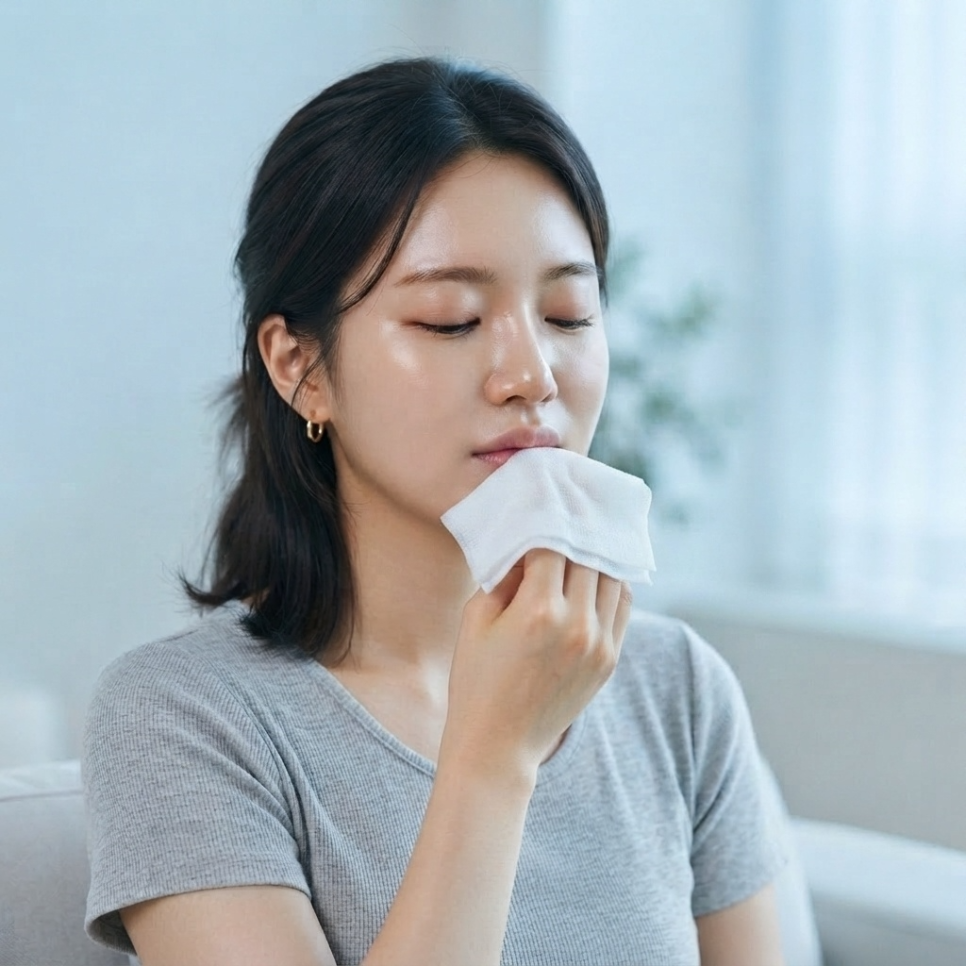
    lip burn blister first aid image 2

    The right approach is to soak a piece of gauze or a soft cloth in cool water (around 60–75°F) and lay it gently on the lip.

    Don’t rub — just hold it there lightly and give the heat time to ease out gradually.

    When I burned my lip on hot soup, I skipped the rubbing and just held a cool, damp cloth against it, and the pain noticeably eased.

    1. Cool the area for 10–20 minutes with lukewarm running water or gauze soaked in cool water.
    2. Never let ice or ice water touch the skin directly.
    3. Pat the area dry and cover it lightly with clean gauze.
    Key Takeaways
    ✔ Direct ice contact can freeze skin cells and block circulation, leading to secondary damage.
    ✔ Always cool the area gradually with a lukewarm damp cloth instead.

    What should you never do once a blister forms?

    A lip burn blister is your skin’s natural protective barrier over the damaged area, so you shouldn’t pop it yourself.

    Over time, a clear fluid-filled blister naturally forms on the burned area.

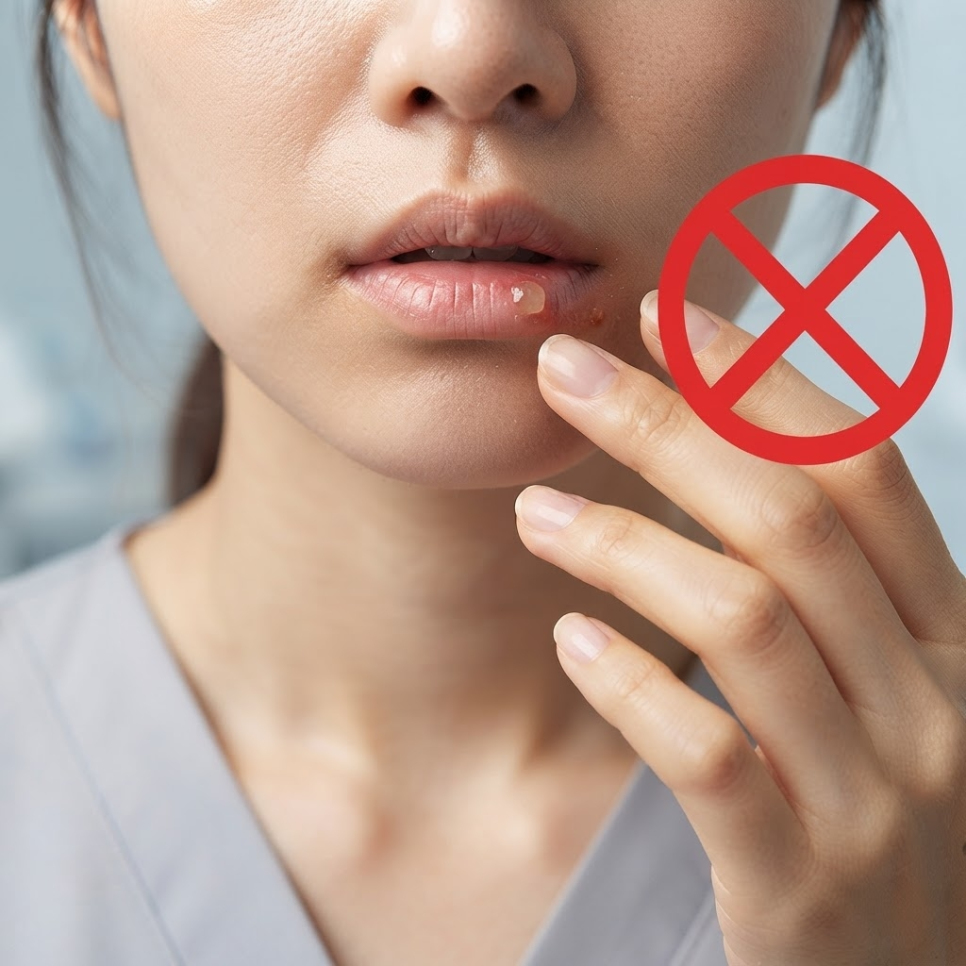
    A surprising number of people end up popping it with their fingers or puncturing it with a needle.

    lip burn blister first aid image 3

    Forcing a blister open raises the risk of a secondary infection.

    It’s safer to leave the blister alone and let it settle or break on its own, since it’s doing the job of protecting the wound underneath.

    Peeling it off yourself makes scarring and dark spots more likely.

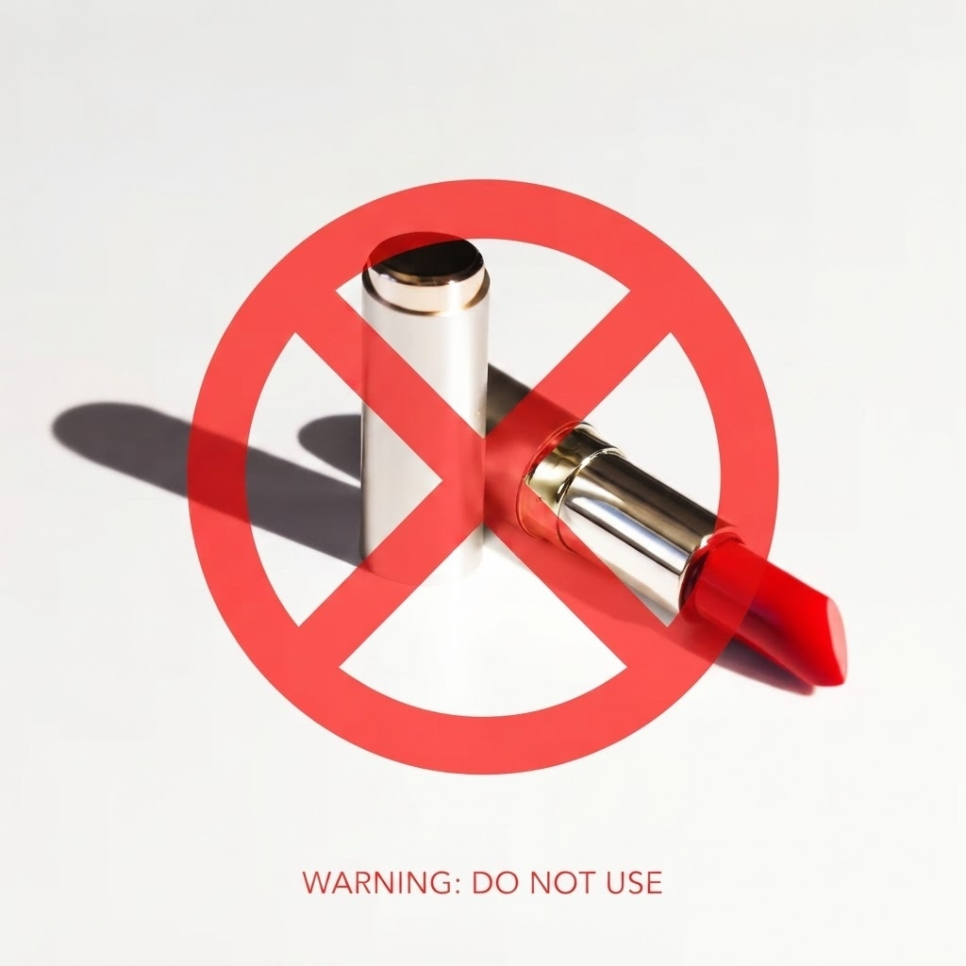
    It’s also best to avoid lipstick or other potentially irritating cosmetics until the area has fully healed.

    Even minor irritation can slow down the healing process.

    lip burn blister first aid image 4

    lip burn blister first aid image 5

    Checklist
    ✅ Don’t pop the blister with your fingers or puncture it with a needle
    ✅ Avoid lipstick and other irritating cosmetics
    ✅ Stop habits like applying saliva or picking at scabs
    ✅ Avoid hot, spicy, or salty foods that can irritate the area

    When should you see a doctor for a lip burn blister?

    If the blister covers a large area, or pain and oozing continue, it’s time to get a professional evaluation.

    Sometimes home care for a few days doesn’t help, and the wound keeps oozing instead of drying out.

    Yellow pus is a possible sign that an infection is developing.

    Key Takeaways
    ✔ If oozing doesn’t stop or you notice yellow pus, infection should be suspected.
    ✔ A professional diagnosis, rather than self-treatment alone, can help reduce the risk of scarring.

    lip burn blister first aid image 6

    In these cases, it’s safer not to rely on self-treatment alone and instead seek out a medical provider experienced with burns and skin wounds.

    With a proper diagnosis, treatments such as antibiotic ointment or wound dressing can help minimize scarring.

    I’ve seen real cases where people treated it as a minor wound, left it untreated, and the symptoms ended up getting worse.

    Early care matters especially for a sensitive area like the lips, where scars tend to form easily.

    If your lip burn blister covers a wide area or isn’t healing well, it’s worth having it checked at a medical facility with experience treating burns, such as Ansan Open Surgery Hospital.

    lip burn blister first aid image 7

    Caution
    ⚠ Don’t ignore heavy oozing or severe pain.
    ⚠ Visit a nearby medical provider for proper treatment.

    Frequently Asked Questions

    1. My blister popped on its own — what should I do?
    Gently clean the area with clean gauze or a cotton swab, then apply an ointment. Don’t force off any remaining loose skin.

    2. Can I put toothpaste or other home remedies on it?
    Traditional home remedies like this can introduce bacteria and cause infection, so they should be avoided entirely.

    3. What should I eat while it heals?
    Avoid hot, spicy, or salty foods, and stick to lukewarm, soft foods that won’t irritate the area.

    4. Can I use any burn ointment I have on hand?
    An over-the-counter wound ointment can generally be used, but if symptoms are severe, it’s safer to consult a doctor and use a product they recommend.

    5. How long does a lip burn blister take to heal?
    Mild cases often heal within 1–2 weeks, but this varies by person and depends on whether infection develops — if healing is slow, it’s best to see a doctor.

    lip burn blister first aid image 8


    References

    · Asan Medical Center Newsroom, “Don’t Use Ice on Burns,” Asan Medical Center. View source
    · Hidoc, “‘Don’t Pop the Blister’ — A Surgeon Explains Burn First Aid,” Hidoc. View source
    · MSD Manual Consumer Version, “Burns,” MSD. View source

    This article is provided for general health information purposes only and is not a substitute for individual diagnosis or treatment. If you have symptoms, please consult a medical professional.