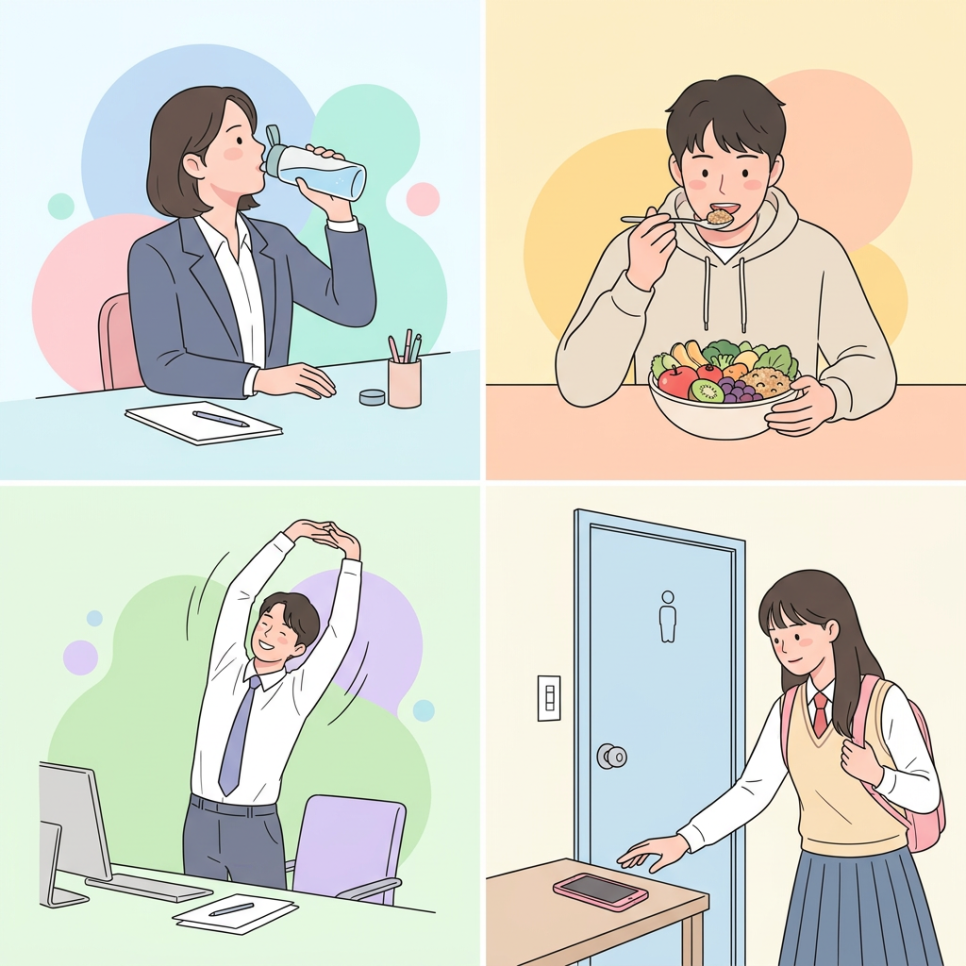
Tag: Piles

  • Ansan Proctology Clinic: 3 Signs of a Trustworthy One

    Ansan Proctology Clinic: 3 Signs of a Trustworthy One

    SummaryIf you’re considering an Ansan proctology clinic, start with the diagnostic criteria. This guide covers how to tell hemorrhoids, anal fissures, and fistulas apart, when conservative treatment versus surgery is appropriate, and the aftercare steps that help prevent recurrence — key points to consider when choosing an Ansan proctology clinic. Delaying treatment tends to make recovery take longer.

    A stinging sensation or a bit of blood doesn’t automatically mean
    you need to head straight into surgery.

    In the early stages, medication and lifestyle changes alone
    can often bring real improvement.

    The real problem is hesitating.
    The longer you put off a decision, the longer treatment tends to take.

    If you’re looking into an Ansan proctology clinic,
    let’s start with the criteria that separate surgical cases from conservative treatment.

    This article breaks down the criteria that confuse people looking for an Ansan proctology clinic.
    You’ll find what to look for in a trustworthy Ansan proctology clinic, how to tell hemorrhoids, fissures, and fistulas apart,
    and the aftercare steps that help prevent recurrence — all in one place.
    Ansan proctology clinic

    Does Anal Pain Always Require Surgery?

    No.
    Depending on how severe the symptoms are, medication or lifestyle adjustments alone can lead to significant improvement.

    Anal disease is an umbrella term for conditions like hemorrhoids, anal fissures, and anal fistulas that affect the anal canal and surrounding tissue.

    Because the cause and stage differ from patient to patient,
    it’s difficult to self-diagnose based on symptoms alone.

    ⚠️ Caution
    The longer you delay diagnosis, the longer treatment tends to take — and in some cases, symptoms worsen to the point where surgery becomes necessary.

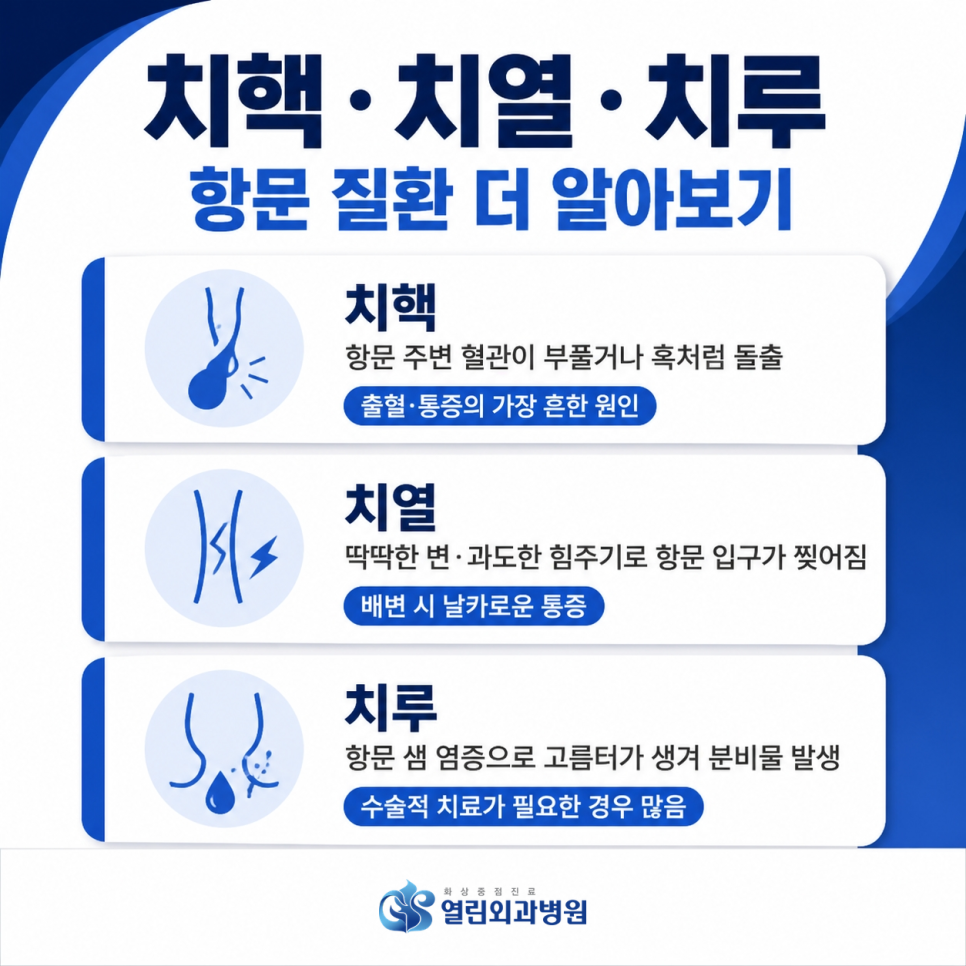
    How Do Hemorrhoids, Anal Fissures, and Anal Fistulas Differ?

    These three conditions have entirely different causes and symptom patterns.
    Identifying which one matches your symptoms is the first step toward treatment.

    Ansan proctology clinic related image 3

    Condition Main Symptoms Characteristics
    Hemorrhoids Painless bleeding, tissue protruding from the anus A common anal condition
    Anal fissure Sharp pain during bowel movements, bright red bleeding Often caused by hard stool or excessive straining
    Anal fistula Pus-like discharge, recurring inflammation Usually requires surgical treatment

    Ansan proctology clinic related image 4


    What Criteria Matter Most When Choosing an Ansan Proctology Clinic?

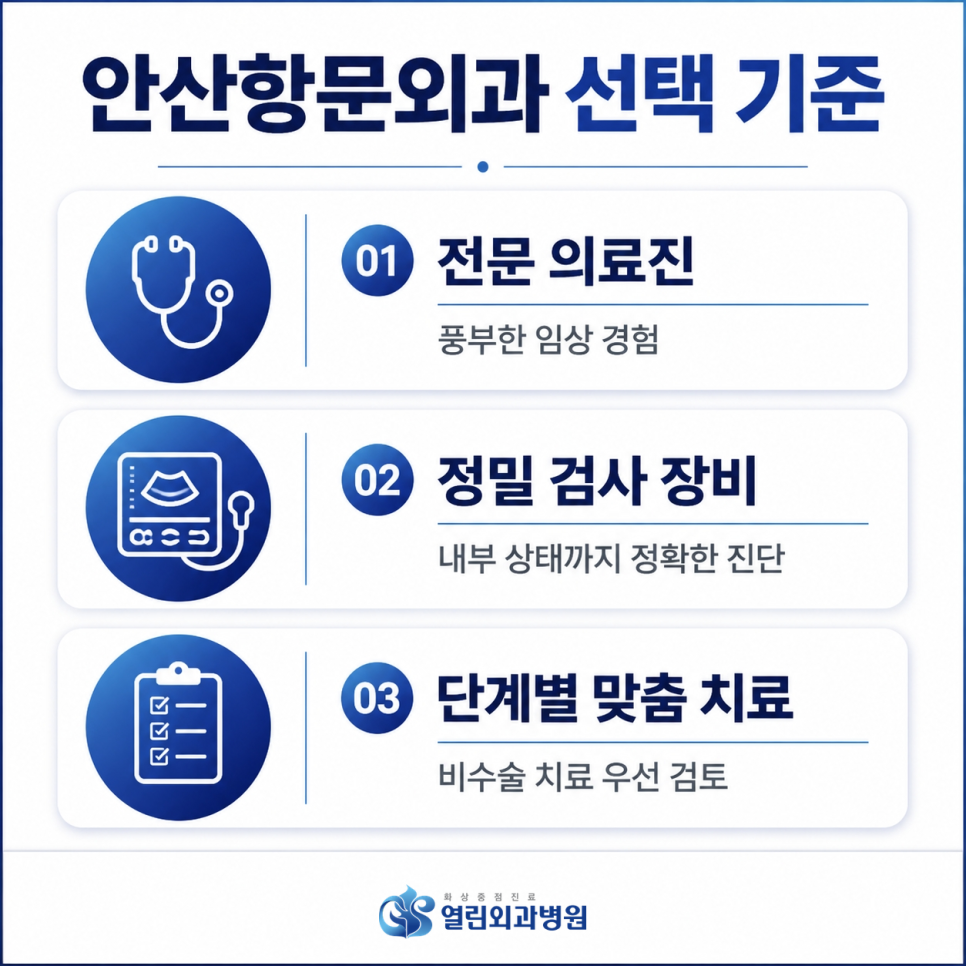
    A trustworthy Ansan proctology clinic is one with clinically experienced doctors and precise diagnostic equipment working together.

    Because the cause and stage of each condition vary from patient to patient,
    a one-size-fits-all approach falls short of what a reliable Ansan proctology clinic should offer.
    Ansan proctology clinic related image 2

    💡 Key Point
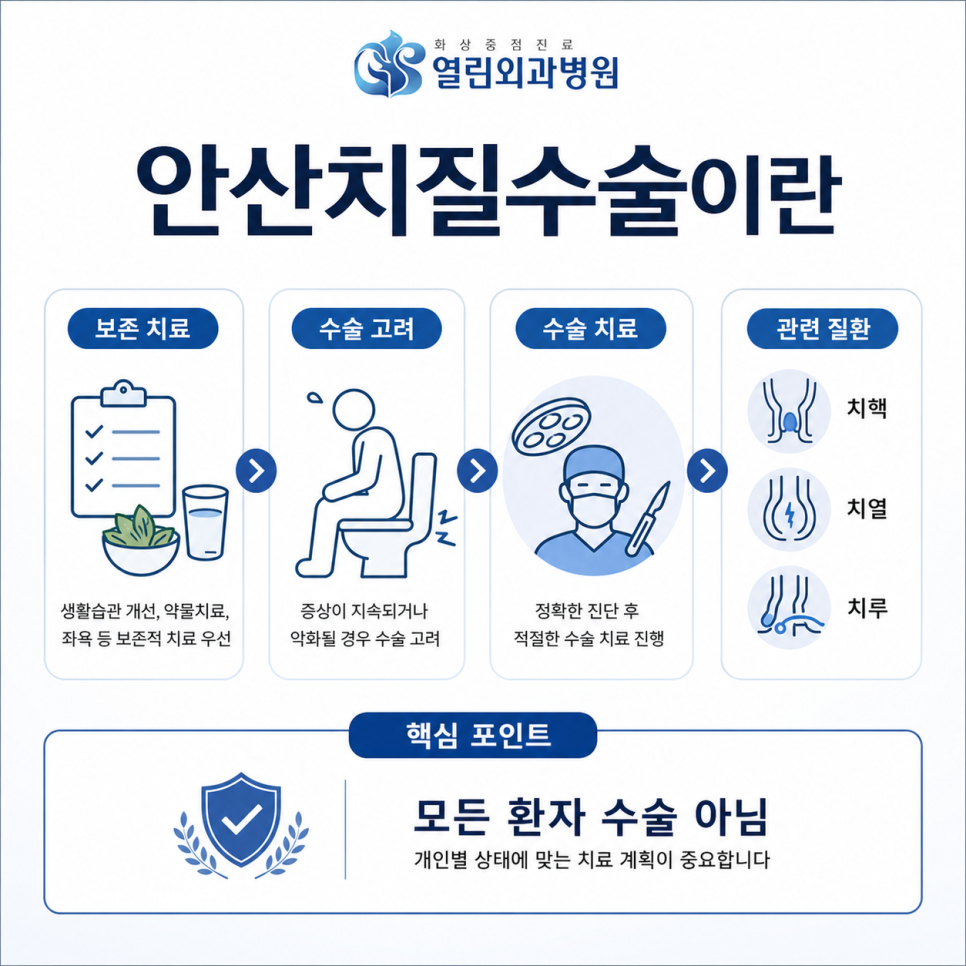
    Check whether the clinic appropriately distinguishes between non-surgical conservative treatment and surgical treatment based on the stage of the condition.

    Second, check whether the clinic has the medical equipment needed for precise examinations.

    Only by closely assessing internal conditions that aren’t visible to the eye
    can diagnostic accuracy be improved and the risk of misdiagnosis reduced.


    What Diagnostic System Is Needed for an Accurate Diagnosis?

    A clinic with an accurate diagnostic system is one equipped with precision ultrasound and similar equipment, and one that offers a tailored treatment plan without unnecessary procedures.

    Ansan proctology clinic related image 5

    What worries people most when looking for an Ansan proctology clinic
    is the pain and burden associated with surgery.

    But surgery isn’t necessary in every case.
    In the early stages, medication or lifestyle changes can often provide sufficient relief.

    So rather than defaulting to surgery,
    look for a clinic that accurately identifies the cause and lays out a step-by-step treatment plan.

    Ansan proctology clinic related image 6

    📋 Checklist
    ✅ Has precision ultrasound and other diagnostic equipment
    ✅ Offers a tailored treatment plan without unnecessary procedures
    ✅ Runs a pain management program for surgical cases
    ✅ Has systems in place to protect patient privacy and personal information

    Once you’ve gone through this checklist,
    remember: the longer you hesitate, the longer treatment tends to take.


    What Aftercare Helps Prevent Recurrence After Treatment?

    A private, comfortable care environment paired with clear aftercare guidance may help support recurrence prevention.

    Since this involves a sensitive area of the body, it’s also worth checking
    whether consultations take place in a private, separate space.
    Ansan proctology clinic related image 7

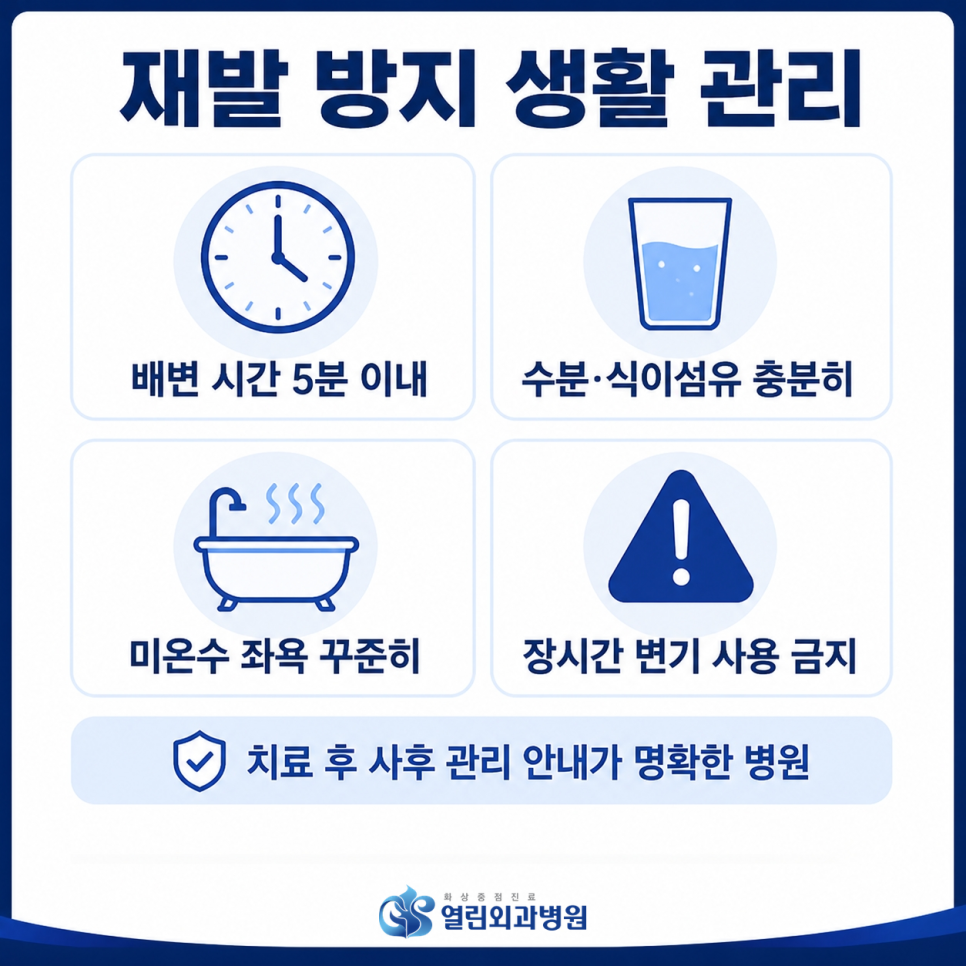
    Everyday care — like proper sitz bath technique and getting enough dietary fiber —
    needs to go hand in hand with treatment to help prevent recurrence.

    In fact, research suggests that simply keeping bowel movements under 5 minutes
    can help lower the risk of anal disease.
    Putting the phone down while on the toilet
    is also known to help improve bowel habits.

    🚀 Benefits of Proper Care
    Combining a systematic diagnosis with good lifestyle habits may help lower the chance of recurrence and support a smoother return to daily life.

    Ansan proctology clinic related image 8

    If you’re also curious about other surgical conditions beyond anal disease,
    take a look at the link below as well.
    Burn treatment information — [Ansan Open Surgery Clinic] Home

    We encourage you to use accurate information to find the right medical facility
    and take the steps needed to recover.

    A little attention and courage now can make a real difference in your quality of life.

    Ansan proctology clinic related image 9

    Ansan proctology clinic related image 10

    Ansan proctology clinic related image 11

    Ansan proctology clinic related image 12

    Ansan proctology clinic related image 13


    Frequently Asked Questions

    1. Does anal pain always mean I need surgery?
    Not necessarily. Depending on the severity and type of condition, conservative treatments like medication, sitz baths, and dietary changes can be tried first. An exact diagnosis requires a proper exam.

    2. What lifestyle habits help prevent anal disease?
    Keeping bowel movements under 5 minutes and getting enough water and dietary fiber can help. It’s also best to avoid sitting on the toilet for long periods or using your phone while on the toilet.

    3. What’s the most effective way to do a sitz bath?
    Soaking in warm water around 38°C (100°F) for about 3 to 5 minutes is generally recommended. Doing this after bowel movements and before bed can help with circulation.

    4. Can I go about my day right after the exam?
    Basic exams and ultrasound testing usually don’t disrupt daily life much, so it’s often possible to return to work or go about your day the same day.


    References

    · Asan Medical Center, \”Hemorrhoids,\” Disease Encyclopedia, Asan Medical Center Health Information. View source
    · Seoul National University Health Care Center, \”Don’t Ignore Pain Around the Anus: Hemorrhoids, Anal Fissures, and Anal Fistulas.\” View source
    · Hidoc, \”Using Your Phone on the Toilet for Over 5 Minutes Raises Hemorrhoid Risk by 46%,\” Latest Research, 2026. View source


    This article is intended for general health information purposes only and is not a substitute for individual diagnosis or treatment. If you have symptoms, please consult a medical professional.
  • Blood in Stool: 3 Common Causes When You’re Bleeding But Feel No Pain

    Blood in Stool: 3 Common Causes When You’re Bleeding But Feel No Pain

    SummaryThe likely cause of blood in stool can differ depending on the color of the blood. From the difference between bright red and dark red blood to hemorrhoids, anal fissures, colon polyps, and inflammatory bowel disease, here’s a detailed breakdown of the possible causes of rectal bleeding, the warning signs that mean you should see a doctor, and everyday habits that can help prevent it.

    Seeing red blood on the toilet paper can make anyone’s heart sink.

    But did you know that the likely cause of blood in stool can vary completely depending on the color of the blood?

    In fact, when patients come in for evaluation of rectal bleeding, the color of the blood is often one of the first things a doctor checks.

    The color and pattern of the bleeding can vary depending on the underlying condition.
    From anal conditions like hemorrhoids and anal fissures to colon polyps and inflammatory bowel disease,
    here are the possible causes of rectal bleeding and the warning signs that mean you should see a doctor.

    blood in stool

    What Does Blood in Stool Color Tell You About the Cause?

    The short answer: yes, the color of the blood alone can give a rough idea of where the bleeding is coming from.
    Blood in stool refers to bleeding that occurs when the anus or the lining of the intestine is damaged during a bowel movement.

    The closer the bleeding site is to the anus, the more likely the blood is to appear bright red.

    On the other hand, if the issue is higher up in the colon or small intestine, the blood can appear dark red or even black.

    That’s why it’s important to pay attention to both the color and the pattern of bleeding when checking your symptoms.

    illustration related to blood in stool 2

    Key points
    ✔ Bright red blood — may indicate damage to small blood vessels near the anus (hemorrhoids, fissures, etc.)
    ✔ Dark red blood — may indicate bleeding higher in the colon or rectum
    ✔ Blood mixed with mucus — may indicate inflammatory bowel conditions or polyps
    Blood Color Likely Location Possible Condition
    Bright red Near the anus Hemorrhoids, anal fissure
    Dark red / black Upper colon, small intestine Colon polyps, ulcerative conditions
    Mixed with mucus Colon lining Inflammatory bowel disease

    Why do you bleed with no pain at all?

    In most cases, painless bleeding is caused by internal hemorrhoids.
    That’s because the lining inside the anal canal has very few sensory nerve endings.

    Common causes of this kind of rectal bleeding include anal conditions like hemorrhoids and anal fissures.

    When hard stool tears the lining of the anus, it can cause both pain and bleeding.

    By contrast, when hemorrhoid tissue is simply irritated during a bowel movement, bleeding often occurs with little to no pain.

    Key points
    ✔ External hemorrhoids — located outside the anus, richly supplied with nerves, so pain is common
    ✔ Internal hemorrhoids — located inside the anal lining, with fewer nerve endings, so painless bleeding is typical
    ✔ Anal fissure — a tear in the lining from hard stool, usually causing sharp pain along with bleeding

    illustration related to blood in stool 3

    Could the cause be something other than an anal condition?

    It’s not always just an anal issue.
    Colon polyps or inflammatory bowel disease, such as ulcerative colitis,
    can also cause rectal bleeding.

    In these cases, bleeding is often accompanied by mucus in the stool or changes in bowel habits.

    illustration related to blood in stool 4

    Checklist
    ✅ A small streak of bright red blood on the toilet paper → possible anal fissure
    ✅ Blood dripping heavily enough to color the toilet water → possible hemorrhoid tissue damage
    ✅ Blood mixed into the stool itself, or accompanied by a heavy, dull ache → possible issue inside the colon lining

    What should you do if bleeding lasts more than a week?

    If bleeding continues for more than a week, you should see a doctor.
    It’s not a good idea to assume it’s just minor irritation and leave it unchecked.

    illustration related to blood in stool 5

    Things to watch for
    ⚠ Bleeding that continues for more than a week
    ⚠ Bleeding accompanied by unexplained weight loss or a sudden change in bowel frequency
    ⚠ Repeated episodes of dark red blood or black stool
    If you notice any of these signs, it’s safer to get a proper medical evaluation rather than guessing on your own.

    For an accurate assessment, it’s safest to get a thorough clinical evaluation.

    In daily life, try to drink enough water and eat a fiber-rich diet.

    Habits that help prevent constipation go a long way toward maintaining anal and colon health.

    If symptoms keep recurring or you’re unsure of the cause, it’s a good idea to see a colorectal specialist.
    Ansan Yeolin Surgical Hospital — Home

    illustration related to blood in stool 6

    Key takeaways
    ◆ Bright red blood suggests anal conditions like hemorrhoids or fissures, while dark red blood may point to polyps or inflammation higher in the colon.
    ◆ Even without pain, an endoscopic exam is recommended if bleeding lasts more than a week or comes with weight loss or changes in bowel habits.
    ◆ Staying well hydrated and eating enough fiber to prevent constipation is a basic habit that may help reduce your risk.

    Frequently Asked Questions

    1. Does blood in stool always mean colon cancer?
    No. In the vast majority of cases, the cause is a common anal condition like hemorrhoids or an anal fissure. That said, if bleeding persists or the blood is dark red, it’s best to get an accurate diagnosis.

    2. Why does bleeding sometimes happen with no pain at all?
    Painless bleeding is commonly associated with internal hemorrhoids. Because the hemorrhoid tissue inside the anal canal has few sensory nerves, bleeding can occur without any pain.

    3. Should I still get checked if there’s only a small streak of blood on the toilet paper?
    It may just be temporary irritation from hard stool, but if it keeps happening or continues over time, it’s safer to find out the cause.

    4. When should I consider getting a colonoscopy?
    An endoscopic exam is recommended if the blood is dark red, or if it’s accompanied by changes in bowel habits, weight loss, or a family history of colon conditions.

    5. Is there a way to prevent this kind of bleeding?
    Drinking enough water and eating a fiber-rich diet to prevent constipation is generally recommended as a basic way that may help reduce the risk.


    References

    · Korea Disease Control and Prevention Agency, “Blood in Stool and Black Stool (Adults),” National Health Information Portal. View source
    · Korea Disease Control and Prevention Agency, “Hemorrhoids,” National Health Information Portal. View source
    · Asan Medical Center, “Hemorrhoids,” Disease Encyclopedia. View source
    · National Cancer Center, “Recurring Dark Blood in Stool: A Warning Sign From Your Colon,” NCC Webzine, 2019. View source


    This article is provided for general health information purposes only and is not a substitute for individual diagnosis or treatment. If you’re experiencing symptoms, please consult a physician.

  • Hemorrhoid Surgery: 4 Symptoms That Mean You Need It

    Hemorrhoid Surgery: 4 Symptoms That Mean You Need It

    SummaryHere’s a breakdown of when hemorrhoid surgery is truly necessary versus when it isn’t, organized by symptom. Explore the full diagnostic workup along with habits that may support recovery, like sitz baths and Kegel exercises.

    Seeing blood on the toilet paper after a bowel movement is enough to make anyone panic.

    That said, a hemorrhoid diagnosis doesn’t automatically mean surgery is next.

    Early-stage hemorrhoids often improve significantly with medication and lifestyle changes alone.

    Still, if your doctor brings up surgery, it can be a sign your symptoms have progressed to the next stage.

    Today, let’s take a closer look at exactly when hemorrhoid surgery actually becomes necessary.

    This article walks through the key symptoms and causes that lead to a hemorrhoid surgery recommendation, the diagnostic workup used to determine whether surgery is needed, and the sitz bath and exercise routines that can speed up recovery.

    We’ve also included answers to the questions patients ask most often, so you can find practical guidance in one place.

    hemorrhoid surgery

    Is Hemorrhoid Surgery Really Necessary for Every Patient?

    To put it simply, not every hemorrhoid patient needs surgery.

    Hemorrhoid surgery refers to a surgical procedure that removes or repairs anorectal tissue that has become abnormal, as seen in conditions like hemorrhoids, anal fissures, and anal fistulas.

    What most people call “hemorrhoids” usually refers to piles — swelling of the cushion tissue lining the anal canal.

    In the early stages, conservative treatments like medication or dietary changes are often enough to see real improvement.

    But if conservative treatment doesn’t work, or the condition has progressed significantly, a surgical approach becomes necessary.

    hemorrhoid surgery illustration 2

    💡 Key Takeaways
    ✔ Not every hemorrhoid patient needs surgery.
    ✔ It’s important to choose treatment that matches your symptom stage.

    What Causes Hemorrhoids? Check the Causes and Warning Signs

    Hemorrhoids rarely have just one cause — they usually result from a combination of everyday habits.

    Piles develop when the blood vessels in the anal canal become swollen from straining too hard during bowel movements and chronic increases in abdominal pressure.

    Spending too long sitting on the toilet is one of the leading causes of increased pressure on the anal blood vessels.

    Chronic constipation or diarrhea, frequent alcohol use, and chronic fatigue also take a toll on anal health.

    In women, rising abdominal pressure during pregnancy and childbirth can cause symptoms to suddenly worsen.

    hemorrhoid surgery illustration 3

    📋 Common Warning Sign Checklist
    ✅ Bright red blood appears on toilet paper or in the bowl
    ✅ Internal tissue pushes out of the anus during a bowel movement
    ✅ Itching or throbbing pain around the anus
    ✅ A hard lump or discharge near the anus

    If these symptoms keep recurring, don’t ignore them — see a doctor and get evaluated for whether surgery is needed.

    Waiting too long can make the pain worse and complicate treatment down the line.

    hemorrhoid surgery illustration 4


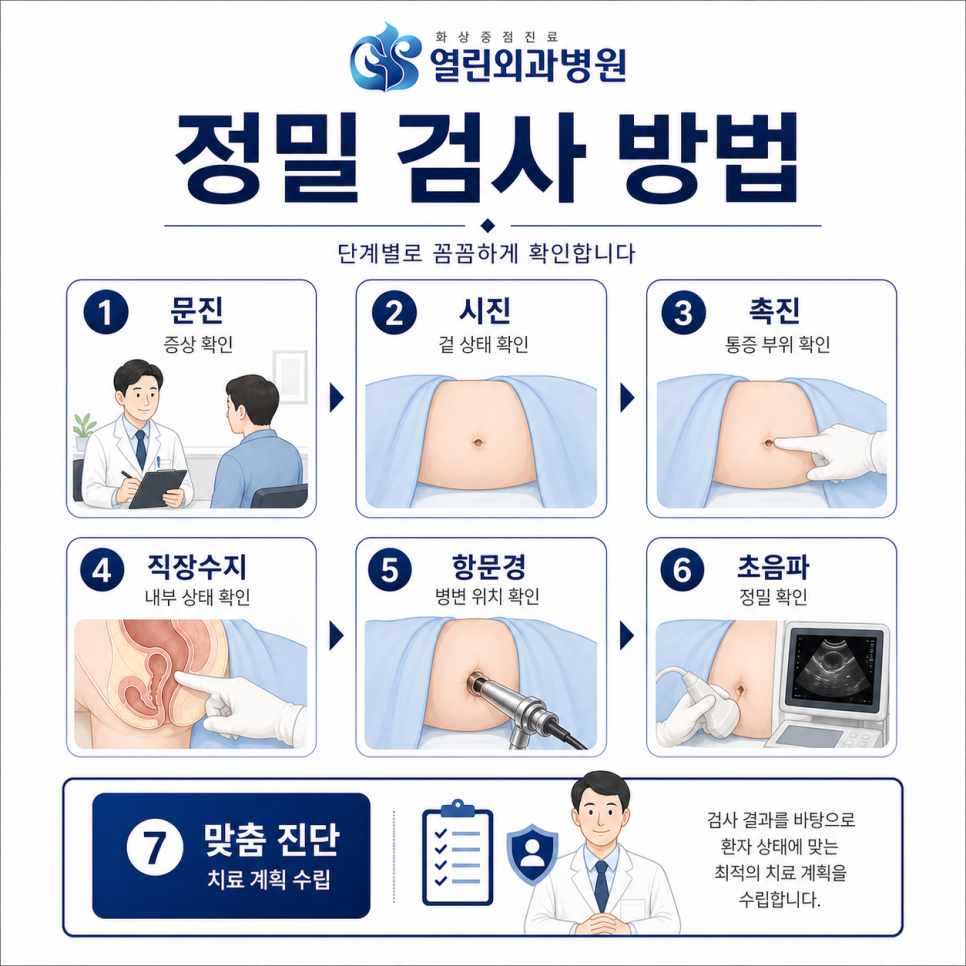
    How Is the Diagnostic Workup That Determines the Need for Surgery Done?

    The diagnostic workup moves step by step, from an initial consultation through imaging tests if needed.

    This workup is the series of diagnostic steps used to pinpoint the location and severity of the condition and determine the right treatment path.

    hemorrhoid surgery illustration 5

    Stage Method Purpose
    Step 1 Consultation Review bowel habits and pain patterns
    Step 2 Visual exam, palpation, digital rectal exam Directly assess the condition inside the anal canal
    Step 3 Anoscopy or ultrasound (if needed) Precisely determine the lesion’s location and severity

    hemorrhoid surgery illustration 6

    📊 Clinical Insight
    A systematic diagnostic workup makes it possible to pinpoint the exact location and severity of the lesion, allowing for a treatment plan tailored to each patient.

    What Sitz Bath and Exercise Routines Help Shorten Recovery After Surgery?

    How fast you recover depends heavily on your post-treatment care routine.

    A sitz bath involves soaking the anal area in warm water to relax the sphincter muscles and improve blood circulation.

    hemorrhoid surgery illustration 7

    Doctors generally recommend sitz baths in water around 38–40°C (100–104°F), 2–3 times a day for 5–10 minutes each session.

    Water that’s too hot, or soaking for too long, can actually irritate the skin or cause swelling, so it’s important to be careful.

    Keeping up a diet rich in fluids and fiber may also support recovery.

    🚀 Habits That Support Recovery
    · Kegel exercises: Repeatedly tightening and releasing the pelvic floor muscles, which is thought to help improve blood circulation around the anus.
    · Light walking: May help stimulate bowel activity and support regular bowel movements.

    hemorrhoid surgery illustration 8

    ⚠️ A Few Precautions
    It’s best to avoid heavy weightlifting or exercises that involve bending forward, since these sharply raise abdominal pressure.

    hemorrhoid surgery illustration 9

    Recovery time varies from person to person, but it generally takes about 2 to 4 weeks.
    Closely following your care team’s instructions during this period can help support a smoother recovery.

    Frequently Asked Questions

    1. Is there a high chance of recurrence after treatment?
    If the affected tissue was fully removed, the recurrence rate at that same site is generally low. That said, new symptoms can develop in a different area if bowel habits don’t improve or anal care becomes inconsistent.

    2. What’s the best way to do a warm sitz bath?
    Soak the anal area in water around 38–40°C (100–104°F) for about 5–10 minutes. Using water that’s too hot or sitting for too long can actually irritate the skin, so be mindful of both.

    3. When does the pain during bowel movements start to ease up?
    It varies by person, but pain usually starts easing within 1–2 weeks, as the wound heals. Taking prescribed medication consistently and getting enough dietary fiber can help ease discomfort.

    4. When can I go back to daily life or work?
    Light daily activities or desk work can generally be resumed within a few days of discharge. However, if your job involves physical labor or lifting heavy objects, it’s recommended to take a longer rest period.

    hemorrhoid surgery illustration 10

    Good anal health comes down to accurate diagnosis and consistent follow-up care.

    If your symptoms keep coming back, don’t try to manage it alone — it’s worth consulting a colorectal specialist.

    You can find more information about care and appointments on the Ansan Yeollin Surgical Hospital homepage.

    hemorrhoid surgery illustration 11

    hemorrhoid surgery illustration 12


    References

    · Korea Disease Control and Prevention Agency, “Hemorrhoids,” National Health Information Portal. View source
    · Asan Medical Center, “Hemorrhoids,” Disease Encyclopedia. View source
    · Kookje Ilbo, “The Anorectal Condition No One Talks About — A Daily 5-Minute, 40°C Sitz Bath Can Help,” Kookje Ilbo, 2020. View source


    This article is intended for general health information purposes only and is not a substitute for individual diagnosis or treatment. If you’re experiencing symptoms, please consult a medical professional.

  • Ansan Proctology Clinic Visit: 3 Bathroom Phone Habits to Break First

    Ansan Proctology Clinic Visit: 3 Bathroom Phone Habits to Break First

    SummaryBefore visiting an Ansan proctology clinic, here’s what you should know: the medical causes behind anorectal conditions, everyday prevention habits like proper sitz baths and fiber intake, and exactly when self-care isn’t enough and it’s time to see a doctor.

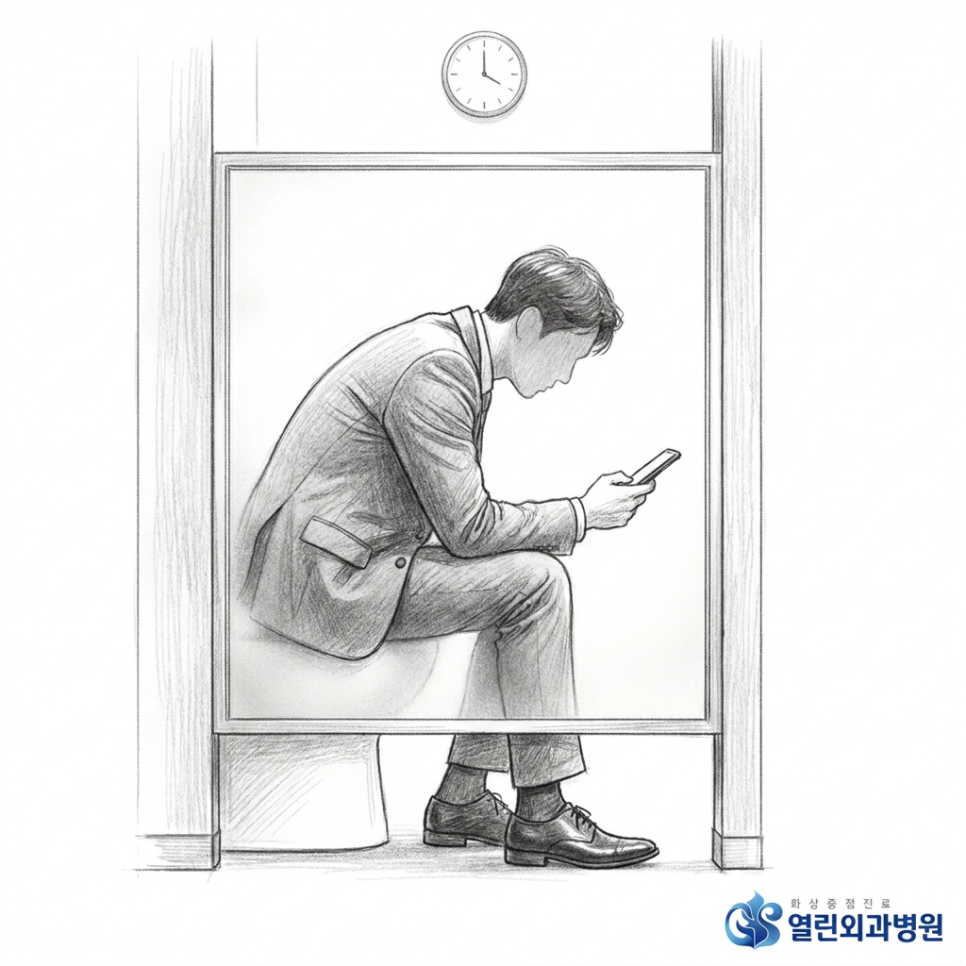
    Bringing your phone into the bathroom —
    just a harmless way to pass the time, right?

    In reality, the symptoms that send people to an Ansan proctology clinic often start
    in just those few minutes.

    Most people, when the pain shows up, brush it off as “I’m probably just tired lately.” But there’s a clear reason this happens so often to office workers and students who sit for long hours.

    안산항문외과

    Without knowing the cause, the same symptoms are bound to keep coming back no matter how much you try to just tough it out.

    Let’s walk through why this happens — and why enduring it isn’t the answer.

    안산항문외과 관련 이미지 2

    Key Points
    · An Ansan proctology clinic visit addresses symptoms such as pain during bowel movements, blood, and discomfort around the anus.
    · The basics of self-care are lukewarm sitz baths 2-3 times a day for 3-5 minutes, plus standing up to stretch every hour.
    · If self-care doesn’t help and the pain keeps recurring, it’s safer to see a doctor before it becomes chronic.

    Why Does Sitting for Long Periods Cause Anorectal Problems?

    To put it simply: prolonged sitting and straining too hard during bowel movements repeatedly put pressure on the blood vessels around the anus.

    Hemorrhoids are a condition in which the blood vessel tissue inside and around the anus stretches and swells, causing pain, bleeding, and discomfort.

    This is also why it’s especially common among office workers and students who sit for long stretches.
    Many people have felt the effects after neglecting healthy bowel habits because of a busy schedule.

    안산항문외과 관련 이미지 3

    Straining excessively during bowel movements or ongoing constipation raises local pressure in that area.

    As this repeats, the vessel tissue swells and pain develops.
    It’s easy to write this off as simple fatigue.
    Pinpointing the actual cause is important.

    안산항문외과 관련 이미지 4

    If you notice discomfort during bowel movements, it’s worth considering treatment.
    If even one item on the checklist below applies to you, we recommend getting a professional opinion.

    Checklist
    ✅ Stinging or pain with every bowel movement
    ✅ Bright red blood on the toilet paper
    ✅ Swelling or a heavy feeling around the anus
    ✅ The same symptoms repeating for several days

    Once an anal fissure or hemorrhoids develop, the chance of recurrence goes up,
    which is why early management matters so much.


    Before Visiting an Ansan Proctology Clinic: What Prevention Steps Can You Take at Home?

    The key comes down to two lifestyle habits that lower pressure during bowel movements: proper sitz baths and adequate fiber intake.

    A sitz bath is a warm-water self-care method that is generally used to help improve blood circulation around the anus and may help relieve congestion and swelling.

    Even one small change may help, and sticking with it consistently may help ease everyday discomfort.

    The Right Way to Take a Sitz Bath

    1. Prepare lukewarm water at about 104-113°F (40-45°C), similar to a warm bath.
    2. Aim for 3-5 minutes per session, 2-3 times a day.
    3. Going past 5 minutes can actually irritate the anal tissue, so stick to the time limit.
    4. After the bath, gently pat the area dry rather than rubbing, to keep it from staying damp.

    Simply sticking to the recommended time and temperature may help with comfort.

    안산항문외과 관련 이미지 5

    Getting enough water and dietary fiber is also important.
    It may help soften stool and reduce local pressure.

    According to a report by Hidoc, the recommended daily fiber intake for adults is around 25g for women and 38g for men.
    It’s best to increase intake gradually, focusing on vegetables, seaweed, and whole grains.

    It’s also important to break the habit of sitting on the toilet for long periods with your phone.
    The longer you sit, the more strain builds up on the blood vessels around the anus.

    Result
    Even small lifestyle adjustments can help ease discomfort.
    Finding a regular bowel rhythm is the first step.

    When Should You Decide It’s Time for an Ansan Proctology Clinic Visit?

    If symptoms keep recurring or worsening even after two or more weeks of self-care, it’s best not to put off seeing a doctor.

    Chronic hemorrhoids describes a condition where symptoms keep recurring after the window for early management has passed.

    Missing the right time to seek treatment can make the process take longer.
    Many people put off going to the doctor simply because they’re busy or feel embarrassed to bring it up.
    But it’s worth remembering that toughing it out isn’t the answer.

    안산항문외과 관련 이미지 6

    If self-care alone isn’t helping and the pain keeps coming back, don’t hesitate.
    Addressing it early — rather than letting it worsen — is generally considered a better way to take care of your body.

    Caution
    Leaving symptoms untreated until they become chronic can disrupt daily life.
    Don’t dismiss even mild symptoms.

    If you need an accurate diagnosis and consultation, you can find hospital information at the link below.
    [Ansan Yeollin Surgical Hospital] Visit the Website

    How to Get to Yeollin Surgical Hospital

    The hospital is located at 376 Hwarang-ro, Danwon-gu, Ansan-si, Gyeonggi-do (basement level and floors 2-4),
    directly across from Ansan City Hall and Danwon Police Station, so it’s easy to find.

    안산항문외과 관련 이미지 7

    안산항문외과 관련 이미지 8

    안산항문외과 관련 이미지 9

    안산항문외과 관련 이미지 10

    안산항문외과 관련 이미지 11

    안산항문외과 관련 이미지 12

    안산항문외과 관련 이미지 13

    안산항문외과 관련 이미지 14

    안산항문외과 관련 이미지 15

    안산항문외과 관련 이미지 16

    안산항문외과 관련 이미지 17


    Frequently Asked Questions

    1. How often and how long should I take a sitz bath?
    Lukewarm water (about 104-113°F/40-45°C), 2-3 times a day for 3-5 minutes each, is appropriate. Water that’s too hot can actually irritate the area.

    2. What foods are good sources of fiber?
    Eating a variety of everyday foods like vegetables, seaweed, and whole grains is an effective way to get enough fiber.

    3. If I notice a little blood during a bowel movement, do I need surgery right away?
    In many early-stage cases, lifestyle adjustments alone can lead to improvement, so it’s usually fine to monitor the situation and manage it first.

    4. I sit for long hours at work — is there a specific way to prevent this?
    Standing up to stretch lightly every hour and using a cushion that helps distribute pressure can help.

    5. Is there anything worth preparing before my appointment?
    Jotting down your usual bowel habits and when your symptoms started can make the consultation go more smoothly.


    References

    · Asan Medical Center, “Hemorrhoids,” Disease Encyclopedia, Asan Medical Center. View Source
    · Severance Hospital, “Hemorrhoids: Consistent Warm-Water Sitz Baths Can Relieve the Pain,” Health Information, Severance Hospital. View Source
    · Hidoc, “‘Good vs. Bad Foods’ for Constipation and Hemorrhoids,” Hidoc News. View Source
    · Hidoc, “5 Bad Habits That Cause Hemorrhoids… A Pharmacist’s Guide to Prevention and Management,” Hidoc News. View Source


    This article is intended to provide general health information and is not a substitute for individual diagnosis or treatment. If you have symptoms, please consult a medical professional.

  • Ansan Proctology Clinic: 3 Bathroom Phone Habits to Break First

    Ansan Proctology Clinic: 3 Bathroom Phone Habits to Break First

    SummaryBefore visiting an Ansan proctology clinic, here’s what you need to know: the medical causes behind anal conditions, everyday prevention habits like proper sitz baths and fiber intake, and the exact point at which self-care isn’t enough and it’s time to see a doctor.

    Bringing your phone into the bathroom —
    just a harmless little habit to pass the time, right?

    In fact, the symptoms that send people to an Ansan proctology clinic often start
    in exactly those few minutes.

    Most people brush off the pain as “I’ve just been tired lately,”
    but there’s a clear reason it shows up so often
    in office workers and students who sit for long hours.

    Ansan proctology clinic

    If you don’t know the cause, the same symptoms will keep coming back no matter how much you try to tough it out.

    Let’s go through why this happens — and why simply enduring it isn’t the answer.

    Ansan proctology clinic related image 2

    Key Points
    · An Ansan proctology clinic visit addresses symptoms like pain during bowel movements, blood, and a feeling of pressure around the anus.
    · The basics of self-care are taking a lukewarm sitz bath 2-3 times a day for 3-5 minutes and standing up to stretch every hour.
    · If self-care doesn’t help and the pain keeps returning, it’s safer to see a doctor before the condition becomes chronic.

    Why Do Anal Conditions Develop From Sitting Too Long?

    The short answer: prolonged sitting and straining too hard during bowel movements
    repeatedly put pressure on the blood vessels around the anus.

    Hemorrhoids are a condition in which the blood vessel tissue inside and around the anus stretches and swells, causing pain, bleeding, and a sense of pressure.

    This is also why it shows up so often in office workers and students who sit for long stretches.
    Many people have had the experience of neglecting their bowel habits because of a busy schedule — and paying for it later.

    Ansan proctology clinic related image 3

    Straining too hard during bowel movements or ongoing constipation raises local pressure in the area.

    As this repeats, the vessel tissue swells and pain develops.
    It’s easy to write it off as simple fatigue.
    But identifying the actual cause is what matters most.

    Ansan proctology clinic related image 4

    If you experience discomfort during bowel movements, it’s worth considering treatment.
    If even one item on the checklist below applies to you, we recommend getting a professional opinion.

    Checklist
    ✅ It stings or hurts every time you have a bowel movement
    ✅ You notice bright red blood on the toilet paper
    ✅ There’s swelling or a heavy feeling around the anus
    ✅ The same symptoms have persisted for several days

    Anal fissures and hemorrhoids can recur once they occur,
    so early management is especially important.


    What Prevention Steps Can You Take at Home Before Visiting an Ansan Proctology Clinic?

    The key lies in two lifestyle habits that lower pressure during bowel movements: proper sitz baths and adequate fiber intake.

    A sitz bath is a warm-water care method generally used to help improve blood circulation around the anus and may help reduce congestion and swelling.

    Even one small habit may bring a noticeable change,
    and keeping it up consistently may help reduce everyday discomfort.

    How to Take a Proper Sitz Bath

    1. Prepare lukewarm water at 40-45°C (104-113°F), about the temperature of a warm bath.
    2. Aim for 3-5 minutes per session, 2-3 times a day.
    3. Keep to the time limit — soaking longer than 5 minutes can actually irritate the anal tissue.
    4. After the bath, gently pat the area dry and keep it dry.

    Simply sticking to the right time and temperature may help you feel more comfortable.

    Ansan proctology clinic related image 5

    Above all, getting enough water and fiber is essential.
    It may help soften stool and reduce local pressure.

    According to Hidoc, the recommended daily fiber intake for adults is around 25g for women and 38g for men.
    It’s best to increase intake gradually, focusing on vegetables, seaweed, and whole grains.

    You should also break the habit of sitting on the toilet for a long time with your phone.
    The longer you sit, the more strain it puts on the blood vessels around the anus.

    Takeaway
    Even small lifestyle adjustments may help ease discomfort.
    Establishing a regular bowel rhythm should be the first step.

    When Is It Time to See an Ansan Proctology Clinic?

    If symptoms keep coming back or get worse even after two or more weeks of self-care, it’s best not to put off seeing a doctor.

    Chronic hemorrhoids refers to a condition where the window for early management is missed and symptoms keep recurring.

    Missing the right window for care can make treatment take longer.
    Many people put off a visit because they’re busy or feel embarrassed to bring it up.
    But it’s worth remembering that simply enduring it isn’t the answer.

    Ansan proctology clinic related image 6

    If self-care alone isn’t helping and the pain keeps returning, don’t hesitate.
    Addressing it early — rather than letting it worsen — is the better way to take care of yourself.

    Caution
    Leaving symptoms unaddressed until they become chronic can interfere with daily life.
    Even mild symptoms shouldn’t be brushed aside.

    If you need an accurate diagnosis and consultation, you can find hospital information at the link below.
    [Ansan Open Surgery Hospital] Visit the Homepage

    How to Find Open Surgery Hospital

    The hospital is located at 376 Hwarang-ro, Danwon-gu, Ansan-si, Gyeonggi-do (basement level and floors 2-4),
    directly across from Ansan City Hall and Danwon Police Station, so it’s easy to find.

    Ansan proctology clinic related image 7

    Ansan proctology clinic related image 8

    Ansan proctology clinic related image 9

    Ansan proctology clinic related image 10

    Ansan proctology clinic related image 11

    Ansan proctology clinic related image 12

    Ansan proctology clinic related image 13

    Ansan proctology clinic related image 14

    Ansan proctology clinic related image 15

    Ansan proctology clinic related image 16

    Ansan proctology clinic related image 17


    Frequently Asked Questions

    1. How often and how long should I take a sitz bath?
    Lukewarm water (around 40-45°C / 104-113°F), 2-3 times a day for 3-5 minutes, is appropriate. Water that’s too hot can actually irritate the area.

    2. What foods are good sources of fiber?
    Eating a variety of everyday foods like vegetables, seaweed, and whole grains is an effective way to get enough fiber.

    3. If I notice a little blood during a bowel movement, do I need surgery right away?
    In many early-stage cases, lifestyle changes alone may help improve symptoms, so it’s fine to monitor and manage things first.

    4. I sit for long hours at work — is there a specific way to prevent this?
    It can help to stand up and stretch lightly every hour and use a cushion that distributes pressure.

    5. Is there anything I should prepare before my appointment?
    Jotting down your usual bowel habits and when your symptoms started makes the consultation go more smoothly.


    References

    · Asan Medical Center, “Hemorrhoids,” Disease Encyclopedia, Asan Medical Center. View source
    · Severance Hospital, “Hemorrhoids: Consistent Warm-Water Sitz Baths Can Relieve the Pain,” Health Information, Severance Hospital. View source
    · Hidoc, “Good Foods vs. Bad Foods for Constipation and Hemorrhoids,” Hidoc News. View source
    · Hidoc, “5 Bad Habits That Cause Hemorrhoids — A Pharmacist’s Guide to Prevention and Care,” Hidoc News. View source


    This article is intended for general health information purposes only and is not a substitute for individual diagnosis or treatment. If you have symptoms, please consult a medical professional.

  • Phone Habit Hemorrhoids: 3 Reasons to See an Ansan Colorectal Clinic

    Phone Habit Hemorrhoids: 3 Reasons to See an Ansan Colorectal Clinic

    SummaryBefore you visit an Ansan colorectal clinic, here is what to check first: the phone habit hemorrhoids link and what raises your risk in the bathroom, a checklist for bowel pain and bleeding, everyday prevention habits like sitz baths and fiber intake, and exactly when it is time to see a doctor.

    Bringing your phone into the bathroom and losing track of five, even ten minutes—have you ever thought of it as just a harmless way to pass the time?

    Research from abroad suggests that people who use their phone during bowel movements are more likely to be diagnosed with hemorrhoids than those who don’t.

    In other words, the pain and discomfort that eventually send people to an Ansan colorectal clinic may start with just a few minutes of that habit.

    This is the phone habit hemorrhoids connection more people are starting to ask their doctor about.

    Phone habit hemorrhoids and Ansan colorectal clinic

    This article covers the common causes of anal conditions such as hemorrhoids and anal fissures—the kinds of issues an Ansan colorectal clinic sees regularly—along with a self-check list you can use before your visit.
    We’ll also walk through everyday prevention habits like sitz baths and fiber intake.

    And if self-care doesn’t help and the pain keeps coming back, we’ll explain exactly when it’s time to see a doctor.

    Ansan colorectal clinic illustration 2

    Phone Habit Hemorrhoids: Why Toilet Scrolling Raises Your Risk

    The short answer: sitting on the toilet and scrolling on your phone puts extra pressure on the blood vessels around the anus, and this raised pressure can increase your risk of hemorrhoids.

    Hemorrhoids occur when the blood vessels around the anus become swollen and stretched from repeated pressure, leading to pain and bleeding.

    This is also why hemorrhoids tend to show up more often in office workers and students who sit for long stretches.
    Straining during bowel movements or ongoing constipation raises local pressure, and over time this repeated strain can cause the vessel tissue to swell.

    In short, phone habit hemorrhoids risk climbs the longer you stay seated on the toilet with a screen in hand.

    Ansan colorectal clinic illustration 3

    Key Point
    One study conducted abroad found that people who used their phone in the bathroom were 46% more likely to be diagnosed with hemorrhoids than those who didn’t.
    Among phone users, 37.3% spent more than five minutes on the toilet at a time, compared with just 7.1% of non-users.

    It’s easy to write the discomfort off as simple fatigue, but identifying the actual cause comes first.
    That’s the only way to keep the same symptoms from coming back.


    What Symptom Checklist Should You Review Before Visiting an Ansan Colorectal Clinic?

    If any of the items below sound familiar, it’s worth getting an opinion from a specialist.
    Once anal fissures or hemorrhoids develop, the chance of recurrence goes up, so catching them early matters.

    Ansan colorectal clinic illustration 4

    Checklist
    ✅ Pain or discomfort during bowel movements
    ✅ Red blood on toilet paper
    ✅ A heavy, foreign-body sensation around the anus

    If even one of these keeps happening, don’t chalk it up to fatigue.
    We recommend scheduling a consultation soon.


    What Everyday Prevention Habits Can Help?

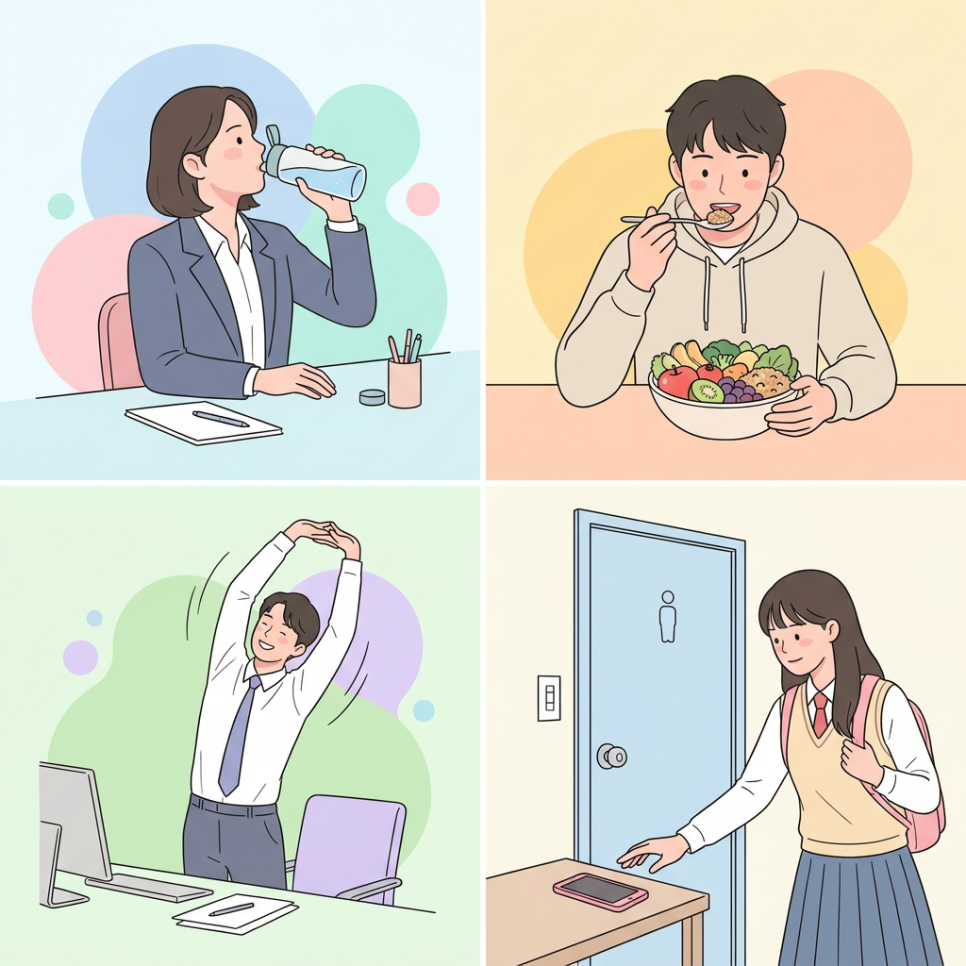
    In short, staying hydrated, eating enough fiber, taking sitz baths, and correcting bowel habits are four things that may help ease symptoms.
    Small daily changes can add up to a real difference.

    Ansan colorectal clinic illustration 5

    Habit Possible Benefit
    Hydration and fiber intake Softens stool and reduces local pressure
    Lukewarm sitz baths Relaxes the anal sphincter and supports circulation
    Stretching every hour Eases pressure on lower pelvic veins
    Limiting phone use in the bathroom Shortens time on the toilet and minimizes pressure exposure

    Sitz baths are typically done with lukewarm water about two to three times a day for around five minutes each, though the exact frequency can vary depending on your symptoms or your doctor’s guidance.
    Eating a balanced mix of fiber-rich foods such as vegetables, seaweed, and whole grains can help as well.

    Takeaway
    Small lifestyle adjustments may help ease discomfort.
    Establishing a regular bowel rhythm can also support prevention.
    Key Point
    If your job keeps you seated for long periods, using a cushion to distribute pressure and standing up to move around every hour can help.

    When Should You See an Ansan Colorectal Clinic?

    If pain or bleeding keeps recurring even after adjusting your habits, don’t put it off—it’s a good idea to see an Ansan colorectal clinic.
    Missing the right window can make treatment take longer.

    Ansan colorectal clinic illustration 6

    Many people delay a visit because they’re busy, or because the topic feels embarrassing to bring up.
    But it’s worth remembering that toughing it out isn’t always the best approach.

    Some reports note that conditions like anal fissures or anal abscesses can recur more often when left untreated without addressing the underlying cause.
    Addressing symptoms early, rather than letting them worsen, is generally a better way to look after your health.

    Caution
    Letting symptoms go untreated and become chronic can interfere with daily life.
    Don’t dismiss even mild symptoms.

    If you’d like to discuss an anal condition, you can also reach out through the [Ansan Yeollin Surgery Hospital] homepage.
    Feel free to reach out for a relaxed, no-pressure consultation.


    Frequently Asked Questions

    1. How often should I take a sitz bath?
    Lukewarm water, about two to three times a day for roughly five minutes, is typical, though the exact frequency can vary based on your doctor’s guidance. Water that’s too hot can actually irritate the area, so caution is needed.

    2. Which foods are good sources of fiber?
    A varied mix of everyday foods—vegetables, seaweed, and whole grains—is an effective way to get enough fiber.

    3. If I notice a little blood during a bowel movement, do I automatically need surgery?
    In early stages, simple care and lifestyle adjustments are often enough to improve symptoms, so there’s no need for excessive worry. That said, if symptoms keep recurring, it’s best to see a doctor.

    4. I have a job that keeps me seated for long hours—are there ways to prevent this?
    Standing up to stretch lightly every hour and using a cushion to distribute pressure can help.

    5. Is there anything I should prepare before visiting the clinic?
    Jotting down your usual bowel habits and when your symptoms started ahead of time makes the consultation go more smoothly.

    Ansan colorectal clinic illustration 7


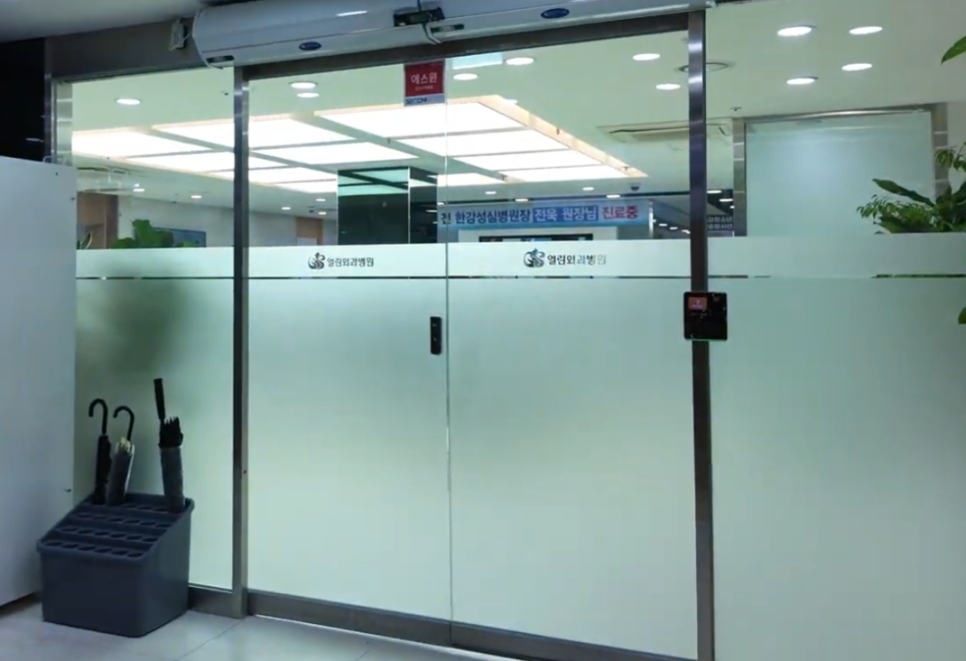
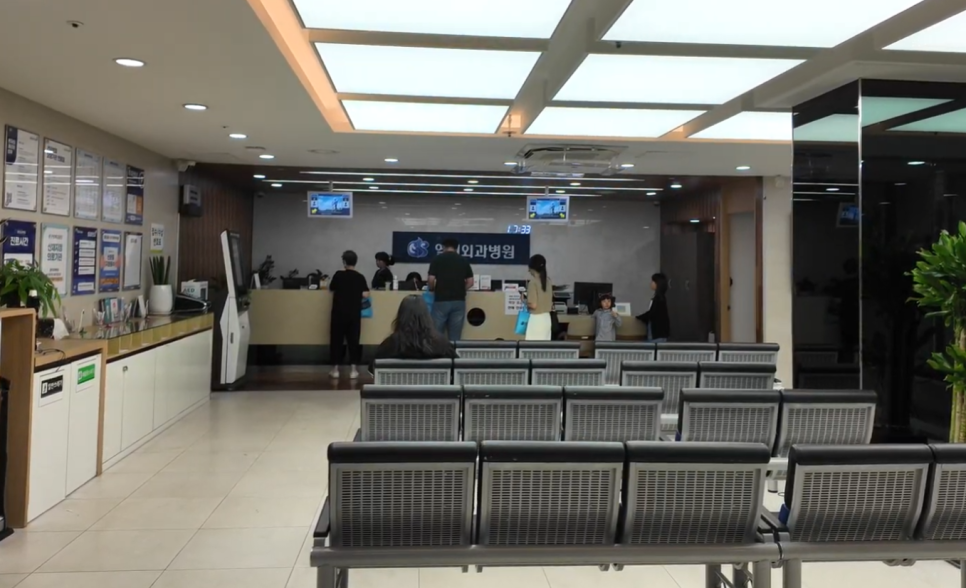
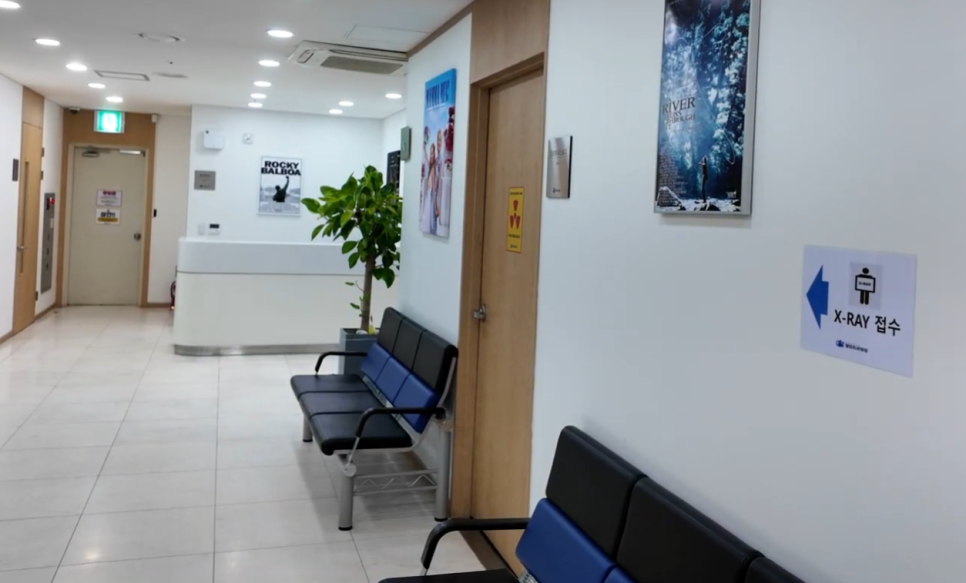
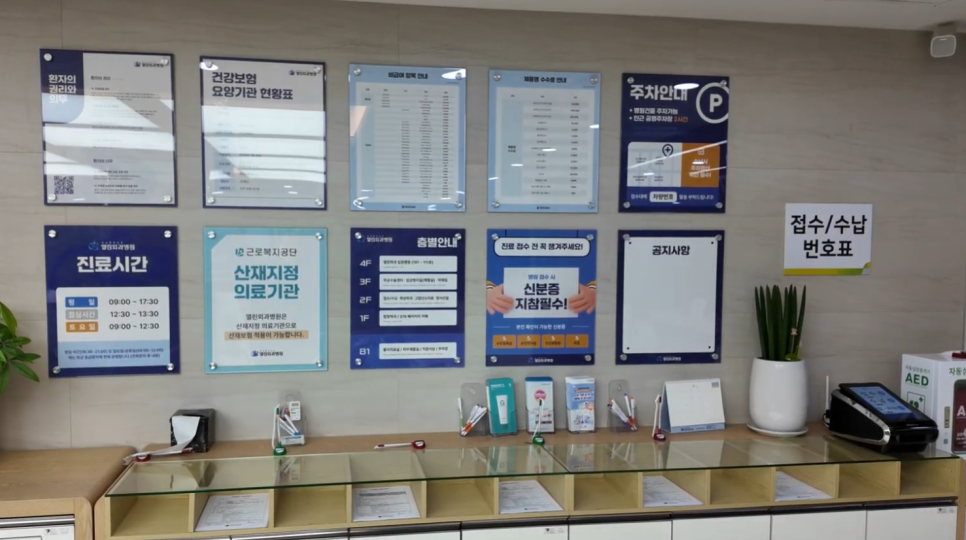
    Below are photos of Yeollin Surgery Hospital, which also provides care for anal conditions.

    Ansan colorectal clinic illustration 8

    Ansan colorectal clinic illustration 9

    Ansan colorectal clinic illustration 10

    Ansan colorectal clinic illustration 11

    Ansan colorectal clinic illustration 12

    Ansan colorectal clinic illustration 13

    Ansan colorectal clinic illustration 14

    Ansan colorectal clinic illustration 15

    Ansan colorectal clinic illustration 16

    Ansan colorectal clinic illustration 17

    Located at 376 Hwarang-ro, Danwon-gu, Ansan-si, Gyeonggi-do — basement level 1, floors 2–4 (across from Ansan City Hall and Danwon Police Station).


    References

    · Financial News, “Why Is Using Your Phone in the Bathroom Risky? ‘Sitting Too Long Is the Problem,’” Financial News, 2026. View source
    · Hidoc, “5 Bad Habits That Cause Hemorrhoids… A Pharmacist’s Guide to Prevention and Care,” Hidoc, 2026. View source
    · Hidoc, “Are Hemorrhoids a Chronic Problem? Why They Recur So Often,” Hidoc. View source
    · Medical World News, “Is a Sitz Bath ‘Medicine’ for Hemorrhoid Prevention? The Wrong Technique Can Be ‘Poison,’” Medical World News. View source


    This article is intended for general health information purposes only and is not a substitute for individual diagnosis or treatment. If you have symptoms, please consult a medical professional.