You’ve probably had a moment when hot soup splashed onto the back of your hand while you were carrying a pot,
and you brushed it off as just a quick sting.
Then the next day, you noticed the skin was red and swollen,
or maybe even blistered, which caught you off guard.
As this shows, a burn’s severity often can’t be judged
just by how it looks on the surface.
In this article, we’ll break down the first-degree vs second-degree burn difference based on how deep the skin damage goes and whether blisters form, along with golden-hour first aid steps and home remedies you should absolutely avoid.
First-Degree vs Second-Degree Burn: How Deep Does the Skin Damage Go?
To cut to the chase, the biggest difference between a first-degree and a second-degree burn is how deep the damage reaches into the skin.
Skin is made up of three layers, in order: the epidermis, the dermis, and the subcutaneous tissue.
A first-degree burn means only the outermost layer, the epidermis, is damaged.
A classic example is sunburn, where skin turns red after too much sun exposure.
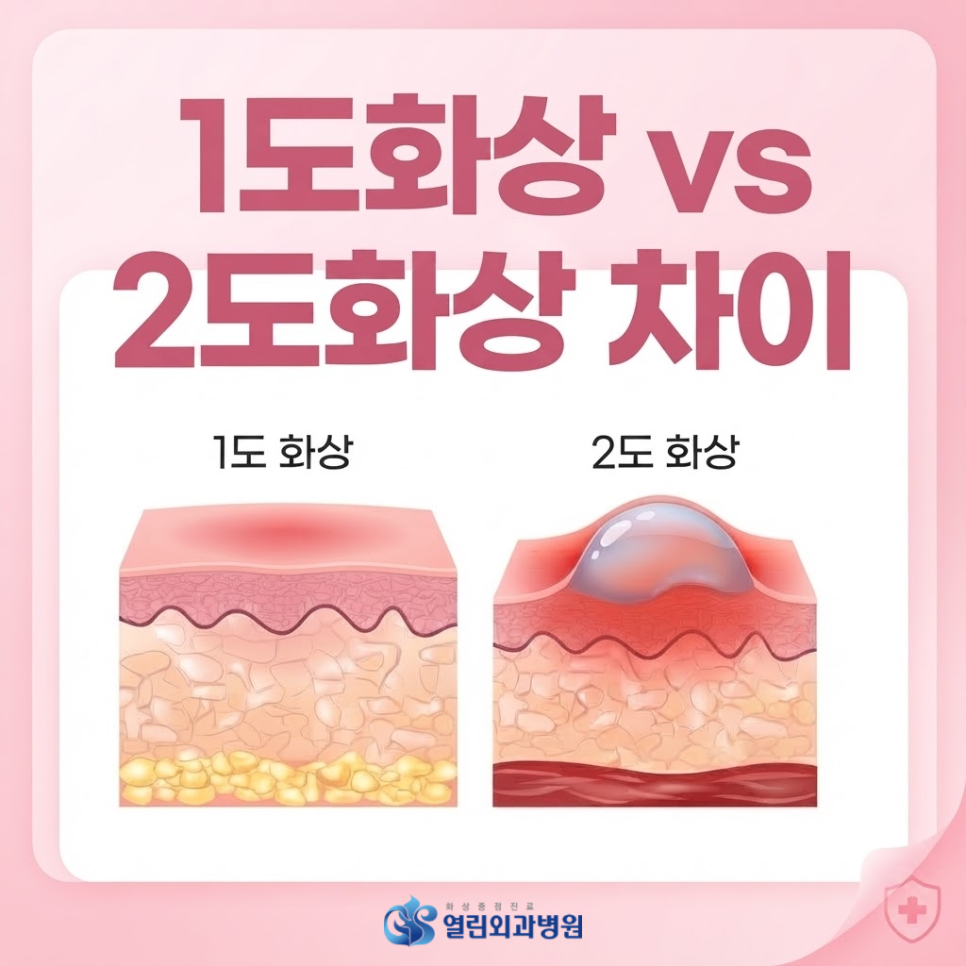
A second-degree burn is different.
A second-degree burn means the damage goes past the epidermis and into the dermis.
It usually happens from direct contact with hot liquid or flames,
and because the damage runs deeper, it needs much more careful care.

✔ First-degree burn: only the epidermis is damaged, and it usually heals without scarring
✔ Second-degree burn: both the epidermis and dermis are damaged, with a risk of blisters and scarring
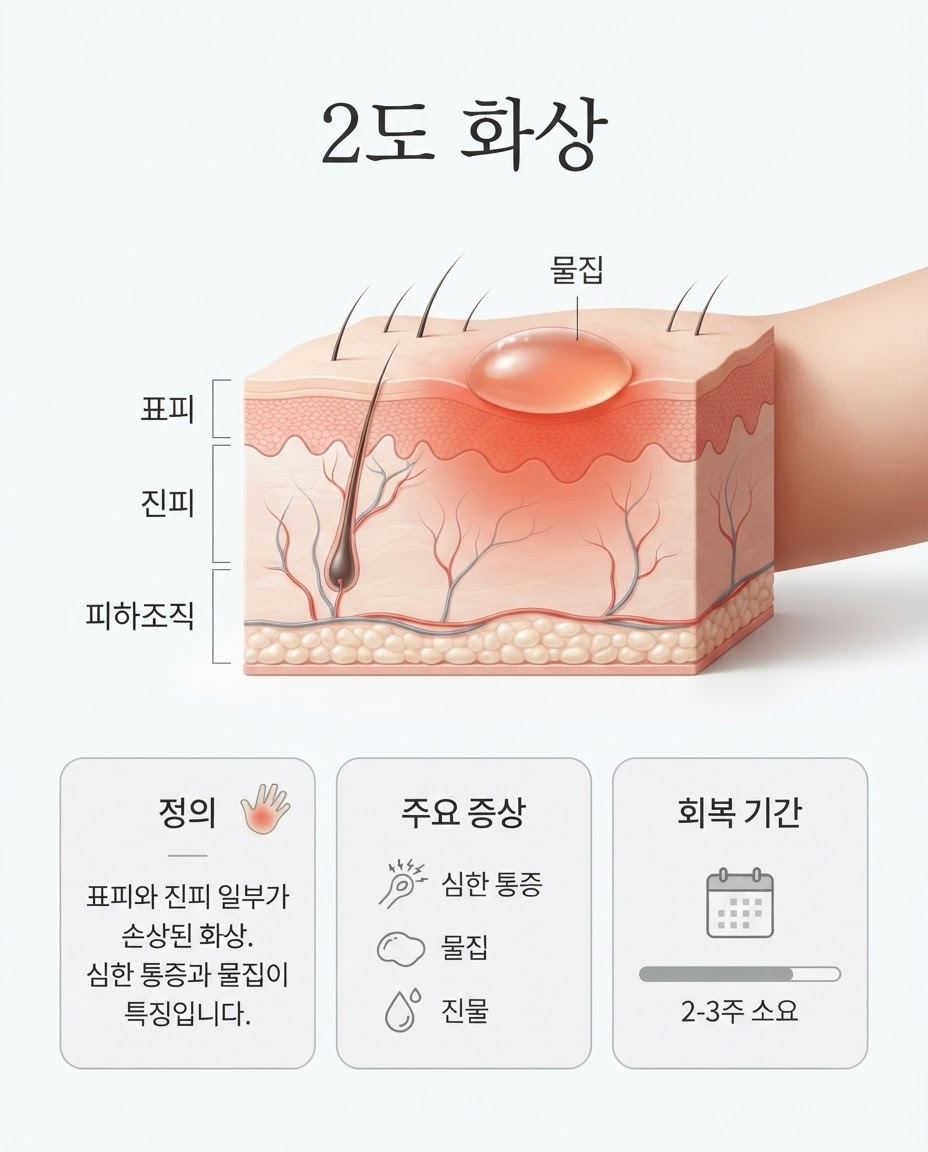
Since the depth of damage varies by burn stage,
identifying it correctly early on is the first step toward deciding how to treat it.
First-Degree vs Second-Degree Burn: How Can You Tell by Symptoms?
The easiest way to tell the two stages apart is whether blisters form.
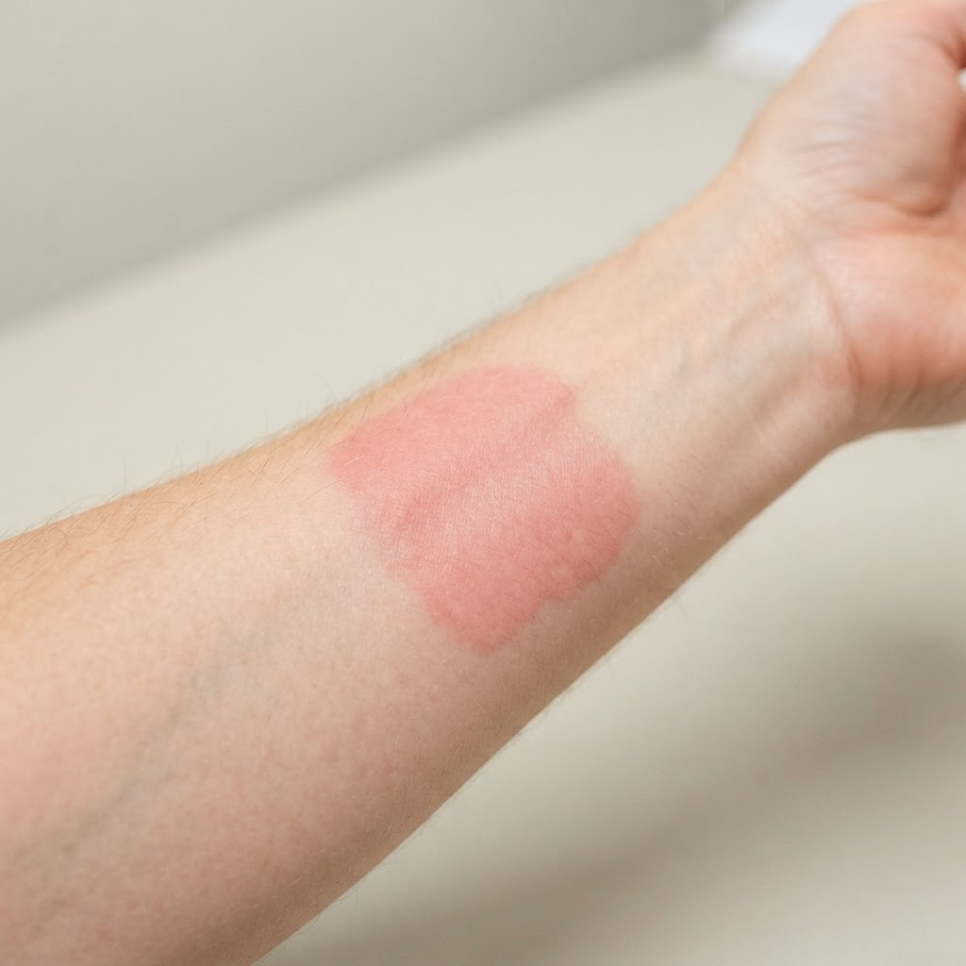
First-degree burn symptoms are red, stinging skin without any blistering.
The skin typically peels within 3 to 7 days and heals without scarring.
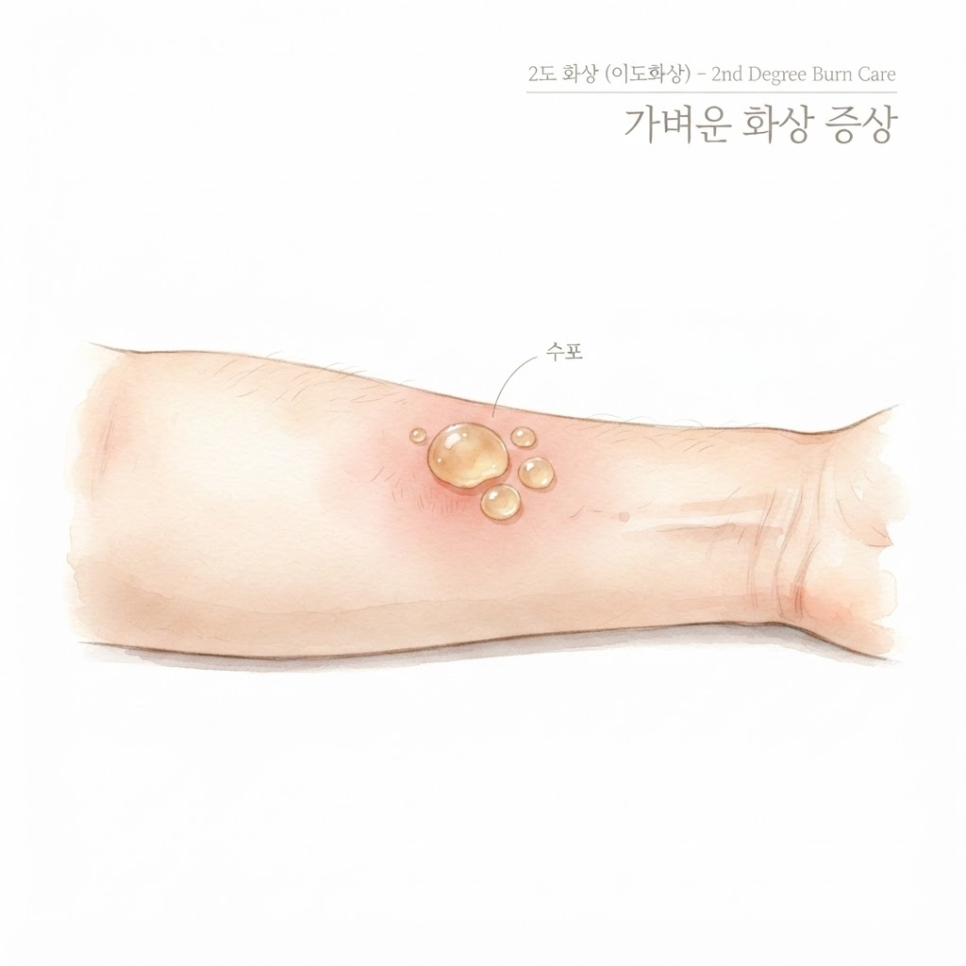
Second-degree burn symptoms are different.
A second-degree burn involves intense pain along with large blisters.
Because nerve endings in the dermis are irritated, the pain tends to be more severe than with a first-degree burn.
Second-degree burns are further split into superficial and deep types,
and how long any scarring lasts depends on how deep the damage runs.
| Category | First-Degree Burn | Second-Degree Burn |
|---|---|---|
| Depth of damage | Epidermis only | Epidermis + dermis |
| Blisters | None | Present |
| Pain | Mild to moderate | Severe |
| Recovery time | 3–7 days | 2–3 weeks or more |
| Scarring | Rare | Possible |
✅ Red skin, no blisters → likely a first-degree burn
✅ Blisters and oozing present → likely a second-degree burn
✅ Severe pain lasting more than 3 days → see a doctor
✅ Burned area larger than the palm of your hand → see a doctor
What First Aid Should You Give for a Burn?
The key to first aid right after a burn is fast cooling.
Stay calm and follow the steps below to help minimize skin damage.
- Run cool water over the burned area for about 15 to 20 minutes to bring down the heat.
- Avoid applying ice directly, since it can irritate the skin.
- Once the heat has fully subsided, gently wrap the area with clean gauze or a towel to help prevent secondary infection.
- Leave any blisters intact — don’t try to pop them yourself.
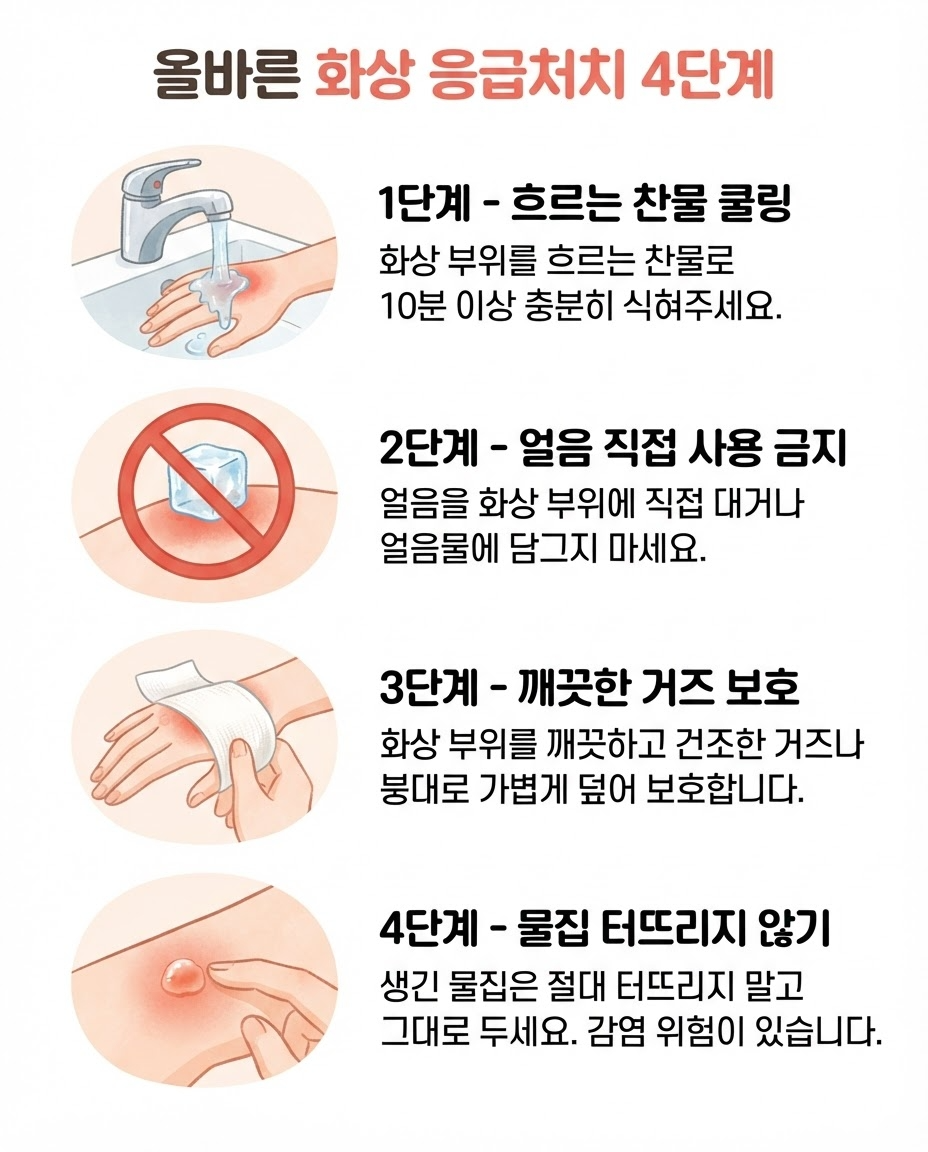
Cooling the burned area under running cold water for 15 to 20 minutes or more may help keep the burn from going deeper, and it can also help ease the pain.
It’s generally understood that how quickly you respond early on can affect whether scarring develops later.
If the burned area is large or the pain doesn’t ease up,
don’t try to judge it on your own — please see a burn specialist.
You can find more information at Burn Treatment – Ansan Yeollin Surgical Hospital homepage.
Can You Put Soju or Soybean Paste on a Burn?
To cut to the chase, never use home remedies like soju or soybean paste on a burn.
Anything containing alcohol irritates the burn site and can actually make the inflammation worse.
Soybean paste, raw potato, toothpaste, and similar remedies leave foreign material in the wound, which raises the risk of secondary infection.
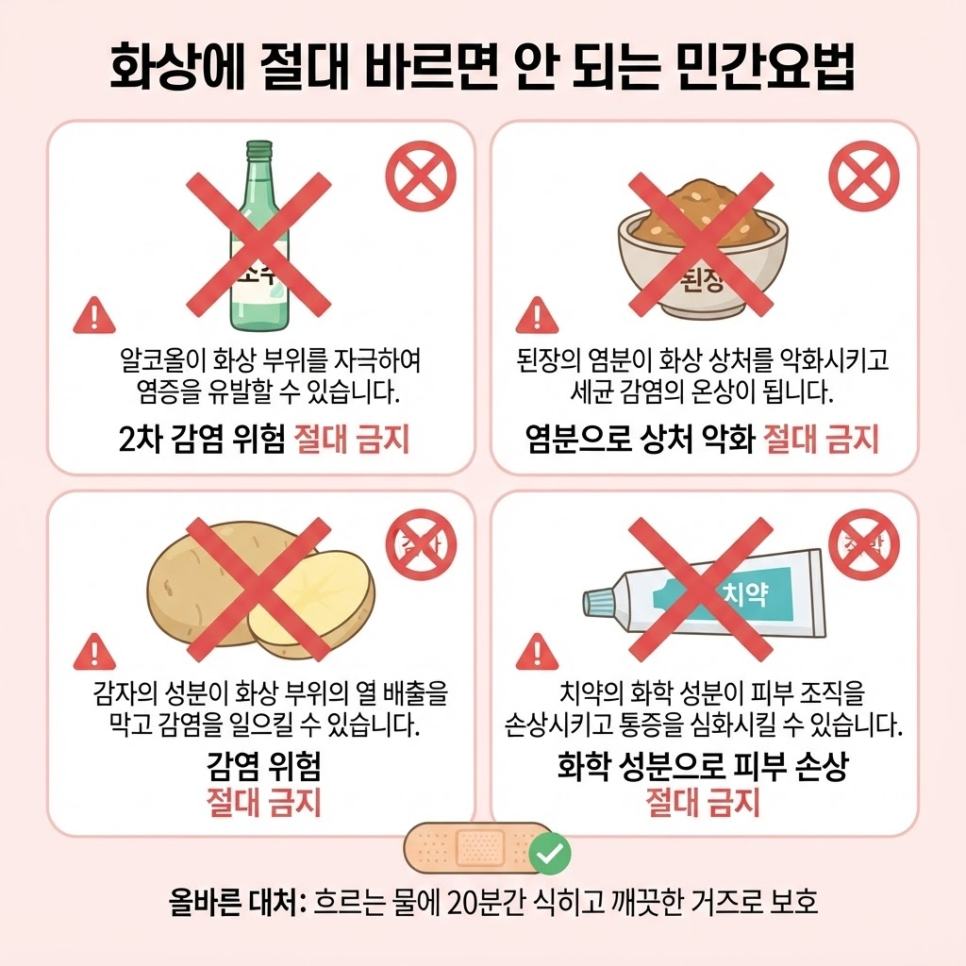
Before applying any ointment, always make sure the wound is clean first.
Home remedies such as soju, soybean paste, or toothpaste on a burn are a leading cause of secondary infection and can delay healing — never try them.
Frequently Asked Questions
1. What should I do if a blister pops?
The skin over a blister protects the wound underneath, so don’t peel it off. Cover it with clean gauze and visit a medical facility to be safe.
2. Do I need to see a doctor for a first-degree burn?
A first-degree burn that’s small with only simple redness can usually heal on its own at home with cooling and moisturizing, but if the area is large, it’s best to get it checked by a doctor.
3. Does putting toothpaste on a burn feel good and cooling?
Chemical ingredients in toothpaste can irritate a burn and trigger inflammation, so you should never apply it.
4. How long does it usually take to recover from a second-degree burn?
A superficial second-degree burn typically heals in around 2 weeks, while a deep second-degree burn can take 3 weeks or more and may leave a scar.
5. Can I tell the difference between a first-degree and second-degree burn on my own at home?
You can get a rough idea based on whether there’s a blister and how much pain there is, but if the area is large or you’re unsure, it’s best to see a doctor for an accurate diagnosis.
References
· Korea Disease Control and Prevention Agency, “Burns,” National Health Information Portal, 2024 (in Korean). View source
· Hidoc Expert Column, “Is a Quick Rinse in Cold Water Enough? Burn Treatment Golden Hour and How to Respond,” Hidoc, 2026 (in Korean). View source
· Money Today, “Believing the Old ‘Soju for Burns’ Advice Could Backfire: The Right First Aid Steps,” Money Today, 2025 (in Korean). View source
This article is intended for general health information purposes only and is not a substitute for individual diagnosis or treatment. If you’re experiencing symptoms, please consult a medical professional.
Leave a Reply