What if a flap that just went through surgery suddenly turned dark red or purple?
Tissue transferred through free flap surgery is at risk of flap necrosis the moment its blood supply is interrupted.
Smoking and pressure from improper positioning are two of the most common causes.
Today, we’ll walk through how free flap surgery works and how to help prevent flap necrosis after the procedure.

✔ Free flap surgery is a microsurgical reconstruction procedure that transplants tissue along with its blood vessels.
✔ Inadequate post-surgery care can lead to flap necrosis.
✔ Smoking and pressure are two of the leading risk factors for flap necrosis.
What Is Free Flap Surgery?
To put it simply, free flap surgery is a microsurgical reconstruction procedure that removes a whole section of a patient’s own tissue — including its blood vessels — and transplants it to a damaged area.
In some cases, a simple skin graft isn’t enough for full recovery.
This is especially true when the tissue damage is deep or blood circulation to the area is compromised.
In these situations, surgeons take skin, fat, and even arteries and veins together from a donor site such as the thigh, back, or abdomen.
But that’s not the end of the process.
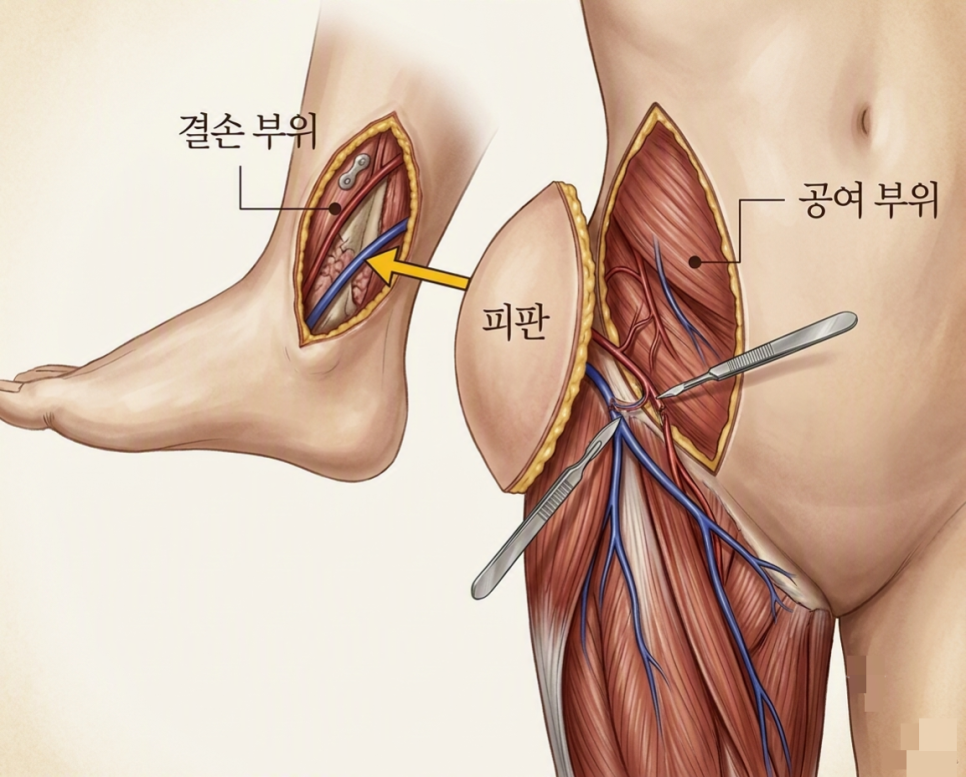
The tiny blood vessels in the removed tissue must be connected, one by one, to the blood vessels at the recipient site under a microscope.
This vascular anastomosis process is the core technique of free flap surgery.
That’s because tissue needs a continuous supply of oxygen and nutrients to survive.
According to related research, this microvascular connection is considered a critical factor in determining whether the surgery succeeds.
Why Does Flap Necrosis Happen? The Effects of Smoking and Pressure
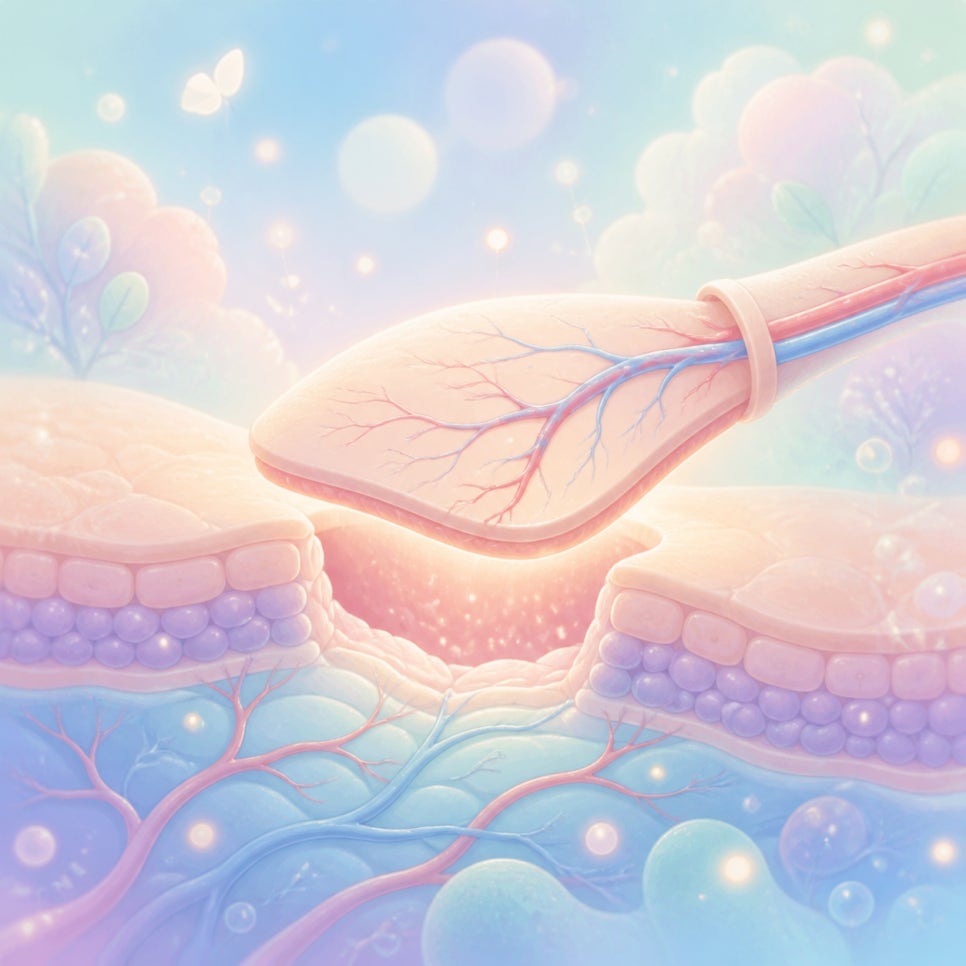
In short, flap necrosis occurs when the oxygen and nutrient supply to transplanted tissue is cut off, causing the cells to die.
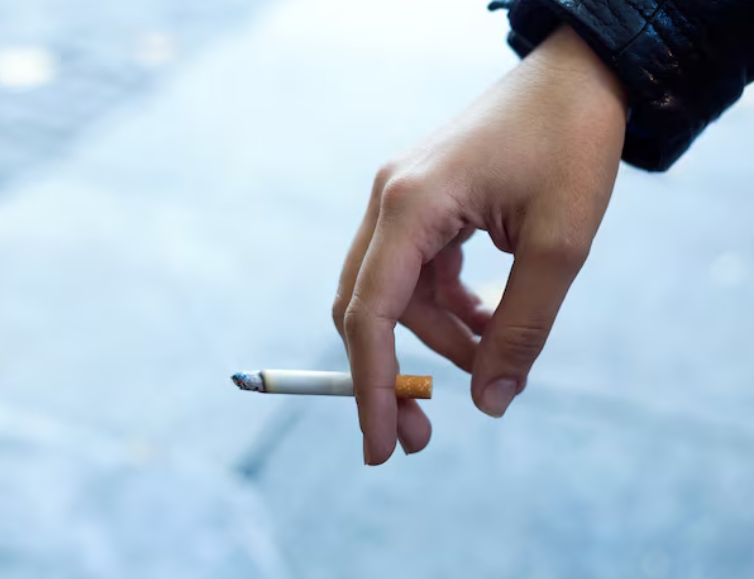
Nicotine in cigarettes causes blood vessels to constrict.
Even a single cigarette can narrow the microvasculature.
That’s why smoking after surgery is considered one of the leading risk factors for flap necrosis.
Pressure has a similar effect.
Something as simple as an unconscious sleeping position can cut off blood flow to the grafted area.
When a blood vessel is compressed, blood clots can form more easily, which can ultimately lead to tissue necrosis.
· Maintain a position that keeps pressure off the surgical site at all times.
· Avoid smoking, since it constricts blood vessels.
· Keep warm, as a drop in body temperature can slow blood circulation.
| Risk Factor | Effect on the Flap |
|---|---|
| Smoking | Vasoconstriction, reduced microcirculation |
| Pressure/positioning | Vessel compression, increased risk of clot formation |
| Hypothermia | Reduced blood circulation |
An international meta-analysis found that smoking significantly increased the rates of hematoma and overall complications after head and neck cancer reconstruction surgery.
Another study reported that free flap perfusion tended to be lower in smokers than in non-smokers.
That said, having a smoking history doesn’t automatically mean flap necrosis will occur.
Still, since the risk is elevated, extra caution is warranted.
When and How Is Free Flap Surgery Performed?
In short, free flap surgery is used when extensive tissue loss needs to be structurally restored.
It’s commonly used to fill defects left after severe burns, head and neck cancer surgery, or breast cancer surgery.
It’s also widely applied for serious skin damage caused by traffic accidents or diabetic foot conditions.
✅ Step 1: Measure the defect and select the donor site (where tissue will be harvested)
✅ Step 2: Harvest the flap, including its blood vessels, from the donor site
✅ Step 3: Perform vascular anastomosis (vessel connection) using a surgical microscope
✅ Step 4: Close the recipient site and the donor site
Because this microsurgical technique involves connecting blood vessels with sutures thinner than a human hair, the procedure takes a long time and requires a high degree of precision.
What Should You Manage After Surgery?
To put it simply, the key to post-surgery care is keeping the transplanted blood vessels open to prevent flap necrosis.

After surgery, blood flow to the transplanted tissue must be monitored continuously.
If a vessel becomes blocked or a clot forms, the transplanted tissue is unlikely to survive.
Close monitoring takes place during the first several days.
Once the tissue has stabilized, patients gradually move into a more routine recovery phase.
it can help support stable flap survival and normal blood flow, and may also help lower the risk of tissue necrosis.
If you’d like to learn more about tissue defects caused by burns and reconstructive treatment options, visiting Burn Treatment, [Ansan Open Surgery Hospital] Home may also be helpful.
Frequently Asked Questions
1. Can tissue from another person be transplanted instead?
No — to prevent immune rejection, the general rule is to use only the patient’s own tissue.
2. Is the donor site (where tissue is harvested) affected afterward?
Surgeons choose a site that has minimal impact on bodily function and where scarring is less visible, and the donor site is closed with careful surgical technique as well.
3. How long does recovery take after surgery?
Hospital stays typically last about one to two weeks, but several months of follow-up monitoring are usually needed before the graft site stabilizes and the patient returns to normal daily activities.
4. Can the skin color or texture differ from the surrounding area?
Depending on the donor site used, there can be differences in texture or color, and additional cosmetic procedures may be used to correct this later if needed.
5. Can smokers undergo free flap surgery?
Smoking doesn’t necessarily rule out surgery, but because it raises the risk of flap necrosis, quitting smoking before and after surgery is strongly recommended.
References
· Asan Medical Center, “Tissue Reconstruction Through Flap Surgery,” Disease Encyclopedia, Asan Medical Center. View source
· Chang et al., “The impact of smoking on surgical complications after head and neck reconstructive surgery with a free vascularised tissue flap: a systematic review and meta-analysis,” Journal of Plastic, Reconstructive & Aesthetic Surgery (ScienceDirect), 2020. View source
· “Smoking and microvascular free flap perfusion in head and neck reconstruction: radial free forearm flaps and anterolateral thigh flaps,” Scientific Reports (Nature), 2022. View source
· Liu et al., “Analysis of the Risk Factors for Free Flap Necrosis in Soft Tissue Reconstruction of the Lower Limbs,” Orthopaedic Surgery (Wiley), 2023. View source
This article is intended for general health information purposes only and is not a substitute for individual diagnosis or treatment. If you have symptoms, please consult a medical professional.
Leave a Reply